



Many homeowners and businesses assume any mover can handle heavy appliances safely, but this misconception leads to damaged fridges, scratched floors, and injury risks. Professional heavy appliance moving requires specialized equipment like appliance dollies, trained staff who understand proper lifting mechanics, and comprehensive insurance coverage. Melbourne’s unique property layouts, with narrow staircases and limited parking, make expert movers essential. This guide reveals how to select reliable movers, understand pricing structures, ensure regulatory compliance, and prepare appliances to avoid costly mistakes and delays.
| Point | Details |
|---|---|
| Specialized equipment and training | Professional movers use appliance dollies, protective padding, and safety-trained staff to prevent damage and injuries during transport. |
| Hourly pricing varies significantly | Rates range from $130 to $200 per hour, with access challenges like stairs increasing costs by 15-50%. |
| Insurance coverage protects investments | Reputable movers offer coverage up to AUD 10,000 or more, safeguarding against damage risks during moves. |
| Proper preparation reduces risk | Disconnecting utilities, draining fluids, and securing loose parts before moving day prevents delays and damage. |
| Selection requires careful evaluation | Compare movers on equipment quality, pricing transparency, insurance compliance, and verified customer reputation. |
Moving heavy appliances in Melbourne demands professional expertise due to the city’s unique urban challenges and the specialized nature of these items. Fridges, commercial ovens, industrial washing machines, and large freezers require careful handling to avoid mechanical damage and personal injury.
Melbourne’s dense urban environment creates specific obstacles. Narrow Victorian-era staircases, limited street parking, and apartment building restrictions make moving heavy appliances particularly complex. These factors require movers who understand local property types and can adapt techniques accordingly.
Both homeowners upgrading kitchens and businesses relocating commercial equipment face similar challenges:
Improper handling causes thousands of dollars in appliance damage annually. Scratched floors, dented appliance casings, broken internal components, and back injuries result from amateur attempts. Professional services eliminate these risks through proper equipment, training, and insurance coverage.
Melbourne’s competitive moving market offers varied service levels. Understanding what separates expert movers from general haulers helps you make informed decisions. The right professionals protect your investment while ensuring safe, efficient relocation regardless of property access challenges.
Professional heavy appliance movers rely on specialized equipment for heavy appliance moving that goes far beyond basic hand trucks. These tools and techniques transform dangerous moves into controlled, safe operations.
Appliance dollies feature reinforced frames rated for 300+ kg loads. Unlike furniture dollies, they have straps that secure appliances vertically during transport. Movers position these dollies to distribute weight properly, preventing tipping during navigation through doorways and around corners.
Protective materials shield appliances from cosmetic and mechanical damage:
Safety training distinguishes professional movers from amateurs. Teams learn proper lifting biomechanics, focusing on leg strength rather than back strain. They practice communication protocols that coordinate movements, preventing accidents when navigating stairs or tight spaces.
Pro Tip: Always verify that movers conduct pre-move site assessments. Professional teams measure doorways, stairwell widths, and elevator capacities before moving day, identifying potential obstacles and planning equipment needs accordingly.
Teamwork protocols ensure synchronized lifting and placement. Lead movers direct operations while team members maintain constant communication. This coordination becomes critical when maneuvering 200+ kg fridges through narrow hallways where a single misstep could cause injury or damage.
Different appliances demand adapted approaches. Front-loading washers require careful tilting to prevent drum damage. Fridges need upright transport to protect compressor oil systems. Ovens with glass doors need extra padding. Expert movers understand these nuances and adjust techniques for each appliance type.
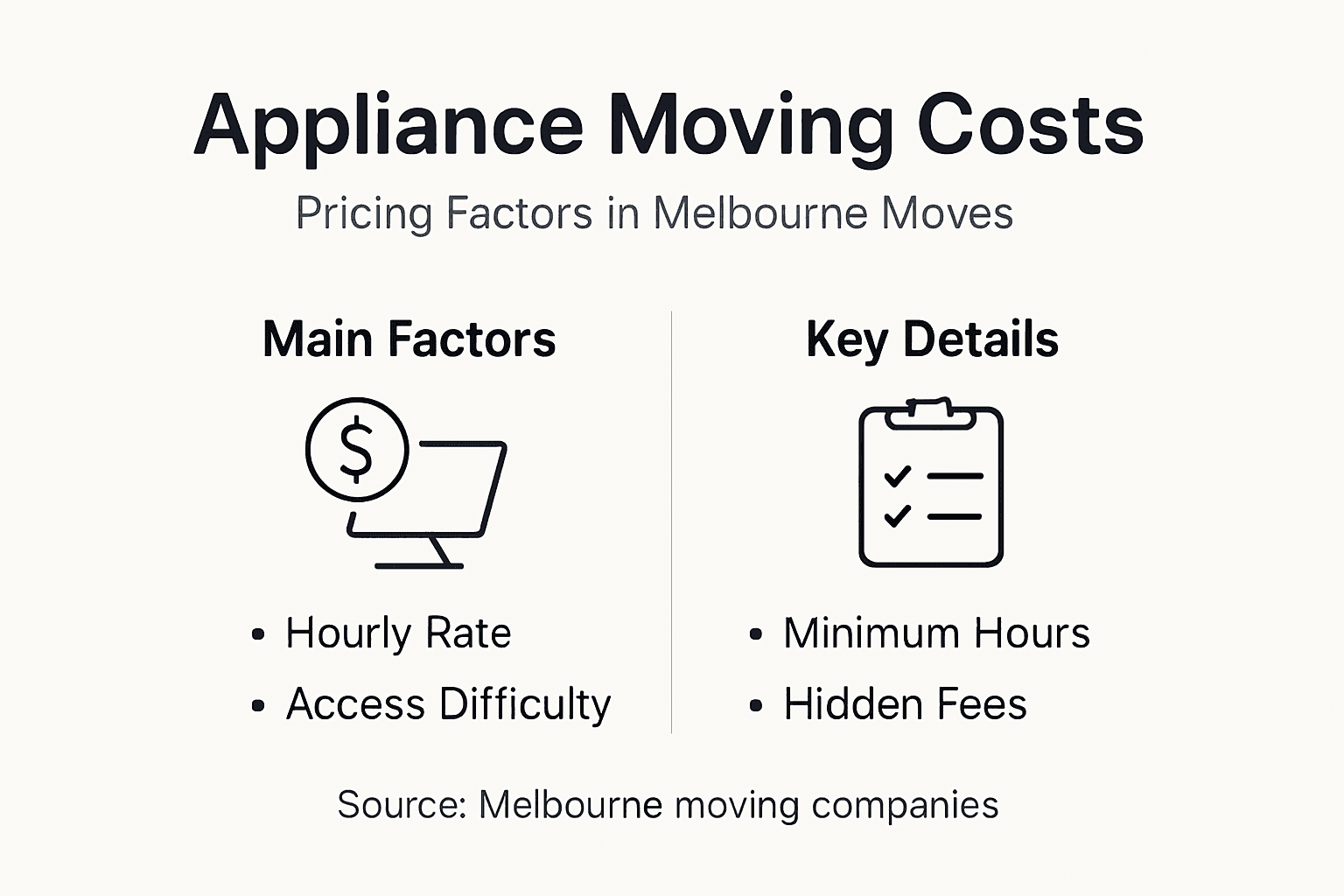
Understanding Melbourne mover pricing helps you budget accurately and avoid unexpected fees. Hourly rates range from AUD 130 to 200 depending on move complexity and access challenges, with several factors driving final costs.
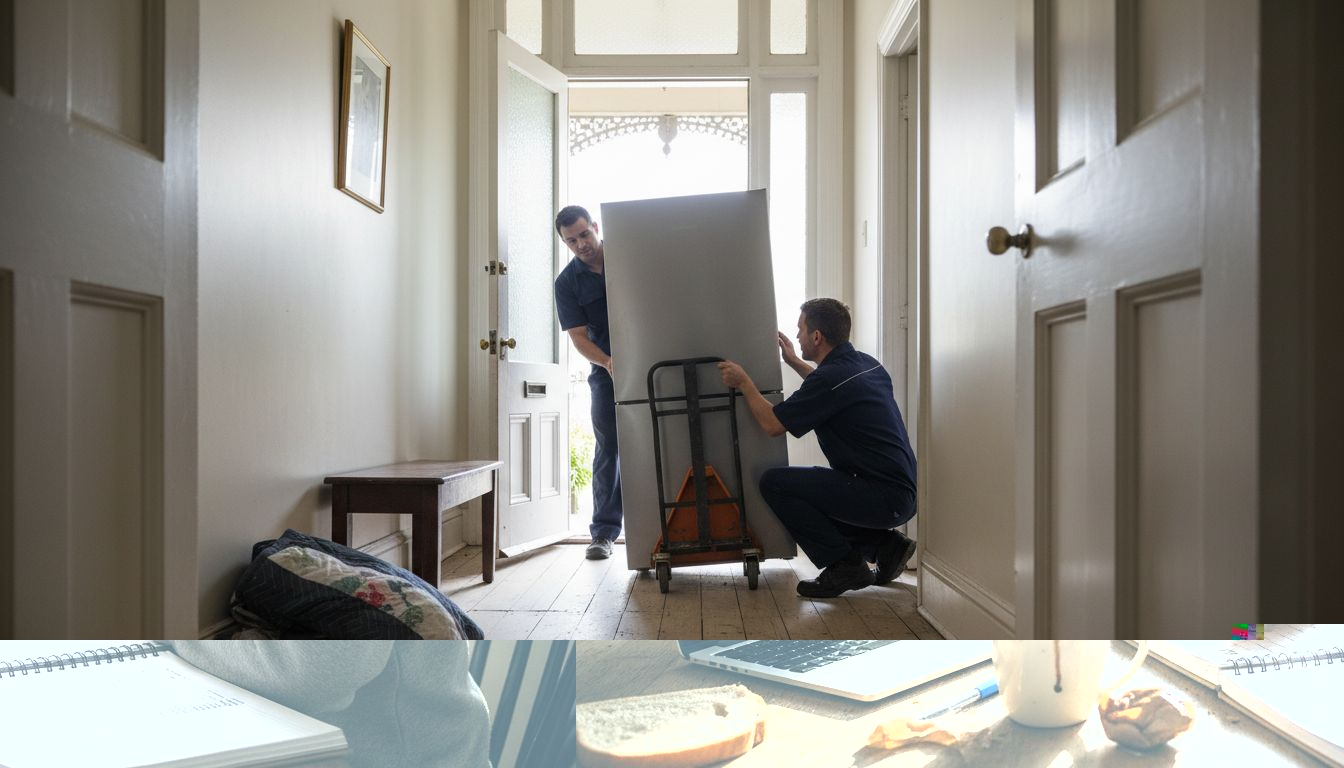
Access difficulty significantly impacts pricing. Stairs add 15-30% to base rates because they require additional time and physical effort. Narrow doorways that necessitate door removal or appliance tipping increase costs by 10-20%. Limited parking requiring long carries from truck to property can add 20-50% more time and expense.
| Access Factor | Cost Impact | Typical Addition |
|---|---|---|
| Ground floor, easy access | Base rate | $130-150/hour |
| One flight of stairs | +15-30% | $150-180/hour |
| Multiple floors, tight spaces | +30-50% | $180-200/hour |
| Door removal required | +$50-100 | Flat fee |
Additional services create separate charges:
Franchise movers versus independent operators show substantial price differences. National franchise companies charge $180-200 per hour but offer consistent service standards and comprehensive insurance. Independent movers on platforms charge $130-150 hourly but may have variable equipment quality and coverage limits.
Price transparency protects you from hidden fees. Reputable movers provide written quotes detailing hourly rates, minimum charges, travel fees, and potential surcharges. They conduct phone or video assessments to identify access challenges before quoting. This upfront clarity prevents surprise charges on moving day.
Minimum charge periods typically span 2-3 hours regardless of actual time spent. Factor this into cost comparisons when evaluating quotes for quick single-appliance moves versus full kitchen relocations.
Australian Consumer Law establishes baseline protections for moving services. Movers must provide clear written contracts specifying services, fees, timelines, and liability terms. These contracts protect both parties by documenting agreed expectations and preventing disputes over scope or pricing.
Occupational health and safety regulations mandate specific practices:
Insurance coverage forms the financial safety net for appliance moves. Reputable movers offer insurance coverage protecting damages up to AUD 10,000 or more during transport and handling. This coverage compensates you if appliances suffer damage despite proper handling.
Three insurance types apply to moving services. Public liability insurance covers third-party property damage and injuries. Goods in transit insurance protects customer belongings during moves. Professional indemnity insurance covers claims arising from service failures or negligence.
Pro Tip: Request certificates of currency for all insurance policies before booking. These documents prove coverage remains active and valid, protecting you if claims become necessary after damage occurs.
Customers bear responsibility when movers lack adequate insurance. Without coverage, you pay repair or replacement costs from your own pocket if accidents happen. This risk makes insurance verification essential during mover selection.
Licensing requirements vary by service type and location. While general moving doesn’t require specific licenses in Victoria, businesses must hold valid ABN registrations and comply with business registration requirements. Some specialized moves, like hazardous material transport, demand additional certifications.
Compliance protects you through accountability. Licensed, insured movers operating under Australian Consumer Law face legal consequences for negligence or deceptive practices. This regulatory framework gives you recourse if service quality falls short of contractual promises.
Several persistent myths lead homeowners and businesses to make poor mover choices, resulting in damaged appliances and unexpected expenses. Understanding these misconceptions helps you avoid costly mistakes.
The belief that any mover can handle heavy appliances safely ignores the specialized skills required. General furniture movers lack appliance-specific training in securing loose components, protecting delicate mechanisms, and preventing compressor damage. This knowledge gap causes mechanical failures that standard moving insurance may not cover.
“I thought all movers were basically the same until my fridge compressor failed three days after a move. The mover had laid it on its side during transport, which I later learned damages the cooling system. That mistake cost me $800 in repairs.”
Fixed pricing misconceptions create budget surprises:
The “insurance is optional” myth leaves customers vulnerable. Some believe their homeowner’s insurance covers moving damage, but most policies exclude items in professional transit. Others think they can skip mover insurance to save money, only to face full replacement costs when accidents occur.
Price-focused selection ignores critical quality factors. The cheapest quote often comes from movers cutting corners on equipment maintenance, staff training, or insurance coverage. These savings disappear quickly when damaged appliances require expensive repairs or replacement.
DIY moving seems cost-effective until you factor in rental truck costs, equipment purchases, time investment, and injury risks. Professional movers complete in hours what takes untrained individuals all day, with far lower damage rates. The apparent savings evaporate when you account for these hidden costs.
Understanding these misconceptions helps you prioritize safety, compliance, and service quality over price alone. This perspective leads to better mover selection and successful, damage-free appliance relocations.
Selecting the right mover requires systematic evaluation across four critical dimensions: equipment and safety capabilities, pricing transparency, insurance and compliance, and verified reputation. This framework helps you compare options objectively.
| Criteria | Franchise Movers | Independent Movers | What to Verify |
|---|---|---|---|
| Hourly Rate | $180-200 | $130-150 | Written quote with all fees |
| Equipment Quality | Standardized, well-maintained | Variable, inspect before hiring | Appliance dollies, padding, straps |
| Insurance Coverage | Comprehensive, up to $20,000 | Basic to comprehensive, verify details | Certificate of currency |
| Staff Training | Formal programs, consistent | Varies by operator | Safety certifications, experience |
| Scheduling Flexibility | Limited, book ahead | Often more flexible | Availability, cancellation terms |
Independent movers on platforms like Airtasker can be up to 50% cheaper but may have variable insurance and reputation, requiring more thorough vetting. This price difference reflects varied overhead costs and service standardization rather than necessarily indicating lower quality.
Equipment assessment questions reveal mover preparedness:
Pricing transparency indicators include detailed written quotes, clear explanation of potential surcharges, and willingness to conduct pre-move assessments. Getting detailed mover quotes through site inspections rather than phone estimates reduces surprise fees.
Insurance verification requires reviewing certificates of currency and understanding coverage limits. Ask what specific damages the policy covers and what exclusions apply. Clarify whether coverage includes mechanical damage from improper handling or only external cosmetic damage.
Reputation assessment goes beyond star ratings. Read detailed reviews mentioning specific appliance types and access challenges similar to yours. Contact references who completed comparable moves. Check complaint records with Consumer Affairs Victoria.
Realistic trade-offs exist between cost and service. Lower rates may mean smaller teams requiring more time, older equipment needing careful monitoring, or basic insurance requiring supplemental coverage. Higher rates typically provide faster service, newer equipment, and comprehensive protection. Your specific situation determines which trade-offs make sense.
Proper preparation steps such as disconnecting, draining, and securing parts reduce damage risk and facilitate smooth transport, making your move faster and safer. Follow these steps systematically for optimal results.
Disconnect utilities 24 hours before moving day. Unplug electrical cords and turn off water supply valves completely. For gas appliances like ovens, hire licensed technicians to safely disconnect lines. This advance timing allows appliances to reach room temperature and prevents electrical or water hazards during transport.
Drain all fluids thoroughly from washers, fridges, and dishwashers. Remove water from washing machine drums by running drain cycles. Defrost fridges and freezers at least 24 hours ahead, removing all ice buildup. Empty and dry dishwasher sumps. Residual water causes leaks during transport and adds unnecessary weight.
Secure loose components using tape or original packaging materials. Remove shelves, drawers, and racks from fridges and ovens, packing them separately with protective wrap. Tape appliance doors shut using painter’s tape that won’t leave residue. Secure power cords to appliance backs preventing tripping hazards and cord damage.
Schedule moves during weekday mid-morning or early afternoon slots when possible. Off-peak timing provides better availability, potentially lower rates, and easier parking access. Avoid Friday afternoons and weekends when moving demand peaks and prices rise 20-30%.
Document appliance condition with photos before movers arrive. Photograph all sides, focusing on existing scratches, dents, or mechanical issues. These records prove pre-existing damage if insurance claims become necessary later.
Pro Tip: Clean appliances thoroughly before moving. Movers handle clean items more carefully, and you’ll avoid transporting food residue or odors into your new space. This small step shows professionalism and often results in more attentive handling.
Communicate access challenges clearly when booking. Measure doorways, stairwell widths, and elevator dimensions, sharing these specifications with movers. Mention parking restrictions, loading dock hours, or building access codes requiring advance coordination. This information allows movers to bring appropriate equipment and allocate sufficient time.
For detailed guidance on preparing complex equipment, review tips for preparing appliances specific to Melbourne properties and access conditions.
Successful heavy appliance moving in Melbourne requires balancing multiple factors: specialized equipment, transparent pricing, comprehensive insurance, proven reputation, and thorough preparation. Each element contributes to safe, efficient relocations that protect your valuable appliances.
Apply this checklist when evaluating potential movers:
Prioritize safety and transparency over lowest price alone. The cheapest option often lacks proper insurance, uses inadequate equipment, or employs untrained staff. These deficiencies create risks that far outweigh initial savings when damage occurs or injuries happen.
Schedule moves well in advance, especially during peak periods like month-ends and summer months when demand surges. Early booking secures better rates and ensures availability of top-rated movers. It also provides time for thorough appliance preparation following the steps outlined earlier.
Prepare appliances systematically using the five-step process: disconnect utilities, drain fluids, secure loose parts, schedule strategically, and document condition. These actions reduce damage risk, speed up moving day operations, and provide evidence if insurance claims become necessary.
Take control of your heavy appliance move by applying these insights immediately. Compare movers using the framework provided, prepare your appliances properly, and select professionals who demonstrate equipment quality, pricing honesty, insurance adequacy, and proven customer satisfaction. This approach ensures your valuable appliances arrive safely at their destination without costly surprises or damages.
When you need reliable heavy appliance relocation in Melbourne, professional expertise makes all the difference. Onyx Removals specializes in safe transport of fridges, washing machines, ovens, and commercial appliances using industry-leading techniques.
Our team uses specialized moving equipment in Melbourne including heavy-duty appliance dollies, professional-grade protective padding, and secure strapping systems. We provide transparent pricing tailored to your specific property access challenges, with no hidden fees or surprise charges on moving day.
Full insurance coverage protects your appliances during every stage of transport. Our staff receives ongoing safety training in proper lifting mechanics and appliance-specific handling protocols. We understand Melbourne’s unique property layouts and adapt our approach to navigate tight staircases, narrow doorways, and parking restrictions efficiently.
Flexible scheduling accommodates your timeline whether you’re a homeowner upgrading your kitchen or a business relocating commercial equipment. Our residential heavy appliance moving services combine efficiency with meticulous care, ensuring your valuable appliances arrive in perfect condition.
Contact Onyx Removals today for a detailed quote and experience the difference professional heavy appliance moving makes.
Professional specialized heavy appliance equipment includes appliance dollies rated for 300+ kg loads, reinforced straps for secure vertical transport, and heavy-duty protective padding. These tools prevent appliance damage and reduce injury risk during complex moves through tight spaces.
Stairs, narrow doorways, and limited parking increase moving time and property access impact on moving costs by 15-50% above base rates. Disclosing these challenges during initial quotes allows movers to allocate appropriate time and equipment, preventing surprise fees on moving day.
Insurance coverage protects customers from damages up to AUD 10,000 or more during moves, covering repair or replacement costs if accidents occur despite proper handling. Verify current insurance coverage for appliance movers through certificates of currency before booking to ensure adequate protection for your valuable appliances.
Follow these appliance moving preparation tips: disconnect power and water 24 hours ahead, drain all fluids from washers and fridges, secure loose shelves and doors with tape, and photograph appliance condition. Schedule moves during weekday off-peak hours when possible for better rates and parking access.

No Related Post


