


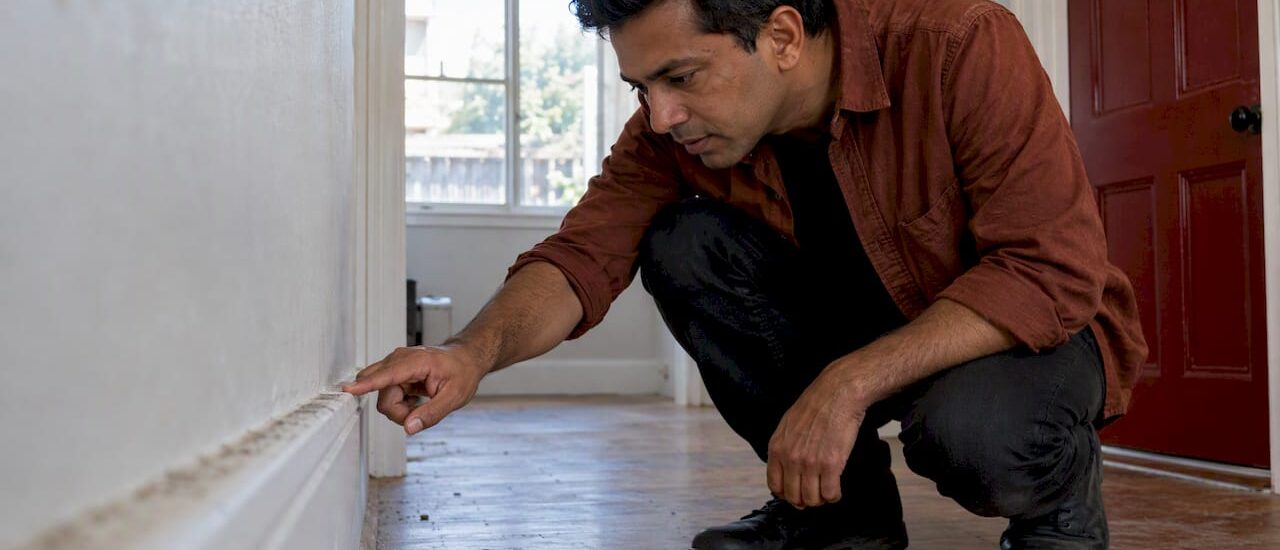
Skirting boards are inspected because they show three things at once: how clean a home was left, whether moisture is getting in, and whether termites are active. They sit low, collect dust, touch the floor and hide the gap between wall and slab. That makes them one of the quickest places for an agent, inspector or pest technician to read the real condition of a property.
If you are a tenant, the reason is mostly money: a dusty skirting board can lead to a bond deduction. If you own the home, the reason is usually damage you cannot see. This guide covers both, with the Australian rules behind them and a practical way to prepare.
An inspection is a search for evidence in a limited time. Walls are easy to judge and floors are obvious. Skirting boards sit in between and show things the other surfaces hide:
Each of these matters to a different person, so the rest of this article takes them in turn.
In Victoria, the standard comparison is between the property now and the condition report completed when you moved in. Consumer Affairs Victoria explains that a condition report is a record of the property’s condition at the start of a rental agreement, and it is the document an exit inspection is measured against. Skirting boards are a line item on most of these reports, often grouped with walls, doors and architraves.
The rule is similar in other states. Queensland’s Residential Tenancies Authority tells tenants they must leave the premises in the same condition as at the start of the tenancy, less fair wear and tear, and to check the entry condition report, including its photos, to see what the property looked like.
The line is the same everywhere: dirt is your responsibility, ageing is not.
| Skirting board condition | Usually treated as |
|---|---|
| Dust, cobwebs, pet hair along the top edge | Cleaning, the tenant’s responsibility |
| Scuffs and shoe marks that wipe off | Cleaning |
| Grease or sticky residue near the kitchen | Cleaning |
| Faded or slightly worn paint from normal use | Fair wear and tear |
| Chipped paint from furniture or vacuum damage | Possible damage claim |
| Swollen or lifting MDF from a leak | Depends on cause, see the moisture section |
If the entry report noted clean boards, a dusty board at exit gives the rental provider a reasonable basis to claim cleaning costs. If the report noted existing marks, you are not responsible for them. This is why photos at move-in matter. Our apartment move-in and move-out checklist for Melbourne tenants shows how to document the state of each room on day one.
When a tenancy ends in Victoria, both sides lodge a bond claim with the Residential Tenancies Bond Authority. Consumer Affairs Victoria lists the reasons a rental provider might claim bond, including damage and leaving the property unclean. The bond is only paid out when everyone on it agrees, or when VCAT orders it.
In practice, one dusty board rarely triggers a dispute on its own. The problem is the pattern. Agents work down a list, and when skirting boards, door tracks, window sills and the tops of fixtures are all missed, the cleaning claim grows. Skirting boards are an easy item to lose points on because they are low, repetitive and tedious. Most tenants clean at eye level and run out of energy near the floor.
Our guide to getting your bond back with apartment move-out cleaning walks through the full room-by-room list.
If you are buying a home or ordering a pest inspection, the skirting boards matter for a different reason. The Victorian Building Authority notes that termites cause more damage to Australian houses than fire, floods and storms combined, and that the damage often stays hidden because termites eat timber from the inside and leave only a very thin outer layer.
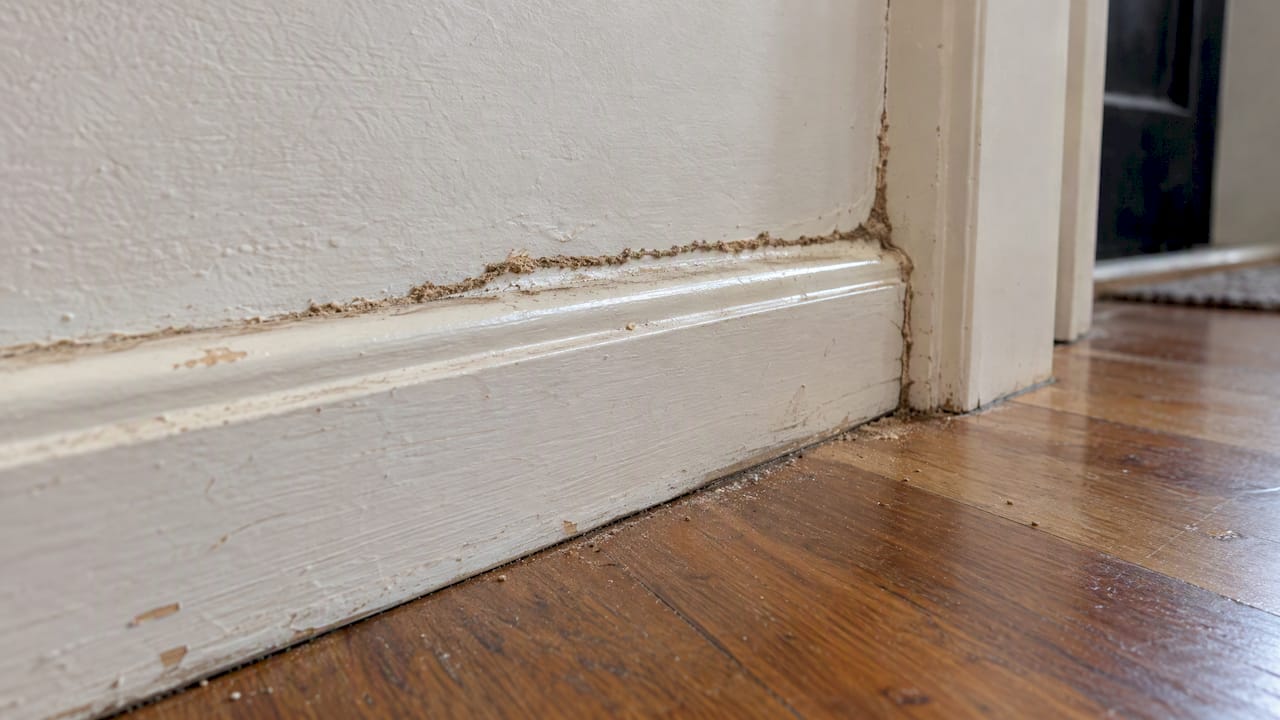
That hidden feeding is exactly why boards are checked. A termite-damaged board can look intact, yet sound hollow when tapped or look slightly rippled. Inspectors also look for mud-like tubes and fine dust residues along the base of walls, which are signs of activity.
There is also a regulatory angle worth knowing. The Building Code of Australia focuses on protecting structural elements such as framing. Industry practice, including the AEPMA Code of Practice, goes further and treats non-structural elements like skirting boards as indicators of a breach in the overall termite management system, according to an industry submission on the ACCC public register. A board is not the structure, but it is often where the problem announces itself.
Pest controllers also care about cleanliness. A Victorian Department of Health technical note on silverfish says a thorough inspection is a prerequisite to treatment, and professional guidance treats clean surfaces as part of effective control because dust and debris can stop residual surface sprays working properly. If a technician is booked, vacuum and wipe the boards beforehand, and ask the company what else it wants cleared.
Floor-level timber is the first thing to suffer when moisture is present. For that reason, inspectors press, sniff and look closely at boards in bathrooms, laundries, and along outside walls.
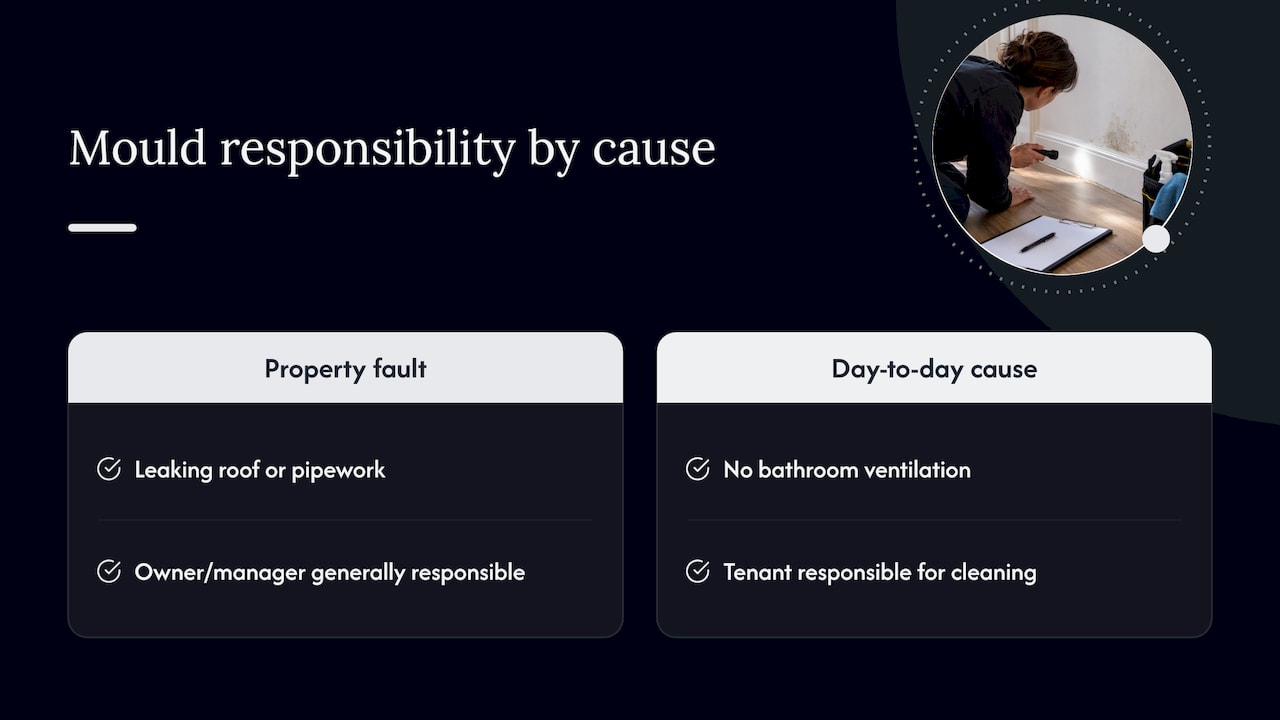
Responsibility depends on the cause. Queensland’s RTA explains that mould caused by a problem with the property, such as a leaking roof or leaking pipework, is generally the property manager’s or owner’s responsibility. Mould caused by day-to-day living, for example never ventilating a bathroom, falls to the tenant to clean.
This is why a mouldy board on an external wall in a bedroom and a mouldy board beside a shower are treated differently. The first suggests a building fault. The second suggests moisture management.
A widely used rule of thumb separates cosmetic mould from damage: if the timber is firm when tested with a knife, the mould is on the surface and the board needs cleaning, not replacing. The Queensland Building and Construction Commission’s guidance is consistent with this, and a board should be replaced only if the timber is soft, spongy or easily penetrated by a tool. The principle for assessing mould is also set out in the Western Australian Department of Health guidelines on mould and dampness, which explain that identifying the extent of growth and its contributing factors helps determine the level of remediation.
Those guidelines also treat persistent dampness and musty odours as early warning signs. If you notice a smell near a board that does not go away after cleaning, do not keep scrubbing. Ask a licensed plumber or a building inspector to find the source. Mould that returns usually has a water source behind it.
The aim is to remove what is on the surface without damaging the board. Conservation guidance on surface cleaning warns that abrasive techniques can damage the finish and leave micro-cracks that collect dust and moisture more easily later. Scrubbing harder is not better.
If boards are yellowed, that is usually a different issue to dirt: oxidised paint, grease drift or smoke residue. Cleaning may improve it but not fully fix it, and heavy discolouration is better judged by comparing it with the entry report.
The work is dull but quick when you are organised. Cleaning in a room that has already been emptied is far easier than cleaning around furniture, which is a good reason to leave this task for after the removalists have gone. Our guide to apartment moving cleaning in Melbourne covers how to sequence the move and the clean.
A proper end-of-lease clean works from the top of the room down to the floor, and skirting boards come late, after walls and light switches have been wiped, because dust and drips fall downwards. A good cleaner will also dry-dust first, then wipe, rather than just running a wet cloth around the room.
Cleaning standards for move-outs vary between countries, but the logic of the inspection is much the same. Cleaners elsewhere describe move-out cleaning as preparing a home so it meets the landlord’s expectations, as in this Swedish page on move-out cleaning standards, where quality control after the clean is part of the service. The same idea applies here: check your own work against the list before the agent does.
When you book a cleaner in Melbourne, ask these questions:
Our page on end of lease cleaning in Melbourne explains how we approach the clean so you can compare it with any provider’s checklist.
We move households and clean empty homes in Melbourne, so we see the same pattern repeatedly. The room looks fine from the doorway, the benchtops are spotless, and the board along the back wall is grey with dust. Agents know this too, which is why they crouch.
Our view is that skirting boards are the honest part of a clean. You cannot fake them with a quick wipe at eye level, and they show whether someone worked methodically. So we treat them as a standard item on a move-out job, not an extra, and we prefer to do them once the furniture is out, when the whole length of each wall is accessible.
We also like handling the move and the clean together. When one team packs, loads and then cleans the empty rooms, there is no gap in which new scuffs appear. Dragging a box along a freshly wiped board is the most common way a clean gets undone, and a single provider managing the sequence avoids it. Where we notice something that is not cleaning, such as soft timber or a musty smell, we say so rather than scrubbing over it, because that is a question for a plumber or the rental provider, not a mop.
— Dinshaw
Owners and landlords see the other side of this. The goal is to separate cleaning items from maintenance items before an inspection, so nothing gets misattributed.
Our landlord property inspection guide for Melbourne covers how to run a fair inspection that both sides can accept.
If you are leaving a rental in Melbourne, the least stressful approach is to have one team handle the whole handover. We offer residential removals, packing and unpacking, cleaning and bond cleaning, short-term storage, waste disposal and skip bin arrangement. Packing and unpacking is published at $109 per hour on our pricing page. For bond cleaning and moves, we quote to the job, so contact us through our cleaning services page with your property details and inspection date.
Yes. Agents work from the entry condition report, and skirting boards are a standard line item alongside walls, doors and windows. They are also easy to miss when cleaning, so they are a common reason for a follow-up request.
A rental provider can claim for cleaning if the property was not left in the condition recorded at the start, less fair wear and tear. In Victoria, bond is only paid out when everyone on the bond agrees or VCAT orders it, so you can dispute a claim you think is unreasonable. Photos from move-in and move-out are your best evidence.
Termites can eat timber from the inside and leave a thin outer layer, so a damaged board can look normal. Tapping reveals hollow sounds, and inspectors also look for mud-like tubes and fine dust. If a board sounds hollow, book a licensed timber pest inspector rather than guessing.
It depends on the cause. If it comes from day-to-day living, such as poor ventilation, it is generally the tenant’s job to clean. If it comes from a leaking pipe or roof, it is generally the rental provider’s responsibility to fix.
Vacuum first, then wipe with a barely damp microfibre cloth and a little neutral detergent. Avoid abrasive pads and heavy soaking, which can damage the paint and porous timber or MDF.

No Related Post


