


A bond cleaning checklist is a room-by-room list of the jobs you finish before you hand back a rental, so the property is left in the condition the law expects and your bond comes back in full. It works as your plan for the clean and your evidence at the final inspection. It does not set a legal standard of its own. The standard is “reasonably clean”, compared with how the place looked when you moved in.
This guide explains what a checklist is, what the law asks of tenants, and gives a full checklist you can work through. It also covers what to do on the day of the exit inspection and when it makes sense to hire help.
In Australian renting, “bond” is the security deposit you pay at the start of a tenancy. “Bond cleaning” (also called end of lease cleaning, exit cleaning or move-out cleaning) is the clean you do at the end so the rental provider has no cleaning grounds to claim part of it.
A checklist breaks that clean into specific, checkable tasks. Good ones are organised by room and by surface: oven, rangehood and filters in the kitchen, shower screens and grout in the bathroom, tracks and sills on the windows, and so on. The lists that rank for this topic are very similar, because agents and tenants tend to inspect the same things: lights and fixtures, cupboards inside and out, benchtops, sinks, floors and carpets.
There are two kinds of checklist worth knowing about:
Many tenants clean to a hotel-room standard because an agent’s email suggests they have to. The legal position is more modest.
Leo Patterson Ross, from the Tenants’ Union of NSW, told the ABC that the rules differ by state, but they tend to be largely similar on cleaning standards. The common test is that you leave the place reasonably clean, in the same state as when you moved in, allowing for fair wear and tear.
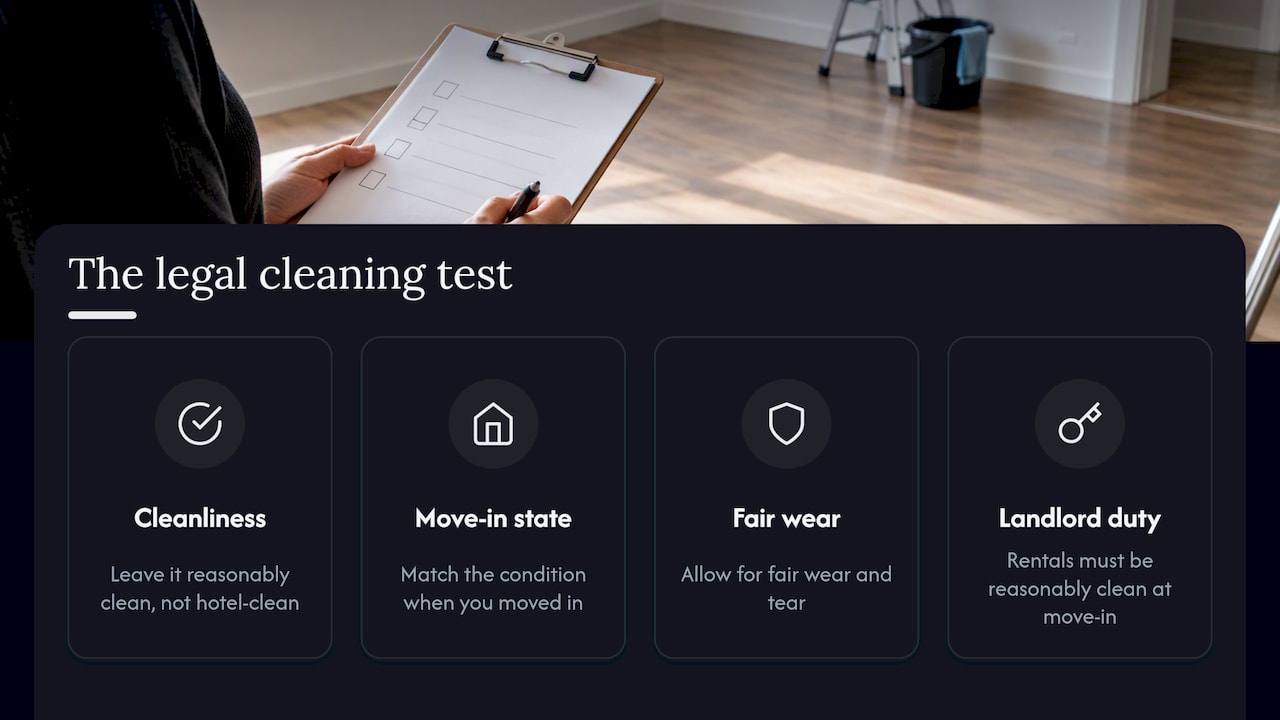
It also runs both ways. Landlords are legally obliged to provide rentals in a reasonably clean state, in all states and territories. That matters because if the place was grubby when you arrived, you are not expected to leave it better than you found it.
A frequent point of confusion is whether you must hire professionals. CHOICE covers this in its guide to rental rights, including the common demand for a carpet steam-cleaning receipt. The rules vary by state, so check the position where you live. In general, a requirement for professional cleaning may not be enforceable unless you specifically agreed to it, for example because of a pet, or the property was professionally cleaned before you moved in.
If your lease contains a special term demanding professional cleaning, read it carefully and ask your state’s tenancy body, such as Consumer Affairs Victoria or a tenants’ union, before deciding. Hiring a cleaner is a convenient choice for many people. It is just not automatically a legal requirement.
If you rent in Melbourne, Consumer Affairs Victoria lists the reasons a rental provider might claim your bond. One of them is that the renter has not left the property reasonably clean. Others include damage and unpaid rent. So cleaning is only one part of getting your bond back, but it is the part most within your control.
The single most useful document in a bond dispute is the condition report you completed when you moved in. In Victoria, it is a record of the property’s condition at the start of the rental agreement. Your rental provider or agent must give you two copies before you occupy the premises, according to LawHub.
If you did not note existing dirt or damage in writing, with dated photos, an agent may assume the property started in perfect condition. That makes disputes harder to win. Before you clean anything:
This step takes 15 minutes and often saves you hours of scrubbing something you were never expected to restore.
Use this as a working template. Adjust it to your property, and tick items off as you go. Our own longer guides cover the same ground in more detail: see our rental property cleaning checklist and move-out cleaning checklist.
The kitchen is where most deductions start, because grease builds up slowly and is easy to miss.
Mould is a common source of arguments. In Queensland, for instance, the Residential Tenancies Authority says a tenant must tell the property manager or owner as soon as possible if mould is present. Responsibility for cleaning and repairing depends on the cause. Report mould during the tenancy rather than at the end. If it is a leak or ventilation issue, it is generally not a cleaning failure on your part.
People waste time cleaning in the wrong sequence. A workable order:
Plan for the clean to take longer than you expect, especially the oven and bathrooms. Many people book the day after their furniture goes out, when the property is empty. That is also when a move and a clean can be coordinated.
From the lists that rank for this topic, the same items come up again and again. Spend your effort here first:
| Area | What gets checked | Common miss |
|---|---|---|
| Oven and rangehood | Inside, racks, filters | Greasy filters |
| Cupboards | Inside shelves and drawers | Crumbs in corners |
| Bathrooms | Grout, screens, drains | Soap scum, hair in drains |
| Windows | Glass, tracks, sills | Dirt and dead insects in tracks |
| Floors and carpets | Edges, under furniture marks | Corners and skirting |
| Light fixtures | Covers, fans | Dust and insects inside covers |
| Walls and doors | Marks, handles | Scuffs near switches |
The final inspection is where a checklist pays for itself. Consumer Affairs Victoria says the rental provider must give you a reasonable opportunity to be present for the exit condition report. Take it. If an agent points out a small gap, such as a smudged mirror or a dusty ledge, you can often fix it on the spot rather than face a deduction later.
On the day:
If a claim is made against your bond that you disagree with, your state’s tenancy authority has a dispute process. In Victoria, start with Consumer Affairs Victoria’s bond claims and refunds page.
There is no single right answer. Here is how to think about it.
DIY works well when:
Hiring help makes sense when:
Whichever you choose, run the same checklist. A cleaner is only as good as the brief you give them, and a copy of your condition report helps. For more on how to approach this in apartments, see our apartment move-out cleaning guide and our end of tenancy checklist.
We are a Melbourne removalist, and we see the same pattern every lease end. A tenant has a moving truck booked for a Saturday, a cleaning deadline for the same day, and an agent’s inspection at 4 pm. The cleaning is what gets squeezed.
Our view is that the checklist should be treated as part of the move plan, not an afterthought. Here is how we think about it:
If you want a clean tailored to your property and timeline, that is exactly what our personalised plans are built for.
— Dinshaw
If you are moving around Melbourne and want the clean taken care of, we offer bond cleaning and packing and unpacking as part of our services. Packing and unpacking is listed at $109 per hour. Bond cleaning does not have a published price, so ask us for a quote based on your property. You can also see our cleaning services or read about our end of lease cleaning in Melbourne.
If you are also planning the move itself, look at our services overview for residential moves, waste disposal and storage.
No. There is no legal document called a bond cleaning checklist that you must complete. The legal obligation is to leave the property reasonably clean, compared with its condition at the start of the tenancy. A checklist is a practical tool that helps you meet that standard and prove you did.
Generally not. Professional cleaning is not a universal legal requirement across Australia. It may be required if your lease validly includes it, for example because you kept a pet, so check your agreement and your state’s tenancy authority before deciding.
It depends on the size of the property and its condition. A small apartment can take a long day for one person, while a family home with carpets and a heavily used oven can take longer. Plan extra time for the oven, bathrooms and windows, and book help early if your move date is fixed.
Ask exactly what the issue is, and compare it with your entry condition report and photos. If the issue is small and you are on site, fix it immediately. If you disagree with a bond claim, contact your state’s tenancy body, such as Consumer Affairs Victoria in Victoria.
Yes. Take dated photos of every room, including the oven, bathrooms, windows and floors, once you finish. Keep them with your receipts and condition reports in case of a dispute.

No Related Post


