


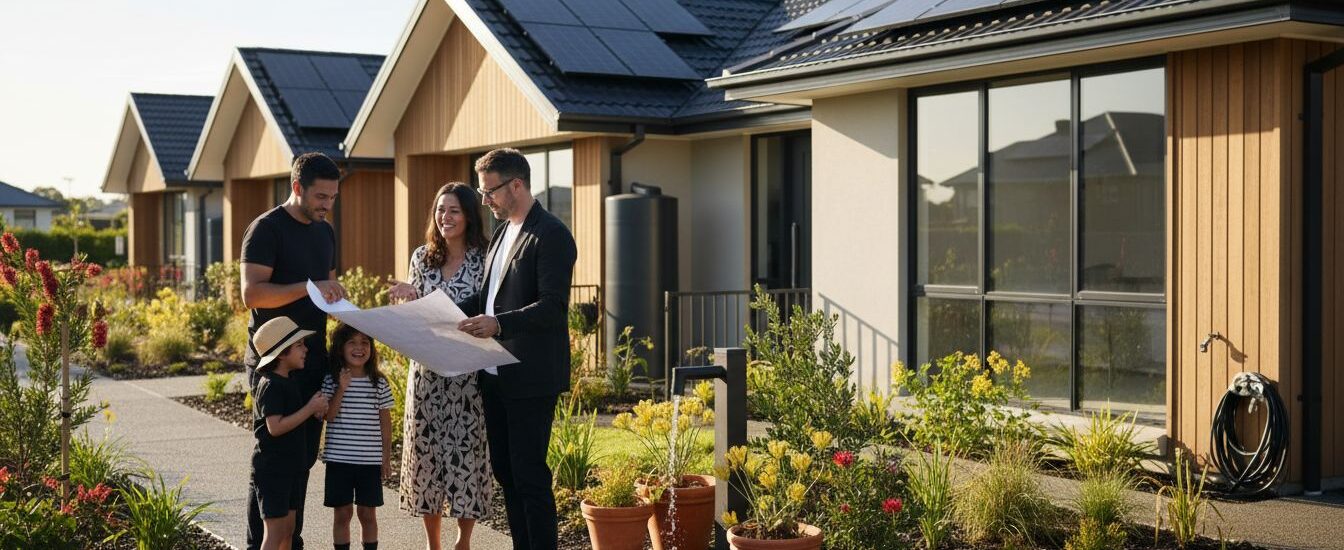
More than 40 percent of australian household energy is used for heating and cooling, making climate-aware design vital for sustainable living. As cities like Melbourne face rising energy costs and extreme weather patterns, building an efficient home becomes more important than ever. This guide highlights practical steps that help you create a comfortable home while saving money and reducing your environmental impact.
| Key Insight | Explanation |
|---|---|
| 1. Assess Local Climate | Understanding Melbourne’s climate helps design homes that respond efficiently to variable temperatures, maximising energy use. |
| 2. Prioritise Sustainable Materials | Use locally sourced and renewable materials to reduce environmental impact and support local economy. |
| 3. Maximise Insulation and Windows | Select high-performance insulation and window designs to minimise energy usage and enhance comfort. |
| 4. Incorporate Solar Power | Integrating solar solutions can significantly lower energy costs and environmental footprint over time. |
| 5. Implement Water Conservation | Install rainwater systems and efficient fixtures to reduce water waste and promote sustainable usage. |
Designing an energy efficient home in Melbourne starts with understanding the city’s unique climate challenges. The key is creating a dwelling that responds intelligently to local weather patterns and minimises energy consumption.
Melbourne experiences variable temperatures throughout the year, which means your home design must be adaptable. According to Planning Victoria, the critical strategy is orienting your building to maximise solar energy use and ensure living spaces capture optimal sunlight.
Key Climate Considerations for Energy Efficiency:
The goal is creating a home that maintains stable indoor temperatures without heavy reliance on artificial heating or cooling. HoneBuilt highlights that intelligent design can dramatically reduce energy system dependence by responding to Melbourne’s specific climatic conditions.
When assessing your local climate, consider consulting regional meteorological data and working with architects who specialise in sustainable design. By strategically positioning living areas, managing solar access, and designing thermal mass appropriately, you can create a home that naturally regulates temperature and minimises energy consumption.
Creating an energy efficient home starts with selecting materials that minimise environmental impact and reduce long term carbon footprint. Your building material choices can significantly influence both the sustainability and performance of your new home.
According to Ecoliv, prioritising locally sourced and renewable building materials is crucial for eco friendly construction. These materials not only support local industries but also dramatically reduce transportation emissions and environmental strain.
Sustainable Material Selection Strategies:
Envy Abode highlights innovative solutions like recycled steel and low carbon concrete as excellent alternatives to traditional building materials. These advanced materials can substantially reduce energy consumption during production and throughout the building lifecycle.
When selecting materials, consider their entire environmental journey. Look beyond initial costs and evaluate factors like durability, thermal performance, and carbon footprint. Engaging with sustainable building consultants or architects specialising in green design can help you make informed decisions that balance environmental responsibility with practical construction needs.
Window design and insulation are critical elements in creating an energy efficient home that maintains comfortable temperatures while minimising energy consumption. Smart thermal management can significantly reduce your heating and cooling expenses.
Hedger Constructions demonstrates how strategic window and insulation choices can transform home performance. Their Passive Homes approach utilises triple glazed windows and continuous insulation to achieve remarkable temperature stability with minimal external energy input.
Key Insulation and Window Performance Strategies:
The Evans House renovation showcases practical application by incorporating Rylock Double Glazed High Performance Low E Windows. These specialised windows dramatically reduce energy consumption while enhancing indoor comfort.
When designing your home, think beyond standard window installations. Look for solutions with superior thermal break technologies that minimise heat transfer. Invest in quality insulation materials that create a consistent thermal envelope around your living spaces. Remember that effective insulation is not just about thickness but also about creating seamless coverage without gaps or thermal bridges.
Solar power represents a transformative approach to creating energy efficient homes in Melbourne. By generating your own renewable electricity, you can significantly reduce both your carbon footprint and ongoing energy expenses.
Emerald Place demonstrates how integrated solar solutions can power entire residential developments. Their approach combines onsite solar generation with centralized air source heat pumps powered exclusively by renewable energy.
Solar Power Implementation Strategies:
Build it highlights the emerging trend of creating net zero homes that generate equivalent energy to their consumption. Modern solar solutions go beyond simple panel installation to create comprehensive energy management systems.
When planning your solar strategy, consider more than just panel placement. Evaluate your household energy consumption patterns, explore battery storage options to maximise self generated power usage, and design a system that can grow with your future energy needs. Professional solar consultants can help you develop a tailored solution that balances initial investment with long term energy savings.
Choosing the right appliances can dramatically transform your home’s energy consumption and reduce long term electricity expenses. Modern appliances are not just about performance they are key players in creating a sustainable living environment.
Arli Homes exemplifies this approach by incorporating all electric cooking solutions like Smeg induction cooktops and wall ovens. These advanced appliances significantly reduce grid dependence and minimise energy bills.
Energy Efficient Appliance Selection Strategies:
SJD Homes emphasises that sustainable home design extends beyond construction materials to include smart appliance choices. Modern technologies now offer remarkable efficiency levels that can substantially reduce your household energy demands.
When shopping for appliances, look beyond the initial purchase price. Calculate the total cost of ownership by examining energy consumption ratings and estimated annual running costs. Investing in high efficiency appliances might seem more expensive upfront but can deliver significant savings over their operational lifetime. Aim to replace older models with new energy efficient alternatives that consume less electricity and support your overall home sustainability goals.
Smart home design goes far beyond aesthetics it is about creating spaces that naturally support energy efficiency and personalised comfort. Intelligent zoning can dramatically reduce your energy consumption while enhancing living quality.
Wolf Architects demonstrates how strategic design can transform home performance. Their approach involves flexible spaces and carefully planned window placement to maximise natural light and ventilation reducing reliance on artificial lighting and mechanical cooling systems.
Strategic Home Zoning Principles:
The Evans House provides an excellent real world example of effective zoning. By creating distinct areas for different family members the renovation achieved both enhanced comfort and improved energy efficiency.
When planning your home layout consider how each space interconnects and responds to environmental conditions. Aim to create zones that can be independently temperature controlled allowing you to heat or cool only the areas currently in use. This approach can lead to significant energy savings by minimising unnecessary environmental conditioning across your entire home.
Water conservation represents a critical component of sustainable home design in Melbourne. Implementing smart water management strategies can significantly reduce your environmental footprint while lowering utility expenses.
Ecoliv demonstrates innovative approaches to water efficiency through comprehensive rainwater harvesting systems that capture and reuse water across multiple household applications. These integrated solutions transform water management from a simple utility into a sophisticated environmental strategy.
Practical Water Conservation Techniques:
Arli Homes provides practical insights by installing high performance water saving fixtures like 5 star basin mixers and 3 star shower heads. These seemingly small interventions can dramatically reduce overall household water consumption.
When planning water conservation strategies consider a holistic approach that goes beyond individual fixtures. Examine your entire water usage ecosystem from collection to distribution and reuse. Integrate technologies that minimise waste capture rainwater for garden irrigation and select plumbing fixtures designed to reduce unnecessary water flow. Remember that effective water management is not just about saving a precious resource it is about creating a sustainable living environment that respects our natural ecosystem.
Below is a comprehensive table summarising the strategies and considerations for designing energy efficient homes in Melbourne, focusing on climate adaptation, sustainable materials, and energy solutions.
| Strategy | Implementation | Expected Results |
|---|---|---|
| Assess Local Climate | Maximise solar access, plan insulation & window strategies, consider wind directions | Stable indoor temperatures, reduced energy use |
| Choose Sustainable Materials | Use locally sourced, low embodied carbon materials, renewable timber | Minimise carbon footprint, support local industries |
| Maximise Insulation & Window Design | Triple glazed windows, continuous insulation, optimise solar gain | Improved thermal comfort, reduced heating/cooling costs |
| Incorporate Solar Power | High efficiency panels, battery storage, assess roof solar potential | Lower carbon footprint, potential net zero energy consumption |
| Select Energy Efficient Appliances | High energy star ratings, all electric options, inverter technology | Reduced electricity bills, lower energy demands |
| Create Smart Zoning & Layouts | Design for thermal buffer zones, optimise airflow, flexible spaces | Enhanced comfort, energy savings from zoned heating/cooling |
| Plan for Water Conservation | Rainwater systems, water efficient fixtures, greywater recycling | Lower utility expenses, reduced water usage |
Building an energy efficient home in Melbourne involves smart choices from climate assessment to sustainable materials and solar power integration. Once your new eco-friendly space is ready to welcome you, the challenge shifts to relocating your belongings safely and efficiently to maintain your home’s fresh start and energy goals. With priorities like minimising environmental impact and protecting high value appliances, partnering with a trusted local team makes all the difference.
Choose Onyx Removals for a personalised moving experience that matches your sustainable lifestyle. Our experienced professionals provide tailored services including careful packing and transport that respects your new home’s design and energy efficient features. Don’t let moving stress disrupt your momentum toward sustainable living. Visit Onyx Removals to discover how our residential removal services can seamlessly support your transition. Start your move now for a smooth relocation combined with energy smart living.
Understanding the local climate is essential for energy efficiency. Evaluate solar access patterns, seasonal temperature changes, and prevailing winds to inform your home design. Aim to create a dwelling that optimally captures sunlight and requires minimal energy for heating and cooling.
Selecting sustainable building materials is crucial for reducing environmental impact. Prioritise locally sourced products, materials with low embodied carbon, and consider using recycled or reclaimed options. Start your material selection process by researching local suppliers that offer eco-friendly choices within a month.
Maximising insulation and window design can lead to significant energy savings. Choose high-performance glazing and ensure continuous wall insulation is included in your plan. Focus on window orientation that enhances solar gain to keep indoor temperatures comfortable throughout the year.
Incorporating solar power can reduce both your energy bills and carbon footprint. Assess your roof’s orientation for optimal solar exposure and consider installing high-efficiency photovoltaic panels. Plan a system that allows for future expansion, which could save you up to 50% on your electricity costs in the long run.
Choosing energy efficient appliances can drastically lower your electricity usage. Look for high energy star ratings and consider all-electric options to reduce grid dependence. Aim to replace older appliances with modern, efficient models to enhance overall home sustainability.
Smart zoning involves designing spaces that optimise energy use and enhance comfort. Create multipurpose living areas that can be independently controlled for temperature. This approach can reduce energy consumption significantly—by as much as 30%—while improving the quality of living in your home.

No Related Post


