



A local move for a three-bedroom house typically runs $1,000 to $2,000, while a studio or one-bedroom move can cost a few hundred dollars. Interstate moves are usually quoted as a fixed price by volume and distance, often $1,500 to $3,500 or more. The one rule that matters: budget the whole moving stack, not just the removalist invoice, or you will run short on moving week.
TL;DR:
- Local moves for a three-bedroom house typically cost between $1,000 and $2,000, with volume and access influencing the final price.
- Interstate moves are usually fixed-price based on cubic volume and travel distance, often exceeding $1,500.
- Quotes often include line items such as labor, fuel levies, access surcharges, and charges for specialist items, which should be confirmed beforehand.
- Proper planning involves detailed inventories, precise access details, and early pricing of all potential extras to prevent unexpected costs.
- Budget secondary expenses like rent deposits, cleaning, utility setup, and storage, which can rival or surpass the removalist’s fee during moving week.
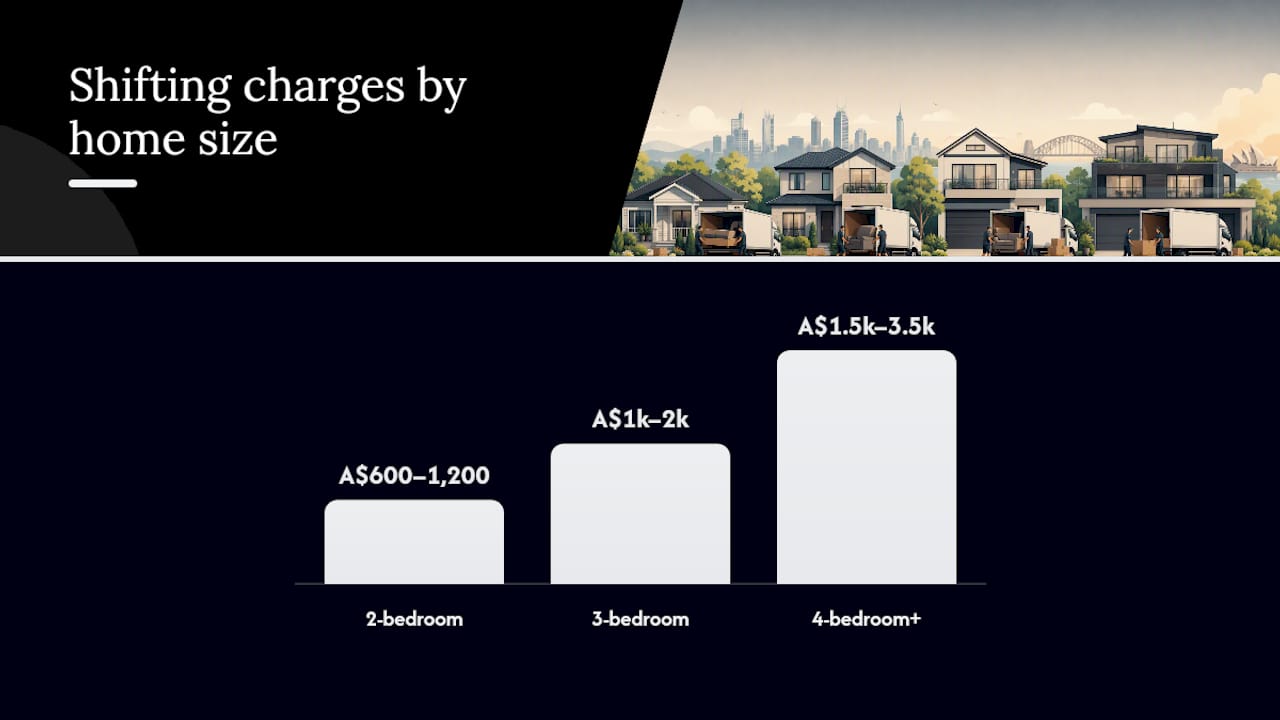
Household shifting charges scale with two things: how much you own and how far it has to travel. For a local move, most Australian removalists either charge hourly or quote a fixed price based on volume, and the gap between a studio move and a four-bedroom house is significant.
Industry price snapshots put local moves roughly like this:
Interstate and long-distance moves work differently. Rather than paying by the hour, you are usually quoted a fixed price based on the cubic metres of goods and the kilometres travelled, since a truck sitting in traffic for eight hours costs the same whether it moves 50km or 500km.
A written quote is rarely just “EX per hour.” Reputable removalists break the job into line items, and knowing what each one covers helps you spot a quote that is missing something.
Two homes with the same bedroom count can attract wildly different quotes, because bedroom count is a poor proxy for volume. A three-bedroom house stuffed with a decade of furniture costs more to move than a sparsely furnished four-bedroom one.
The variables that swing a quote the most:
Pro Tip: Photograph every room, including cupboards, the garage and the balcony, before you ask for quotes. Removalists price what they can see, and hidden volume is the single biggest cause of on-the-day price blowouts.
An accurate quote starts with information, not guesswork. Removalists cannot price a job properly from a phone call alone, so give them what they need up front and insist on the same detail back.
Comparing quotes side by side only works when every quote makes the same assumptions about start times, travel inclusion, and parking access. If one removalist assumes street parking and another assumes a loading dock, the numbers are not comparable no matter how close they look.
The removalist invoice is rarely the biggest number on moving week. Secondary costs commonly equal or exceed the removalist bill, and they tend to land at the worst possible time for cash flow.
Lodging your bond claim early and aligning settlement or lease dates wherever possible takes the sharpest edge off this timing squeeze.
DIY moving looks cheaper until you count your own time, a van hire, and the risk of damaging furniture or a rental property’s walls. Professional removalists earn their fee back fastest on large homes, awkward access, and specialist items like pianos or bulky plants, where inexperienced handling turns into real money lost.
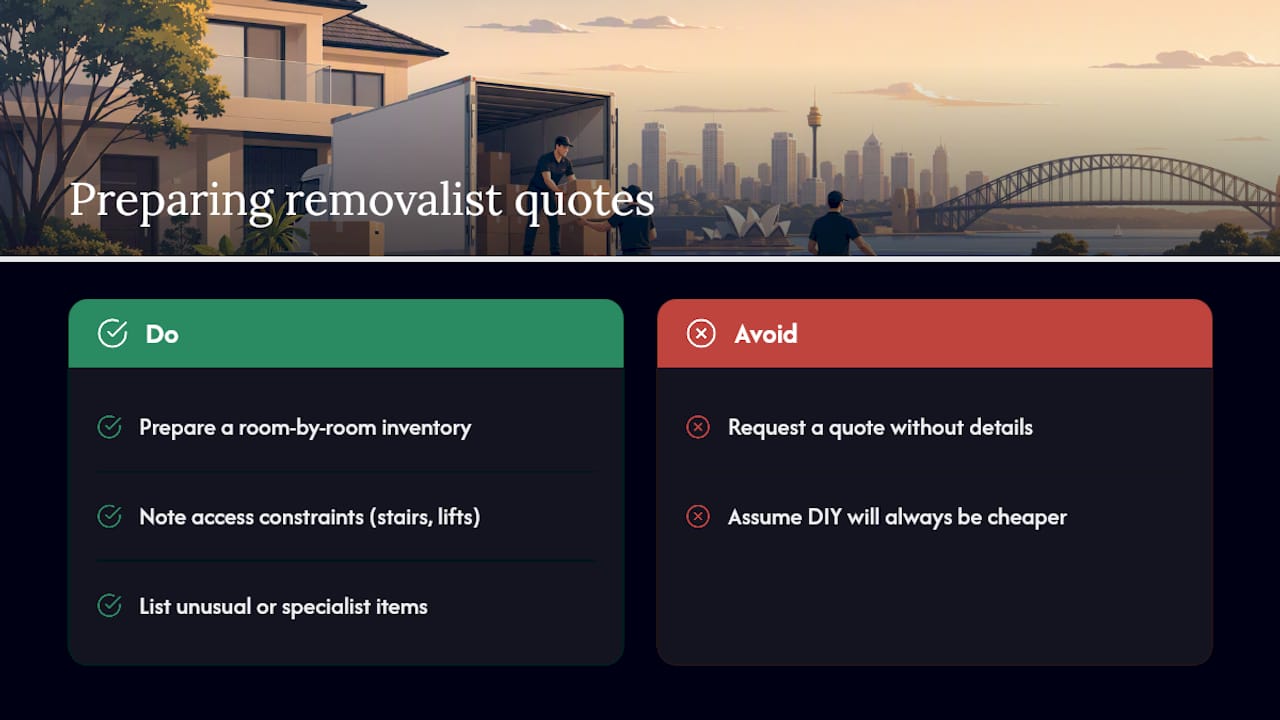
Before requesting a quote, prepare a room-by-room inventory, note access constraints, and list anything unusual you’re moving. A detailed inventory and access information allow removalists to provide a firm, written price rather than a guess that changes on the day.
Some moving companies offer an integrated service handling residential moves, packing and unpacking, bond cleaning, and short-term storage, which can simplify the process by providing one quote and invoice for the entire job.

Before you get in touch, pull together a room-by-room inventory, a few photos of bulky items, and notes on stairs, lifts or parking restrictions at both ends. That’s the same detail a fair quote depends on, and it means Onyx can give you a firm number instead of a rough guess. Packing and unpacking services are often priced hourly, and other services such as moves, cleaning, and storage are typically quoted based on the specifics of each job. Head to the pricing and services page and request an itemised written quote before you lock in a moving date.
For consumer rights around moving contracts and complaints, Consumer is the official reference. MoneySmart covers the secondary cost lines like bonds and utility connections in detail.
A local move typically costs $1,000 to $2,000 for a three-bedroom home, while larger four-bedroom-plus moves often run $1,500 to $3,500 or more depending on volume and access. Interstate relocations are usually quoted as a fixed price based on volume and distance rather than an hourly rate.
Local moves are commonly billed hourly, with two-mover crews charging around $140 to $220 per hour depending on the city. The total cost depends on how many hours the job takes, so a smaller inventory and easy access keep the bill down even at the same hourly rate.
Booking a mid-week, mid-month date outside the December to February peak season is one of the most reliable ways to cut costs, since weekend and peak-season bookings can run 10% to 30% higher. Doing your own packing, decluttering before the move to cut volume, and getting multiple written quotes with identical assumptions also helps you avoid paying for time you don’t need.
Fuel levies of 5% to 20% on interstate moves, long-carry fees, stair and lift surcharges, and specialist-item charges for things like pianos are the most common add-ons. Ask for an itemised written quote from Onyx Removals or any provider you’re comparing, so these charges are visible before moving day rather than added on afterwards.

No Related Post


