



TL;DR:
- Proper planning and early booking with licensed Melbourne movers can save you money, time, and stress during your move.
- Research, compare quotes, and review contracts carefully to ensure reliable service and protect your interests.
Booking movers sounds straightforward until you realise you have no idea whether your quote is fair, which companies are actually licensed, or why the truck turned up two hours late with only one removalist. Many Melbourne residents and businesses find that not knowing how to book movers properly costs them far more than the move itself, in money, time, and sheer frustration. This guide walks you through every stage, from working out what kind of help you need to signing the right documents, so your relocation is something you plan once and execute confidently.
| Point | Details |
|---|---|
| Plan early | Booking movers well in advance secures better pricing and availability. |
| Compare multiple quotes | Request at least three quotes to find trustworthy and cost-effective movers. |
| Choose the right mover | Match mover type and service level to your specific Melbourne moving needs. |
| Review contracts carefully | Check all contract terms and insurance details before signing to protect your move. |
| Time moves wisely | Avoid Melbourne’s peak months and weekends for significant savings and easier booking. |
Before you contact a single removalist, you need clarity on what you actually require. The process to book movers begins with deciding the type of mover needed and the level of help you want. Getting this wrong at the start leads to either overpaying for services you do not need or arriving on moving day without enough hands.
Start by identifying your move category:
Next, be honest about how much help you actually want. A full-service move includes packing, loading, transport, unloading, and even unpacking at the destination. Partial service covers just loading and transport. Knowing which one suits your situation determines your budget and the right company to call. For a deeper look at how these two move types differ operationally, the residential vs commercial moves guide covers the specifics well.
Melbourne’s moving market has its own rhythms. Summer (December to February) is peak season, with demand surging as leases roll over and families relocate before the school year. Planning ahead is not optional during these months; it is essential.
Once you know what you need, research becomes your most valuable tool. Not all removalists are equal, and the difference between a reliable company and a poor one often comes down to how thoroughly you vet them before signing anything.
Follow these steps when comparing movers:
When evaluating quotes, watch for these red flags:
For quote comparison, tools like Connect Market for instant quotes allow you to compare transparent pricing from verified Melbourne removalists side by side, which saves time and reduces the risk of selecting a company based on a single conversation. Our guide on how to compare moving quotes breaks down exactly what to look for in each line item.
Understanding what makes a quote detailed and trustworthy is also worth your time. The detailed moving quotes explained article covers what should always appear in a written estimate, and our getting moving quotes Melbourne resource walks through the full process locally.
Pro Tip: Off-peak months and midweek bookings can attract meaningful discounts. Ask each company directly about their pricing for Tuesday to Thursday moves during autumn or winter, as many will reduce rates to fill their schedule.
You have done the research, compared the quotes, and chosen your removalist. Now comes the part most people rush and later regret: the actual booking process.
Follow these steps to confirm your booking without surprises:
The table below summarises key booking milestones for Melbourne moves:
| Milestone | Peak season (Dec-Feb) | Off-peak (Mar-May, Aug-Oct) |
|---|---|---|
| Begin research | 14 weeks out | 8 weeks out |
| Collect quotes | 12 weeks out | 6 weeks out |
| Confirm booking | 8-10 weeks out | 3-5 weeks out |
| Review bill of lading | 3 days before move | 3 days before move |
| Confirm moving day details | 48 hours before | 48 hours before |
According to Melbourne’s seasonal data, peak season booking needs to happen 8 to 12 weeks in advance, while off-peak moves can often be locked in with 3 to 5 weeks’ notice. Do not treat those as exact deadlines; treat them as the latest acceptable point to act. For guidance on securing the right quote before you commit, secure home removal quotes Melbourne is a practical next read.

Pro Tip: Create a simple checklist document listing every piece of paperwork related to your move: the signed order for service, the bill of lading, insurance confirmation, and payment receipts. Store it somewhere you can access on moving day.
Timing is one of the few controllable variables in a move. Get it right and you can save hundreds of dollars while also having more movers available to choose from.
Melbourne’s mover rates peak in summer from December through February at $200 to $350 per hour, while off-peak months from March to May see rates drop to $130 to $200 per hour. That is a meaningful difference, particularly for larger moves requiring multiple crew members and a full day’s work.
Key timing insights for Melbourne moves:
| Period | Typical hourly rate | Advance booking required |
|---|---|---|
| Dec-Feb (peak) | $200-$350 | 8-12 weeks |
| Mar-May (off-peak) | $130-$200 | 3-5 weeks |
| Jun-Jul (mid-peak) | $160-$250 | 5-7 weeks |
| Aug-Oct (off-peak) | $130-$200 | 3-5 weeks |
Pro Tip: Booking a midweek slot during March, April, or September is the single most cost-effective timing choice you can make for a Melbourne move. If you have flexibility in your schedule, use it here.
For those watching their budget closely, low cost moving companies Melbourne lists what to look for without sacrificing quality.
Contracts make many people’s eyes glaze over. That reaction is exactly what unscrupulous operators count on. Knowing what to look for takes less than ten minutes and protects you from far bigger headaches.
The bill of lading is your binding contract. It details the full scope of your move, agreed pricing, pickup and delivery addresses, and the terms around liability. Every item on this document needs to match your verbal and written agreements exactly.
Key things to review before signing:
Never sign a bill of lading with blank spaces or vague wording, or terms that do not match your understanding.
During loading, ask the crew to walk through an inventory with you. This creates a written record of item condition at pickup, which is critical if you later need to make a claim for damage. Keep copies of every document you sign. Whether physical or digital, these records are your proof of the agreed terms if any dispute arises.
For a deeper comparison of how contract expectations differ between move types, residential vs commercial moving details is worth reading before you sign.
Here is an opinion you will not hear often enough: the best moving day is one that was mostly decided three months earlier.
The conventional wisdom is that you should start looking for movers once you have a confirmed move date. The problem is that by the time most people have a confirmed date, Melbourne’s better removalists are already booked out for their preferred window. So you either pay a premium for late availability or you settle for a company you would not have chosen if you had more time to compare.
Early booking secures better rates, reliable crews, and reduces moving day stress in ways that last-minute planning simply cannot replicate. When you book early, you also give yourself time to spot problems, like a company that takes days to send a written quote, or one whose contract contains terms you do not agree with. Those are signals that are very hard to act on when you are booking four days before your lease ends.
Early planning also changes your relationship to the process. Instead of reacting to logistics, you are managing them. You can take advantage of moving company cost estimate Melbourne tools to understand the real cost of your move before you commit to anything. You can compare seasonal pricing and deliberately choose a cheaper window if your schedule allows.
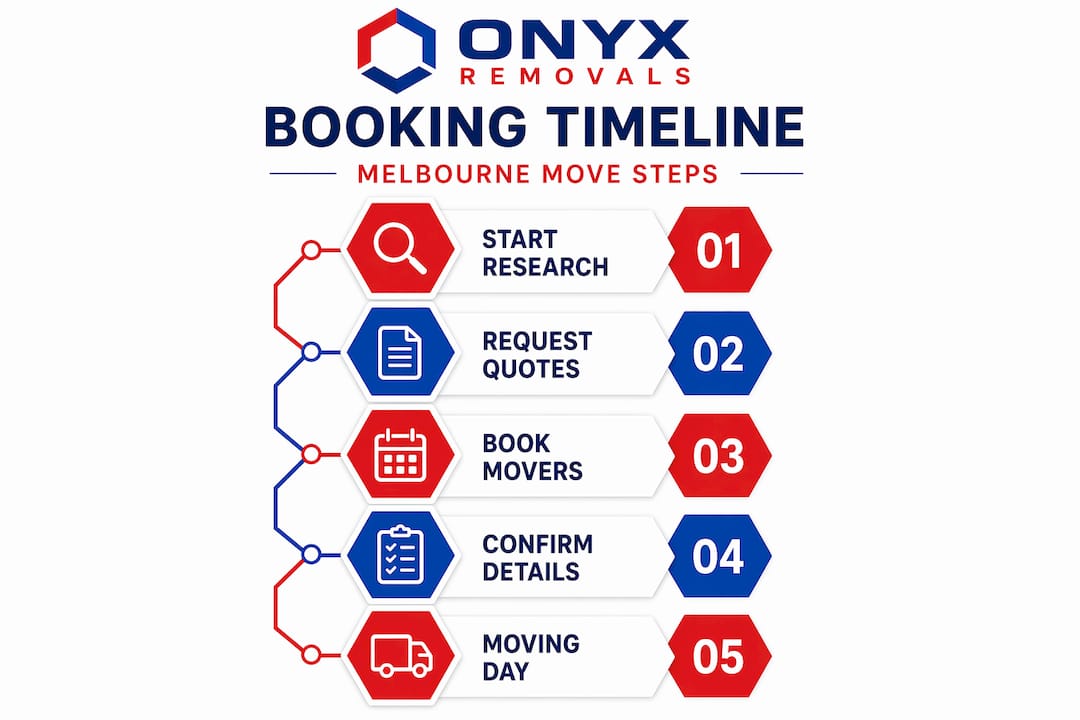
The misconception that waiting for last-minute deals saves money is particularly persistent. In reality, desperate timelines produce desperate decisions. Any savings on a discounted quote are usually absorbed by the cost of corners cut during the actual move.
Pro Tip: Add “book removalist” to your moving calendar the same week you begin your property search or give notice. Treat it as a critical milestone, not an afterthought.
Following a structured booking process puts you in a strong position. Having the right removalist team behind you on moving day takes the remaining pressure off entirely.
Onyx Removals provides licensed, insured, and experienced movers for residential removals and commercial moves across Melbourne, with transparent quotes and flexible service options that include packing, unpacking, and specialty item transport. Whether you are moving a two-bedroom apartment or relocating an entire office, the team is equipped to handle it with care and precision. Secure your moving quote today and get honest advice on timing, cost, and what to expect on moving day. Booking early with Onyx during Melbourne’s peak periods means you secure availability before the calendar fills.
Book at least 8 to 12 weeks ahead during Melbourne’s peak season from December to February, and 3 to 5 weeks ahead during off-peak periods for the best availability and pricing.
Local mover rates typically range from $140 to $220 per hour, rising to $200 to $350 per hour during peak summer months and December to February.
Yes. Platforms like Connect Market provide verified Melbourne removalists with transparent pricing, making it straightforward and safe to compare options and book with confidence.
Check your bill of lading carefully for correct move details, insurance coverage, and agreed pricing, and never sign if any fields are blank or the wording does not match your understanding.

No Related Post


