



Organising a warehouse can make or break any business that relies on fast stock movement and reliable inventory control. It might sound simple, just stack things where they fit and move on. But only a handful of places get it right, and clever zoning can improve productivity by up to 30%. Most people focus on shelves and boxes, but it’s the actual layout and data-driven approach that decides whether your whole operation runs smoothly or grinds to a halt.
| Takeaway | Explanation |
|---|---|
| Develop a strategic layout plan. | A well-designed layout optimizes space and improves workflow by categorising items based on their usage and size. |
| Implement advanced planning techniques. | Utilize AI and data-driven insights to create efficient warehouse designs that adapt to your operational needs. |
| Create well-defined storage zones. | Clearly marked zones enhance inventory management and minimize unnecessary movement, contributing to overall efficiency. |
| Prioritize safety access and protocols. | Establish clear emergency routes and ensure ongoing safety training to protect workers and maintain smooth operations. |
| Tailor storage solutions for special items. | Use specialized techniques for sensitive or high-value inventory to maintain product integrity and enhance inventory control. |
Successful warehouse organisation requires a strategic approach that goes beyond simple storage solutions. A well-planned warehouse can dramatically improve operational efficiency, reduce unnecessary movement, and optimize overall productivity.
The foundation of effective warehouse organisation starts with a meticulously designed layout. Research from NetSuite highlights the critical importance of implementing a warehouse management system (WMS) that provides real-time visibility and precise control over inventory placement. This approach ensures that every square metre of your warehouse is used strategically.
Key considerations for layout development include understanding product flow, creating logical storage zones, and minimising unnecessary movement. Think of your warehouse as a living ecosystem where each item has an optimal location that supports quick retrieval and efficient processing. This means categorising items based on frequency of use, weight, size, and compatibility.
Advanced warehouse organisation goes beyond traditional approaches. An innovative research framework demonstrates how artificial intelligence can generate optimal warehouse layouts using constrained beam search techniques. These methods consider complex factors such as item accessibility, minimum clearance requirements, and aisle connectivity.
The most effective strategies incorporate multiple planning dimensions:
Implementing these techniques requires a holistic view of your warehouse operations. It’s not just about where items are stored, but how they move through the space, how quickly they can be retrieved, and how the layout supports overall business objectives.
Modern warehouse organisation is increasingly driven by data and technology. Implementing a robust warehouse management system provides unprecedented insights into inventory movement, storage efficiency, and potential bottlenecks. These systems can track everything from item locations to picking routes, allowing for continuous improvement of your warehouse layout.
The goal is to create a dynamic, responsive warehouse environment that can quickly adapt to changing business requirements. This means regular analysis of your layout, willingness to make incremental improvements, and a commitment to ongoing optimization.
Remember, warehouse organisation is not a one-time task but an ongoing process of refinement and adaptation. By combining strategic planning, advanced techniques, and technology-driven insights, you can transform your warehouse into a highly efficient operational hub that supports your business growth.
Creating a well-structured warehouse with strategically defined zones is crucial for maximizing operational efficiency and productivity. Proper zoning helps streamline inventory management, reduce worker movement, and optimize overall warehouse performance.
Logistics operational guidelines recommend allocating approximately 70% of warehouse floor space for storage and 30% for movement and work areas. This critical balance ensures not just storage capacity, but also provides essential space for operational flexibility and safety.
Zone design goes beyond simple spatial division. It involves carefully mapping areas that support smooth workflow and minimize unnecessary movement. Think of warehouse zoning as creating a strategic blueprint where each area serves a specific purpose and contributes to overall operational efficiency.
ERP Information research highlights several essential zones that form the backbone of effective warehouse organization:
Each zone must be clearly marked, easily accessible, and designed to support smooth transitions between different warehouse functions. The goal is to create a logical flow that reduces handling time and potential errors.
To help visualise the core zones every efficient warehouse should have, here is a summary table describing their function and purpose:
| Zone | Purpose | Key Features |
|---|---|---|
| Storage Zone | Store items categorised by frequency, weight, etc. | Organised by usage, compatible with various products |
| Receiving Zone | Handle incoming goods and initial inspections | Quick unloading, inspection, initial processing |
| Picking Zone | Facilitate efficient order fulfilment | Strategic location, minimizes worker travel time |
| Dispatch Zone | Prepare and load outgoing shipments | Ready access to loading docks, efficient dispatching |
| Maintenance Zone | Service warehouse equipment and technical operations | Area for repairs, machinery upkeep and storage |
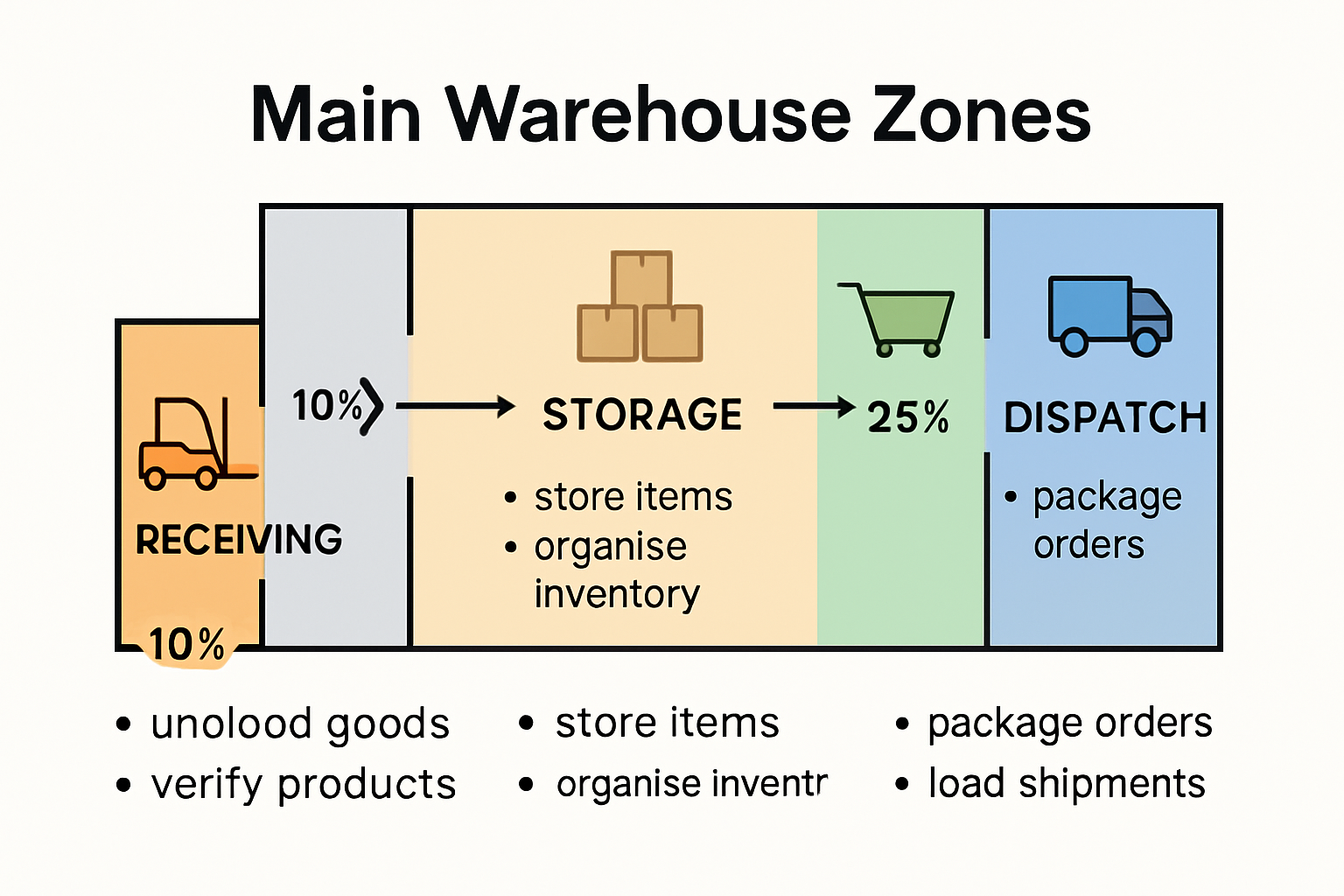
NetSuite recommends a comprehensive approach to zonal layout that involves:
Vertical storage strategies can dramatically increase storage capacity without expanding the warehouse footprint. High-turnover items should be placed in easily accessible locations, while slower-moving inventory can be stored in higher or more remote areas.
Effective zoning is not a static process. Regular review and adjustment are necessary to adapt to changing inventory patterns, business growth, and operational requirements. Implement a system of continuous improvement where zones are periodically reassessed and optimized.
By thoughtfully designing and maintaining well-defined warehouse zones, businesses can significantly enhance operational efficiency, reduce costs, and create a more productive working environment. Remember, the ultimate goal of zoning is to create a seamless, intuitive space that supports quick, accurate, and safe warehouse operations.
Ensuring safe and easy access within a warehouse is fundamental to maintaining an efficient and secure working environment. Proper access management protects workers, prevents accidents, and supports smooth operational workflow.
OSHA guidelines mandate that warehouses maintain unobstructed and well-lit exit routes to guarantee safe emergency evacuations. This means creating clear pathways that are at least 28 inches wide, free from stored materials, and directly leading to external exits.
Critical considerations for emergency access include:
These practices are not just regulatory requirements but essential lifelines during potential crisis situations. Every worker should be able to navigate to safety quickly and without confusion.
Warehouse safety experts emphasize that comprehensive safety training forms the backbone of maintaining safe access. This involves more than just initial orientation training but ongoing education about potential hazards, proper equipment usage, and emergency response procedures.
Key training components should include:
By creating a culture of safety awareness, warehouses can significantly reduce the risk of workplace incidents and ensure smoother, more reliable operations.
Beyond training, the physical design of the warehouse plays a crucial role in ensuring safe and easy access. This means thoughtful layout planning that considers worker movement, equipment navigation, and potential interaction points.
Strategic design elements include:
Accessibility is not just about movement but about creating an environment where workers can perform their tasks efficiently and without unnecessary physical strain.
Implementing these best practices requires a holistic approach that combines comprehensive training, strategic infrastructure design, and a commitment to ongoing safety improvement. By prioritizing safe and easy access, warehouses can protect their most valuable asset their workers while maintaining high levels of operational efficiency.
Not all warehouse items are created equal. Some products require specialized storage conditions, handling protocols, and inventory management strategies that go beyond standard warehousing practices. Understanding and implementing tailored solutions for unique items is crucial for maintaining product integrity and operational efficiency.
Inventory management experts recommend employing specific inventory control techniques to manage different types of special items. These techniques include multiple tracking methods such as:
Each method serves a unique purpose in managing inventory flow and ensuring product quality. The choice depends on the specific characteristics of the items being stored, their shelf life, and regulatory requirements.
Here’s a comparison of specialised inventory control techniques as outlined in the article, showing their best use cases and applicable item types:
| Technique | Best For | Typical Items/Products |
|---|---|---|
| FIFO | Perishable stock, expiring goods | Food, medical supplies |
| LIFO | Non-perishable, consistent quality | Hardware, durable goods |
| FEFO | Sensitive to expiry dates | Pharmaceuticals, some chemicals |
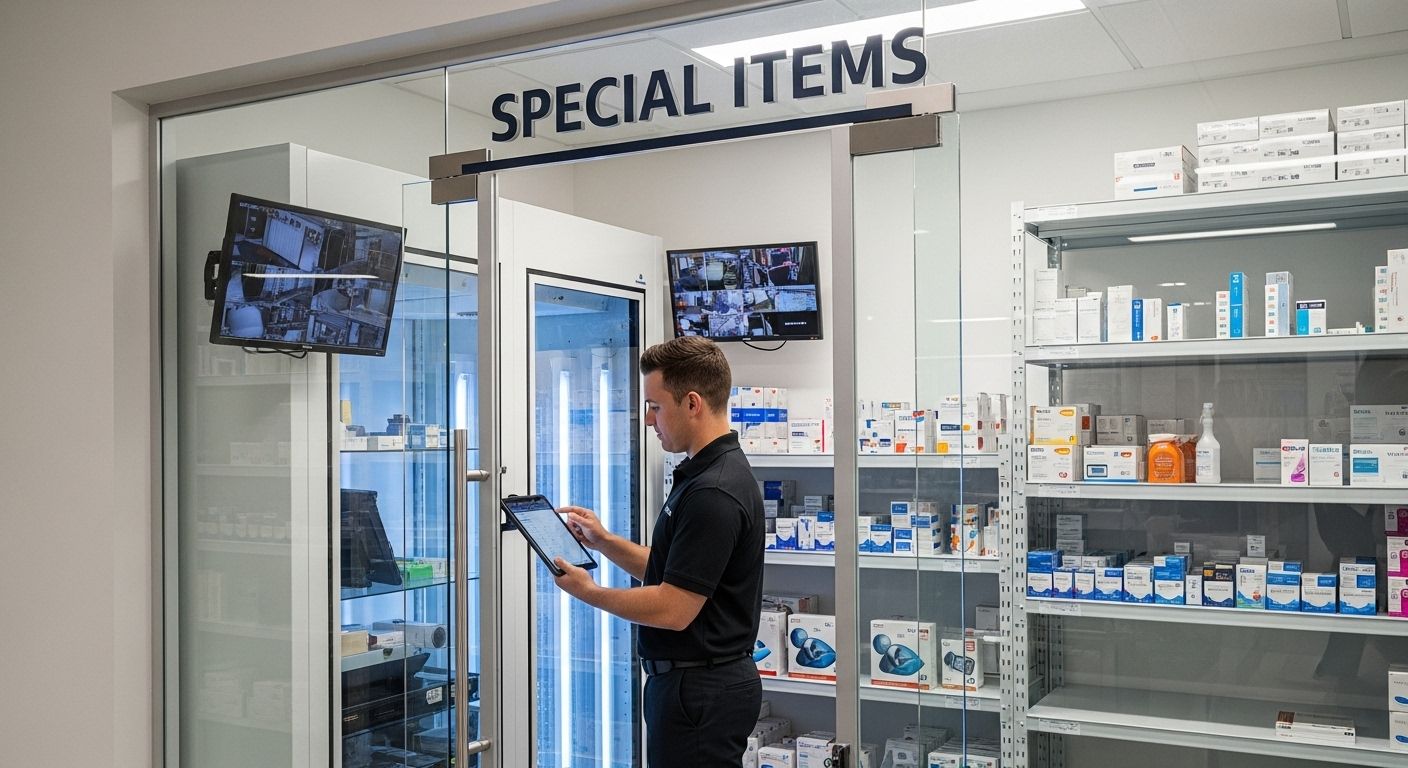
Warehouse management research emphasizes the importance of implementing specialized storage solutions for sensitive items. This includes creating dedicated zones with controlled environmental conditions, enhanced security measures, and specific handling protocols.
Considerations for special item storage include:
For instance, electronic components might require anti-static storage environments, while chemical products need carefully designed containment areas with specific ventilation and safety features.
NetSuite’s warehouse management insights highlight the critical role of technology in managing special items. A robust Warehouse Management System (WMS) provides real-time tracking, precise location management, and detailed monitoring capabilities.
Key technological solutions include:
Advanced WMS solutions can track minute details such as temperature fluctuations, humidity levels, and potential exposure risks, ensuring that special items receive precisely the care they require.
Tailoring warehouse solutions for special items is not just about storage but about creating a comprehensive ecosystem that protects, tracks, and manages unique inventory. By combining specialized techniques, dedicated storage solutions, and advanced technological tools, warehouses can ensure the highest standards of item preservation and operational excellence.
Remember, the goal is to treat each item as unique, understanding its specific requirements and creating a storage environment that maintains its quality, safety, and value throughout its warehouse journey.
To develop an effective warehouse layout strategy, assess your inventory items’ flow and usage frequency. Create logical storage zones, minimise unnecessary movement, and consider current and future scalability when mapping out your layout.
A well-defined storage zone includes clearly marked areas for different product categories, a receiving zone for incoming goods, picking zones for efficient order fulfilment, a dispatch zone for outgoing shipments, and a maintenance zone for equipment servicing.
To ensure safety and easy access, establish clear emergency routes that are unobstructed and well-lit. Implement regular safety training for employees, use proper signage, and design your warehouse layout to facilitate safe movement for both employees and equipment.
For high-value or sensitive inventory, employ techniques such as First In First Out (FIFO) for perishable goods, and designate controlled environmental zones with security measures for valuable items. Utilise advanced Warehouse Management Systems (WMS) for real-time tracking and monitoring to maintain product integrity.
Struggling to organise your warehouse for maximum efficiency while keeping business moving? If you are feeling overwhelmed by the complexities of floor plans, zone creation and specialised inventory handling, you are not alone. The practical tips in this article highlighted why having a tailored strategy and professional support can make all the difference. When it comes time to relocate or reorganise your workspace, you deserve more than a generic removals service. You need a team who gets how important careful planning, warehousing best practice and secure storage really are.
Discover how Onyx Removals can help you turn a complicated warehouse reorganisation or move into a pain-free process. Our expert Melbourne team delivers solutions for everything from commercial removals to inventory packing and secure storage. Need advice on safe access or want your special assets handled with precision? Find out more about our dedicated commercial moving services today and get your personalised quote. Act now to protect your business, minimise downtime, and move forward with confidence.

No Related Post


