



Most Australian households underestimate the challenge of moving plants safely, even though over 80 percent of people report accidental damage to their greenery during a relocation. If you cherish your plants, understanding how to prepare them before a move is essential for their survival. This guide walks you through each critical step to keep your plants healthy, protected, and thriving throughout any Australian move.
| Key Point | Explanation |
|---|---|
| 1. Assess plant health before moving | Check for signs of stress or disease to ensure plants can survive the journey. |
| 2. Use appropriate packing materials | Select sturdy boxes and cushioning to protect plants during transport. |
| 3. Secure plants to prevent damage | Wrap plants in breathable materials and stabilise them in the vehicle. |
| 4. Load plants with care | Create a dedicated space in the vehicle to keep plants stable and safe. |
| 5. Settle plants properly upon arrival | Inspect and acclimatise plants gradually to reduce transplant shock after moving. |
Before you start packing your beloved greenery for a move, you’ll want to carefully evaluate their condition and transportability. Not every plant is ready to survive a relocation journey, so a thorough health check is crucial.
Begin by inspecting each plant systematically using Queensland Government plant health guidelines. Look for signs of stress, disease, or pest infestation that might compromise the plant’s ability to withstand transportation. Check the leaves for discolouration, unusual spots, wilting, or evidence of insect damage. Examine the stems and roots for any soft or decaying sections, which could indicate underlying health issues.
To get a more precise assessment of your plant’s resilience, consider using home testing methods. Landscape South Australia recommends using a refractometer to measure plant sugar levels, which can indicate the plant’s overall health and potential stress tolerance during moving.
Pro tip: Prioritise moving healthy, robust plants and consider leaving weaker or severely stressed specimens with a trusted caretaker or local plant nursery to ensure their best chance of survival.
To help you decide which plants are suitable for moving, consider these health indicators:
| Indicator | What to Check | Suitability for Moving |
|---|---|---|
| Leaf Condition | No discolouration or wilting | Indicates good health for travel |
| Stem and Root Health | Firm, no soft/decaying areas | More likely to survive transport |
| Pest/Disease Signs | Absence of insects or fungal spots | Reduces risk of contaminating new location |
| Sugar Levels | High (measured by refractometer) | Shows resilience to stress |
Now that you’ve assessed your plants’ health, it’s time to gather the right materials and prepare them for a safe journey. This step involves selecting appropriate packing supplies and ensuring your green companions are ready for transportation.
Start by collecting sturdy cardboard boxes, packing paper, bubble wrap, and breathable materials like newspaper or tissue paper. Business Queensland guidelines recommend carefully selecting packaging materials to protect delicate plant structures during transit. Choose boxes that are slightly larger than your plants to provide cushioning space, and create air holes to allow proper ventilation.
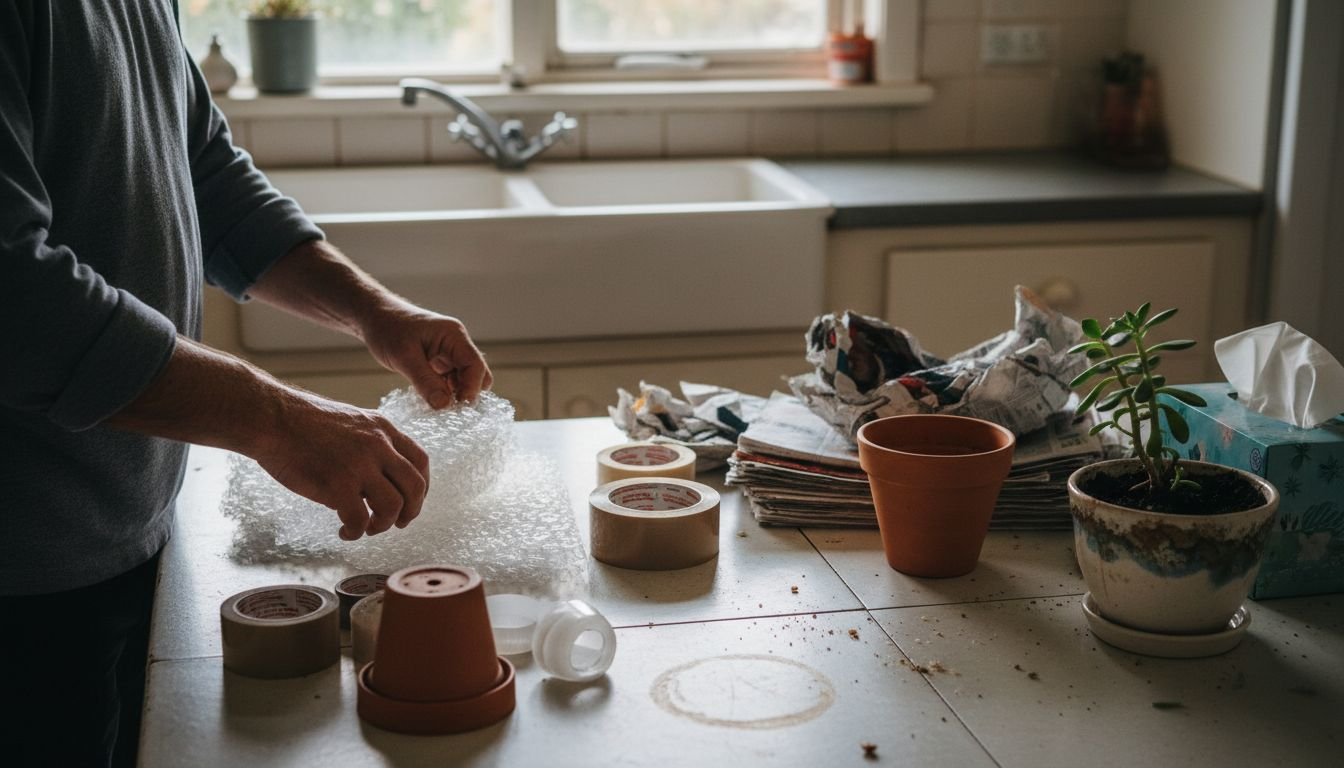
Before packing, the New South Wales Government suggests thoroughly watering your plants to reduce transplant stress. Water them a day before moving, ensuring the soil is moist but not waterlogged. Wrap the base of each pot with plastic to prevent soil spillage, and use soft packing materials to stabilise the plant within the box.
Pro tip: Create makeshift plant sleeves using rolled newspaper or kraft paper to protect leaves and branches during the move, providing an extra layer of cushioning and protection.
The following table summarises common packing materials and their protective qualities for transporting plants:
| Packing Material | Protective Quality | Best Use Case |
|---|---|---|
| Cardboard boxes | Shock absorption, structure | Supporting pots and large plants |
| Bubble wrap | Cushioning, impact resistance | Wrapping delicate stems and leaves |
| Newspaper/tissue | Breathable, lightweight | Stuffing gaps and covering foliage |
| Plastic wrap | Prevents soil spillage | Sealing around base of pots |
With your plants carefully prepared, the next crucial step is ensuring they remain stable and protected during the move. Proper securing techniques will minimise the risk of damage and help your green companions arrive safely at their new home.
Business Queensland biosecurity guidelines highlight the importance of preventing potential plant contamination during transportation. Begin by individually wrapping each plant in breathable materials like soft cloth or specialised plant transport bags. Use foam padding or additional newspaper to create a protective barrier between plants and the box sides, preventing movement and potential breakage.
Arrange your plants strategically within the moving vehicle, keeping them upright and away from direct sunlight or extreme temperatures. If transporting multiple plants, create separators using cardboard or bubble wrap to prevent them from touching or crushing each other. For larger plants, consider using specialized plant transportation containers or tie down straps to maintain stability during transit.
Pro tip: Label each plant box with handling instructions and fragility warnings, and if possible, transport more delicate or valuable plants in your personal vehicle to ensure maximum protection.
Loading your plants into the moving vehicle requires precision and care to ensure they survive the journey intact. Your goal is to create a stable, protective environment that minimises potential damage during transportation.
Safe Work Australia’s traffic management guidelines emphasise the importance of strategic planning when moving delicate items. Begin by creating a dedicated space in your vehicle specifically for plants, preferably in a temperature-controlled area away from direct sunlight or air conditioning vents. Place heavier plant containers at the bottom of the stack and lighter ones on top, using non slip mats or towels to prevent sliding during transit.
Carefully position your plant boxes to avoid pressure on delicate stems or leaves, ensuring they remain upright and supported. If you are using a moving truck, secure the plants against a wall using soft straps or wedged padding to prevent shifting during movement. For cars, consider using the passenger seat or floor area where plants can remain stable and receive indirect light. SafeWork SA’s safety recommendations highlight the critical need to assess potential risks and create a controlled transportation environment.
Pro tip: Create a temperature buffer by wrapping plant containers in blankets or thermal covers, which can help protect them from sudden temperature changes during the move.
Your plants have survived the journey, but their relocation is not complete. The first few hours after arrival are critical for helping your green companions adjust to their new environment and recover from the stress of moving.
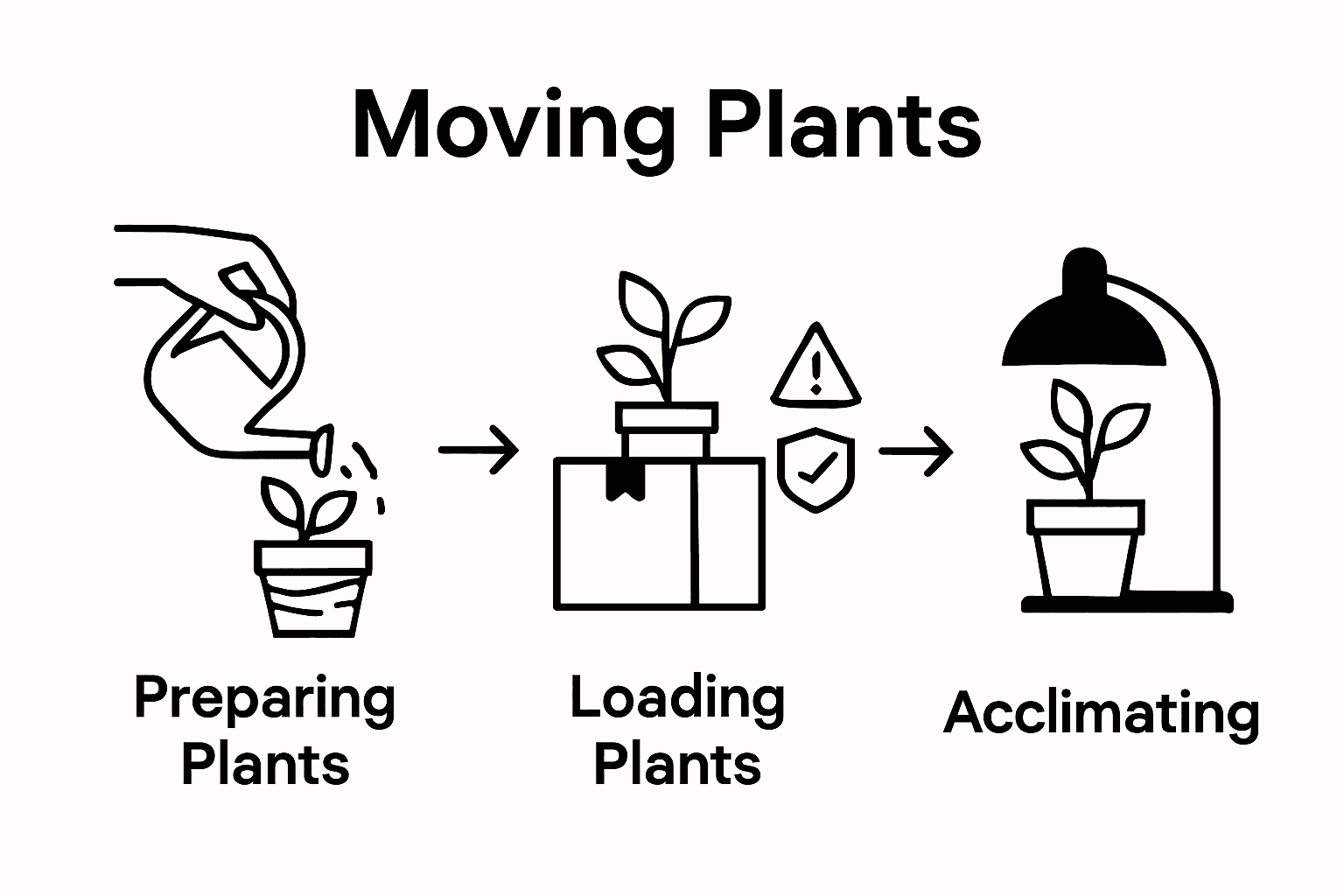
New South Wales Government post-planting maintenance recommendations emphasise the importance of carefully assessing plant health immediately after transportation. Begin by gently removing each plant from its protective packaging, inspecting leaves, stems, and roots for any signs of damage or stress. Look for wilting, discolouration, broken branches, or compressed soil that might indicate transportation strain.
Choose a transitional location with similar light conditions to your plants’ previous environment to help them acclimatise gradually. Water them lightly, being careful not to overwater stressed plants. Allow them to rest for 24 to 48 hours before repositioning or repotting, giving them time to recover from the move. If possible, maintain a consistent temperature and protect them from direct sunlight or strong winds during this critical settlement period.
Pro tip: Create a temporary plant recovery area with indirect light and stable temperatures, using humidity trays or light misting to help them rehydrate and reduce transplant shock.
Moving your cherished plants safely requires careful planning, specialised packing, and secure transport to prevent damage and stress. The detailed steps in this guide highlight the challenges of maintaining plant health during a move, from assessing their condition with tools like a refractometer to securing them properly in transit. You want to avoid wilting, pest infestations, or broken stems that can easily occur without professional care.

Trust Onyx Removals in Melbourne to handle your green companions with personalised expertise and proven techniques based on industry standards. We offer customised specialised transportation services that ensure your plants remain stable, well-ventilated, and protected from temperature extremes throughout the move. Our dedicated team understands how crucial it is to create a smooth transition that minimises transplant shock, as outlined in the article on how to transport plants safely during a move. Ready to give your plants the care they deserve on moving day? Explore the full range of our residential removal services tailored to your needs and receive a hassle-free quote today by visiting Onyx Removals.
To assess your plants’ health, inspect their leaves, stems, and roots for any signs of stress, disease, or pests. Check for discolouration, wilting, or soft areas and consider using a refractometer to measure sugar levels, indicating overall health.
You will need sturdy cardboard boxes, bubble wrap, packing paper, and breathable materials like newspaper. Gather these supplies to ensure each plant is cushioned and protected during transport, allowing for proper ventilation.
Wrap each plant individually in breathable materials and create a protective barrier using foam or additional packing materials. This will help prevent movement and damage during transit, ensuring they arrive safely.
When loading plants, create a dedicated space in your vehicle away from direct sunlight and extreme temperatures. Arrange heavier pots at the bottom and ensure all plants are upright and secured to avoid any shifting during the move.
After arrival, gently remove each plant from its packaging and inspect for any damage. Allow the plants to rest in a transitional area with similar light conditions for 24 to 48 hours before repositioning or repotting to help them recover from the move.
If your plants show signs of stress, provide light watering without overwatering, and create a stable environment with indirect light and stable temperatures. Monitor their condition for a few days and consider adjusting their location if they do not improve.

No Related Post


