


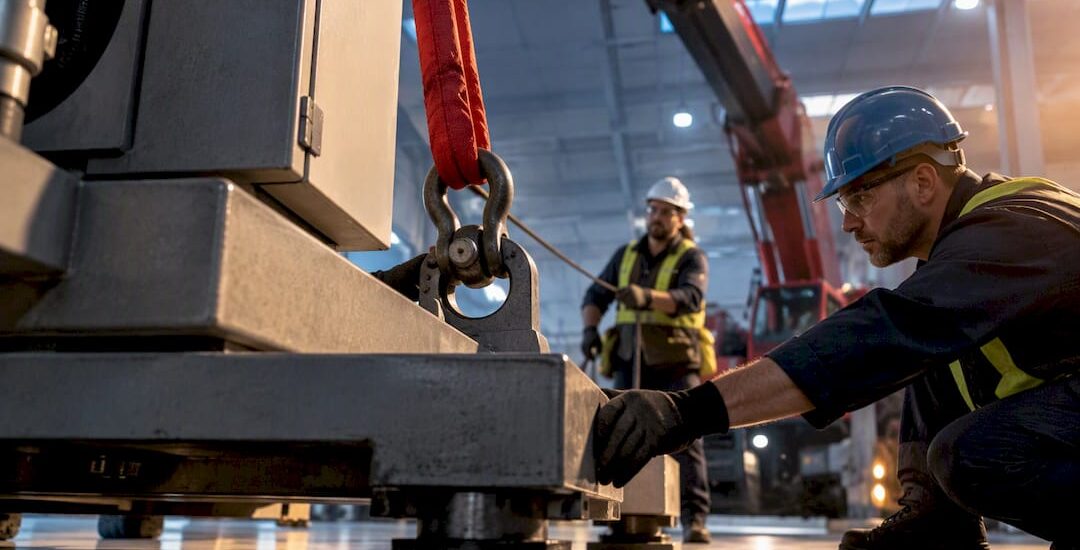
A safe machine relocation always needs structured project planning, a task-based risk assessment, the right lifting and transport plant, and permits for any oversized or high load on the route. Get moving by notifying the plant owner or operations lead, maintenance, a licensed lifting contractor, a heavy transport operator, your safety officer, and, where non-standard lift points are involved, a structural engineer. Permit lead times vary by state and route complexity, so build several weeks into your schedule rather than assuming a same-week approval.
TL;DR:
- Permits for loads above 4.3 to 4.6 meters in height or exceeding 5 meters laden height require early application and may need approval from electricity authorities, delaying schedules if not prepared in advance.
- The choice of lifting and transport methods depends on the machine’s weight, center of gravity, design lifted points, and site access, with specialist cranes often replacing forklifts for awkward or heavy loads.
- Building several weeks into the schedule for permit approvals, route scoping, and site preparation is crucial, as late permit refusals or route issues common in Melbourne can cause major delays.
- A comprehensive risk assessment must cover each stage of the lifecycle, including decommissioning, dismantling, transport, and installation, with controls tailored to hazards at each phase.
- Locking in all service plans, permit approvals, and specialist contractors early minimizes emergency rework during heavy-lift and load transfer phases, which are the highest-risk moments.
Before anyone touches a spanner, get the paperwork and the plan right. This sequence works as a standalone job plan or as the skeleton for a contractor brief.
Pro Tip: Lock in your lifting contractor and transport operator before you finalise the move date. Specialist cranes and permitted heavy vehicles book out weeks ahead, and a late booking often dictates your timeline more than the machine itself does.
Safe Work Australia requires a lifecycle approach to plant risk management, meaning your assessment has to cover decommissioning, dismantling, transport, installation, and commissioning as connected stages rather than isolated tasks. Treat each stage as its own hazard set, because the controls that protect a rigger during dismantling are not the ones that protect a driver on a permitted route.
Common hazards across a relocation include:
A lifecycle risk assessment must cover decommissioning, dismantling and disposal as part of the plant’s overall life cycle, according to Safe Work Australia. Skipping the decommissioning stage in your paperwork is one of the most common gaps auditors find.
Apply the hierarchy of controls at each stage: eliminate the hazard where possible (reroute around a powerline rather than working near it), substitute safer plant (a crane instead of an unsuitable forklift), isolate people from moving loads with exclusion zones, and use engineering controls such as rated lifting frames before relying on procedures or PPE. Your safety officer and, where lift points are non-standard, a structural engineer should sign off the SWMS before work starts. Keep the risk assessment, SWMS, lift plan, and permit correspondence on file for the life of the project.
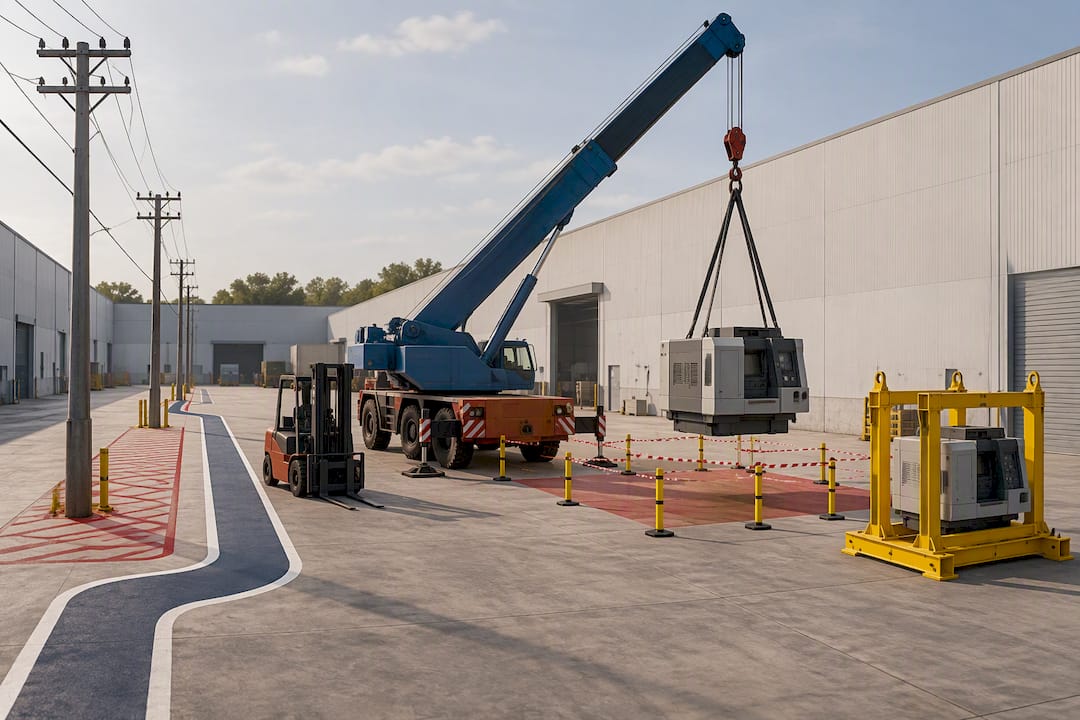
Method selection comes down to four questions: how heavy is the machine, where is its centre of gravity, where are its designated lift points, and what do the floor loading and access constraints allow. Get these wrong and you either under-specify the plant or damage the machine on the first lift.
Any powered mobile plant used as a crane for lifts of one tonne or more needs burst protection fitted to its hydraulic cylinders, and this single check has stalled more than one scheduled lift when it was assumed rather than confirmed, according to the mobile crane code of practice.
Pro Tip: Never improvise a lift point. Use only the manufacturer’s designated lift point or an engineer-approved lifting attachment, and get that approval in writing before the crane arrives.
Route scoping should start well before you book a truck, because a refusal discovered two days out will blow your whole schedule. NHVR rules mean loads above common gazetted height thresholds of 4.3 to 4.6 metres need a notice or permit, and laden heights above 5.0 metres commonly trigger an Over Height Clearance Authority letter from the electricity supply authority along the route.
Route scoping identifies the road managers and third-party approvals a permit application needs, which is why doing it early avoids late-stage refusals, per NHVR’s access management guidance.
The lift and load are usually the highest-risk hour of the whole project, so the site controls need to be locked in before the truck arrives, not improvised once it does.
Getting the machine back into service safely takes as much discipline as getting it out. Reconnect mechanical, fluid, and electrical services methodically, running safety isolation checks before any power is restored.
Pro Tip: Run site preparation and permit applications in parallel with dismantling, rather than in sequence. Staged commissioning, where non-critical lines restart first, also trims the total downtime window.
Onyx Removals supports plant moving, assembly and dismantling, and specialist transport as part of an integrated relocation service. The most common delay we see is not the lift itself but a permit or route issue discovered too late, which tighter early scoping consistently avoids. Careful sequencing, not extra equipment, is usually what saves a schedule.
— Dinshaw
Planning a machine relocation touches packing, transport, and often storage in the same project, and having one provider handle all three removes a layer of coordination most facility managers do not have time for.
Professional moving and relocation companies offer machine relocation projects with:
To get a quote, have your machine drawings, weights, preferred dates, and site photos ready. Visit our services page or pricing page to request a technical scoping visit.
A machine relocation involves project planning, a task-based risk assessment, choosing the right lifting and transport method, securing any required permits, and a commissioning and handover step once the machine is reinstalled. Each stage, from decommissioning through to commissioning, needs its own risk controls under the lifecycle approach set out by Safe Work Australia.
You commonly need a notice or permit once a laden load exceeds gazetted height thresholds of 4.3 to 4.6 metres, and loads above 5.0 metres laden height often require an Over Height Clearance Authority letter from the local electricity supply authority, according to NHVR. Route scoping early in your planning helps confirm exactly which approvals your specific vehicle and load combination needs.
Sometimes, but a forklift becomes unsuitable once a load is awkward, bulky, or outside safe lift geometry, in which case a mobile crane or other load-shifting plant is the safer option, per WorkSafe Victoria. The right method depends on the machine’s weight, centre of gravity, and designated lift points.
Timelines vary widely depending on permit lead times, route complexity, and the machine’s size, so build in several weeks for planning and approvals rather than assuming a quick turnaround. Running site preparation and permit applications in parallel with dismantling, and staging commissioning, are the most reliable ways to cut the downtime window.
Responsibility is shared across the plant owner, the lifting contractor, the transport operator, and a safety officer, with an engineer’s sign-off required for non-standard lift points. Keeping the risk assessment, SWMS, and permit documentation on file throughout the project supports accountability at every stage.

No Related Post


