


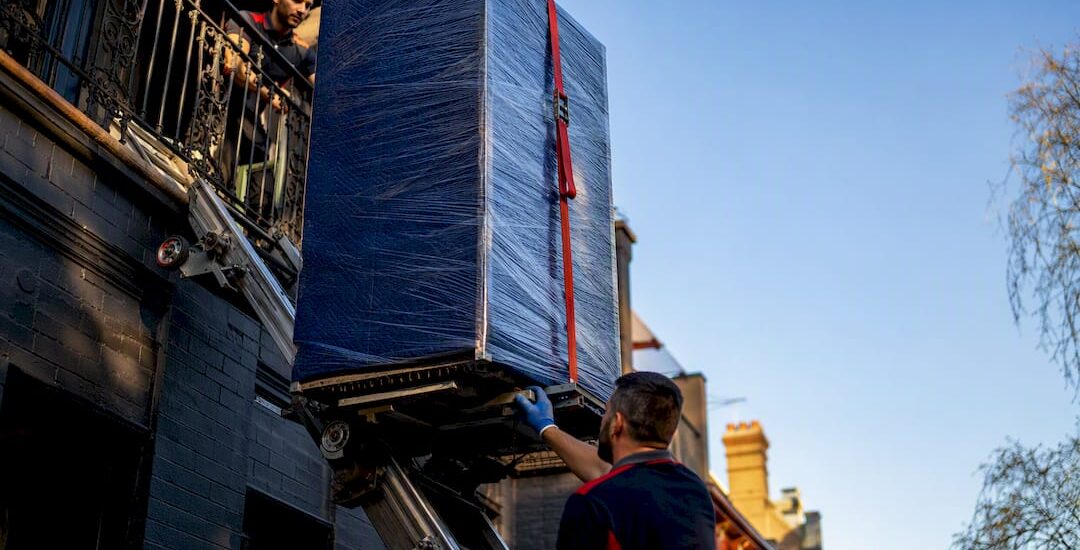
A furniture lift mover is a professional crew trained to lift, manoeuvre and transport heavy or awkward furniture safely, using straps, dollies and sometimes mechanical hoists. Hire one whenever an item is heavy, oddly shaped, moving through tight stairwells or balconies, or simply too valuable to risk on a DIY carry. If any of those apply, the next move is a quote or site check, not a group of mates and a ute.
TL;DR:
- Heavy or awkward furniture items, such as pianos or stone tables, require professional crews with specialized equipment to prevent injuries and damage.
- Accurate quotes depend on clear photos, precise measurements, and honest access descriptions, with site visits essential for complex or narrow spaces.
- Insurance covers property damage and belongings during transport, but pre-existing damage and customer-packed items may be excluded; confirm coverage beforehand.
- Common issues like furniture not fitting or weather disruptions are managed through disassembly, load redistribution, and adaptable planning by trained professionals.
- Book early for jobs involving complex access or equipment, especially for hoists or cranes, and ensure a site assessment to facilitate smooth, safe lifts.
A furniture lift mover isn’t just extra muscle. The service covers the full physical handling of your belongings, from the first protective wrap to the final placement in your new space, plus the planning that stops things going wrong in between.
Core tasks generally include:
Beyond the basics, most crews offer specialist add ons. Disassembly and reassembly handles bed frames, wardrobes and modular lounges that won’t fit through doorways whole. For upper floor apartments or heritage staircases, some jobs need hoist or crane scheduling arranged in advance. Short term storage bridges the gap when settlement dates don’t line up.
Equipment matters more than most people expect. Furniture dollies spread weight across wheels instead of your spine. Ratchet straps stop a wardrobe shifting mid-carry. Ramps replace a risky stair-carry with a controlled roll. A crew that turns up without this gear is relying on brute force, which is exactly what leads to injuries and damaged goods.
The honest answer: DIY is fine for a bookshelf, risky for a fridge, and reckless for a piano. The line sits around weight, size and access, not confidence.
Australian workplace guidance treats large or awkward items as hazardous manual handling once they get heavy and bulky enough that one person can’t safely control them alone, which is exactly the point where mechanical aids or a professional crew become the sensible default rather than an optional extra.
Watch for these specific scenarios where DIY moving turns into a liability:
If a quote only accounts for a manual carry and the item ticks any of those boxes, insist on a site visit before booking. A phone estimate can’t judge a spiral staircase, and a mover who skips that step is guessing, not planning.
Getting an accurate quote for a heavy or awkward item comes down to giving the mover enough information to plan properly, not just enough to guess a number.
Pro Tip: Ask for the quote in writing before the day of the move, not verbally on arrival. A written estimate protects you if the final invoice doesn’t match what was discussed.
Trust indicators are easy to spot once you know what to look for. A mover willing to do a site check for awkward access is signalling confidence in their own process. Vague scope, no mention of insurance, or resistance to a written estimate are the opposite signal, and worth walking away from.
Moving day runs on a routine, not improvisation, when the crew knows what they’re doing.
Your job beforehand is short but genuinely useful:
None of this takes long, but skipping it is one of the most common reasons a straightforward job runs late.
Manual handling isn’t just a training problem, it’s an equipment and planning problem, and the regulations reflect that.
Healthdirect’s guidance on manual handling makes a point that surprises a lot of people: basic training alone has limited evidence behind it as a way to prevent back injury. Mechanical aids and professional services are the more reliable control, not a fallback option.
That matters for two different readers. Homeowners lifting a fridge with a friend aren’t protected by good intentions. Businesses moving office furniture carry a duty of care to staff, which means manual handling has to be treated as a workplace hazard, with genuine controls in place rather than a verbal warning to “lift with your knees.” In practice, that often means contracting the job out entirely rather than rostering staff to carry desks.
Timelines vary with the size of the job, but the shape of the process is consistent. Booking a quote can happen same day for straightforward jobs, though anything involving a hoist, crane scheduling or awkward access is worth booking one to two weeks ahead so the right equipment and crew size can be arranged.
A single heavy item, say a piano or a large fridge, typically takes a few hours from arrival to placement once you include the site walk, protection, disassembly if needed, the lift itself and reassembly. A full residential move with several heavy pieces usually runs a half day to a full day, depending on floor count and truck loading time.
Where the timeline stretches is access complexity, not the furniture itself. A ground floor pickup with a driveway is fast. A third floor walk up with a narrow stairwell, or a delivery requiring a crane booking, adds planning time before the job even starts, because that equipment has to be scheduled separately and can’t be arranged on the spot.
The practical takeaway: book early for anything that isn’t a simple ground floor lift, and be upfront about access when you request your quote. A mover who knows about a spiral staircase in advance can plan around it. A mover who finds out on the day has to solve it live, which costs time and adds risk.
Insurance is the part of the hiring decision most people skip past, right up until something gets damaged.
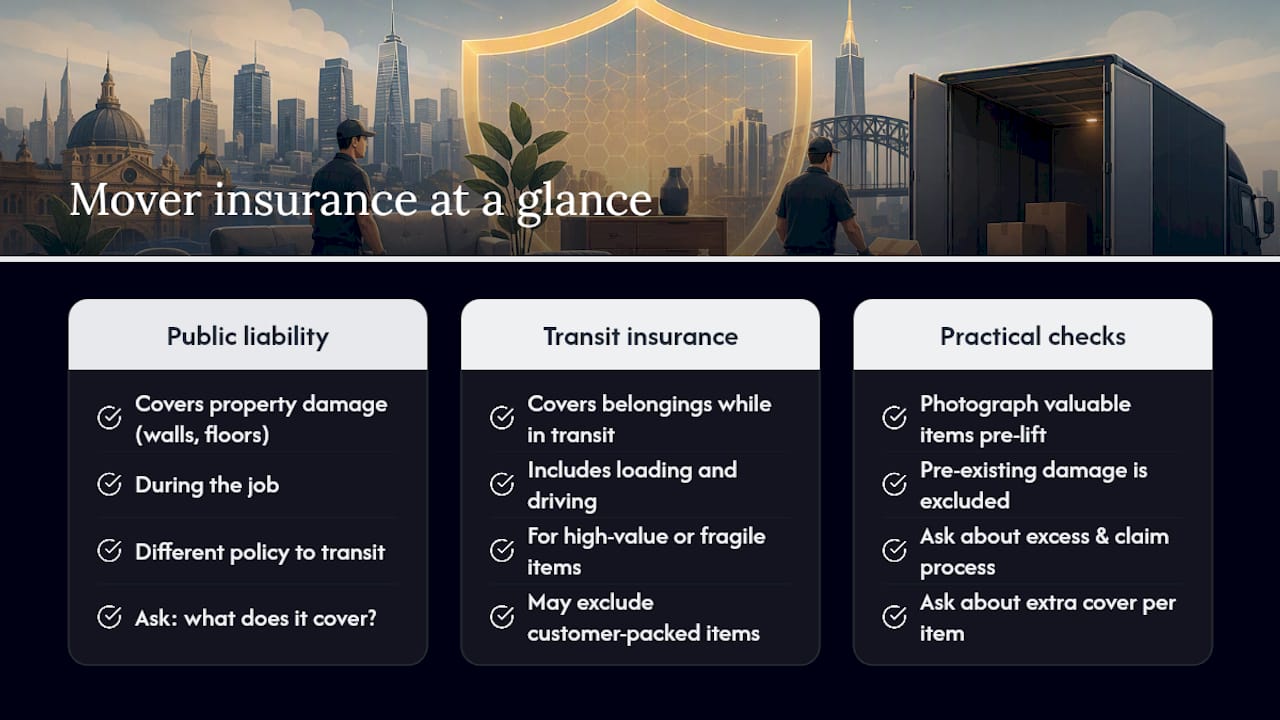
Reputable movers carry public liability insurance, which covers damage to property (walls, floors, door frames) during the job. Separately, transit insurance covers your belongings while they’re being carried, loaded or driven, which matters most for high-value or fragile pieces. These are two different policies covering two different risks, and a mover should be able to explain both clearly when asked.
What’s not always covered is worth checking specifically. Pre-existing damage to an item (a scratch that was already there) isn’t something insurance will pay out on, which is why some crews photograph valuable pieces before the lift begins. Items packed by the customer rather than the crew sometimes fall outside transit cover too, since the mover can’t vouch for how they were packed.
Before booking, ask three direct questions: what does your public liability cover, what does your transit insurance cover, and is there an excess or claim process if something goes wrong. A mover who answers clearly and quickly has done this before. One who deflects or says “it’ll be fine” is not someone you want holding your antique dresser on a narrow staircase.
For high-value items, it’s worth asking whether additional cover is available for that specific piece rather than assuming standard cover is enough.
Even well-planned lifts hit snags. The difference between a good mover and a risky one is how they handle the moment things don’t go to plan.
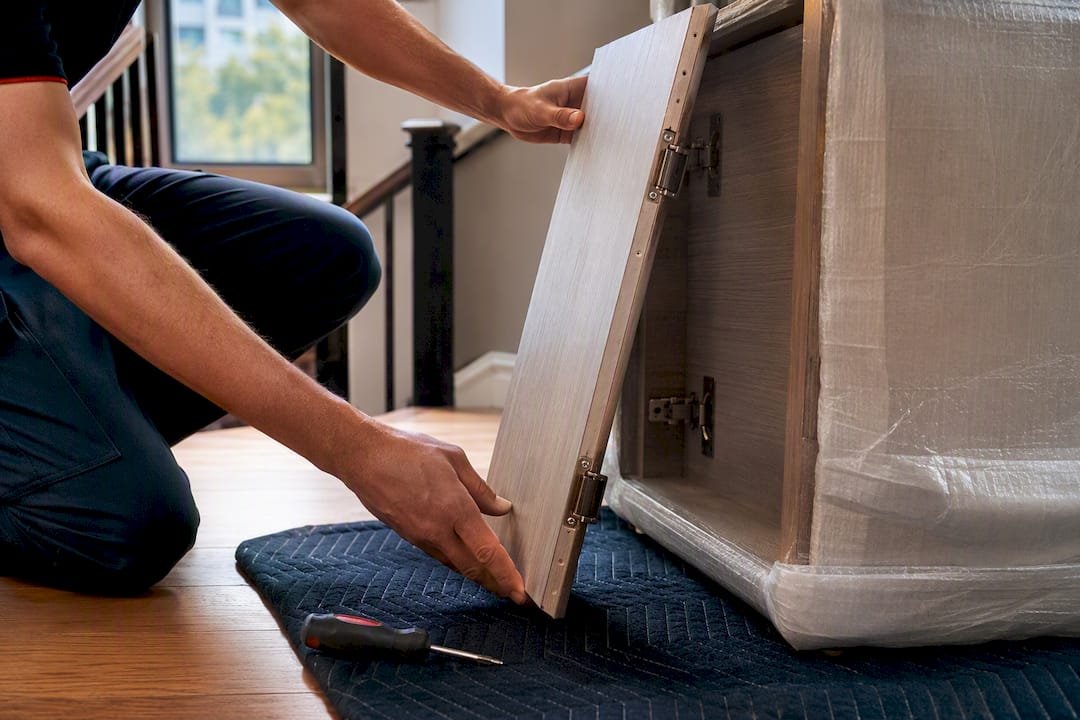
The most common issue is furniture that doesn’t fit through an opening as measured. Professionals handle this with partial disassembly on site: removing a door, unscrewing table legs, or tilting the item at an angle the crew has calculated in advance rather than guessing under pressure.
Weight distribution is another frequent problem, particularly with stone benchtops or filled bookcases. A crew trained in proper lifting technique will redistribute the load across more people or switch to a mechanical aid rather than pushing through with an unsafe grip.
Weather and access changes cause last-minute headaches too. A driveway blocked by another vehicle, or rain making a ramp slippery, means a professional crew adjusts the plan on the spot, whether that’s rescheduling the outdoor portion or bringing extra protection.
The least visible challenge is damage prevention on the property itself, not just the furniture. Scraped walls and gouged floorboards are the most common complaint after a move, which is why protective wrapping and floor covering aren’t optional extras, they’re the difference between a clean job and an expensive one.
Every difficult lift starts the same way for us: a proper site assessment before anything gets touched, not a guess based on a phone description. That’s where the equipment plan gets built, whether it’s a straightforward team carry or something needing disassembly and staged storage. Office fit-outs and upper floor apartment moves are the jobs where integrated services (packing, temporary storage, cleaning) actually reduce risk, because fewer separate providers means fewer handoffs where something can go wrong. If your move has any of the complications covered above, request a site visit before you book anything.
— Dinshaw
If your move involves a piano, a stone-top table, a narrow stairwell or an office full of desks, that’s the exact situation a heavy-lift crew earns its fee. Onyx Removals runs experienced teams for residential and commercial moves across Melbourne, with disassembly and reassembly, reliable pantech truck hire, and short-term storage available when your settlement dates don’t line up. Rather than juggling separate providers for packing, cleaning and waste removal, one team can manage the whole job.
Getting a quote is straightforward: send through photos of the item, rough measurements, and a description of access at both ends (stairs, lifts, parking distance). For jobs involving packing, Office and House Packing & Unpacking is priced at $109 per hour, with other services quoted after a quick look at your job. Book a site assessment through the services page and get a written quote before moving day arrives.
There’s no single legal cutoff every mover uses, but items that are bulky, oddly shaped, or unmanageable for one person (wardrobes, fridges, pianos, stone-top tables) are generally treated as hazardous manual handling under Australian workplace guidance, which favours mechanical aids or professional crews over a manual carry.
Pricing depends on the size of the job, access and whether packing is involved. Packing and unpacking through Onyx Removals is $109 per hour, while other services such as heavy-lift crews and truck hire are quoted after reviewing your specific job.
Reputable movers carry their own public liability and transit insurance, but it’s worth confirming what’s covered before booking, particularly for high-value or antique items. Ask specifically about excess amounts and the claims process rather than assuming standard cover applies.
Yes, this is one of the most common reasons people hire a crew rather than attempt a DIY carry. Professional movers plan the lift path in advance, use dollies, straps and ramps, and can arrange partial disassembly or hoist access for staircases and balconies that a manual carry can’t safely handle.
Simple ground floor jobs can often be booked within a few days, but anything needing a hoist, crane scheduling or complex access is worth booking one to two weeks out. Booking early gives the crew time to arrange the right equipment rather than solving access problems on the day.

No Related Post


