



TL;DR:
- Long-distance moving costs are primarily driven by shipment weight, mileage, and seasonal demand, not hourly rates.
- Obtaining a binding estimate after an in-home or virtual survey helps ensure accurate and predictable pricing, while decluttering and booking early can significantly reduce expenses.
Long-distance moves are priced by shipment weight, mileage, and timing rather than the hourly rates used for local removals. For a typical 2 to 3 bedroom home, average move costs sit between $3,500 and $5,500 in 2026, with fuel surcharges adding a further 10 to 20% on top. Many families assume moving companies long distance cost is simply a flat rate per kilometre. The reality is more layered, and understanding those layers is what separates a well-budgeted move from an expensive surprise on moving day.
Long-distance moves are priced on shipment weight and mileage, not hours worked. This distinction matters because every extra box, piece of furniture, or appliance you load onto the truck directly increases your final bill. A typical 3-bedroom household ships between 7,500 and 10,000 pounds of goods, and the rate applied to that weight scales with the kilometres travelled.
The main cost drivers you need to understand are:
Pro Tip: Ask every removalist upfront whether they are a direct carrier or a broker. If they cannot answer clearly, treat the quote as a rough estimate rather than a firm price.
Understanding these factors gives you a working framework for any moving company cost estimate you receive. It also tells you exactly where you have leverage to reduce the final figure.

The most reliable way to get an accurate, binding quote is through an in-home or virtual survey. Online calculators and instant quotes frequently mislead users because they cannot account for the actual volume and weight of your belongings, access constraints at your property, or the specific services you need. A surveyor who walks through your home produces a far more precise inventory.
Once you have that survey, you need to understand the two main types of estimates:
Pro Tip: Before your survey, photograph every room and note any access constraints such as narrow driveways, no-parking zones, or stairwells. Sharing this information upfront prevents last-minute charges and helps you compare moving quotes on a like-for-like basis.
Transparent communication with your removalist about stair carries, long walks, and parking availability prevents the most common costly surprises on moving day. Treat your quote comparison as a negotiation, not just a price check.
Reducing the cost of long distance movers comes down to three levers: weight, timing, and service choices. Each one is within your control before you sign a contract.
Using a moving costs calculator to model different weight and timing scenarios before you commit to a date is a practical way to budget for your long-distance relocation.
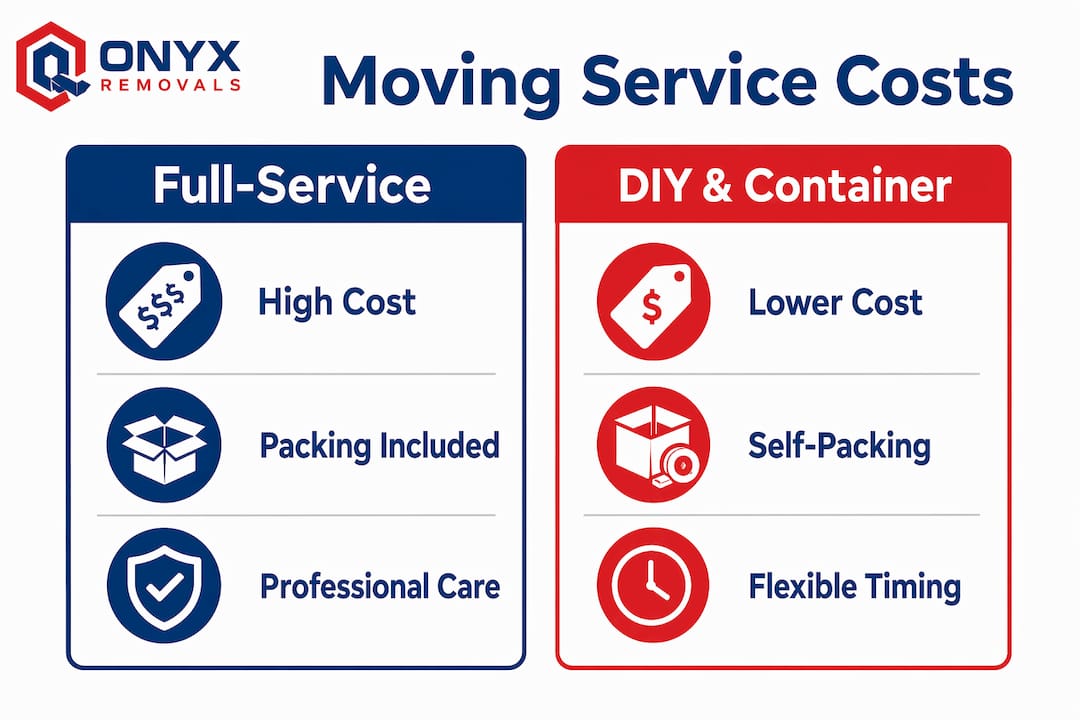
The three main service types for long-distance moves each carry a different cost structure and a different risk profile.
| Service type | Typical cost range | What’s included | Best suited for |
|---|---|---|---|
| Full-service removalists | $3,500 to $7,000+ | Packing, loading, transport, unloading, insurance | Families with valuable goods or limited time |
| DIY truck rental | $1,500 to $3,500 | Truck hire only | Budget-conscious movers with time and physical capacity |
| Moving containers | $2,000 to $5,000 | Container delivery and transport; labour is separate | Flexible timelines; those needing temporary storage |
Full-service moves appear more expensive upfront, but DIY costs rise quickly once you factor in fuel, tolls, insurance, accommodation on multi-day drives, and the physical risk of handling heavy furniture yourself. The price gap between professional and DIY narrows considerably when all expenses are counted.
Moving containers offer a middle path. You pack and load at your own pace, the container is transported to your destination, and you unload on arrival. The benefit is flexibility, particularly if your new home is not ready immediately. The drawback is that you still need to arrange labour for loading and unloading, and storage fees apply if the container sits for more than the included period.
For households with fragile, high-value, or bulky items, the benefits of professional movers extend beyond convenience. Licensed removalists carry transit insurance and accept liability for goods damaged in their care, which DIY options do not provide.
Long-distance moving costs are determined primarily by shipment weight and mileage, and the most effective way to reduce them is to declutter before your survey, move off-peak, and obtain at least three binding quotes from direct carriers.
| Point | Details |
|---|---|
| Weight drives price | Every kilogram removed before your survey directly lowers your base rate. |
| Timing saves money | Moving in January or February instead of peak season can cut costs by 25 to 50%. |
| Binding quotes protect you | Always request a binding or binding not-to-exceed estimate to avoid moving day surprises. |
| Shuttle fees are hidden | Confirm property access at both ends before your survey to avoid unadvertised transfer charges. |
| Direct carriers beat brokers | Direct carriers own their trucks and crew, making their quotes more reliable than broker estimates. |
After years of working in the removals industry, the pattern I see most often is this: families spend weeks comparing headline prices and almost no time understanding what those prices actually include. A quote that looks $800 cheaper than the competition frequently excludes packing materials, shuttle access fees, or a realistic fuel surcharge. By the time the invoice arrives, the “cheaper” option has cost more.
The single most underrated piece of advice I give is to declutter before you call anyone for a quote. Not after. Not during. Before. Your survey is based on what the removalist sees in your home, and every item they count adds to your estimated weight. If you have already removed the furniture you were planning to sell, the boxes of books you have not opened in three years, and the appliances that will not fit your new kitchen, your quote reflects a leaner, cheaper shipment from the start.
I also think people underestimate how much timing matters. The difference between booking a move in late June and booking the same move in late January is not marginal. It can be the difference between a $5,500 invoice and a $3,800 one for identical goods and distance. That is real money, and it costs nothing except a willingness to plan ahead.
My honest advice: get three binding quotes from direct carriers, not brokers. Book eight weeks out if you can. Move mid-week in an off-peak month. And have an honest conversation with your removalist about every access constraint at both properties. Do those four things and you will avoid 90% of the surprises that turn a manageable move into a stressful one.
— Dinshaw
Onyx Removals is a Melbourne-based direct carrier offering transparent, fixed-price quotes for residential removals across Australia. There are no broker markups and no hidden fees. Every quote is based on an in-home or virtual survey, so the price you agree to is the price you pay.
The team at Onyx Removals handles packing, loading, transport, and unpacking, with packing materials available as part of a tailored service plan. Whether you are moving a studio apartment or a five-bedroom family home, you can get a home removal quote online in minutes. For a full overview of available services, visit the Onyx Removals services page.
The average cost for a 2 to 3 bedroom long-distance move in Australia sits between $3,500 and $5,500 in 2026, with fuel surcharges adding 10 to 20% on top. Final costs vary based on shipment weight, distance, and the services included.
A binding estimate fixes your price regardless of the final shipment weight, while a non-binding estimate can increase based on the actual weight at delivery. Federal regulations cap non-binding final bills at 110% of the original estimate, but a binding quote offers stronger protection.
January and February are consistently the most affordable months for long-distance removals in Australia. Moving mid-week and mid-month during off-peak periods can reduce costs by 25 to 50% compared to peak season bookings between May and September.
Brokers assign your move to a third-party carrier who sets their own rates separately. The initial broker quote does not always account for reweighs or access difficulties, which can trigger price increases on moving day. Direct carriers own their trucks and crew, making their quotes more reliable.
Shuttle service fees, stair carry charges, long-walk fees, and fuel surcharges are the most common costs absent from initial quotes. Confirming property access at both addresses and requesting an itemised quote prevents these charges from appearing unexpectedly on your final invoice.

No Related Post


