



Most Melbourne homeowners are surprised to learn that local moving prices can fluctuate by as much as thirty percent from one suburb to another across the Australian market. Choosing the right mover is about more than just finding the cheapest rate. Factors like economic trends, housing demand, and even seasonal spikes shape what you pay for residential moving services. Understanding these details helps you secure the best value while avoiding unexpected costs during your move.
| Point | Details |
|---|---|
| Local Economic Factors | Prices are influenced by economic conditions, including inflation and living costs, with metropolitan areas like Sydney experiencing more variability. |
| Service Types and Pricing Models | Various moving services offer different pricing approaches, making it essential to understand what’s included in quotes. |
| Impact of Distance and Volume | Longer distances and larger volumes significantly affect moving costs, emphasising the importance of careful planning. |
| Hidden Fees Awareness | Homeowners should be vigilant about potential hidden charges and request detailed, written quotes to avoid unexpected costs. |
Moving company prices are shaped by a complex interplay of local economic factors, housing market dynamics, and regional supply and demand. In the Australian context, these influences are particularly nuanced and directly impact the cost of relocation services. Housing market trends play a significant role in determining moving costs across different regions.
The economic landscape significantly affects local moving prices. Inflation, interest rates, and broader economic conditions create a dynamic pricing environment. Cities with higher living costs, such as Sydney and Melbourne, typically experience more variable moving service rates compared to regional areas. Economic outlook factors like population growth, housing availability, and regional economic health directly influence moving company pricing strategies.
Several specific local factors contribute to price variations:
Regional economic disparities also create significant pricing differences. Metropolitan areas with higher living expenses and more competitive moving markets tend to have more sophisticated pricing models compared to rural locations. Understanding these local nuances can help homeowners better anticipate and budget for their moving expenses.
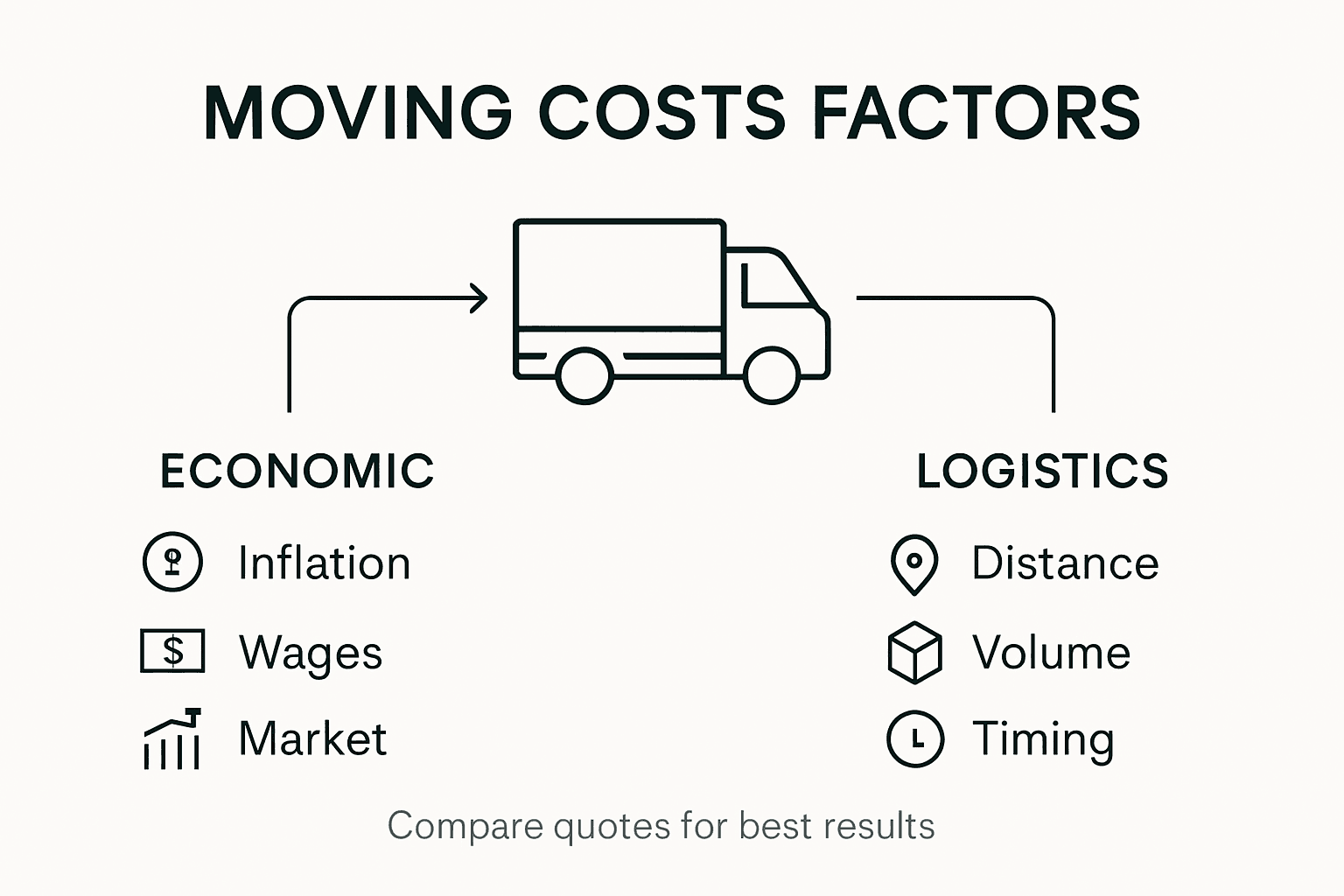
Here’s a summary of how different factors uniquely influence local moving costs in Australia:
| Factor | Metropolitan Areas | Regional Areas |
|---|---|---|
| Competition Level | High, many providers | Low, few specialised movers |
| Pricing Variability | Frequent, dynamic changes | Relatively stable rates |
| Labour Costs | Higher due to demand | Moderate to low |
| Housing Access | Challenging, tight spaces | More accessible properties |
| Demand Peaks | Pronounced seasonal spikes | Less seasonal fluctuation |
Pro tip: Request quotes from multiple local moving companies during off-peak seasons to potentially secure more competitive pricing and better understand regional cost variations.
The moving industry offers a diverse range of services and pricing models tailored to meet different customer needs and budgets. Transport and warehousing sectors provide insights into the complexity of moving service structures across Australia. Understanding these variations can help homeowners make informed decisions about their relocation strategies.
Service Types typically include:
Pricing models in the Australian moving market are equally diverse. Companies often employ multiple approaches to calculate moving costs, including:
The complexity of pricing is influenced by factors such as the volume of goods, distance travelled, accessibility of properties, and additional services required. Metropolitan areas like Sydney and Melbourne tend to have more competitive and nuanced pricing structures compared to regional locations.
Use the table below to help compare common moving service types and their main pricing features:
| Service Type | Typical Inclusions | Pricing Approach |
|---|---|---|
| Full-Service Move | Packing, transport, unpacking | Fixed or hourly, itemised quotes |
| Self-Service Move | Vehicle hire, limited labour | Hourly rates, basic packages |
| Specialty Move | Handling fragile/large items | Custom quotes, premium charges |
| Commercial Move | Office/industrial relocation | Bespoke pricing, scale discounts |
Pro tip: Always request itemised quotes that break down service components to understand exactly what you’re paying for and identify potential cost-saving opportunities.
Transport infrastructure research reveals the complex relationship between moving costs and key logistical factors. Distance, volume, and timing are critical variables that dramatically influence the pricing of moving services across Australia. Understanding these interconnected elements helps homeowners and businesses anticipate and potentially optimise their moving expenses.
The impact of distance is particularly pronounced in moving cost calculations. Longer journeys significantly increase expenses through multiple channels:
Volume considerations play an equally important role in pricing structures. National Transport Research insights demonstrate that larger moving volumes require more complex logistical arrangements. Movers must account for:
Timing represents another crucial cost determinant. Peak moving periods like weekend and month-end transitions typically command premium rates due to heightened demand and limited resource availability. Seasonal variations, local events, and regional economic factors further complicate pricing dynamics. Metropolitan areas such as Sydney and Melbourne experience more pronounced fluctuations compared to regional locations.

Pro tip: Schedule your move during off-peak periods and request consolidated quotes that transparently break down distance, volume, and timing components to potentially reduce overall moving expenses.
Moving company pricing can be a minefield of unexpected charges and complex fee structures that catch homeowners off guard. Transparency is crucial when navigating the potential financial pitfalls associated with relocation services. While most reputable moving companies aim to provide clear pricing, several common hidden fees can significantly inflate your final moving costs.
Common pricing traps to watch out for include:
Additional financial risks emerge from less obvious pricing strategies. Some moving companies employ complex pricing models that can include:
Metropolitan areas like Sydney and Melbourne often experience more intricate pricing structures, with moving companies implementing more sophisticated fee models. Customers must remain vigilant and request comprehensive, written quotes that explicitly detail all potential charges.
Pro tip: Request a detailed, written breakdown of all potential fees and insist on a binding quote that limits unexpected additional charges during your move.
Service comparison strategies reveal the critical importance of thoroughly evaluating moving quotes to ensure optimal value and avoid unexpected expenses. Obtaining multiple quotes allows homeowners to understand the nuanced pricing structures different moving companies employ across the Australian market.
When comparing moving quotes, key evaluation criteria include:
Regional variations significantly impact quote comparisons. Metropolitan areas like Sydney and Melbourne typically feature more competitive markets with diverse pricing models. Support services for informed decision-making emphasize the importance of understanding each quote’s unique components beyond simple price comparison.
Strategic quote evaluation involves more than just identifying the lowest price. Homeowners should consider factors such as company reputation, service quality, equipment condition, and staff professionalism. Requesting detailed, written quotes from multiple providers enables a comprehensive assessment of value, potential risks, and overall relocation support.
Pro tip: Create a standardised comparison spreadsheet that captures all quote details, allowing side-by-side evaluation of services, costs, and inclusions to make an informed moving decision.
Understanding the many factors that influence “Moving Company Near Me Prices” like distance, volume, timing, and hidden fees can be overwhelming. You want a reliable partner who offers clear, upfront pricing so you can avoid surprises and stress. Onyx Removals specialises in personalised moving plans tailored to your unique needs across Melbourne and beyond. Our experienced team handles everything from residential to commercial relocations with transparent quotes and no hidden costs.

Take the guesswork out of your move by exploring our comprehensive business – Onyx Removals services and trusted solutions. Act now to request your detailed quote at https://onyxremovals.com.au and enjoy a seamless, stress-free relocation experience with experts who prioritise your peace of mind.
Local moving company prices are influenced by factors such as distance between the origin and destination, the volume and weight of items being moved, the complexity of the move (like stairs and narrow access), seasonal demand fluctuations, and local fuel and transportation costs.
Moving services vary by type, including full-service moves, self-service moves, specialty moves, and commercial moves. Each type has distinct pricing models based on the level of support provided, with full-service moves typically being the most expensive due to comprehensive services.
Distance greatly impacts moving costs because longer journeys increase expenses in various ways, including fuel consumption, vehicle wear and tear, extended labour hours, and additional logistical planning requirements.
Common hidden fees can include packing material charges, long carry fees, stair and elevator fees, and unexpected storage fees. It’s crucial to request a detailed, written breakdown of all potential charges to avoid surprises.

No Related Post


