



Moving large furniture often leads to accidents, with studies showing that over 25 percent of home injuries involve lifting or relocating heavy objects. Preparing your space the right way can make the difference between a smooth move and an unexpected mishap. Whether you are handling a simple room swap or a full house move, this step-by-step guide helps you clear pathways, gather essential gear, and protect both your belongings and yourself for a safer, stress-free experience.
| Key Point | Explanation |
|---|---|
| 1. Assess your moving space | Check for hazards and obstacles to create a safe environment for moving furniture. |
| 2. Gather necessary protective gear | Use quality equipment like gloves and blankets to safeguard yourself and your furniture during the move. |
| 3. Disassemble furniture properly | Break down larger items into manageable pieces to facilitate easier and safer transportation. |
| 4. Use correct lifting techniques | Learn to lift items with your legs and keep them close to your body to prevent injuries. |
| 5. Plan furniture placement in advance | Have a clear strategy for where to position each piece in your new space to avoid injuries and damage. |
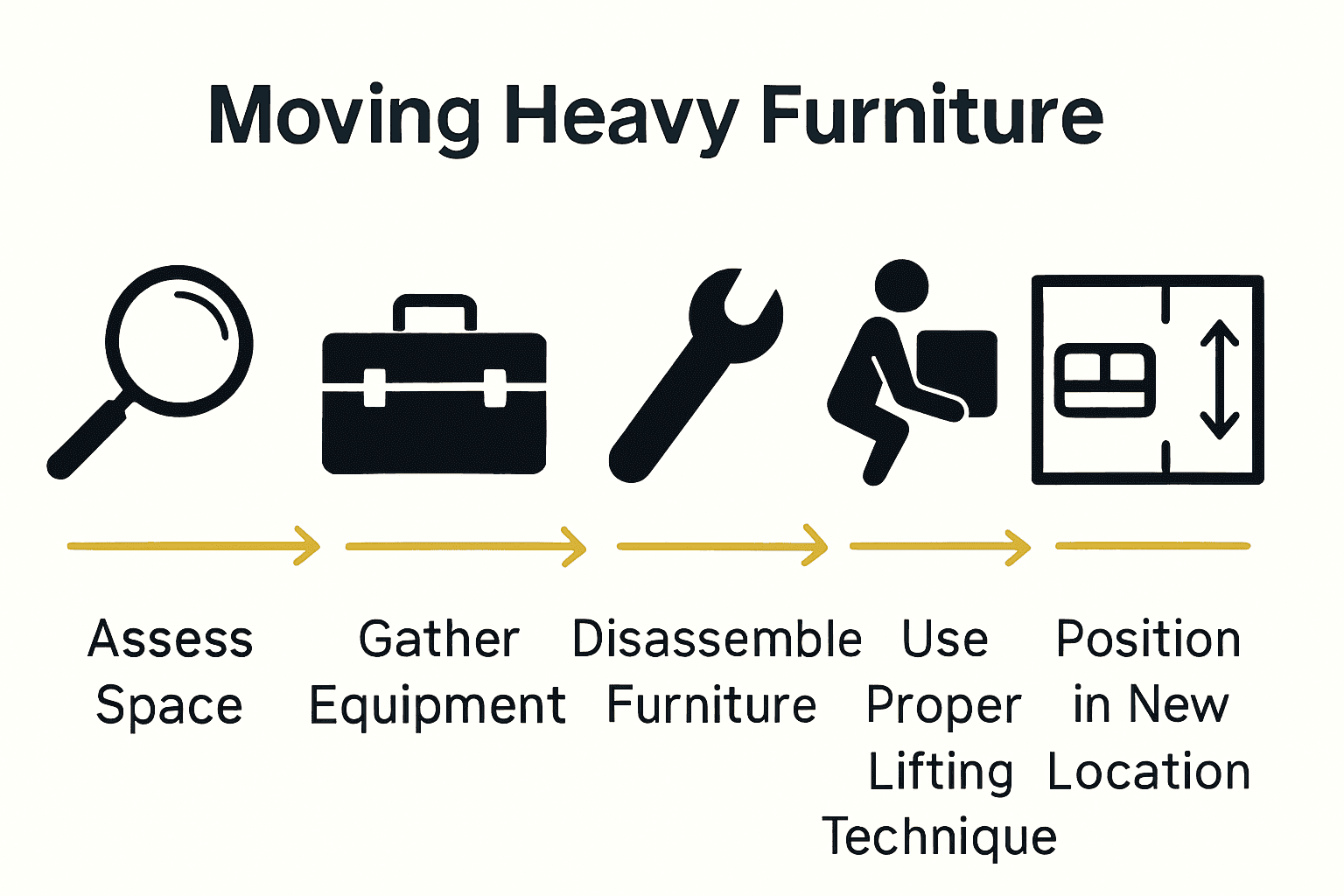
Assessing and preparing your moving space is crucial for a safe and efficient furniture relocation. Your goal is to create a clear, obstacle-free environment that minimizes potential risks and streamlines the moving process.
Start by thoroughly inspecting the entire pathway where furniture will be moved. According to BlueSafe Solutions, pre-move inspection is essential for identifying potential hazards such as poor lighting, loose rugs, or uneven surfaces. Systematically walk through each room and remove obstacles like small furniture pieces, decorative items, area rugs, electrical cords, and any loose objects that might impede movement.
Clear pathways require more than just removing objects. Measure doorways, hallways, and staircases to confirm your larger furniture pieces can navigate these spaces without difficulty. Consider disassembling larger items like bed frames or removing doors temporarily if tight spaces could pose challenges. As recommended by the Queensland Department of Education, standardizing furniture placement and reducing unnecessary movements can significantly decrease injury risks.
One critical tip: Always plan your route in advance. Sketch a basic floor plan marking potential challenges and alternative pathways. This visual strategy helps you anticipate potential obstacles and develop contingency plans before lifting a single piece of furniture.
With your space now assessed and prepared, you are ready to move on to gathering the right equipment and recruiting helpers for your furniture relocation.
Gathering the right equipment and protective gear is your blueprint for a safe and damage-free furniture move. Your goal is to collect tools that will protect both your body and your valuable furniture during the relocation process.
Start with personal protective equipment. Invest in sturdy work gloves to improve grip and protect your hands, and wear closed-toe shoes with good traction to prevent slips. Simplify Australia recommends using specialised moving equipment like lifting bars and rotating castor rollers, which can help you move heavy furniture with less physical strain and reduced injury risk.
Protective materials are equally important. According to Omni Group, heavy-duty furniture blankets and felt rolls are crucial for preventing scratches, dust accumulation, and damage during transit. These reusable protective coverings will shield your furniture from potential scuffs and impacts. Additional recommended equipment includes furniture sliders, shoulder dollies, adjustable moving straps, a furniture dolly, and packing tape.
One critical tip: Never compromise on quality when selecting moving equipment. Cheap or worn-out tools can lead to personal injury or furniture damage, which could cost you far more in the long run.
With your equipment gathered, you are now prepared to start the strategic process of protecting and moving your furniture safely.
Disassembling and securing furniture components is a critical step that can significantly reduce the risks associated with moving heavy items. Your mission is to carefully break down furniture into manageable pieces while protecting each component from potential damage.
BlueSafe Solutions emphasises the importance of a systematic approach to furniture disassembly. Begin by gathering the right tools preparation: screwdrivers, Allen wrenches, ziplock bags, and labelling materials. Take photos of furniture before disassembly to help you remember how pieces fit together. Carefully remove legs from tables, detach headboards from bed frames, and separate modular furniture components. Place screws, bolts, and small hardware in clearly labelled bags and tape them directly to their corresponding furniture piece to prevent losing critical connections.
As recommended by the Queensland Department of Education, manual handling tasks involving heavy furniture require thoughtful planning and risk assessment. Wrap each disassembled component in protective blankets or bubble wrap, paying special attention to vulnerable areas like corners and edges. For wooden furniture, use furniture pads to prevent scratches and dents. Consider using stretch wrap to keep drawers and cabinet doors securely closed during transit.
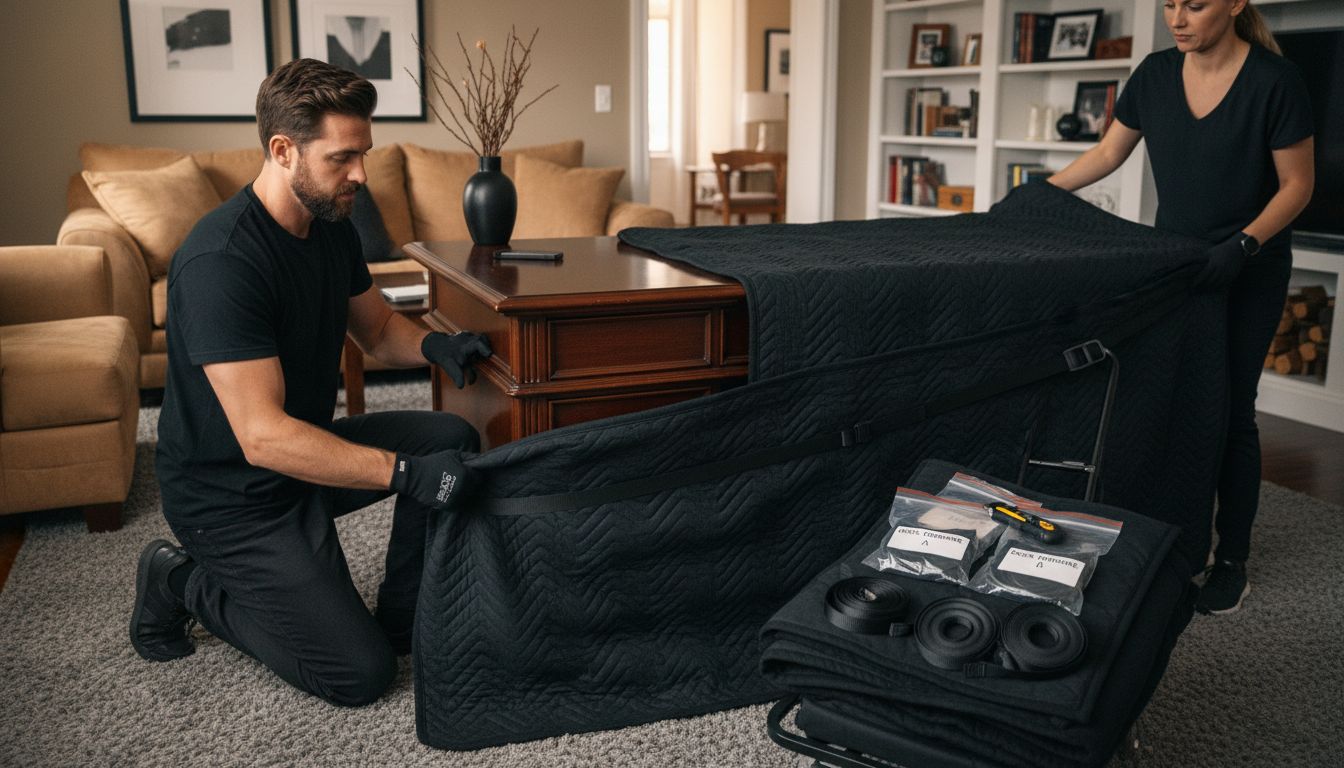
One critical tip: Never force components apart. If something seems stuck, investigate carefully to avoid causing accidental damage. A gentle approach will preserve your furniture and make reassembly easier.
With your furniture carefully disassembled and secured, you are now ready to prepare for safe transportation.
Lifting and moving furniture safely requires precision, strength, and strategic technique to prevent injuries and damage. Your goal is to transport heavy items efficiently while protecting both your body and your valuable furniture.
BlueSafe Solutions emphasizes the critical importance of correct lifting techniques. Start by positioning yourself close to the furniture, with feet shoulder width apart and a stable base. Bend your knees and keep your back straight, using your leg muscles to generate lifting power rather than straining your back. When lifting, keep the item close to your body to maintain balance and reduce muscular strain. Always lift gradually and smoothly, avoiding sudden jerking movements that could cause injury.
For particularly heavy items, Simplify Australia recommends using specialised moving equipment that can handle up to 500kg safely. Consider using shoulder dollies, furniture sliders, or lifting straps to distribute weight more evenly and reduce physical stress. When moving larger pieces, coordinate with a partner and communicate clearly about your movements. One person should lead and direct while the other follows, ensuring smooth and controlled transportation.
One critical tip: Never twist your body while carrying heavy furniture. Instead, pivot your entire body by moving your feet to change direction, which prevents potential back injuries and maintains your stability.
With these careful lifting techniques mastered, you are now prepared to transport your furniture safely to its new location.
Positioning furniture in your new space requires careful planning and strategic execution to ensure both functionality and aesthetic appeal. Your mission is to place each piece with precision while minimizing the risk of injury or damage during the final placement.
BlueSafe Solutions recommends developing a detailed unloading and positioning strategy before moving any items. Start by referencing your pre-move floor plan and measuring the designated spaces to confirm furniture dimensions. Use furniture sliders to make fine adjustments without straining yourself. Begin with larger pieces like sofas and beds, positioning them first to establish the room’s primary layout. Carefully rotate and align each item to create optimal pathways and ensure comfortable movement around the space.
Following guidance from the Queensland Department of Education, approach furniture placement as a collaborative task requiring appropriate equipment and assistance. Work with a partner to distribute weight evenly and maintain control during positioning. Use level indicators to ensure items like bookcases and cabinets are perfectly balanced. Take time to step back and visually assess the overall arrangement, making incremental adjustments to achieve both functional and aesthetic harmony.
One critical tip: Never rush the final positioning. Small, deliberate movements are safer and more precise than aggressive repositioning that could cause injury or damage.
With your furniture carefully placed, you are now ready to reassemble any disassembled components and prepare for final setup.
Handling large furniture pieces is more than just a physical challenge it requires careful planning, the right tools, and experienced professionals who understand safe lifting techniques and strategic placement. This guide highlights the importance of properly assessing your space, using protective gear, and applying expert methods to prevent injury and damage. But let’s be honest managing all these steps alone can leave you stressed and overwhelmed.
Onyx Removals is here to take the weight off your shoulders. Our Melbourne-based team specialises in moving heavy, awkward furniture safely and efficiently. We bring the right equipment, expert know-how, and personalised service to ensure your move is smooth from start to finish. Whether you need packing, secure transport, or thoughtful placement at your new location, our comprehensive range of services covers every detail.

Ready to experience stress-free moving tailored just for you Discover how Onyx Removals can simplify your heavy furniture move today. Visit our website, check out our customer success stories, and get your personalised quote now. Don’t risk injury or damage when expert help is just a click away. Start your safe and seamless furniture relocation with us now.
Learn more about how we can support your move at Onyx Removals Services and let us handle the hard work while you focus on the excitement of your new space.
Assess your space by inspecting pathways and identifying potential hazards like loose rugs or uneven surfaces. Clear all obstacles and measure doorways, hallways, and staircases to ensure your furniture can pass through without issue.
Gather essential equipment like sturdy work gloves, closed-toe shoes, and specialized moving tools such as dollies, lifting straps, and sliders. Ensure you have protective materials too, like blankets and bubble wrap, to safeguard your furniture during transit.
Disassemble furniture carefully by using the right tools, such as screwdrivers and Allen wrenches. Organize screws and small parts in labeled bags and wrap each piece in protective materials to prevent damage during the move.
Use proper lifting techniques by bending your knees, keeping your back straight, and lifting with your legs instead of your back. Maintain a stable base with your feet shoulder-width apart and keep the item close to your body to reduce the risk of injury.
Plan your furniture placement by referencing a pre-move floor plan and measuring spaces in your new location. Use sliders for adjustments and work with a partner to ensure safe lifting and repositioning to achieve the desired arrangement.
If furniture components seem stuck, avoid forcing them apart to prevent damage. Instead, investigate the connection points gently and look for hidden screws or fasteners that may need removal before carefully disassembling the piece.

No Related Post


