



Every year, more than 600,000 Australians face the challenge of moving into new living arrangements as they age. This process involves complex emotions, unique practical needs, and the desire to maintain independence and dignity. With the right approach, you can turn a senior move from a source of anxiety into a positive transition that supports well being, comfort, and safety at every step.
| Main Insight | Explanation |
|---|---|
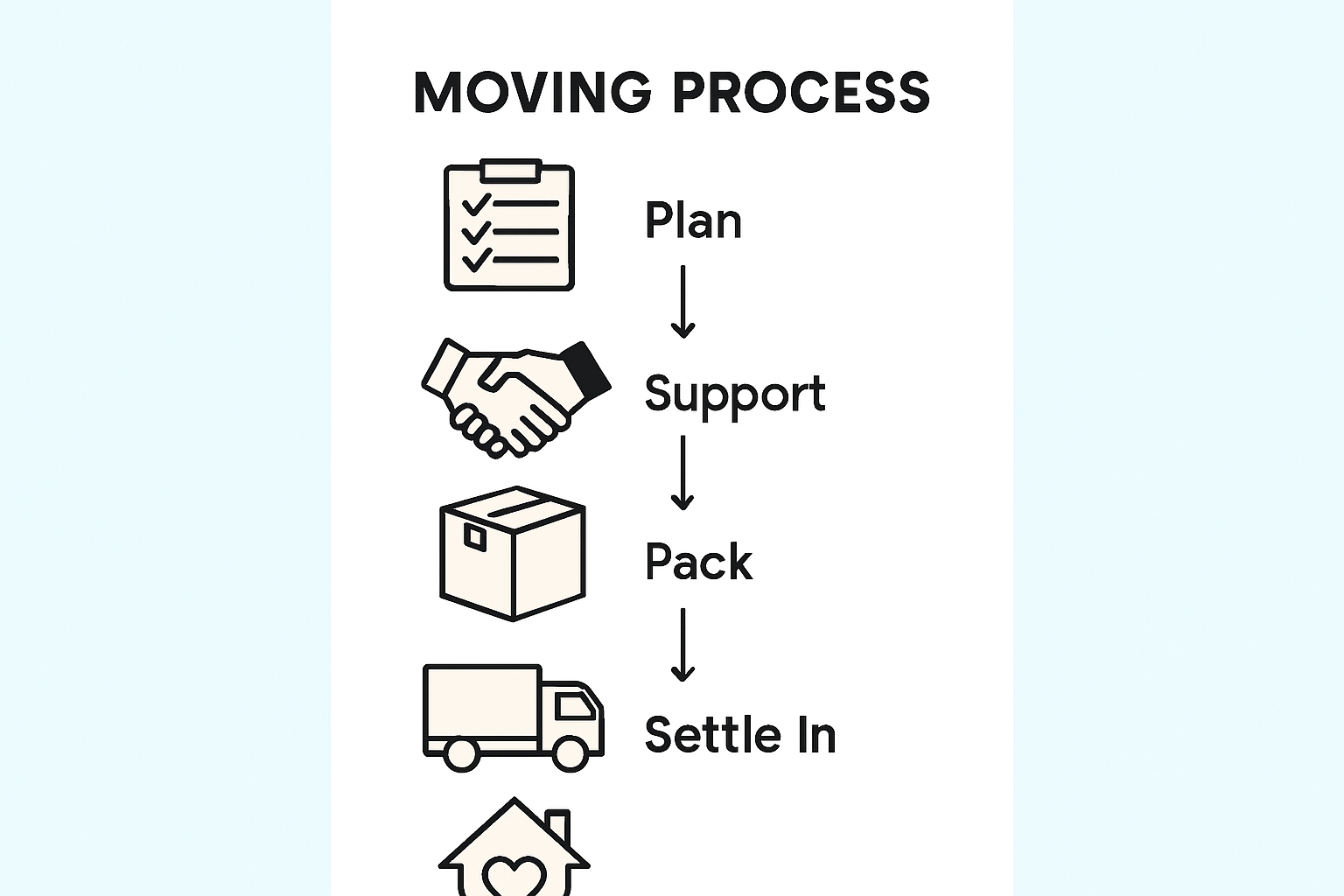
| 1. Understand Individual Needs | Conduct open discussions to identify preferences and concerns regarding the move, ensuring the process respects their autonomy. |
| 2. Develop a Personalised Moving Plan | Create a detailed timeline that incorporates their physical, emotional, and medical requirements, allowing for flexibility and their involvement in decisions. |
| 3. Sort Belongings Collaboratively | Engage in a thoughtful sorting process, categorising items while prioritising emotional attachments and involving the senior in all decisions. |
| 4. Coordinate Transport Effectively | Ensure transport options meet mobility needs, while preparing a support network and schedule that accommodates comfort and safety during the move. |
| 5. Create a Safe New Environment | Assess and adapt the new living space to enhance safety and comfort, involving the senior in setting up their surroundings to aid their adjustment. |
Understanding individual requirements is the cornerstone of a stress-free senior move. When relocating an older family member, you’ll want to create a personalised approach that respects their autonomy and comfort. The key is comprehensive dialogue and careful observation.
Start by scheduling a relaxed, unhurried conversation with your senior loved one about their specific needs and preferences. The Australian Government’s assessment guidelines recommend a holistic approach that prioritises the individual’s rights and choices. Ask open ended questions about their physical capabilities, emotional attachments to belongings, and specific concerns about the upcoming move. Are they worried about leaving familiar spaces? Do they have cherished items they absolutely want to bring? Understanding these nuanced details helps craft a move strategy that feels supportive rather than disruptive.
Pay close attention to potential mobility challenges, medical requirements, and emotional readiness. Aged care quality standards emphasise creating personalised plans that optimise individual well-being. This might mean arranging specialised transport, ensuring medication continuity, or scheduling the move during a time that minimises stress. Remember that empathy and patience are your greatest tools in this process. By centring their perspective, you transform a potentially overwhelming transition into a collaborative, respectful journey.
Crafting a personalised moving plan is your roadmap to a smooth and supportive relocation experience for your senior loved one. This critical stage transforms a potentially stressful transition into a thoughtful, manageable journey that respects their individual needs and preferences.
The Australian Government’s Single Assessment System emphasises developing flexible care strategies that adapt to changing requirements. Begin by creating a comprehensive moving timeline that breaks down tasks into manageable steps. Consider your loved one’s physical capabilities, emotional readiness, and specific needs. Document their medical requirements, preferred moving schedule, and any special accommodations they might need. This might include arranging specialised transport, planning medication management, or identifying support networks that can provide emotional assistance during the move.
Prioritise flexibility and compassion throughout your planning. Government aged care reforms highlight the importance of maintaining independence and community connections. Involve your senior family member in every decision possible, allowing them to feel in control and respected. A truly personalised moving plan isn’t just about logistics it’s about preserving dignity, minimising stress, and creating a sense of excitement about their new living arrangement. Remember that each small consideration can significantly reduce anxiety and make the transition feel more like an adventure than an upheaval.
Sorting and packing belongings for a senior move requires sensitivity, patience, and strategic planning. This stage is about more than just moving items it is about preserving memories, respecting emotional attachments, and ensuring your loved one feels supported throughout the process.

The Support at Home program guidelines emphasise creating a comfortable and safe living environment during transitions. Begin by conducting a collaborative sorting session with your senior family member. Create three primary categories: items to keep, items to donate, and items to discard. Involve them in every decision to maintain their sense of control and dignity. Pay special attention to sentimental objects photographs, heirlooms, or cherished mementos that carry deep emotional significance. These items are more than just objects they represent a lifetime of memories and experiences.
Adopt a compassionate approach when helping your loved one declutter. Communication resources from aged care provider toolkits recommend using gentle, respectful language that validates their feelings. Take frequent breaks, be patient, and understand that letting go can be emotionally challenging. Consider photographing items they are struggling to part with this can provide comfort and a sense of preservation. Prioritise their emotional well being over efficient packing and remember that this process is a journey of transition not just a physical move.
Coordinating transport and moving day support is a critical phase that requires meticulous planning and compassionate execution. Your goal is to create a seamless transition that minimises stress and ensures your senior loved one feels safe, comfortable, and respected throughout the moving process.
Guidance material for Elder Care Support Workers emphasises the importance of personalised support during transitions. Begin by arranging specialised transport that accommodates your loved one’s specific mobility needs. This might involve securing a wheelchair accessible vehicle, ensuring comfortable seating, or scheduling breaks during longer journeys. Consider their physical comfort medical requirements like medication schedules, restroom access, and potential fatigue. Create a detailed moving day schedule that includes buffer time and allows for unexpected pauses or adjustments.
Prepare a comprehensive support network for moving day. Aged care provider resources recommend assembling a team that can provide both practical and emotional support. This might include family members, a trusted carer, or professional moving assistants who understand the unique needs of senior relocations. Pack a dedicated comfort kit with essential medications, favourite snacks, personal comfort items, and important documents. Communicate clearly with everyone involved about your loved one’s specific preferences and potential anxiety triggers. Remember that moving day is not just a logistical challenge but an emotional journey that requires patience, empathy, and unwavering support.
Settling into a new living environment is more than just unpacking boxes it is about creating a sense of belonging and security for your senior loved one. Your primary focus during this transition is to transform an unfamiliar space into a comfortable sanctuary that supports their independence and well being.
The Support at Home program booklet provides comprehensive guidance on creating a safe and supportive living environment. Begin by conducting a thorough safety assessment of the new space. Look for potential hazards like uneven flooring, inadequate lighting, or narrow hallways. Install assistive technologies such as grab bars in bathrooms, non slip mats, improved lighting, and perhaps a medical alert system. Arrange furniture to create clear pathways that support mobility and reduce fall risks. Consider their specific needs such as proximity to bathrooms, easy access to essential items, and comfortable seating that provides both support and relaxation.
Aged Care Quality Standards emphasise the importance of continuous assessment and personalisation. Engage your loved one in the settling in process by involving them in decisions about room arrangements and decoration. Bring familiar items like cherished photographs, favourite blankets, or meaningful artwork to create a sense of continuity and emotional comfort. Establish a routine that provides structure while remaining flexible. Check in regularly not just physically but emotionally to ensure they feel supported and heard during this significant life transition. Remember that settling in is a gradual process that requires patience compassion and attentive care.
Moving with seniors can be challenging because it requires sensitive planning that respects their unique needs and emotional attachments. This guide highlights how personalisation, patience and thoughtful coordination are essential to reduce stress and create a smooth transition for your loved ones. At Onyx Removals we understand these challenges and specialise in providing tailored moving solutions designed to prioritise comfort safety and dignity throughout every step of the relocation.
Our professional team offers personalised moving plans that align with the principles described in the article including specialised transport arrangements and careful packing and unpacking to preserve cherished items. Whether you need residential or specialist moving assistance you can rely on our experience to make the process seamless. Learn more about our approach on our business – Onyx Removals page and explore the wide range of services we provide to cater to your family’s specific requirements.

Choose a moving partner who respects the importance of this life transition and supports your family every step of the way. Contact us today at https://onyxremovals.com.au to receive a personalised quote and discover how we can help make your senior loved one’s move as stress-free and comfortable as possible.
Understanding your senior loved one’s needs involves having a relaxed conversation about their preferences and concerns regarding the move. Schedule this discussion carefully, asking open-ended questions about their mobility, emotional attachments, and any specific worries they have about leaving their current home. Document their feedback to create a personalised moving plan within the next few weeks.
A personalised moving plan should outline a comprehensive timeline, detailing tasks while considering your loved one’s physical and emotional needs. Break down the move into manageable steps, addressing medical requirements, preferred moving times, and emotional support networks. Aim to finalise this plan at least 30 days before the moving day.
Collaborate with your senior loved one to sort their belongings into three categories: keep, donate, and discard. Use gentle, encouraging language and allow them to drive the decision-making process to respect their emotional attachment to their items. Schedule dedicated sorting sessions, aiming to complete this process a couple of weeks before the move.
When coordinating transport for moving day, ensure the vehicle accommodates your senior loved one’s mobility needs, such as wheelchair access or comfortable seating. Create a detailed schedule that allows for breaks during the journey to minimise fatigue. Finalise transport arrangements at least two weeks in advance to ensure everything runs smoothly.
Set up the new living space to be safe and familiar by rearranging furniture and installing assistive technologies as needed. Involve your loved one in decorating their new space with sentimental items, like photographs or favourite blankets, to create emotional continuity. Aim to complete the settling-in process within the first week after the move, ensuring regular check-ins to address any needs they may have.

No Related Post


