


TL;DR:
- Choosing the correct packing supplies ensures belongings arrive undamaged and unpacking is efficient.
- Proper box sizes, high-quality tape, and clear labelling are crucial for safe and organized moves.
Most people assume any old box and a roll of tape will do the job. Then they arrive at their new home with crushed cartons, shattered plates, and a wardrobe full of crumpled clothes. The truth is, choosing the right packing supplies for moving is one of the most consequential decisions you’ll make before moving day, yet it rarely gets the attention it deserves. This guide cuts through the guesswork and tells you exactly what to buy, why it matters, and how to use it properly so your belongings arrive safely and unpacking doesn’t feel like an archaeological dig.
| Point | Details |
|---|---|
| Use the right box sizes | Pack heavy items in small boxes and lighter, bulkier items in large boxes to prevent injury and collapse. |
| Packing paper beats newspaper | Packing paper tears less easily, leaves no ink residue, and fills voids better to protect fragile items. |
| Tape every seam with care | Apply quality packing tape in an H-pattern on the bottom and top flaps to stop boxes opening mid-move. |
| Label on at least two sides | Include the room, contents, and priority so removalists and family can sort boxes instantly on arrival. |
| Stock extra supplies | Most people underestimate how much tape, paper, and bubble wrap they need. Buy more than you think. |
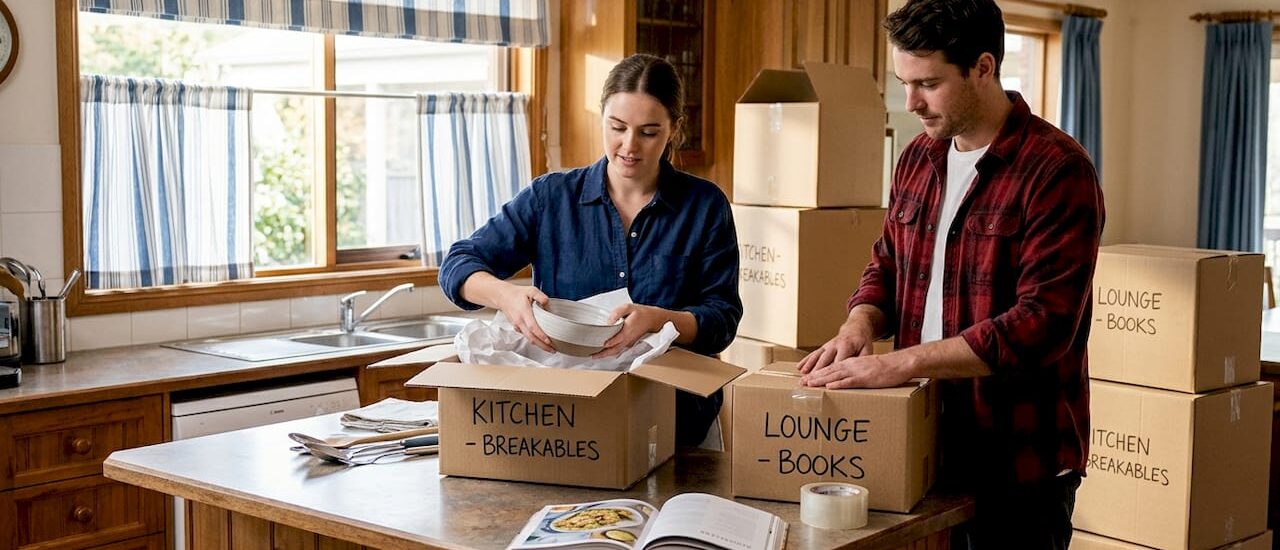
The single biggest mistake people make before a move is treating boxes as interchangeable. They’re not. Using a variety of box sizes based on item weight and fragility directly reduces the chance of injury and damage during your move. Once you understand that principle, everything else about choosing packing materials for moving falls into place.
Here’s the core logic: the heavier an item, the smaller the box it should go in. A small box (roughly 1.5 cubic feet) is ideal for books, canned food, tools, and anything dense. A medium box handles kitchenware, small appliances, and toys. A large box (up to 4.5 to 6 cubic feet) suits light but bulky items like pillows, duvets, and lamp shades. Large boxes can hold up to 65 pounds in volume capacity, but that doesn’t mean you should fill them with heavy goods. Keep heavy items in small boxes, full stop.
For a standard three-bedroom home, plan on 60 to 80 boxes across all sizes. That number surprises a lot of people, but once you account for every drawer, cupboard, and shelf, it adds up quickly. Running out of boxes on packing day is genuinely stressful, so over-order rather than under-order.
Beyond standard cartons, consider these specialty options:
| Box type | Best for | Approximate size |
|---|---|---|
| Small | Books, tools, tins | 1.5 cu ft |
| Medium | Kitchen items, toys | 3 cu ft |
| Large | Bedding, cushions, lamps | 4.5 to 6 cu ft |
| Wardrobe | Hanging clothes | 18" x 24" x 45" |
| Dish pack | Crockery, glassware | Double-walled carton |
Quality boxes are worth paying for. Single-wall cartons fold under pressure; double-wall holds its shape when stacked. After the move, flat-pack them and store or recycle them. Many removalist companies and council waste programmes accept cardboard bundles.
Boxes keep your belongings contained. Cushioning keeps them safe. These are two entirely different jobs, and skimping on protective packing materials for moving is where most breakages occur.
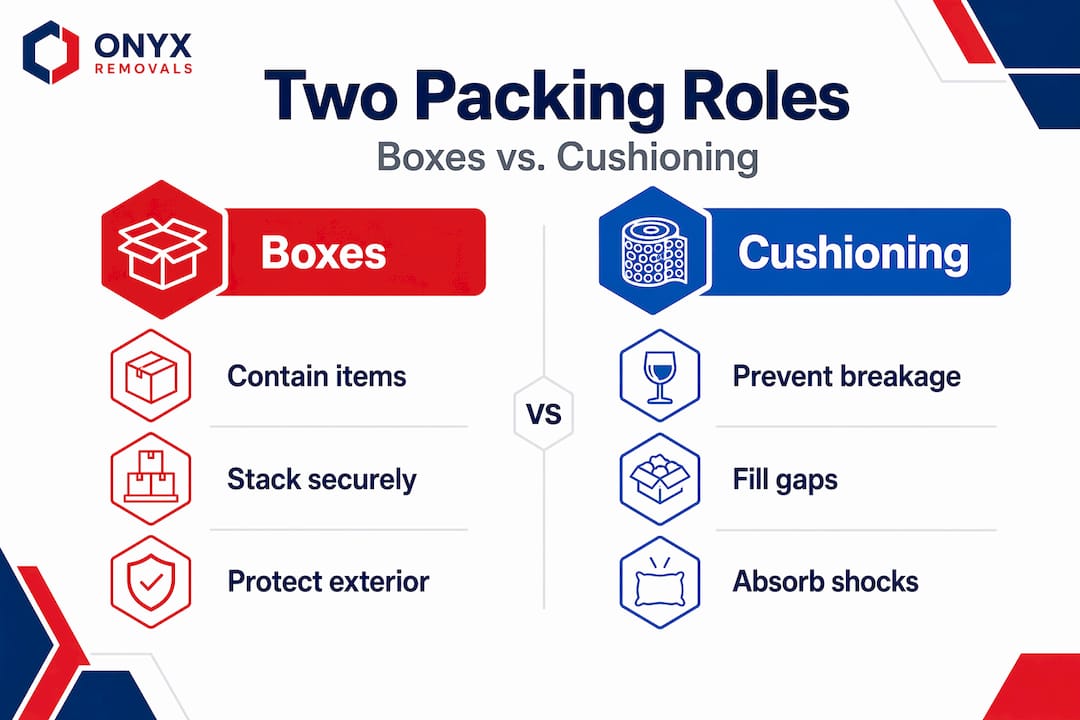
Packing paper tears less easily when balled up than newspaper and fills voids more effectively to immobilise items during transit. It also leaves no ink transfer on your belongings, which newspaper absolutely will. Use it to individually wrap mugs, bowls, ornaments, and picture frames. Ball it up to fill empty space at the top of boxes. If you’re searching for packing paper for moving near me, most hardware stores, removalist suppliers, and large office supply chains in Melbourne stock it.
The rule for fragile items is simple: wrap each piece individually, then cushion it within a double layer of protection, with at least an inch of padding on all sides so the item stays centred and can’t shift or contact the box wall. For detailed guidance on protecting breakables, Onyx Removals has a thorough resource on fragile item packing tips that goes room by room.
Bubble wrap is excellent for hard, smooth-surfaced items like ceramics, glass, and electronic screens where packing paper alone won’t absorb impact. It’s less effective as a void filler because it compresses under weight. Foam peanuts fill irregular spaces well but shift over time, leaving gaps and causing items to move. If you do use peanuts, pack the box completely full and shake it before sealing to check for settling.
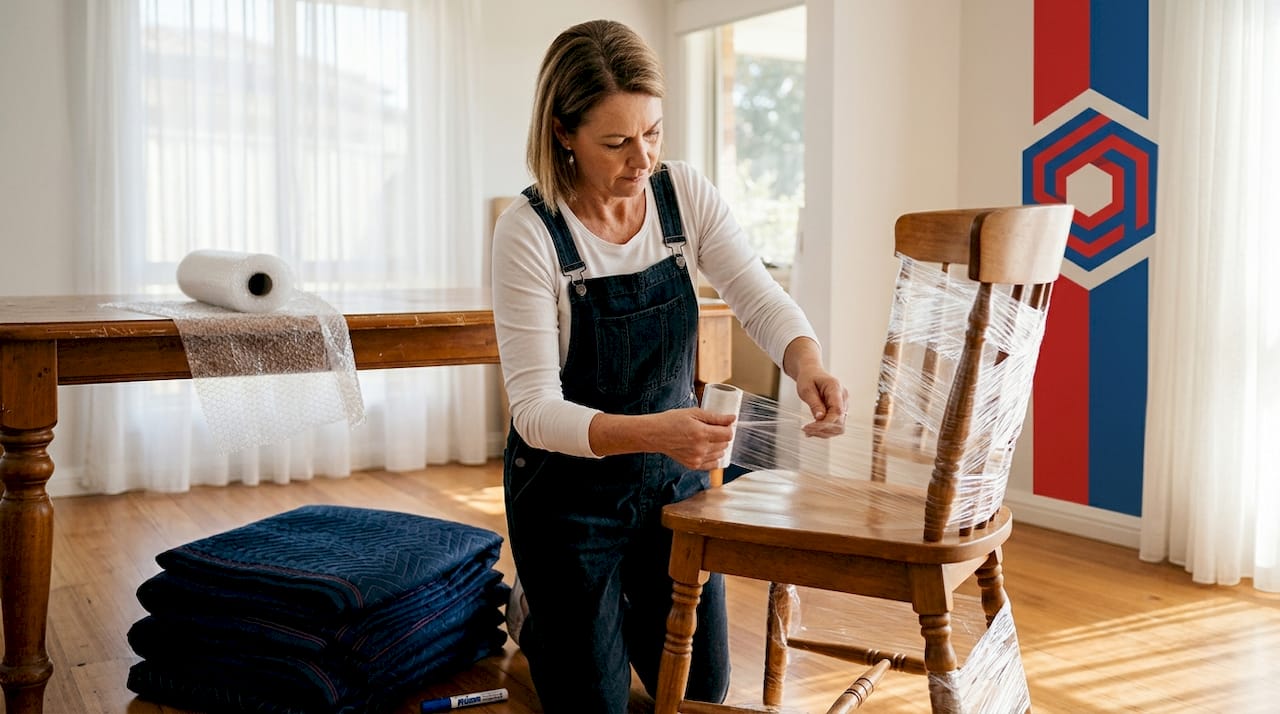
Plastic stretch wrap keeps drawers closed, bundles chair legs together, and protects surfaces from scratches and dust. It’s indispensable for furniture. Furniture pads and moving blankets add another layer of protection for timber, upholstered pieces, and appliances during transit. Mattress bags are a specific purchase worth making. A mattress is expensive. A thick plastic mattress bag costs very little and keeps it clean, dry, and protected throughout the move.
Pro Tip: Never use rope to secure boxes or furniture in a removal truck. It cuts into surfaces and loosens over time. Use stretch wrap and ratchet straps instead.
Once a box is packed, your goal is to make it impossible to open accidentally and instantly identifiable on arrival. That requires good tape and clear labelling. These two things also happen to be what most people buy too little of.
Cheap tape peels, tears, and loses adhesion under weight or humidity. Invest in high-quality packing tape that’s at least 48mm wide, and always use a tape dispenser. Dispensers feel like an unnecessary extra purchase, but they make taping every seam faster and more accurate. Without one, you’ll spend half your time wrestling with a roll and end up with crooked strips that don’t seal properly.
The method that works:
This taping method means the box won’t spring open if it’s tilted, dropped, or stacked under other cartons.
Label every box on at least two sides using a permanent marker that won’t smear or fade. Include the destination room, a brief list of contents, whether anything fragile is inside, and a priority marker like “OPEN FIRST” for boxes you need access to immediately. Onyx Removals has a dedicated guide on efficient box labelling that covers colour-coding systems in detail.
Colour-coded tape or stick-on labels per room are genuinely helpful. Assign blue to the kitchen, green to the garden, red to the master bedroom, and so on. When removalists are carrying dozens of boxes at speed, a colour system means every box ends up in the right room without anyone needing to read fine print.
Pro Tip: Pack a clear bag of markers, spare tape, and extra labels and keep it accessible on moving day. Running out of tape mid-pack is one of the most avoidable delays there is.
Beyond boxes and wrapping materials, a handful of physical tools make the actual move dramatically easier and safer.
The essentials worth sourcing before moving day:
For a full breakdown of what to have ready on the day itself, the Onyx Removals moving day essentials guide covers everything from personal comfort items to parking logistics.
Having the right moving box supplies is only part of the picture. How you use them determines whether things arrive intact.
Here are the packing methods that actually work:
Pro Tip: Before you start packing in earnest, take a photo of the back of every electronic device so you know which cable goes where when you reassemble at the new property. It takes two minutes and saves a great deal of frustration.
For a full timeline of when to pack what, work through the step-by-step packing schedule from Onyx Removals so supplies and packing happen in the right order.
I’ve watched hundreds of moves unfold, and the pattern is remarkably consistent. People buy two rolls of tape and run out halfway through. They grab whatever boxes are free from the supermarket and wonder why a box full of wine glasses collapses. They skip mattress bags because it feels like a small thing, and then deal with a stained or wet mattress that costs far more to replace than a bag ever would have.
The other big one is labelling. People feel pressed for time at the end of packing and stop labelling properly. “I’ll remember what’s in here,” they say. They don’t. Unlabelled boxes create chaos on arrival and mean rooms don’t get sorted for weeks.
What I’ve found genuinely works is treating the supply list as seriously as the move itself. Buy more tape than you think you need. Double your estimate of packing paper. Get the dispenser. Invest in the wardrobe boxes because refolding and ironing every piece of clothing after a move is miserable. Colour-code your rooms. The people who pack well unpack fast, and unpacking fast means you feel at home sooner. That’s worth spending an extra fifty dollars on supplies.
— Dinshaw
If reading through this list feels like a lot to manage alongside everything else a move demands, that’s because it genuinely is. Onyx Removals provides residential moving services in Melbourne designed to handle exactly this. The team brings professional-grade packing materials for relocation, knows which supplies suit which situations, and packs with a method that protects your belongings from start to finish. For those who prefer to source their own moving home supplies and handle packing independently, Onyx Removals also offers access to moving equipment hire including dollies, furniture pads, and protective wrap. Whether you want full-service support or just the right gear, get in touch for a personalised quote tailored to your home size, timeline, and needs.
Most three-bedroom homes require between 60 and 80 boxes across a mix of small, medium, and large sizes. Always buy slightly more than your estimate, as it is far easier to return unused flat-packed boxes than to scramble for more mid-pack.
Yes. Packing paper tears less easily, fills voids more effectively, and leaves no ink residue on your belongings. Newspaper ink transfers onto surfaces and doesn’t provide reliable cushioning for fragile items.
The H-pattern involves running one strip of tape along the central seam of a box flap, then two strips across that seam horizontally. This forms an H shape and creates a much stronger seal than a single strip of tape down the middle.
Wardrobe boxes keep hanging garments wrinkle-free and ready to rehang immediately. Folding clothes into regular boxes works for casual items, but for suits, dresses, and delicate fabrics, a wardrobe box saves significant time and avoids the need for ironing after the move.
Pack bed linen, a kettle, mugs, phone and laptop chargers, toiletries, a change of clothes, any medications, and basic snacks. Label this box “OPEN FIRST” and make sure it’s the last thing loaded onto the truck so it’s the first item you can access on arrival.

No Related Post


