



Managing a commercial office move in Melbourne means every small misstep can ripple out into lost productivity and frustrated teams. When you shoulder the responsibility as a project manager, your role demands far more than ticking logistics boxes. You become the anchor, driving planning and coordination efforts that keep business disruption to a minimum while guiding staff through each step. This guide uncovers proven methods for maintaining continuity from the old location to the new, ensuring your move delivers results without costly downtime.
| Point | Details |
|---|---|
| Comprehensive Planning is Essential | Conduct detailed feasibility assessments and establish clear timelines to mitigate risks and streamline the move. |
| Effective Stakeholder Management | Ensure communication caters to diverse stakeholder needs to maintain alignment and address concerns promptly. |
| Rigorous Budget Control | Pre-approve budgets and document assumptions to prevent overspending and ensure financial transparency throughout the project. |
| Post-Move Support is Crucial | Monitor staff integration and gather feedback after the move to identify issues and optimise workplace functionality. |
An office relocation project manager sits at the centre of your move, overseeing every element that keeps your business running smoothly during transition. Unlike a standard removal coordinator, your role extends beyond logistics to encompassing stakeholder management, budget control, timeline coordination, and operational continuity. You’re responsible for ensuring that when staff members walk into their new workspace, they can immediately focus on their work rather than grappling with incomplete setups or lost equipment. This means orchestrating planning and coordination efforts that anticipate problems before they materialise and implementing solutions that minimise the operational impact on your business.
Your core responsibilities include conducting thorough eligibility assessments and feasibility planning for the relocation itself. Before a single box is packed, you’ll evaluate the scope of the move, identify potential complications specific to Melbourne’s CBD congestion or inner-suburb office locations, and develop contingency plans for everything from IT infrastructure interruptions to parking challenges at your new premises. You’ll manage budgets with precision, tracking every expense from removal services to cabling installation whilst ensuring stakeholders understand costs without hidden surprises. Managing funding and reimbursements falls within your purview, particularly when dealing with staff relocation entitlements or departmental budget allocations. The relocation management process also requires you to support individuals during the transition, whether that’s arranging accommodation assistance, managing transportation of equipment, or coordinating office familiarisation sessions at the new location.
You’ll develop and communicate a detailed relocation timeline that aligns with business operations. This isn’t simply about booking a removal truck; it’s about scheduling office moves in phases if necessary, coordinating with IT teams for equipment decommissioning and recommissioning, managing utility connections, and ensuring lease transitions happen seamlessly. Your project management expertise means creating clear milestones, assigning ownership of tasks, and holding regular communication touchpoints with all parties involved. Your ability to anticipate disruption and build buffers into timelines directly impacts how quickly your team can return to full productivity. Managing stakeholder expectations becomes crucial because everyone from the CEO to front-line staff needs to understand the plan and their role within it.
Pro tip: Create a detailed handover checklist at least two weeks before moving day that assigns responsibility for each workspace element (furniture positioning, technology setup, stationery ordering, signage installation) to specific team members, preventing last-minute scrambles and ensuring nothing falls through the cracks.
Office relocations rarely happen in a single chaotic push. Instead, successful moves break down into distinct phases that build on each other, creating a structured pathway from planning to full operational readiness. Understanding these phases helps you allocate resources correctly, set realistic timelines, and identify potential friction points before they become costly problems. Your role as a project manager is to orchestrate these phases so that each one flows seamlessly into the next without creating bottlenecks or surprises for your team.
The planning phase forms your foundation. This is where you conduct feasibility assessments, identify eligible staff needing relocation support, and determine what relocation assistance your organisation will provide. You’ll evaluate the new office space against current operational requirements, assess IT infrastructure needs, and flag any logistical complications specific to Melbourne’s transport networks or building access restrictions. During this phase, you’re also communicating with stakeholders, gathering requirements from different departments, and beginning to build stakeholder buy-in for the move. Pre-relocation planning involves clearly outlining what support will be available to staff, whether that includes temporary accommodation, moving allowances, or flexible working arrangements during transition. You’ll establish your budget parameters and approval procedures, ensuring everyone knows the relocation support framework before moving day arrives.

The execution phase covers the actual move and immediate settling period. This includes coordinating with removal service providers, managing the physical transportation of equipment and personal effects, and ensuring IT systems are decommissioned from the old location and recommissioned in the new one. You’ll oversee utility connections, lease handovers, and the meticulous task of getting workstations set up so people can actually work. This phase demands precision and constant communication because delays cascade quickly. A delayed internet connection in one department can derail productivity across multiple teams. Your coordination with external providers like removalists, electricians, and telecommunications companies becomes critical here.
Post-move support represents the final phase that many organisations overlook, yet it determines whether your relocation actually succeeds. This phase includes assisting staff with settling into the new location, addressing any teething problems with workspace layouts or IT systems, and gathering feedback on what worked well and what didn’t. You’ll monitor productivity metrics to ensure the move hasn’t created unexpected disruptions, handle any last-minute issues with furniture placement or equipment functionality, and support staff who are struggling with the transition. This phase typically lasts two to four weeks after moving day, though some issues may emerge later.
Here’s how each relocation project phase contributes to a successful move:
| Project Phase | Core Focus | Main Risks Addressed | Typical Duration |
|---|---|---|---|
| Planning | Strategy and scoping | Budget overruns, missed needs | 4–8 weeks pre-move |
| Execution | Physical move logistics | IT outages, equipment loss | 1–2 weeks (staggered moves) |
| Post-move Support | Staff settling and feedback | Productivity loss, unresolved issues | 2–4 weeks post-move |
Pro tip: Maintain a centralised issues register during all three phases where any team member can log problems or concerns, assigning each item an owner and target resolution date so nothing disappears into a communication gap.
Managing an office relocation demands a specific skill set that goes beyond general project management. You need the ability to juggle competing priorities while keeping your team focused on business continuity. This means developing strategic thinking, detailed planning expertise, stakeholder communication skills, and risk management capability. Unlike project managers overseeing software development or construction, you’re operating in a compressed timeline where every decision ripples through your organisation’s daily operations. Your team cannot afford downtime equivalent to what other projects might tolerate, so your planning must anticipate problems rather than react to them.
Communication forms your most critical skill. You’ll spend more time talking to people than reviewing spreadsheets. Different stakeholder groups need different information delivered at different times. Finance wants budget certainty. Department heads want assurance their teams will maintain productivity. IT needs detailed infrastructure specifications. Your front-line staff just wants to know when they’re moving and where their desk will be. Mastering stakeholder engagement and relationship management allows you to craft messages that resonate with each group whilst maintaining consistent overarching messaging. You’ll need to translate between technical and non-technical language, manage conflicting demands, and keep everyone aligned even when tensions rise.
Your planning requirements must be ruthlessly comprehensive. Start with a master timeline that breaks the entire relocation into manageable chunks, assigning dependencies so you understand which tasks must happen before others can begin. Build contingency buffers into every critical path item because Melbourne’s traffic, unexpected building code compliance issues, or supplier delays will test your plans. Strategic planning and risk assessment are not optional luxuries but foundational requirements. Document assumptions about utility availability, parking arrangements, and IT system compatibility. Create risk registers identifying what could go wrong (supplier failure, key staff illness, unexpected building problems) and establish response protocols before these scenarios materialise. Your budget planning must track both fixed costs like removal services and variable costs that emerge during execution. Never assume your budget will remain static once the move begins.
You’ll also need strong analytical and problem-solving abilities. Office relocations generate unexpected complications because you’re coordinating multiple external providers, navigating building regulations, and managing human elements that resist predictability. Can your phone system integrate with the new building’s infrastructure? Will your furniture fit through the doorways? Is there adequate power for all your equipment? These questions require methodical investigation, not assumptions. Keep detailed records of all decisions, approvals, and changes because you’ll need to reference them weeks into the move. Build relationships with key vendors and stakeholders because when problems emerge, those relationships determine whether you get rapid solutions or bureaucratic delays.
Pro tip: Create a skills matrix early in your project identifying which team members bring expertise in IT, facilities, finance, and operations, then assign each person ownership of their domain whilst you orchestrate the overall coordination so critical knowledge doesn’t reside solely in your hands.
Office relocations operate within a complex web of legal and safety obligations that extend far beyond simply moving desks and equipment. Overlooking these requirements can expose your organisation to liability claims, breach of employment agreements, regulatory penalties, and workplace incidents that could have been prevented through proper planning. Your role includes ensuring that every aspect of the relocation complies with relevant legislation, industry standards, and your organisation’s own policies. This isn’t bureaucratic busywork but rather foundational risk management that protects both your staff and your organisation.
Employment law forms the first critical layer. You must ensure proper staff consultation and adherence to employment agreements throughout your relocation project. This means notifying affected employees well in advance, explaining how the move affects their roles, and addressing any concerns about working conditions, travel distances, or changed circumstances. Some employment agreements contain relocation clauses that specify what support the organisation must provide. Others don’t, which means you need to clarify entitlements before announcing the move. If your organisation is unionised, you’ll need to follow consultation procedures outlined in enterprise agreements. Providing adequate notice periods is not optional. Springing a relocation on staff with insufficient notice breaches trust and potentially violates employment law. You’ll also need to manage reimbursement processes transparently, ensuring claims are processed promptly and staff understand what expenses are covered and what aren’t.
Occupational health and safety requirements demand equal attention. Moving activities introduce genuine hazards that require proper risk management. Your relocation plan must include health and safety risk management protocols addressing manual handling of equipment, traffic management during moves, adequate lighting and signage in the new space, and safe access routes. If your move involves any hazardous materials or specialised equipment, you’ll need specific risk assessments. Conduct a thorough site inspection of the new office to identify potential safety issues before staff arrive. Check for adequate emergency exits, functional fire safety equipment, accessible facilities for staff with disabilities, and appropriate ergonomic setup for workstations. Document all safety measures implemented and maintain records demonstrating your due diligence.
Compliance with building codes, accessibility standards, and local council requirements represents another essential area. Your new office must meet relevant building standards for its jurisdiction. If the space involves modifications or renovations before occupation, obtain necessary permits and ensure inspections are completed. Verify that the building complies with disability access requirements under relevant legislation so all staff can work safely and effectively. Check utility connections meet current standards and that any IT infrastructure installations comply with telecommunications regulations. Maintain documentation of all compliance checks and approvals as evidence that you’ve fulfilled your obligations.
The following table outlines key legal and compliance focus areas for office relocations in Australia:
| Compliance Category | Primary Obligation | Typical Documentation Needed |
|---|---|---|
| Employment Law | Staff consultation, entitlements | Advance notices, signed agreements |
| Work Health & Safety | Risk-controlled move and setup | Risk assessments, training logs |
| Building & Accessibility | Code compliance, inclusive access | Permits, accessibility certifications |
| Financial Compliance | Transparent expense monitoring | Cost registers, reimbursement forms |
Pro tip: Create a compliance checklist at the project outset covering employment law, health and safety, building codes, and accessibility requirements specific to your industry and Melbourne’s regulations, then assign responsibility for verifying each item with target completion dates so nothing falls through administrative cracks.
Relocation budgets have a stubborn habit of expanding once the move begins. Unexpected costs emerge from building modifications, additional IT infrastructure requirements, or extended timelines caused by unforeseen complications. Your challenge is establishing financial controls that prevent runaway expenses whilst remaining flexible enough to address genuine problems. The key lies in separating fixed costs you can negotiate upfront from variable costs you’ll need to manage actively throughout the project. Start by pre-approving relocation budgets and negotiating assistance limits with finance leadership before the project kicks off. This gives you clear parameters and prevents mid-project arguments about spending authority. Document every assumption in your budget, from removal company quotes to equipment purchases, so you can identify precisely where variances occur.
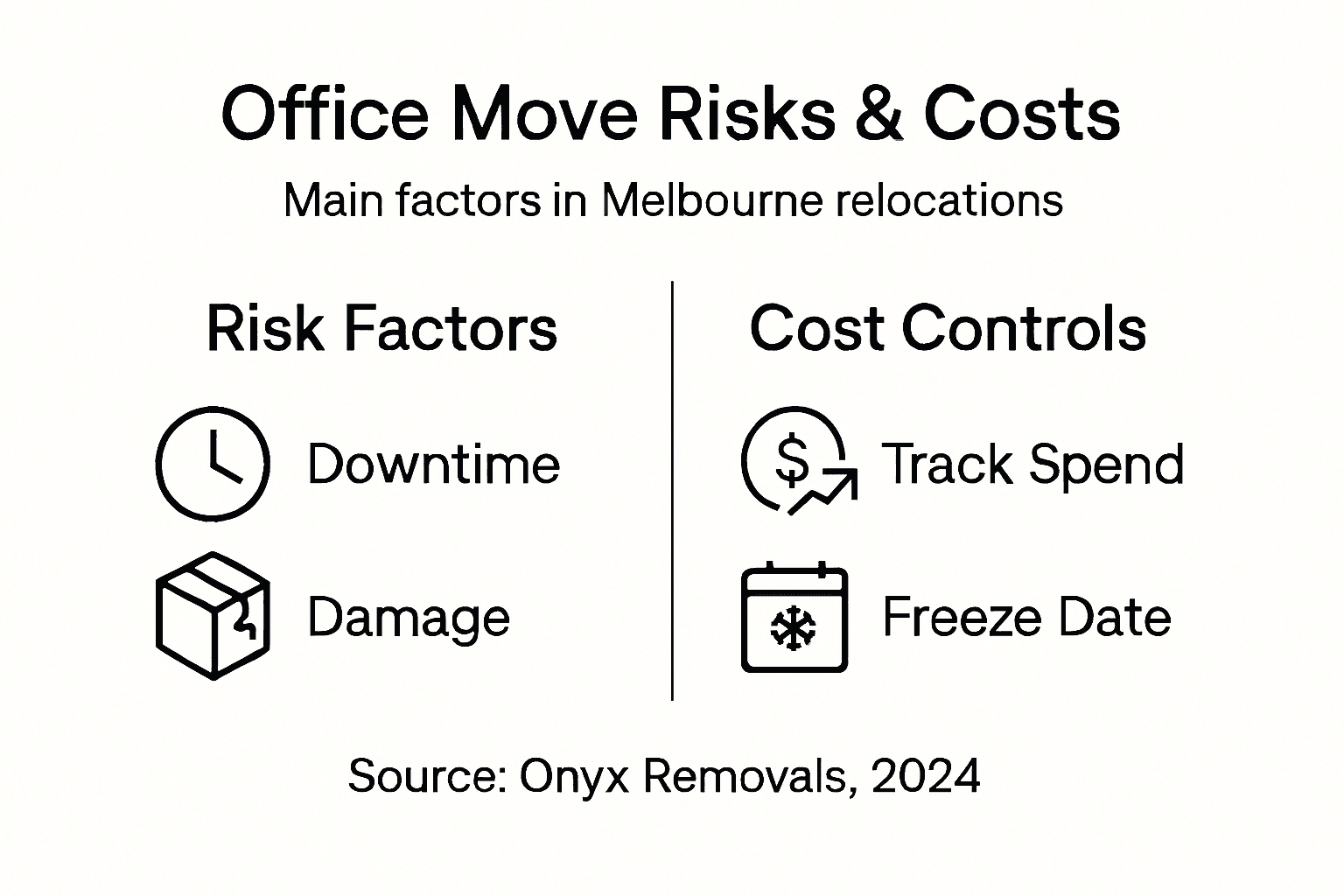
Risk management requires identifying potential disruption sources and building mitigation strategies before problems materialise. Office relocations create three primary disruption categories: operational interruption from IT system downtime, productivity loss from staff confusion or incomplete workspace setup, and quality degradation from rushed work or inadequate planning. Address operational risk by scheduling the move during low-activity periods if possible, ensuring IT systems are thoroughly tested in the new location before staff arrive, and having your internet service provider on standby for immediate troubleshooting. Manage productivity risk by providing staff with clear information about what to expect, how their workday will change during the transition, and where they can find answers to questions. Mitigate quality risk by building adequate time into your schedule and resisting pressure to compress timelines that will force corners to be cut. Create detailed risk registers identifying what could derail your project, rating the probability and impact of each risk, then assigning ownership for monitoring and responding to each identified risk.
Cost control throughout execution requires active monitoring and disciplined change management. Implement a simple tracking system where every expense is logged against your approved budget categories. When costs threaten to exceed limits, investigate immediately rather than discovering overruns at project conclusion. Establish clear approval processes for any changes to scope or spending so you’re not constantly surprised by new requests that blast through your budget. Communicate regularly with stakeholders about budget status so no one discovers cost overruns unexpectedly. Consider building contingency reserves of approximately 10 percent of your total budget for genuine emergencies, but protect this reserve fiercely against scope creep that should be properly authorised and tracked.
Disruption avoidance depends on meticulous planning of the moving sequence itself. Stagger moves by department or floor rather than relocating the entire office simultaneously, allowing you to test systems and resolve problems incrementally. Move departments in reverse order of client interaction so customer-facing teams move last when systems are proven and reliable. Ensure adequate staffing at the new location during initial days to help colleagues locate equipment, troubleshoot technology issues, and answer questions. Maintain the old office space for several days after the primary move in case urgent items were overlooked. Schedule your move when Melbourne traffic is lightest, typically midweek and mid-morning, rather than during rush hours or weekends when your removal team will work slower.
Pro tip: Establish a cost freeze date approximately 60 percent through your project timeline, after which no new expenses are approved unless they address critical safety or compliance issues, forcing all discretionary spending decisions to happen early when you have accurate visibility of remaining budget.
Managing an office relocation in Melbourne demands precision, strategic planning and seamless coordination to minimise disruption and protect your business operations. If you are a project manager navigating the complexities of budget control, stakeholder communication and risk management, partnering with trusted professionals can make all the difference. Onyx Removals specialises in tailored commercial moving solutions designed to support every phase of your office relocation, helping you keep productivity high and stress low.
Discover how our experienced team can assist with comprehensive moving services for Melbourne businesses, from careful packing to secure transportation and setup. Visit our business – Onyx Removals page for specialised offerings that align perfectly with your project requirements. Ready to streamline your office move today? Contact us now via Onyx Removals and ensure your next relocation is executed smoothly and successfully.
An office relocation project manager oversees stakeholder management, budget control, timeline coordination, and ensures operational continuity during a move. They anticipate problems and implement solutions, allowing staff to focus on their work immediately upon moving into the new workspace.
To minimise disruption, a project manager should develop a detailed relocation timeline, stagger departmental moves, and keep communication clear among all stakeholders. This includes scheduling moves during low-activity periods and maintaining the old space temporarily to address any urgent needs.
Key skills include strong communication abilities, strategic thinking, detailed planning, risk management, and analytical problem-solving. These skills ensure the project manager can effectively coordinate logistics and address any unexpected complications that arise during the move.
Project managers must ensure compliance with employment laws, occupational health and safety regulations, and local building codes. This includes consulting with staff, conducting risk assessments, and documenting safety protocols to protect both employees and the organisation.

No Related Post


