



Moving across Melbourne can feel overwhelming when you need to keep fragile furniture, electronics, or stock safe from damage. Packing loose boxes into a truck often leads to shifting and broken goods, which is why many locals turn to pallet packing services for secure, organised relocations. Pallet packing uses specialised platforms and tight wrapping to stabilise your belongings, making both residential and small business moves safer, simpler, and less stressful. Discover how the right packing method protects your items and saves you time on moving day.
| Point | Details |
|---|---|
| Pallet Packing Definition | Pallet packing is a specialised service that secures items on a pallet for safe transport, preventing damage during relocations. |
| Pallet Types | Wooden, plastic, and metal pallets are commonly used, each with advantages depending on cost, durability, and intended use. |
| Benefits of Pallet Packing | This method maximises space utilisation and ensures stability of items, significantly reducing moving costs and damage risk. |
| Choosing a Provider | Local Melbourne removalists have better knowledge of regional logistics and compliance, ensuring a smoother moving experience. |
Pallet packing is a specialised moving service that secures your belongings onto a standardised platform called a pallet for safe transport. This method combines secure wrapping, strategic placement, and proper securing techniques to keep items stable during relocation. It’s especially popular among Melbourne homeowners and small businesses moving fragile items, heavy equipment, or large quantities of goods.
At its core, pallet packing involves placing your items on a flat, horizontal platform and wrapping them tightly to prevent shifting during transit. Pallets support goods for easier handling, storage, and shipping by enabling bulk movement and secure stacking. This approach significantly reduces damage risk compared to loose loading, which is why professional removalists recommend it for valuable or delicate items.
The type of pallet matters for your move’s success. Most Australian removalists use three main varieties:
Wooden pallets dominate the market because they balance cost-effectiveness with reliability. They’re also reusable, which reduces waste during your move.
Choosing pallet packing offers several real advantages for Melbourne relocations. Items wrapped to pallets stay stable throughout transport, meaning less chance of damage to your furniture, electronics, or artwork. The method also improves space utilisation in removal trucks, potentially reducing your overall moving costs if you’re moving a moderate amount of goods.
For small business owners relocating retail stock or office equipment, pallet packing streamlines the entire process. Your items arrive at your new location organised, secured, and ready for immediate placement.
Professional pallet packing transforms loose items into stable, moveable units that protect your belongings and simplify the entire relocation process.
The wrapping process itself serves multiple purposes. Tight wrapping prevents individual items from moving independently, protects surfaces from scratches, and keeps related items grouped together for easier unpacking at your destination.
Pro tip: When scheduling your pallet packing service with a Melbourne removalist, discuss your item types upfront—fragile glassware, heavy machinery, and artwork all require slightly different securing approaches for optimal protection.
Not all pallet packing is the same. The type of pallet you choose directly impacts how well your belongings survive the move and what it costs you. For Melbourne homeowners and small business owners, understanding these options means making smarter decisions about your relocation.
Wooden pallets are the workhorses of Australian removals. They’re affordable, easy to repair if damaged during transit, and handle both heavy and fragile items exceptionally well. Most removalists stock wooden pallets because they balance cost-effectiveness with reliability.
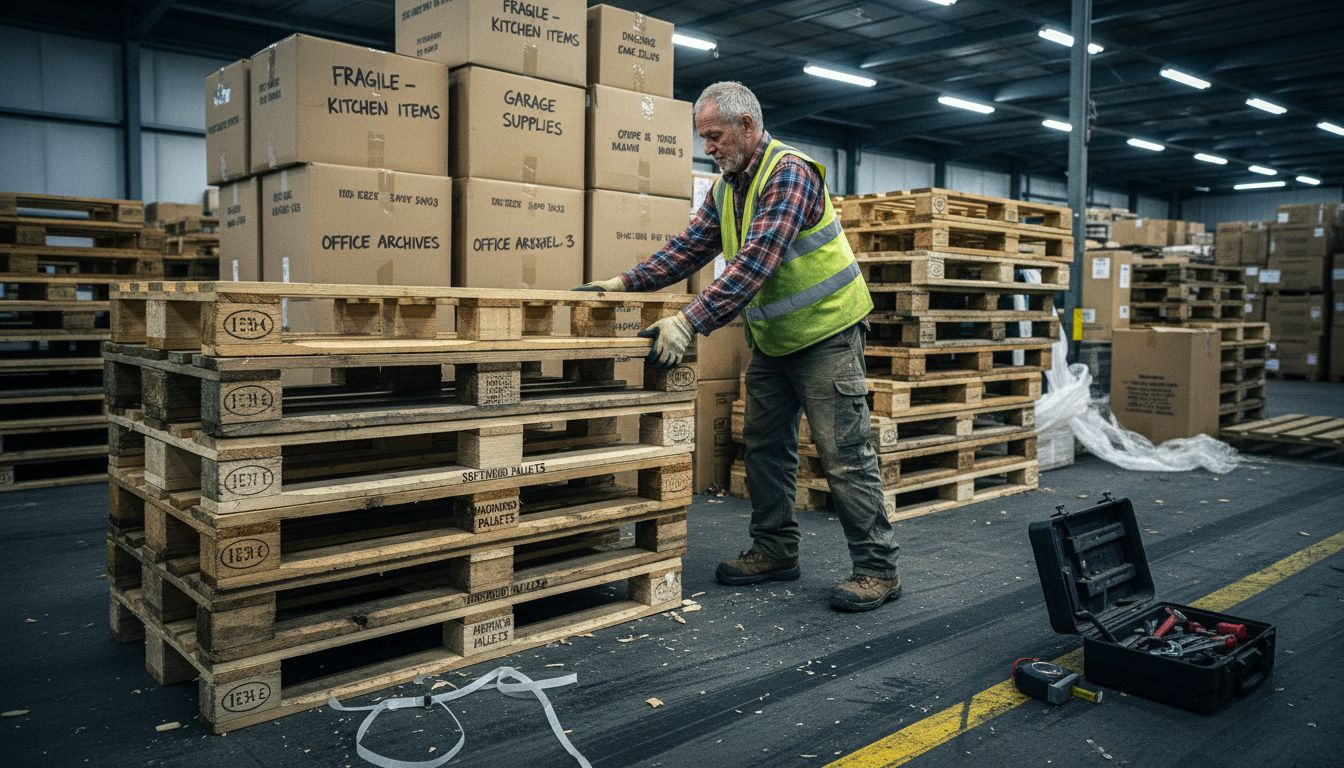
You’ll find wooden pallets in two varieties: softwood and hardwood. Softwood options cost less and suit lighter loads, whilst hardwood varieties handle heavier items like machinery or dense furniture. Both types are reusable and environmentally friendly compared to alternatives.
The main drawback? Wooden pallets can absorb moisture, which matters if you’re moving during wet Melbourne seasons. They’re also heavier than plastic options, slightly increasing transport weight.
Plastic pallets offer superior hygiene benefits and resist moisture and chemicals far better than wood. They’re significantly stronger and last longer with minimal maintenance. Plastic pallets are increasingly used in sectors with strict hygiene requirements, making them ideal if you’re relocating sensitive goods like food products or medical equipment.
However, plastic pallets come with a higher upfront cost. They’re also heavier than wooden alternatives and less common in standard removalist fleets, potentially limiting availability for your specific move.
Metal pallets represent the premium option for heavy-duty applications. They provide exceptional strength and durability for industrial equipment or extremely heavy loads. Their strength means they rarely need replacement, offering long-term value despite initial expense.
The trade-off is significant: metal pallets are heavy, expensive, and rarely used for residential moves. Most Melbourne removalists don’t stock them due to cost and weight disadvantages for typical household relocations.
Beyond material type, pallets differ in how forklifts access them. Two-way entry pallets allow lifting from two sides, whilst four-way entry allows access from all four sides, improving storage efficiency and flexibility.
| Pallet Type | Cost | Durability | Best For | Drawbacks |
|---|---|---|---|---|
| Wooden | Low | Good | General moves | Moisture sensitive |
| Plastic | High | Excellent | Hygiene-sensitive goods | Expensive, less available |
| Metal | Very High | Superior | Heavy industrial loads | Heavy, costly, uncommon |
Choosing the right pallet type balances your budget, the nature of your items, and your removalist’s available inventory.
Most Melbourne homes benefit from wooden pallets. They’re cost-effective, readily available, and handle typical household items safely. Small businesses with standard retail stock follow the same logic unless they have specific hygiene or durability requirements.
Pro tip: When requesting a quote for pallet packing, specify your item types and any special requirements—this helps your removalist recommend the most suitable pallet type and avoid unexpected costs or delays on moving day.
Here’s how pallet packing choices impact typical moving scenarios:
| Scenario | Recommended Pallet | Key Benefit | Main Consideration |
|---|---|---|---|
| Moving fragile artwork | Hardwood wooden pallet | Stable support for delicate items | Extra wrap protection needed |
| Small business with retail stock | Standard wooden pallet | Efficient stacking and loading | Ensure correct weight balance |
| Food/medical equipment relocation | Plastic pallet | Hygienic, easy to clean | Higher service and material cost |
| Heavy machinery transport | Metal pallet | Handles extreme weights safely | Added weight increases transport cost |
Pallet packing might seem straightforward, but professionals follow a precise process to ensure your belongings arrive damage-free. Understanding these steps helps you appreciate what your removalist does and why it matters for your move.
Every packing job starts with choosing the correct pallet base. Your removalist considers your item weight, the warehouse setup, and your specific needs when making this choice. A heavy furniture load requires sturdy hardwood pallets, whilst lighter boxes might use softwood or plastic options.
The pallet selection directly affects how safely your items travel. Wrong choice here compounds problems throughout the entire packing process.
Placement matters enormously. Heaviest items go at the pallet base, with lighter goods stacked carefully on top to create tight, stable layers. This arrangement prevents shifting during transport and reduces damage risk dramatically.
Your removalist arranges items to avoid overhang beyond the pallet edges. Everything stays centred and balanced, which improves handling efficiency and safety throughout transit.
Once items are stacked, the pallet gets wrapped tightly. Your removalist applies stretch wrap or shrink wrap starting from the base and working upwards, creating multiple layers for protection. Corner boards reinforce weak points where items might shift.
Straps and bands provide additional security, keeping everything locked in place. This multi-layer approach prevents individual items from moving independently during the move.
Height limits matter in Australian transport regulations. Pallets must stay under 1.8 metres tall to comply with road transport requirements and carrier standards. Your removalist checks measurements before the truck loads.
Proper height management prevents damage to your items and ensures legal compliance during transit through Melbourne.
Visible labelling on all sides prevents delays and handling mistakes. Your removalist marks shipping details, destination addresses, and any special handling instructions directly on the wrapped pallet.
Clear labelling ensures your pallet reaches the right location without confusion or unnecessary stops.
Proper pallet packing reduces freight damage, handling delays, and additional unexpected charges during your move.
Here’s how the process flows from start to finish:
Professional removalists follow a structured packing timeline that coordinates these steps efficiently, ensuring nothing gets missed and your belongings stay protected.
Pro tip: Before your removalist arrives, photograph items you’re packing and note any fragile pieces—this creates a reference record if any damage claims arise and helps your removalist understand what needs extra care during wrapping.
Pallet packing costs money, but cutting corners costs more. Understanding what goes wrong helps you avoid expensive damage claims and delays during your Melbourne move.
Pallet packing services typically cost between $200 and $800 depending on item complexity, pallet type, and wrapping requirements. Wooden pallets cost less than plastic or metal options. The investment protects your belongings far better than loose loading.
Skipping professional packing to save money often backfires. Damaged items, delayed deliveries, and liability disputes cost far more than upfront packing fees.
Improper weight distribution like placing heavy items on top of light ones creates unstable loads that shift during transit. This causes damage and increases the risk of load collapse on the truck.
Heaviest items must always go at the pallet base. Everything balances from there, creating a stable foundation for the entire stack.
Boxes extending beyond pallet edges reduce load stability significantly. Overhanging items get knocked during handling, causing them to fall or shift the entire stack off balance.
Professional packers ensure everything sits within the pallet footprint. This improves handling safety and prevents damage claims.
Damaged pallets can collapse under load, ruining everything on top. Using the wrong pallet type for your goods creates similar problems. A light plastic pallet cannot handle heavy machinery—it simply fails.
Your removalist inspects pallets before use and selects the correct type for your specific items. This prevents costly failures during transport.
Insufficient stretch wrap application allows items to shift independently during transit. Boxes move, furniture gets scratched, and fragile items break. Multiple wrap layers and corner protectors prevent these issues.
Straps, bands, and corner boards work together to lock everything in place. Skimping on wrapping materials leads to preventable damage.
Individual boxes lacking internal cushioning allow contents to move inside boxes during transport. Glassware rattles. Electronics shift. Delicate items break before they even reach the pallet.
Proper internal packing with bubble wrap, foam, or packing paper keeps individual items stable. This protects goods from the moment they’re packed until they’re unpacked at your new home.
Avoiding these five mistakes reduces damage claims, prevents delivery delays, and protects your investment during relocation.
Several hidden expenses emerge when mistakes happen:
Understanding hidden moving costs before your relocation helps you budget accurately and avoid surprises.
Pro tip: Request a detailed packing quotation that specifies wrap materials, pallet type, and labour costs—transparent pricing upfront prevents billing surprises and ensures your removalist uses appropriate materials for your specific items.
Compare the effects of common pallet packing mistakes:
| Mistake | Likely Result | Extra Cost Risk |
|---|---|---|
| Overhanging items | Damaged goods, instability | Damaged item replacement |
| Wrong pallet chosen | Collapsed loads, breakages | Claims and liability disputes |
| Skimping on wrap | Boxes shift, surface damage | Repairs or replacements |
| Poor internal box packing | Breakages inside boxes | Lost value, insurance issues |
Not all removalists handle pallet packing equally. Selecting a local Melbourne provider who understands your specific needs makes the difference between a smooth move and a stressful one.
Local providers know Melbourne’s traffic patterns, infrastructure challenges, and regional logistics better than interstate companies. They understand how weather affects moves, which routes work best, and what compliance requirements apply specifically to your area.
A removalist familiar with your suburb can optimise routes, predict delays accurately, and provide realistic timelines. This local knowledge prevents surprise costs and schedule disruptions.
Before contacting providers, clarify what you actually need. Are you moving a few pieces of furniture or an entire household? Do you have fragile items requiring specialist care? Is timing flexible or do you need a specific moving date?
Providers assess these factors differently. Understanding your requirements helps them recommend appropriate pallet types, labour levels, and service packages that match your situation.
When comparing local Melbourne removalists, check these critical areas:
Providers with strong track records demonstrate reliability through customer testimonials and industry recognition. Comparing removal companies helps you evaluate capability, pricing, and service quality side by side.
Australian Standard pallets for local and interstate shipping require providers to understand regulations and compliance standards. Reputable Melbourne removalists ensure all pallets meet relevant requirements.
Sustainability matters too. Ask whether they reuse pallets, recycle damaged materials, or use eco-friendly wrapping options. This reflects their commitment to responsible business practices.
Clear pricing prevents billing surprises. Request detailed quotes specifying labour, materials, pallet type, and any additional charges. Good providers explain exactly what you’re paying for.
Regular communication throughout your move keeps you informed. You should receive updates on pickup times, estimated delivery windows, and any unexpected issues as they arise.
Local providers with transparent communication, proven experience, and genuine customer support reduce moving stress and protect your belongings.
Contact three to five local removalists and request specific quotes. Provide detailed information about your items, your moving date, and your destination. Compare quotes side by side, but don’t automatically choose the cheapest option.
The lowest price often reflects cut corners. Mid-range quotes from experienced, well-reviewed providers usually offer the best value.
Pro tip: Request references from recent customers and ask specifically about their pallet packing experience—talking to people who’ve actually used the service reveals whether the removalist delivers on promises and handles your item types carefully.
Moving fragile or bulky items requires more than just lifting and loading. The key challenge highlighted in the article is protecting your belongings from damage caused by improper pallet selection, poor weight distribution and inadequate wrapping. If you want peace of mind knowing your items will arrive stable and intact, professional pallet packing is essential. Onyx Removals understands these pain points and specialises in tailored pallet packing solutions designed to suit your unique move whether residential or commercial.
Our team employs industry best practices including strategic item placement, high-quality wrapping and pallet type selection to prevent shifting and damage. We also comply fully with Australian standards for pallet transport to ensure safety and reliability. Don’t risk costly damage claims or delays when you can rely on experts who prioritise the security of your goods and provide transparent service.
Ready to protect your move with trusted pallet packing? Experience a stress-free relocation with Onyx Removals — Melbourne’s local moving professionals offering personalised plans for every move.
Discover how our comprehensive business removal services cater specifically to secure pallet packing needs. For residential or office moves visit our main site at Onyx Removals and get a detailed quote today. Take control of your move and book expert pallet packing now to avoid damage and delays.
Pallet packing is a specialised service that secures your belongings onto a standardised platform called a pallet for safe transport. It involves strategic placement, wrapping, and securing techniques to keep items stable during relocation.
Pallet packing significantly reduces the risk of damage to your belongings during transport. It ensures that items are stable and organised, making the moving process more efficient, especially for fragile or heavy items.
The three main types of pallets used for packing are wooden pallets, plastic pallets, and metal pallets. Wooden pallets are the most common due to their affordability and durability, while plastic and metal pallets offer specific advantages for hygiene and heavy-duty applications, respectively.
The pallet packing process involves selecting the right pallet, strategically arranging items based on weight, securing them with wraps and straps, verifying height compliance, and ensuring clear labelling for transport. These steps protect your belongings and facilitate smooth unloading at the destination.

No Related Post


