



Moving from Melbourne to a new home in Sydney, Brisbane, Perth, or Adelaide feels overwhelming when distance and regulations come into play. Interstate relocations require far more planning and resources than a local move within Victoria. Road freight remains the dominant mode for interstate moves across Australia due to the country’s vast size and reliance on federal highways. This guide helps you understand the essential features that define professional interstate moving, simplifying the complex logistics so you can approach your relocation with confidence.
| Point | Details |
|---|---|
| Interstate Moving Services | These services involve long-distance transport across state borders, necessitating complex logistics and compliance with various regulations. |
| Service Options | Choices range from full-service moves that manage everything, to self-service options that allow more control and lower costs. |
| Planning and Compliance | Successful interstate moves require thorough planning, understanding legal obligations, and maintaining proper documentation to avoid delays. |
| Cost Factors | Key cost determinants include distance, weight, service type, and timing, with transparent pricing avoiding unexpected charges. |
Interstate moving services differ fundamentally from local relocations because they cross state borders and involve considerably longer distances. These services handle the transportation of your household belongings, furniture, and personal items across Australia’s varied terrain and regulatory landscape.
Key characteristics of interstate moving include:
Australia’s geography makes interstate moves unique. The country’s vast distances mean relocations between Melbourne and Sydney, Brisbane, Perth, or Adelaide require substantial planning and resources. Unlike local moves within Victoria, interstate services must navigate Australia’s expansive road network and federal highway systems that connect states and territories.
The reliance on road freight is critical for Australian interstate moves. Most interstate relocations depend on road transport rather than rail, as road freight remains the dominant mode for transporting goods across state borders. This reflects Australia’s infrastructure patterns and the practical realities of reaching diverse destinations nationwide.
Professional interstate moving companies like Onyx Removals manage several operational elements simultaneously. They coordinate with multiple transport hubs, ensure compliance with regulations governing cross-state movement, and handle documentation required for interstate transport. Your belongings pass through different jurisdictions, each with specific requirements.
Weight and volume assessment forms the foundation of any interstate move. Companies must evaluate your freight’s total weight, dimensional specifications, and classification to determine vehicle requirements, route planning, and cost structures. Oversized items or specialised goods require additional consideration during this assessment phase.
Interstate moving services define professional relocation by coordinating complex logistics across state borders whilst ensuring your possessions arrive safely and on schedule.
The timeframe for interstate moves varies based on distance and complexity. A Melbourne to Sydney removal typically takes 3 to 5 days, whilst Perth relocations require considerably longer planning and execution periods. Professional movers provide realistic timelines after evaluating your specific requirements.
Pro tip: Request a detailed assessment of your belongings before committing to any interstate moving company, as accurate weight and volume estimates directly impact your final costs and delivery timeframes.
Interstate moving companies offer different service levels to match your budget and needs. Your choice depends on how much help you want, how quickly you need to move, and what you’re willing to spend.
Full-service moves handle everything from start to finish. The team packs your belongings, loads them into the truck, transports them across state lines, unloads at your destination, and often unpacks as well. This option costs more but removes all the physical work from your shoulders.

Self-service and containerised options give you more control and lower costs. You pack your own items, and the moving company provides the transport. Containerised shipments offer flexibility—you load at your pace, and the container sits with you until you’re ready for pickup.
Common service types include:
Route options depend heavily on where you’re moving. Melbourne to Sydney follows established corridors on federal highways with regular weekly shuttles. Perth and Brisbane routes require longer planning periods and different transport strategies. Regional centres may need custom routing depending on access and distance.
Popular interstate routes from Melbourne include:
Route planning focuses on efficient federal highway corridors to ensure timely delivery despite Australia’s geographic spread. Professional movers understand traffic patterns, road conditions, and seasonal challenges affecting each route.
Here’s how Melbourne’s most popular interstate removal routes compare:
| Route | Typical Duration | Planning Complexity | Main Challenge |
|---|---|---|---|
| Melbourne to Sydney | 3–5 days | Moderate | Urban traffic, coordination |
| Melbourne to Brisbane | 4–6 days | Moderate-High | Long distance, weather |
| Melbourne to Adelaide | 2–3 days | Low | Border crossing, timing |
| Melbourne to Perth | 7–10 days | High | Distance, remote access |
| Melbourne to Regional Areas | Variable | Custom routes required | Road access, fewer shuttles |
Weekly shuttle services operate between major cities, meaning your move might share truck space with other customers. Direct transport moves provide faster delivery but typically cost more. Storage options bridge the gap if your new home isn’t ready when your belongings arrive.
Choose your service type based on three factors: your budget, available time, and how much physical work you can manage yourself.
Specialised services handle unique items requiring expert care. Vehicle shipping, piano moving, and fine art transport demand specialised equipment and trained professionals. Onyx Removals provides these services for items beyond standard household goods.
Pro tip: Compare full-service and self-pack options by calculating your time value—if your hourly rate justifies paying for packing, full-service often saves money and stress despite higher upfront costs.
Interstate moving involves more than just loading a truck. You need to understand the planning phases, legal requirements, and compliance obligations that protect your move from delays or penalties.
The planning process starts weeks before your moving date. Professional movers assess your inventory, calculate weight and volume, determine the appropriate vehicle size, and identify the best route. This initial consultation informs your timeline, costs, and service selection.
Key planning stages include:
Regulatory compliance becomes critical when moving certain items across state borders. If you’re relocating a vehicle, mandatory insurance requirements such as compulsory third party coverage apply. Unregistered vehicles require specific permits depending on the destination state.
Vehicle transportation demands particular attention. Each state has different rules for moving cars, motorcycles, or caravans. Your moving company should handle documentation and ensure compliance with transport safety legislation to avoid fines or delays at state borders.
Insurance protection is non-negotiable. Standard moving insurance covers accidental damage during transport, but you should verify coverage limits match your belongings’ value. High-value items like artwork, jewellery, or electronics may need additional coverage.
Regulatory compliance isn’t optional—it protects you from fines, delays, and legal complications during your interstate relocation.
Specialised items require advance planning. Moving a piano, fine art collection, or antiques involves specialised handling procedures and potentially additional permits. Declare these items to your moving company at least two weeks before the move.
Documentation streamlines the entire process. Keep copies of:
Onyx Removals manages compliance requirements on your behalf, ensuring documentation is accurate and all regulatory obligations are met. This reduces your stress and protects both parties throughout the relocation.
Condition reporting happens at pickup and delivery. Photographs and detailed notes document your belongings’ condition before transport. This evidence protects you if damage claims arise.
Pro tip: Obtain written confirmation of all regulatory requirements and insurance coverage before signing your moving contract, then keep these documents safe throughout your interstate relocation.
Interstate moving costs vary significantly based on several factors. Understanding what drives pricing helps you budget accurately and avoid nasty surprises when your invoice arrives.
Major cost factors include:
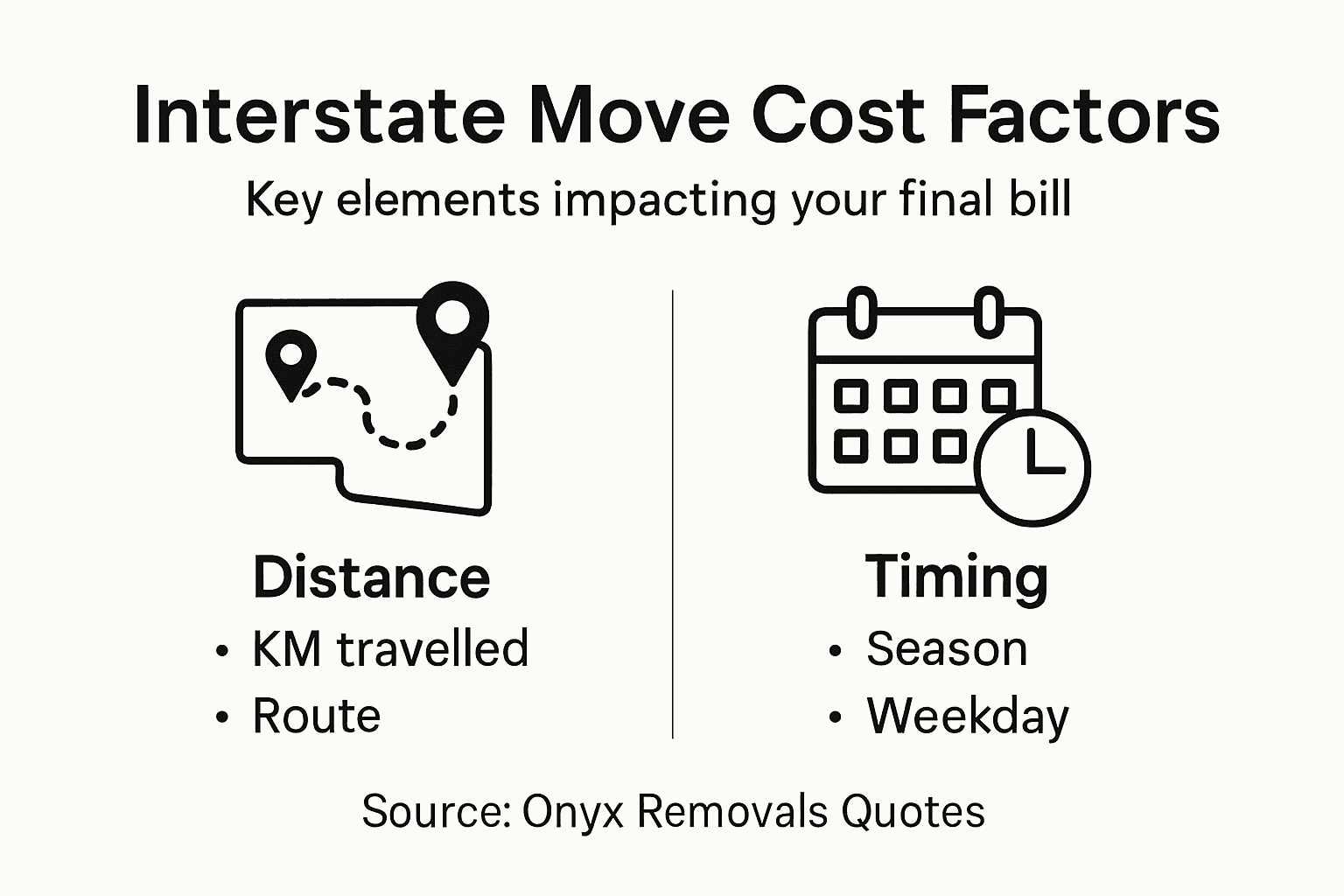
Distance matters enormously. A Melbourne to Adelaide move costs substantially less than Melbourne to Perth. Additional kilometres add fuel, time, and labour costs that compound quickly across interstate routes.
Volume represents your second major cost driver. Underestimating how much you’re moving leads to unexpected charges when movers arrive and discover additional items. Request an in-home assessment where assessors physically evaluate your inventory.
Timing affects your final bill. Moving during peak season (December to February) costs 20–30% more than quieter months. Weekday moves typically cost less than weekend relocations due to crew availability.
Insurance protection is essential, not optional. Standard moving liability covers basic accidental damage, but it often provides minimal protection. High-value items like artwork, jewellery, or electronics need additional insurance coverage beyond standard policies.
Third-party insurance providers offer alternative options. Some homeowner or renters policies cover moving damage, so check your existing coverage before purchasing additional protection. Document your belongings’ condition with photographs before the move.
Transparent pricing upfront eliminates cost surprises—ask for itemised quotes that break down labour, transport, packing, and insurance separately.
Common mistakes start with inadequate planning. Many people don’t verify mover credentials or read contracts carefully, leading to unexpected expenses or service disruptions. Always confirm your moving company holds proper licensing and insurance.
Typical mistakes Melbourne homeowners make:
Deposit and cancellation policies deserve careful attention. Read these clauses thoroughly before signing your contract. Some companies charge significant penalties for cancellations within specific timeframes.
Below is a summary of typical additional fees and where surprises often occur:
| Fee Type | Typical Cause | How to Avoid |
|---|---|---|
| Excess volume charge | Underestimating belongings | Get in-home assessment |
| Stairs/Access surcharge | Difficult property access | Disclose access obstacles |
| Peak season premium | Moving in Dec–Feb | Book well in advance |
| Insurance top-up | High-value items included | Confirm cover requirements |
| Late cancellation fee | Last-minute change of plans | Read contract, plan ahead |
Onyx Removals provides transparent pricing with no hidden fees. Our quotes itemise all costs so you understand exactly what you’re paying for. We encourage obtaining quotes from multiple providers to compare value, not just price.
Pro tip: Obtain written quotes from at least three companies, request in-home assessments rather than phone quotes, and verify insurance coverage details in writing before committing to any interstate move.
Selecting the right moving company makes the difference between a smooth relocation and a stressful nightmare. Melbourne homeowners need movers who understand local routes, interstate logistics, and the unique challenges of Victorian relocations.
Start by evaluating company credentials and experience. Look for movers with established track records handling routes to and from Melbourne. Companies familiar with Melbourne’s geography, access issues, and local regulations will navigate your move more efficiently.
Key credentials to verify:
Customer reviews reveal real-world performance. Check multiple platforms including Google Reviews, Trustpilot, and industry sites. Pay attention to comments about communication, punctuality, and damage handling—these reflect the company’s actual service quality.
Transparent pricing without hidden fees separates reliable movers from problematic ones. Request detailed written quotes that itemise labour, transport, packing, and insurance separately. Compare quotes from at least three companies before deciding.
Availability matters for your preferred moving dates. Confirm the company can accommodate your timeline before committing. Some Melbourne movers book interstate slots weeks in advance, particularly during peak season.
Service offerings should include:
Customer support quality indicates how seriously a company takes your concerns. Test their responsiveness by asking detailed questions. Do they answer promptly? Do they address your concerns thoughtfully? These interactions predict how they’ll handle issues during your move.
Reliable movers provide clear contracts with upfront deposit terms and transparent cancellation policies—no surprises hidden in fine print.
Verify that your chosen company holds appropriate licenses for interstate operations. Each state has different transport regulations, and legitimate movers comply with all requirements. Asking about their licensing process reveals their professionalism.
Onyx Removals operates with full transparency on pricing, availability, and service scope. We handle Melbourne-based interstate relocations with experienced teams familiar with routes to Sydney, Brisbane, Adelaide, and Perth.
Request a detailed home assessment rather than phone quotes. In-person evaluations provide accurate inventory assessments and realistic pricing. This personal interaction also lets you evaluate the company’s professionalism firsthand.
Pro tip: Contact your top three candidates simultaneously with the same moving details, request itemised quotes with deposit and cancellation terms clearly outlined, then compare not just price but service scope and company responsiveness before selecting your mover.
Navigating the complexities of interstate moving from Melbourne requires expert planning and reliable service to avoid costly delays and surprises. If you want to eliminate the common challenges of coordinating logistics, managing insurance, and adhering to state regulations, trust the professionals who understand Melbourne’s unique relocation landscape. Whether you need full-service packing, specialised handling, or efficient transport, Onyx Removals offers tailored solutions designed to meet your specific moving needs.
Discover how our experienced team at Onyx Removals can simplify your interstate relocation with personalised plans and transparent pricing. Check out our comprehensive business services when moving commercial or office assets interstate. Start your stress-free journey now by visiting our homepage to request a detailed, obligation-free quote and secure your preferred moving dates today.
Full-service moves handle everything from packing to unpacking, while self-service options allow you to pack your belongings, and the moving company takes care of transportation. Full-service is more convenient but costs more, whereas self-service can save you money if you’re willing to do the packing.
You can request an in-home assessment from moving companies where they will evaluate your inventory, calculate total weight, and measure dimensions. This assessment is crucial for accurate quotes and ensuring your selected vehicle meets the requirements.
Different states have specific regulations for certain items like vehicles and specialized goods. You should verify mandatory insurance coverage and permits for items like unregistered vehicles. It’s important to declare any special items to your moving company ahead of time.
To avoid mistakes, obtain multiple quotes for comparison, verify mover credentials and insurance, read contracts carefully for cancellation and deposit policies, and plan your move well in advance, especially if your relocation coincides with peak seasons.

No Related Post


