



Every australian homeowner knows that planning a renovation is more than picking paint colors or new flooring. With more than fifty percent of australian households investing in upgrades each year, the difference between a smooth project and a costly headache comes down to preparation. Whether you are aiming to boost comfort, property value, or both, you will find practical steps here to make your australian renovation process less stressful and more rewarding from the start.
| Essential Insight | Explanation |
|---|---|
| 1. Assess renovation needs clearly | Evaluate each room to identify critical repairs and aesthetic improvements, prioritising the most urgent renovations first. |
| 2. Establish a detailed budget | Break down all expected costs, including a contingency fund for unplanned expenses to ensure financial stability throughout the project. |
| 3. Find reputable trades and suppliers | Gather multiple quotes and verify contractor credentials to ensure quality work and avoid potential pitfalls in your renovation. |
| 4. Coordinate renovation with moving plans | Develop a timeline that aligns renovation phases with your moving schedule to minimize disruption during the transition. |
| 5. Conduct a thorough final inspection | Inspect all completed work rigorously to ensure it meets quality and compliance standards before finalising your move into the renovated space. |
Before diving into home renovations, you’ll want to create a clear roadmap that prioritises your most critical improvements. Conducting a thorough assessment helps you transform your living space strategically and avoid unnecessary expenses.
Start by walking through each room and making detailed observations about what needs attention. Evaluate your home’s existing features and identify areas for potential upgrades like energy efficiency, layout functionality, or structural integrity. Consider both immediate necessities and long-term enhancement goals. Are there rooms that feel outdated? Spaces that lack proper functionality? Structural elements requiring urgent repair?
Smart home renovations start with distinguishing between essential needs and optional desires. Create two separate lists: one for critical repairs and another for aesthetic improvements. Critical repairs might include fixing leaky roofs, addressing electrical issues, or resolving structural weaknesses. Aesthetic improvements could involve updating kitchen cabinetry, refreshing paint colours, or modernising bathroom fixtures.
Here’s a quick reference comparing essential repairs and aesthetic improvements in home renovations:
| Type of Improvement | Typical Examples | Impact on Value | Priority Level |
|---|---|---|---|
| Essential Repairs | Fixing leaks, electrical faults | Preserves structural integrity | High |
| Aesthetic Improvements | Upgrading cabinetry, new paint | Enhances visual appeal | Moderate to Low |
Pro tip: Use a spreadsheet or dedicated renovation planning app to track your assessment, helping you stay organised and focused on your most important home improvement objectives.
As you compile your renovation priorities, remember that thoughtful planning now can save significant time and money during the actual renovation process.
Budgeting is the backbone of any successful home renovation project, transforming your vision from dream to reality while keeping your finances firmly in check. Your goal is to create a comprehensive financial plan that covers every potential expense without leaving you financially stretched.
Developing a detailed budget requires careful consideration of multiple cost categories. Start by breaking down your expected expenses into clear segments: construction costs, design fees, materials, labour, permits, and potential additional expenses. Most experts recommend including a contingency fund of 10 to 20 percent to manage unexpected challenges that inevitably arise during renovations.
Below is a summary of key cost categories when budgeting for a renovation:
| Cost Category | Common Inclusions | Potential Hidden Costs |
|---|---|---|
| Construction | Building works, demolition | Unexpected structural issues |
| Design Fees | Architect or designer services | Plan changes, approval fees |
| Materials | Flooring, tiles, fixtures | Delivery, premium upgrades |
| Labour | Tradespeople wages | Overtime, delays |
| Permits | Council approvals | Additional inspections |
Understanding common budgeting pitfalls can help you create a more accurate financial plan. Research local building costs, get multiple quotes from reputable contractors, and be honest about your financial limitations. Remember to factor in potential disruptions to your daily life such as temporary accommodation or alternative living arrangements during major renovation stages.
Pro tip: Create a dedicated spreadsheet with separate columns for estimated and actual expenses, allowing you to track spending in real time and quickly identify areas where you might be over or under budget.
By approaching your renovation budget with meticulous planning and realistic expectations, you’ll set yourself up for a smoother renovation journey with fewer financial surprises.
Finding the right trades and suppliers can make or break your home renovation project. Your mission is to assemble a team of skilled professionals who can transform your vision into reality while maintaining high standards of quality and reliability.

Obtaining comprehensive quotes from multiple builders is crucial for making an informed decision. Request written quotes from at least three different contractors, carefully comparing their services, pricing, and proposed approaches. Pay close attention to the details in each quote look for clear breakdowns of inclusions and exclusions. This approach helps you understand exactly what you are getting and prevents unexpected surprises later in the renovation process.
Selecting tradespeople requires thorough research and verification of their professional credentials. Start by seeking recommendations from trusted sources like friends, family, or local community networks. Verify each contractor’s professional licenses, insurance coverage, and past work portfolios. Check online reviews and ask for references from recent projects similar to yours. Look for professionals who demonstrate not just technical skill, but also clear communication and a professional approach to project management.
Pro tip: Create a detailed checklist of essential qualifications and ask potential trades specific questions about their experience with projects similar to yours, helping you assess their true capability and fit for your renovation.
By investing time in carefully selecting your renovation team, you set the foundation for a successful and stress free home transformation.
Successfully integrating your renovation plans with your moving timeline requires strategic planning and precise coordination. Your goal is to minimise disruption and ensure a smooth transition between renovation work and your relocation.
Comprehensive pre planning is essential for aligning renovation activities with your moving schedule. Begin by creating a detailed timeline that maps out each renovation phase and its potential impact on your moving date. Consider critical path activities that might cause delays or require temporary accommodation. Work closely with your contractors to establish realistic completion dates that provide buffer time before your actual move date.
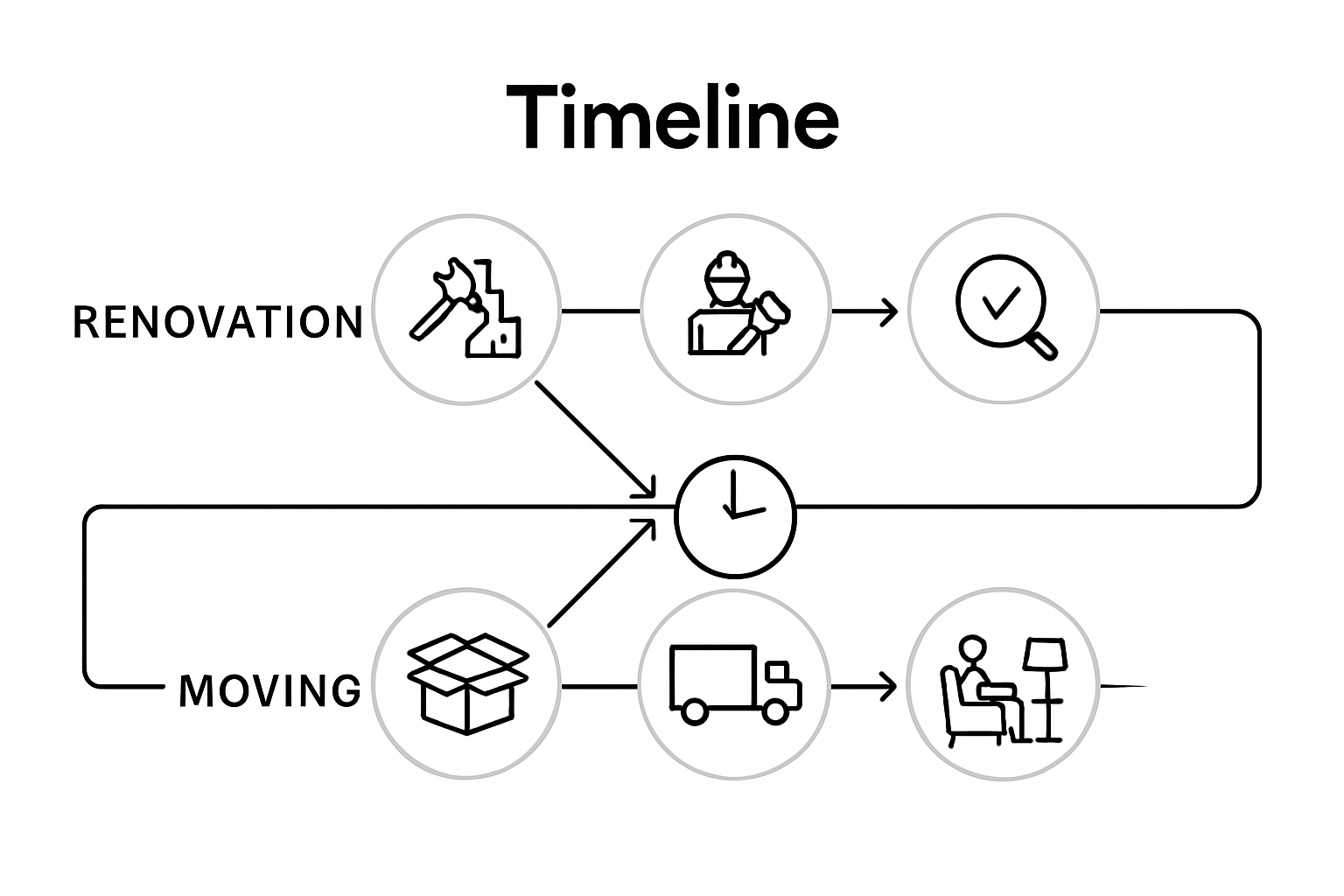
Phased renovation approaches can help manage complexity and reduce potential scheduling conflicts. Prioritise essential renovation work that directly impacts livability or structural integrity. Schedule major disruptions like kitchen or bathroom remodels well in advance of your moving date. If certain renovations cannot be completed before moving, discuss flexible arrangements with your contractors about finishing work after you have relocated.
Pro tip: Create a colour coded master timeline that tracks renovation milestones, moving logistics, and potential contingencies, allowing you to visualise and manage potential scheduling conflicts proactively.
By meticulously coordinating your renovation and moving schedules, you transform a potentially stressful process into a manageable and strategic transition.
As you approach the final stages of your renovation and moving journey, a meticulous inspection of completed works becomes crucial. This is your opportunity to ensure every detail meets your expectations and that your newly transformed space is ready for occupancy.
Thoroughly evaluating renovation quality requires a systematic approach to identifying potential issues and confirming compliance with agreed standards. Walk through each renovated area methodically, checking for workmanship quality, finishing details, and functional performance. Test electrical outlets, plumbing fixtures, and newly installed appliances. Verify that paint finishes are smooth, tiling is precise, and structural modifications meet your original specifications.
Sustainability and energy efficiency standards can significantly enhance your home’s long term value and comfort. Review the energy performance of new installations, such as windows, insulation, and any upgraded heating or cooling systems. Request documentation from your contractors that confirms compliance with current building regulations and performance specifications.
Pro tip: Document any identified issues with dated photographs and written descriptions, creating a clear record for addressing potential defects with your contractors before final payment.
By conducting a comprehensive final inspection, you transform your renovation from a project into a perfectly tailored living space that meets your exact requirements.
Master planning home renovations involves careful scheduling, budgeting, and coordination to ensure a seamless move and avoid costly delays or unexpected stress. Whether you are juggling tight timelines or complex renovation phases, one common challenge is managing the transition from your old space to your newly renovated home without disruption. Critical points such as coordinating trades, aligning renovation completion with your moving date, and conducting thorough final inspections highlight the importance of reliable moving solutions that fit perfectly into your renovation roadmap.
Onyx Removals understands these challenges and offers tailored moving services that adapt to your renovation schedule. From meticulous packing and secure storage to specialised transportation and cleaning, our professional team in Melbourne ensures your relocation complements your renovation journey smoothly. Explore how our business moving solutions can deliver personalised support when you need it most via business – Onyx Removals.

Don’t let moving day add to your renovation worries. Take control now with a trusted partner who understands the importance of timing and quality. Visit Onyx Removals to get a customised quote and make your home renovation move stress free and perfectly coordinated.
Before moving, walk through each room to identify critical repairs and aesthetic upgrades. Create two separate lists: one for essential repairs, like fixing leaks, and another for desired improvements, such as updating cabinetry. This helps prioritise work that must be done for a seamless move.
To create a realistic renovation budget, break down expenses into categories, including construction, materials, and permits. Include a contingency fund of 10 to 20 percent for unexpected costs. Review your budget regularly and adjust as needed to stay on track.
When sourcing tradespeople, obtain written quotes from at least three contractors and compare their services and pricing. Verify each contractor’s credentials and previous work to ensure quality. Ask specific questions about their experience with projects similar to yours to gauge their suitability.
To effectively coordinate renovations with your moving schedule, create a detailed timeline that aligns renovation phases with your relocation dates. Prioritise essential work and communicate with your contractors about completion dates, allowing time for possible delays. This proactive planning can help reduce unexpected disruptions.
During the final inspection, systematically evaluate the quality of workmanship and the functionality of installations, such as plumbing and electrical systems. Document any issues with photos and descriptions, ensuring everything meets your agreed standards. Address these concerns with your contractors before finalising payments to achieve your desired results.

No Related Post


