


Access restrictions for movers are the local council parking and loading rules plus building or strata limits on lifts, times and protection. Together, they determine what permits you need, how long the move will take, and what extra fees land on your invoice.
Here are the five restrictions that catch most Australian city movers off guard:
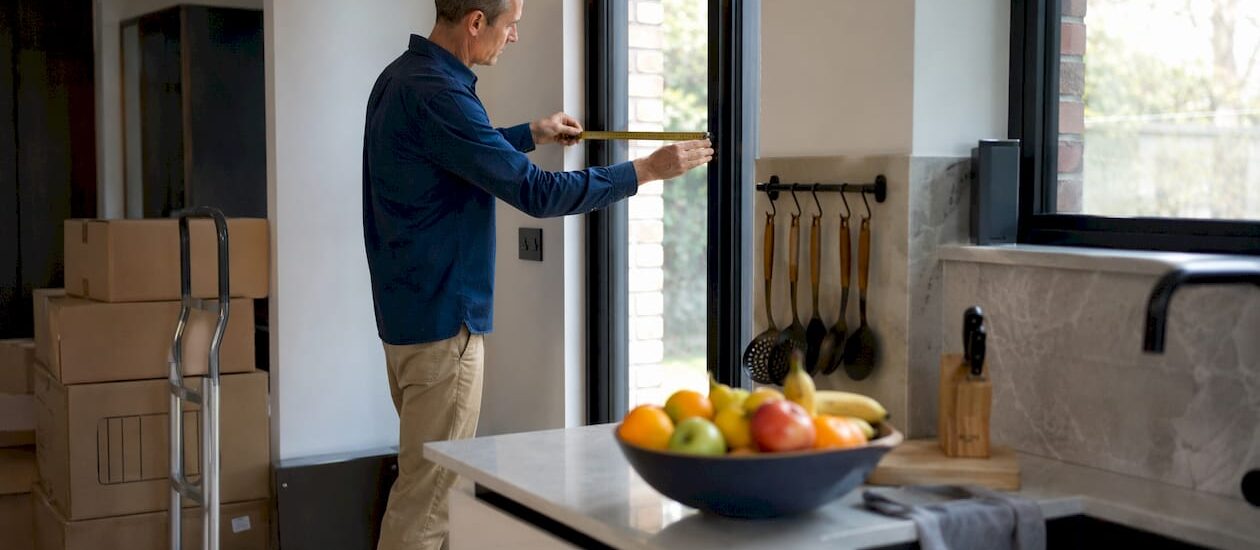
Act in the next 48–72 hours: measure every doorway, staircase and lift opening at both properties; photograph the street, driveway and any height-restriction signs; check your local council’s parking permit page; and contact the building manager to confirm lift availability and any written approval requirements.
Strata buildings run on by-laws, and those by-laws almost always contain a moving section. The typical requirements are not optional suggestions.

Scheduled lift bookings are the norm in any building with a passenger or goods lift. Most building managers want several business days’ notice, and many require a refundable damage bond paid before the booking is confirmed. The lift is usually padded with blankets or purpose-built panels for the duration of the move, with the crew expected to supply or fit those panels. Some buildings insist on exclusive use during the booked window, which means other residents cannot use the lift while furniture is being moved through it.
Move hours are another standard restriction. Most strata buildings limit removals to weekdays and Saturdays during daytime hours, and some inner-city buildings have stricter time windows. Weekend moves may be banned outright or attract a surcharge from the building manager. Getting the approved window in writing before you book your removalist saves a painful rescheduling conversation later.
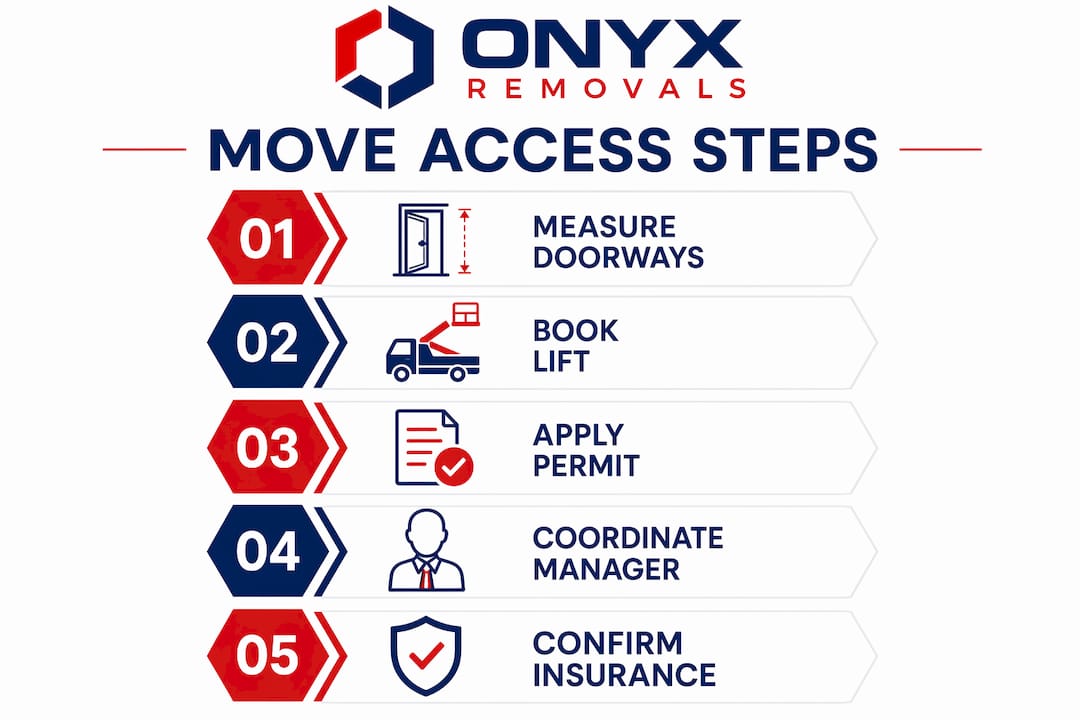
Proof of public liability insurance is near-universal. Apartment moving guides confirm that building managers routinely ask for a certificate of currency before they allow a crew to work on common property. The minimum cover required varies, but $10 million is a common threshold in Melbourne and Sydney strata buildings. Your removalist should be able to email this document within 24 hours of being asked.
Strata by-laws have legal limits. Under section 139(1) of the Strata Schemes Management Act 2015 (NSW), by-laws cannot be harsh, unconscionable or oppressive, and the NSW Civil and Administrative Tribunal has struck down by-laws that overreach the owners corporation’s powers. If a building manager is blocking your move with conditions that go beyond what the by-laws actually say, you have recourse. From 1 July 2025, NSW strata law changes also make it easier to approve accessibility upgrades to common property via a simple majority vote rather than a special resolution, which reduces some access barriers in older strata complexes.
Pro Tip: Ask the building manager for a copy of the relevant by-law clause, not just a verbal summary. If the restriction is not in the by-laws or the owners corporation’s written rules, it may not be enforceable.
Most metropolitan councils do not issue a dedicated “moving truck” permit. Instead, movers rely on temporary parking permits, trades permits or reserved bay requests, and the rules differ significantly between neighbouring local government areas.
The City of Sydney issues tradesperson permits to residents (not directly to the mover) for vehicles up to 4.5 tonnes, at roughly $80, with a lead time of around 10 business days. Melbourne’s reserved parking permits range from approximately $50–$200 depending on the zone, with about five business days’ notice required. The City of Gold Coast treats short-term parking of a removal van as a permitted activity on residential premises, but larger vehicles may still need a heavy vehicle parking permit if they exceed local thresholds.
| Council | Permit type | Typical cost | Lead time |
|---|---|---|---|
| City of Sydney | Tradesperson/visitor permit (up to 4.5 t) | ~$80 | ~10 business days |
| City of Melbourne | Reserved parking permit | ~$50–$200 | ~5 business days |
| Port Phillip (Vic) | Temporary parking permit | Varies by zone | ~5 business days |
| City of Gold Coast | Heavy vehicle permit (if applicable) | Varies | Varies |
A few things to know before you apply:
How to apply: Search your council’s website for “temporary parking permit” or “trades parking permit.” Gather your proof of residency, the removalist’s vehicle details (registration, weight, dimensions), and a quote or booking confirmation showing the move date and address. Submit online where possible, and follow up by phone if you have not received a reference number within two business days.
Getting the numbers wrong at the quote stage is the single fastest way to blow a moving budget. Removalists price labour in hourly blocks, and a staircase or tight corridor that was not disclosed upfront can add a crew member, a shuttle vehicle, or both.
Measure these at both properties:
Certain items reliably cause problems regardless of how well the rest of the move is planned. Upright pianos need a minimum door width of around 800 mm and cannot be tilted on stairs without specialist equipment. Pool tables must be disassembled by a technician before they can be moved. Wardrobes taller than 2.1 m often cannot fit in standard passenger lifts and may need to be dismantled. Knowing this before the truck arrives means the crew brings the right gear.
Industry guidance estimates that a single internal staircase adds 30–60 minutes of labour to a move. Two staircases, a long carry from the street, and a lift that only fits half the furniture at once can easily add two to three hours to what looked like a straightforward job.

Pro Tip: Walk through both properties with your phone camera before you call a removalist. A short video of the staircase, the lift interior and the street frontage gives the operations team more useful information than any written description, and it reduces the chance of a revised quote on moving day.
Access constraints are the most common reason a fixed-price quote becomes a disputed invoice. Understanding where the extra charges come from makes it much easier to compare quotes accurately.
The single biggest cost driver most people miss: budget blowouts in apartment and townhouse moves are most often caused by failing to account for lift availability and owners corporation load-sharing rules. Both require early scheduling, or they add substantial labour time that falls entirely on the client’s bill.
The time penalties compound quickly. A single staircase adds 30–60 minutes; a long carry from a shuttle vehicle parked 100 metres from the door adds similar time per load. When a large truck cannot reach the entrance, the crew must either carry items the full distance or use a smaller vehicle to shuttle loads between the truck and the door. That shuttle cost typically falls to the client.
Common extra-cost items to watch for in any quote:
When reading a quote, look for explicit line items covering each of these. A quote that lists only a flat hourly rate with no mention of access conditions is a red flag. Access problems are among the most common causes of moving-day delays, and a vague quote gives the removalist room to add charges after the fact.
Getting approvals delayed because a document is missing or formatted incorrectly is entirely avoidable. Prepare these before you contact the building manager.
Certificate of currency (public liability insurance): This is the document that proves your removalist holds active public liability cover. Building managers typically want to see the insurer’s name, the policy number, the coverage amount and the expiry date. Many strata buildings in Melbourne and Sydney require minimum public liability insurance coverage. Ask your removalist to email this directly to the building manager at least five business days before the move.
Lift booking confirmation: Once the building manager confirms your booking, get the date, time window and any conditions in writing. A text message is not sufficient; ask for an email or a signed booking form that includes the permit reference number if the building uses one.
Council permit reference: Once your council permit is approved, save the reference number and print a copy to keep in the truck on moving day. Some councils issue a physical permit to display on the vehicle; others issue a digital reference that the driver quotes if challenged.
Owners corporation written approval: For any work on common property, including moving furniture through shared corridors and lifts, a written approval from the strata manager or owners corporation is good practice. In NSW, strata by-laws set out what residents must follow, and a written approval confirms you have met those conditions.
Site survey checklist to attach to your quote: Include annotated photos of the lift interior, staircase, street frontage and any height restriction signs. Note the carry distance from the nearest parking spot to the front door. This becomes part of the quote record and protects both you and the removalist if a dispute arises later.
Timing is everything. Miss a council lead time by two days and you may be moving without a permit, which means the risk of a fine and a truck that cannot legally stop where you need it.
For commercial moves, the office relocation checklist process adds traffic management and road-occupancy considerations that residential moves rarely need, particularly for large city-centre buildings.
Who to contact at each step: local council parking unit (phone or online portal); strata manager or building manager (email, confirmed in writing); removalist operations contact (not just the sales team, who may not have site-specific knowledge).
Most access costs fall to the client by default, but that default is negotiable if you get agreements in writing before the move.
| Fee type | Who normally pays | Notes |
|---|---|---|
| Council parking permit | Client | Applied for by the resident; cost passed through or paid directly |
| Long-carry charges | Client | Triggered when carry distance exceeds the quoted standard |
| Shuttle vehicle hire | Client | Charged when the primary truck cannot park close enough |
| Lift booking fee / bond | Client | Set by the building; refundable if no damage |
| Padding / panel hire | Client or building | Some buildings charge separately; confirm in advance |
| Damage or cleaning bond | Client | Held by building; returned after inspection |
| Parking fine (mover error) | Removalist | If the mover parks illegally without a permit, the fine is theirs |
| Parking fine (client failed to get permit) | Client | If no permit was arranged, the client bears the risk |
| Storage or re-delivery | Client | Triggered if access is blocked on the day |
Three scenarios that commonly trigger unexpected charges:
The truck cannot access the driveway. Basement height clearances often suit passenger cars but not high-roof removal trucks. When the truck cannot enter, the crew unloads on-street and shuttles items in. That shuttle time is billed as additional labour, and if the street parking is restricted, a fine risk sits with whoever failed to arrange the permit.
The lift is out of service on moving day. If the building’s lift breaks down and the booking cannot proceed, the removalist will charge for the additional stair carry time. This is not the removalist’s fault, but it is the client’s cost unless the quote explicitly states otherwise.
On-the-day council enforcement. If a council officer issues a move-along order and the truck must relocate, the crew loses time repositioning and carrying from a greater distance. That time is billed at the hourly rate.
A removalist who cannot answer basic access questions before you book is a removalist who will charge you for the answers on moving day.
Red flags to watch for:
Questions to ask before you book:
An acceptable answer to the shuttle question is a clear policy: either a fixed shuttle rate per run, or a stated hourly rate for the additional crew time. An unacceptable answer is “we’ll figure it out.” The same applies to the permit question. A removalist who handles permits regularly will know your council’s lead times and application requirements without being prompted.
Pro Tip: Ask for the quote in writing with access limitations and any potential extra charges listed as separate line items. If the removalist says the quote is “all-inclusive” but cannot specify what access scenarios are covered, that phrase is meaningless. Get the inclusions in writing.
Avoiding common moving mistakes almost always comes down to documentation: the movers who arrive prepared, with permits confirmed and site photos reviewed, are the ones who finish on time.
Access restrictions for movers in Australian cities combine council parking rules, strata by-law conditions and physical site constraints, and addressing all three in writing before moving day is the only reliable way to avoid surprise costs.
| Point | Details |
|---|---|
| Apply for council permits early | Most metro councils need several business days for processing; Sydney’s tradesperson permit has a modest fee. |
| Get lift bookings in writing | Confirm the date, time window and damage bond amount before paying anything. |
| Measure before you quote | Staircase, carry distance and lift dimensions directly affect labour time and crew size. |
| Prepare a document bundle | Certificate of currency, council permit reference and owners corporation approval in one PDF. |
| Onyx Removals handles access planning | Onyx Removals conducts site surveys, coordinates lift bookings and lists all access charges in itemised quotes. |
The conventional wisdom is that access problems are a moving-day surprise. They are not. Every access restriction that causes a delay or an extra charge was knowable before the truck left the depot.
What actually happens on difficult moves is this: the client assumed the removalist would handle permits, the removalist assumed the client would handle the building manager, and nobody confirmed the lift booking window matched the truck’s arrival time. Three separate assumptions, zero written confirmations, and suddenly the crew is carrying a three-bedroom apartment up four flights of stairs because the lift is booked by another resident.
The strata rules and council permit requirements covered in this article are not obscure. They are standard conditions in almost every inner-city apartment building and most terrace-house streets in Melbourne and Sydney. The gap is not knowledge; it is the discipline to confirm everything in writing, early enough to fix it if something falls through.
One thing worth saying plainly: a removalist who charges a flat hourly rate and leaves permit and building coordination entirely to the client is not offering a lower price. They are transferring risk. When the lift is unavailable or the council officer issues a move-along order, that risk converts directly into extra hours on the invoice.
Permit applications, lift bookings, strata approvals and shuttle logistics are the parts of a move that most people only discover matter when something goes wrong. Onyx Removals handles all of it as part of the move planning process, not as an afterthought.
Before any truck is booked, Onyx Removals conducts a site survey, reviews access photos and confirms council permit requirements for your specific local government area. Lift bookings are coordinated directly with building managers, and the certificate of currency is provided to strata managers without you having to chase it. Every quote lists access limitations and any potential extra charges as separate line items, so there are no on-the-day revisions. For moves requiring specialist equipment such as shuttle vehicles or stair-climbing trolleys, that equipment is confirmed at the quote stage, not sourced on the morning of the move.
Get in touch with Onyx Removals for an itemised quote that covers your specific access conditions, or request a site survey for properties where access is complex.
The table below lists the primary sources to check when applying for permits or seeking strata guidance. Rules change; always confirm current requirements directly with the relevant authority.
| Source | What it covers | Where to find it |
|---|---|---|
| City of Sydney parking permits | Tradesperson and visitor permits, lead times, vehicle weight limits | cityofsydney.nsw.gov.au |
| City of Melbourne reserved parking | Reserved bay permits for moves and trades | melbourne.vic.gov.au |
| Port Phillip temporary parking | Temporary permit types for inner-Melbourne suburbs | portphillip.vic.gov.au |
| City of Gold Coast heavy vehicle permit | Heavy vehicle parking on residential premises | goldcoast.qld.gov.au |
| NSW strata by-laws overview | What by-laws can and cannot include; how to get a copy | nsw.gov.au/housing-and-construction/strata/living/by-laws |
| Strata Schemes Management Act 2015 (NSW) | Legal limits on by-laws; owners corporation powers | legislation.nsw.gov.au |
| NSW strata law changes (from 1 July 2025) | Accessibility upgrade voting threshold reduced to simple majority | nsw.gov.au/housing-and-construction/strata/changes |
What to show a council officer or building manager on the day: the council permit (physical or digital reference), the lift booking confirmation with the approved time window, the removalist’s certificate of currency, and a contact number for the removalist’s operations team.
Local variation is real. A permit that takes five business days in one Melbourne suburb may take ten in the next. Always confirm lead times, fees and application requirements directly with your specific council or owners corporation before you book the move date.

No Related Post


