



TL;DR:
- Families need storage during moves to bridge timing gaps between property settlements and prevent stress. It provides a safe, accessible space to hold belongings, allowing for a calmer and more organized relocation process. The best storage options depend on the duration, with warehouse holds suitable for under a week and self-storage ideal for longer periods.
Temporary storage is the most practical buffer a family can use when relocating between homes. The gap between selling one property and settling on another rarely closes without friction, and that friction costs time, money, and peace of mind. Storage is about timing, not just having too much stuff. That single insight changes how families should plan every residential move. Whether you are upsizing, downsizing, or navigating a separation, understanding why families need storage during moves puts you in control of the process rather than at its mercy.
Storage solves a timing problem, not a clutter problem. Australian property settlements rarely align perfectly, and the gap between your move-out date and your move-in date can stretch from a few days to several weeks. Storage prevents the pressure of forcing those dates to match, which almost never happens without significant stress.
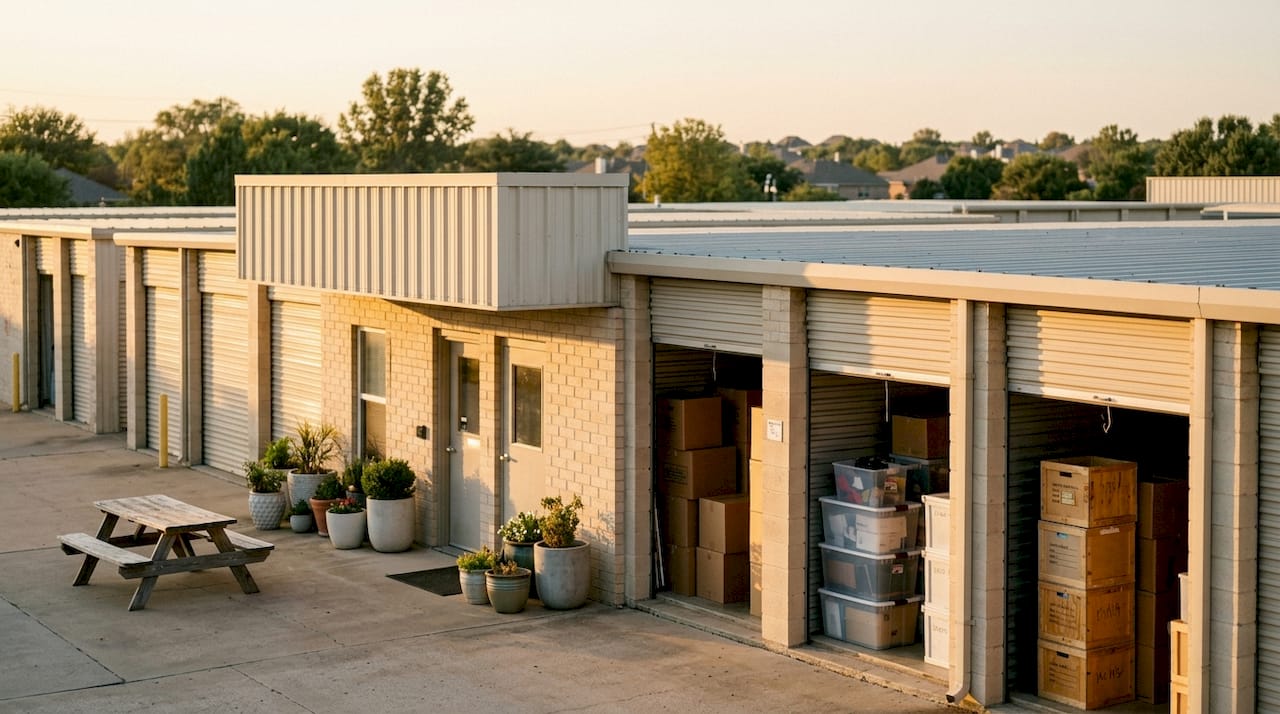
Families face a specific version of this challenge. You cannot simply sleep on a friend’s couch with three kids, a dog, and a dining suite. You need your belongings somewhere safe, accessible, and affordable while you wait for the keys to your new home. That is exactly what temporary storage provides.
The benefits of storage during relocation extend beyond the obvious. Families who use storage report calmer moves, fewer damaged items, and more time to make considered decisions about what goes where in the new home. Storage gives you room to breathe when everything else feels compressed.
Several situations make storage not just useful but necessary for Australian families.
Each of these scenarios is common in Melbourne and across Australia. Recognising which one applies to your move is the first step toward choosing the right storage solution.
Storage acts as a neutral buffer during stressful transitions, keeping belongings out of your immediate living space until decisions are finalised. That physical separation has a measurable emotional effect. When your home is not buried under boxes, you think more clearly and move more deliberately.
Families with children benefit most from this breathing room. Kids need routine and familiar surroundings. A chaotic temporary home stacked floor to ceiling with boxes disrupts sleep, schoolwork, and behaviour. Storing the bulk of your belongings offsite means your temporary accommodation stays liveable and calm.
Storage reduces clutter in temporary accommodation and protects belongings from damage during moves. This matters practically too. Items left in a cramped rental or a relative’s garage are far more likely to be scratched, broken, or lost than items in a secure storage facility.
Staged unpacking is another underrated benefit. Rather than dumping everything into your new home on day one and spending weeks navigating chaos, you can move in the essentials first and retrieve stored items room by room as you are ready. This approach produces a more organised home faster.
Pro Tip: Pack a clearly labelled “first week” box with everyday essentials before anything goes into storage. Keep this box with you, not in the storage unit, so your family has what it needs without making extra trips.
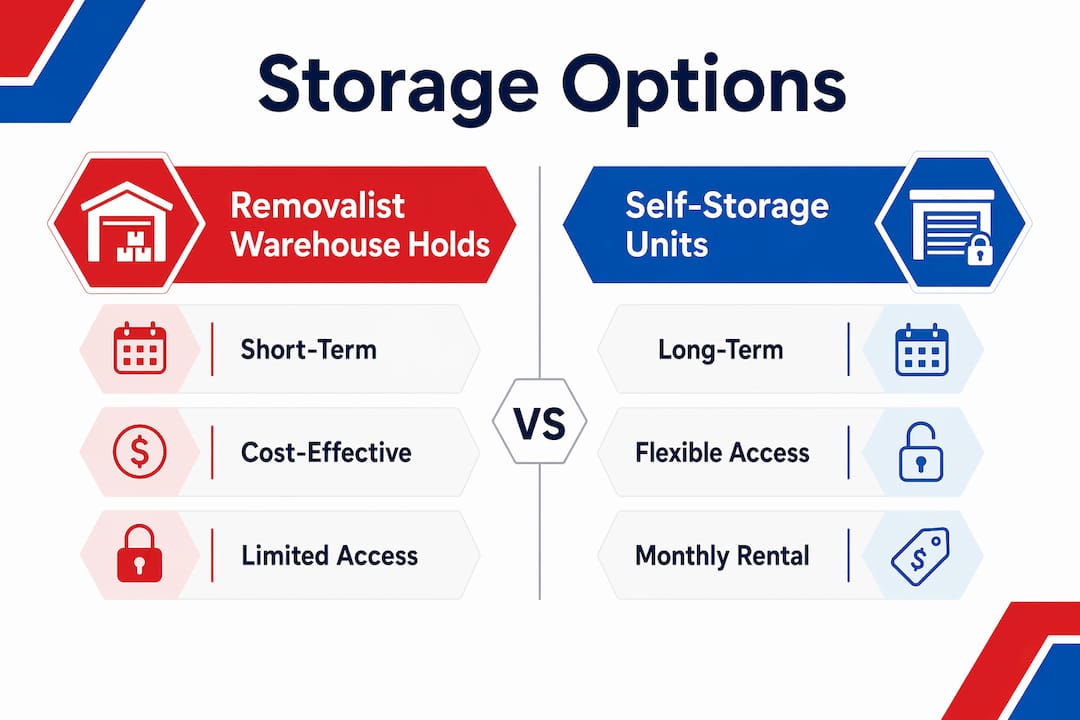
The right storage option depends almost entirely on how long you need it. Two categories cover most family moving situations.
For gaps under a week, a removalist warehouse hold is the most cost-effective choice. Your removalist loads the truck, takes your belongings to their warehouse, and delivers them to your new address when you are ready. Costs typically range from $50–$150 for short durations. This avoids the need to sign a storage contract, pay a bond, or arrange separate transport.
Self-storage suits gaps of two weeks or longer. You rent a unit by the month, access it on your own schedule, and retrieve items as needed. The cost efficiency improves significantly after the two-week mark compared to extended warehouse holds.
| Storage type | Best duration | Typical cost | Key benefit |
|---|---|---|---|
| Removalist warehouse hold | Under 1 week | $50–$150 | No contract, single transport |
| Self-storage unit | 2–8 weeks or more | Monthly rental | Flexible access, scalable size |
| Combined removalist and storage | Any duration | Varies by provider | Reduces double handling |
Combined removalist and storage services reduce double handling and logistic complexity. When your removalist manages both transport and storage, your belongings move fewer times and face less risk of damage.
Insurance is a critical variable. Moving-related storage often includes insurance in removalist solutions, simplifying claims and reducing risk compared to standard self-storage insurance. Always confirm what is covered before you sign anything.
Pro Tip: Always verify whether insurance is included in your storage quote. Coverage varies significantly between removalist storage and traditional self-storage, and the difference in risk exposure during a move is substantial.
Effective storage planning starts well before moving day. Families who book storage at the last minute pay more and have fewer options. Follow this sequence to get it right.
Beyond logistics, storage also helps families manage temporary accommodation more comfortably. If you are staying in a short-term rental or with family between properties, keeping the bulk of your belongings in storage means that space stays functional rather than becoming a warehouse.
For a deeper look at your options, the temporary storage during relocation guide from Onyx Removals covers the full range of solutions suited to families between properties.
Storage solves a timing problem during family moves, not a clutter problem, and choosing the right type and duration saves money, protects belongings, and keeps your household calm throughout the transition.
| Point | Details |
|---|---|
| Storage is a timing tool | Use storage to bridge settlement date gaps, not just to manage excess belongings. |
| Match type to duration | Use removalist warehouse holds for gaps under a week; use self-storage for two weeks or longer. |
| Confirm insurance before booking | Coverage varies between removalist storage and self-storage. Always check before signing. |
| Plan volume accurately | Underestimating how much space you need is the most common and costly storage mistake. |
| Book early and coordinate dates | Align your storage rental period with settlement dates to avoid paying for unused days. |
Most families I have worked with underestimate storage until they are standing in a half-empty house the night before settlement with nowhere to put a king-size bed. The ones who planned storage in advance moved with noticeably less panic. The ones who did not spent moving day making frantic phone calls.
The biggest misunderstanding I see is that families treat storage as a decluttering exercise rather than a logistics tool. They think storage is for people with too much stuff. It is not. It is for anyone whose move-out date and move-in date do not match perfectly, which is almost everyone.
The emotional dimension matters too. A move that feels chaotic affects the whole family. Kids pick up on parental stress. Teenagers become difficult. Toddlers stop sleeping. Storage does not eliminate moving stress, but it contains it. When your belongings are safe and accounted for, you can focus on the people in your household rather than the furniture.
My honest advice for 2026: book storage before you think you need it. The Melbourne rental and property market moves fast, and storage facilities fill up during peak moving periods, particularly around school holidays and the end of the financial year. Securing your unit or warehouse hold early costs nothing extra and removes one major variable from an already complex process.
— Dinshaw
Families planning a residential move in Melbourne deserve a removalist who handles both transport and storage without passing them between providers.
Onyx Removals offers residential moving services that combine professional removalists with flexible storage solutions, so your belongings stay safe whether the gap between properties is three days or three weeks. The team works with you to assess your volume, recommend the right storage type, and coordinate delivery to your new home when you are ready. Get an accurate quote tailored to your specific move, including storage, by contacting Onyx Removals directly. You can also explore the full range of storage solutions for Melbourne homeowners to find the option that fits your timeline and budget.
Storage solves the timing gap between a family’s move-out and move-in dates, which rarely align perfectly. It keeps belongings safe, reduces clutter in temporary accommodation, and gives families the flexibility to move without rushing.
The duration depends on the property settlement gap. Gaps under a week suit a removalist warehouse hold; gaps of two weeks or more are better served by a self-storage unit rented on a monthly basis.
Not always. Some removalists include integrated storage and transit insurance in their packages, while others quote it separately. Always ask specifically whether storage and insurance are included before confirming a booking.
A removalist warehouse hold is the most cost-effective option for gaps under a week, typically costing $50–$150 for a few days, compared to a full month of self-storage fees.
Book storage as soon as your settlement dates are confirmed, ideally four to six weeks before your move date. Storage facilities fill quickly during peak periods such as school holidays and the end of the financial year in Melbourne.

No Related Post


