



Updating your address when moving house feels simple enough, right? In Australia, missing a single detail could leave you tangled in paperwork and without access to critical services. Here is the surprise. You have just 14 days to update your government documents after moving or risk fines and service disruptions. There is much more on the line than just receiving your mail. Address updates done wrong can snowball fast and cost you far more than you expect.
| Key Point | Explanation |
|---|---|
| 1. Gather essential documents first | Compile personal ID and proof of address for a smoother transition during your relocation tasks. |
| 2. Notify relevant authorities promptly | Inform government and service providers within two weeks to avoid service interruptions and administrative issues. |
| 3. Update important documents systematically | Ensure changes reflect in crucial legal, financial, and identification paperwork to maintain accurate records. |
| 4. Verify all changes with confirmations | Track notifications and request confirmations to ensure every service has updated your address correctly. |
| 5. Establish mail redirection services | Set up forwarding with Australia Post to capture any missed communications sent to your previous address. |
Address updates require meticulous preparation and strategic document collection. Before launching into your relocation administrative tasks, assembling a comprehensive information packet will streamline your entire moving process and prevent potential communication disruptions.
Start by collecting personal identification documents that serve as verification for your address change. These typically include your current driver’s licence, passport, Medicare card, and other government issued identification. Ensure all documents are current and valid, with matching legal names across different records. Australian authorities are particularly strict about document consistency, so double checking name spellings and matching details becomes crucial.
Your core information package should include several key elements that organisations will request during address updates:
According to the Australian Government Moving Guide, maintaining an organised digital and physical record of these documents significantly reduces potential bureaucratic complications. Consider creating both digital scans and physical copies stored securely.
Beyond personal documents, compile a comprehensive list of organisations and services requiring address updates. This includes financial institutions, healthcare providers, insurance companies, employer records, subscription services, and government agencies. Creating a systematic checklist helps ensure no critical contact points are overlooked during your transition.
Digital storage solutions like secure cloud platforms or encrypted document management systems can help you maintain these critical records efficiently. Storing documents electronically allows quick access and provides backup in case physical copies are misplaced during moving preparations.
Successful information gathering means having a complete, organised package ready to facilitate smooth address transitions across multiple platforms and service providers. Your preparation now will save significant time and potential administrative headaches in the coming weeks.
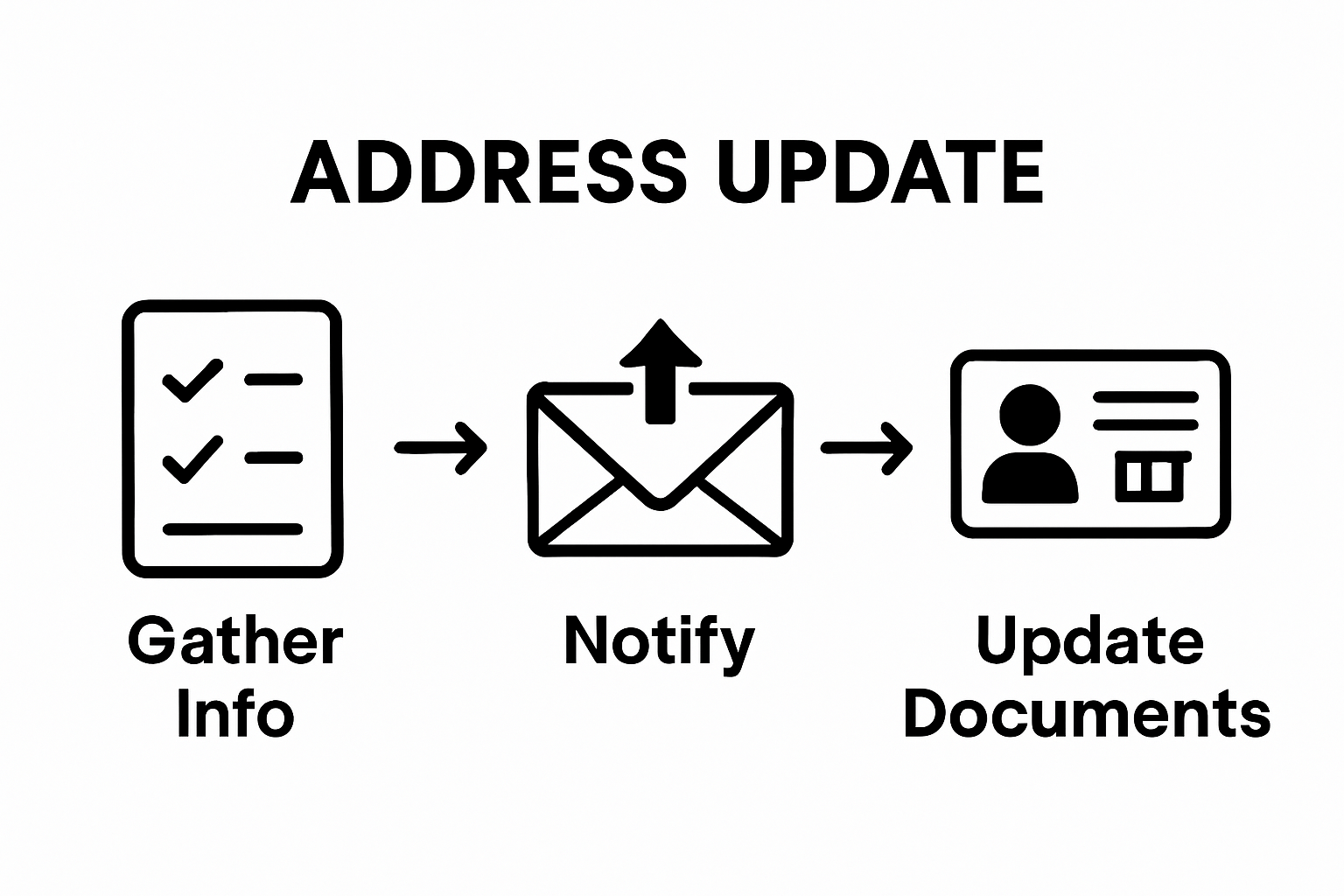
Notifying relevant authorities and service providers about your address change represents a critical phase in your moving process. This step ensures continuous communication and prevents potential disruptions to essential services during your transition.
Begin with official government notifications, which form the foundation of your address update strategy. The Australian Tax Office, Medicare, and Australian Electoral Commission require precise address updates to maintain accurate records. Prioritise these notifications within the first two weeks of your move to prevent potential administrative complications.
Most government agencies now offer online platforms for address modifications, reducing paperwork and streamlining the process. Visit each organisation’s official website and navigate to their address change or update sections. Typically, you will need your tax file number, Medicare card number, and other identifying information to complete these updates.
Your comprehensive notification process should encompass several key service categories:
According to the Australian Government Moving Services Guide, systematic documentation and proactive communication are essential for seamless transitions. Consider creating a dedicated spreadsheet tracking each notification, including confirmation dates and reference numbers.
For private service providers like banks and insurance companies, phone communication or secure online portals often provide the most efficient update methods. Many organisations now offer dedicated mobile applications or web interfaces specifically designed for managing personal details. Ensure you have login credentials readily available and update your contact information comprehensively.
Remember to provide a forwarding address or alternative contact method during these notifications. This ensures you continue receiving critical communications during the transition period.
The table below summarises the key categories of organisations and services you should notify of your address change, along with suggested methods and documentation required for each.
| Organisation/Service Category | Notification Method | Required Documentation |
|---|---|---|
| Government agencies (ATO, Medicare, AEC) | Online portals, myGov | ID, proof of address, relevant numbers |
| Financial institutions (banks, credit unions) | Online/phone/in-person | ID, proof of address |
| Insurance providers | Phone, email, portal | Policy/reference number, new address |
| Utility services (electricity, water, internet) | Online, phone, email | Account number, new address |
| Healthcare providers | In-person, phone, email | Medicare card, ID, new address |
| Superannuation funds | Online portal, phone | Member ID, proof of address |
| Vehicle registration & licensing | In-person, online | Licence, proof of new address |
Verify each notification by requesting a confirmation email or reference number. These serve as crucial evidence of your address update and can be valuable if any discrepancies arise later. Your methodical approach now prevents potential service interruptions and administrative headaches in the future.
Updating your address on important documents represents a crucial phase in your relocation process. This step ensures legal compliance, maintains accurate personal records, and prevents potential communication gaps across various official platforms.
Start by systematically reviewing all legal and personal documentation that requires address modification. Your driver’s licence becomes the cornerstone of this update process, serving as a primary identification document that must reflect your current residential location. Visit your local transport authority to complete this critical update, bringing necessary proof of identity and residential address.
Your comprehensive document update strategy should encompass multiple critical areas:
According to the Services Australia Moving Guide, updating government documents within 14 days of moving helps maintain accurate communication channels and prevents potential administrative complications. Most updates can now be completed online through secure government portals like myGov, reducing time spent in physical queues.
Prioritise digital and physical documentation updates simultaneously. For digital records, access your online accounts and navigate to personal details sections. Many organisations now offer streamlined online update processes that can be completed within minutes. Ensure you have reliable internet connection and all necessary identification numbers readily available.
Physical documentation updates might require in-person visits or formal written notifications. Prepare a comprehensive folder containing supporting documents like utility bills, lease agreements, or statutory declarations that verify your new residential address. Some institutions may require original or certified copies of these supporting documents.
Pay special attention to professional and financial documents. Your bank, superannuation fund, and professional registration bodies will need precise address updates to maintain uninterrupted services. Some organisations might require additional verification steps, so patience and thorough preparation become essential.
Verify each document update by requesting confirmation emails or receipts. Maintain a dedicated tracking system documenting when and how each address modification was completed. This methodical approach ensures no critical document is overlooked during your relocation process, providing peace of mind and preventing potential administrative challenges.
Verifying address changes represents the critical final checkpoint in your relocation administrative journey. This stage ensures that all previous notifications and updates have been successfully processed across multiple platforms and service providers.
Systematic verification becomes your safeguard against potential communication disruptions. Begin by creating a comprehensive tracking document that lists every organisation and service you have notified during your address update process. This methodical approach allows you to methodically confirm each change has been accurately implemented.
Start with government and official channels, which often provide the most reliable confirmation mechanisms. Online portals like myGov offer immediate verification options for multiple government services. Check your digital accounts to confirm address updates have been processed correctly, paying special attention to:
According to the Australian Government Services Guide, most digital platforms provide instant confirmation notifications or status updates. Request email confirmations wherever possible and save these digital receipts as proof of your address modifications.
For financial and private service providers, proactively contact customer service departments to verify your address change. Some institutions might require additional verification steps or have specific protocols for address updates. During these interactions, request a written or email confirmation documenting the successful address modification.
Telecommunications providers, insurance companies, and banking institutions often send verification communications to both your old and new addresses. Monitor both mailboxes during the transition period to ensure no critical correspondence is missed. Set up mail redirection services to capture any communications sent to your previous address.
Create a personal verification checklist with specific timeframes for follow-up. Mark each service as confirmed once you have received definitive proof of address update. This systematic approach prevents potential oversights and provides peace of mind during your relocation process.
Final verification involves testing communication channels. Send test emails, make phone calls, and check that digital notifications are arriving at your new address. Unexpected communication gaps could indicate an unprocessed address change that requires immediate attention. Your thorough verification ensures a smooth, uninterrupted transition to your new residential location.
The following checklist table helps you keep track of verification steps during your address change process, ensuring no crucial updates or confirmations are missed.
| Verification Step | How to Complete | Status/Notes |
|---|---|---|
| Government services updated (myGov, ATO, Medicare) | Check online account, request confirmation email | |
| Financial institutions confirmed | Confirm by phone/email, request receipt | |
| Insurance details verified | Receive or request written confirmation | |
| Utilities addresses checked | Login or call, check service location | |
| Mail redirection set up | Australia Post redirection confirmation | |
| Subscription and healthcare updates | Confirm with providers, track changes | |
| Monitor for missed/returned mail | Review mail regularly at new address |
Confirming the seamless delivery of important mail and packages represents the final critical stage in your address transition process. This step ensures that no crucial communications or deliveries are lost during your relocation, protecting your personal and professional interests.
Mail redirection becomes your primary safeguard against communication interruptions. Immediately after moving, establish a comprehensive mail management strategy that bridges your old and new residential addresses. Australia Post offers mail redirection services that can forward your correspondence for predetermined periods, providing a crucial buffer during your transition.
Your mail tracking strategy should focus on several key communication channels:
According to the Australia Post Redirection Services, you can set up mail forwarding for periods ranging from one to twelve months. This service allows you to capture any communications inadvertently sent to your previous address, minimizing the risk of missed important notifications.
Proactively contact key organisations to confirm they have updated your address in their systems. For critical services like banks, healthcare providers, and government agencies, request confirmation emails or written acknowledgments of your address change. Establish a digital and physical tracking system that allows you to monitor incoming mail across both your old and new locations.
Consider setting up email or SMS notifications with Australia Post to track packages and important mail deliveries. Many postal services now offer digital tracking mechanisms that provide real-time updates on your correspondence. These digital tools help you quickly identify and address any potential delivery issues during your transition period.
Maintain a log of expected communications and cross-reference them against actual received mail. Pay special attention to time-sensitive documents like tax correspondence, legal notifications, and financial statements. If you notice any missing communications, contact the respective organisations immediately to request duplicates or confirm delivery methods.
Your final verification involves a comprehensive review of all incoming mail over the first 4-6 weeks after moving. Ensure that no critical communications have been missed and that all important packages and documents are successfully reaching your new address. This meticulous approach guarantees a smooth, uninterrupted transition to your new residential location.
Updating your address for a move in 2025 can feel overwhelming when you face endless paperwork and fear missing a single important document or notification. At each step from gathering proof of identity to confirming that critical mail arrives at your new home, it is easy to feel stressed by the sheer number of tasks and the risk of something slipping through the cracks.

Let Onyx Removals remove the pressure. Our dedicated Melbourne removal specialists take care of every part of your move so your belongings are handled safely and you have more time to focus on your address changes. With tailored moving plans, expert packing and unpacking, and short or long-term storage solutions, we cover every detail for you. Choose the moving partner who understands that accuracy, reliability, and timeliness matter when it comes to legal requirements and avoiding headaches after you move. Act now to enjoy a seamless relocation and visit Onyx Removals to request your stress-free moving plan today.
To update your address with the Australian Tax Office, visit their official website and log in to your online account. Navigate to the address change section and provide your tax file number, as well as your new address details. It’s best to complete this within two weeks of your move to avoid issues.
You typically need personal identification documents such as your current driver’s licence, passport, and Medicare card, along with proof of your new residential address like rental agreements or utility bills. These ensure accuracy and consistency across all records.
To verify address changes, create a tracking document listing all organisations you notified. Check online accounts with government agencies like myGov for updates, and contact private service providers to confirm the updates via customer service. Request confirmation emails or reference numbers where possible.
If you miss essential mail after moving, contact the respective organisations immediately to request duplicates or verify your address update status. Additionally, consider setting up a mail redirection service through Australia Post to ensure that all important communications are forwarded to your new address.

No Related Post


