


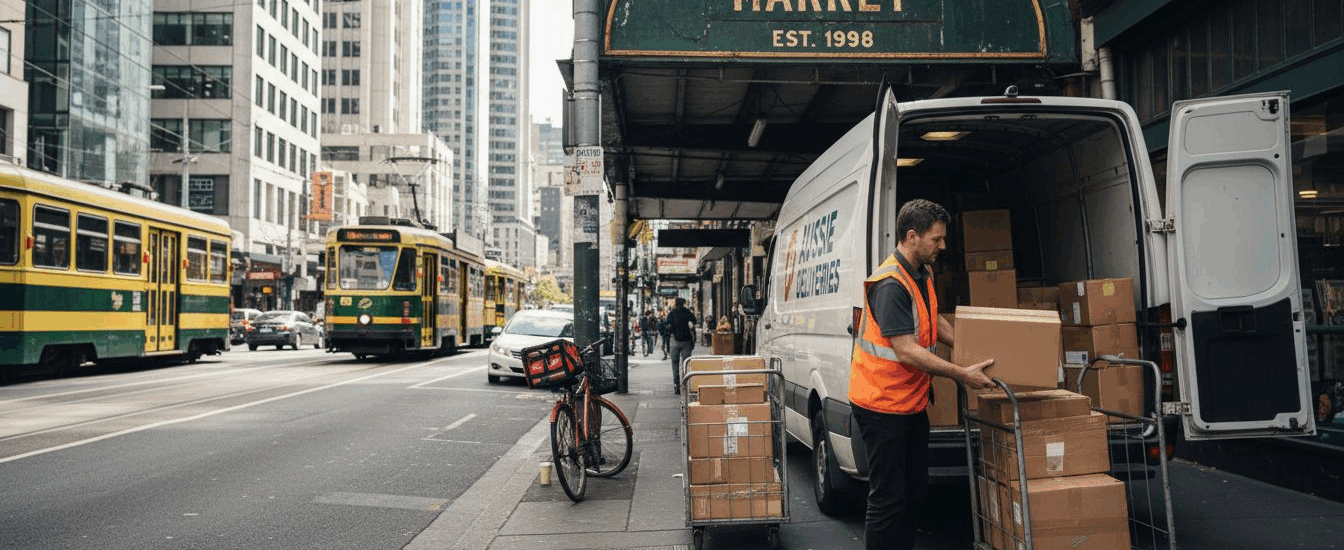
Over 80 percent of Australian shoppers expect fast and trackable delivery with every order. For Melbourne retailers, meeting these demands while juggling day-to-day operations is a constant challenge that can strain both resources and patience. Understanding the unique Australian delivery landscape helps you choose smarter solutions that keep your customers happy and your business running smoothly.
| Point | Details |
|---|---|
| Integrated Solutions | Retail delivery solutions in Australia utilise advanced technologies for efficient logistics, including GPS tracking and route optimisation. |
| Diverse Delivery Services | Businesses can choose from a variety of delivery options, including standard and express services, to meet customer expectations effectively. |
| Legal Compliance | Ensuring compliance with Australian Consumer Law and maintaining appropriate insurance coverage are critical for risk management in retail delivery. |
| Avoiding Pitfalls | Retailers should develop adaptable logistics strategies to mitigate common challenges such as inefficient routing and poor communication within delivery processes. |
Retail delivery solutions represent a sophisticated ecosystem of logistics and transportation strategies designed to efficiently move products from businesses to customers across Australian markets. Last mile delivery in the retail sector has become increasingly complex, particularly within dense urban environments like Melbourne, where rapid consumer expectations and technological innovations are reshaping traditional distribution models.
In the Australian context, these solutions encompass a comprehensive range of services including order processing, inventory management, transportation, tracking, and final product distribution. Modern retail delivery strategies leverage advanced technologies such as route optimisation software, real-time GPS tracking, and automated warehouse systems to enhance efficiency. The online food delivery landscape demonstrates how these solutions have transformed consumer purchasing behaviours, offering unprecedented convenience and speed.
Key components of effective retail delivery solutions in Australia typically include:
Delivery Expert Tip: Invest in scalable delivery infrastructure that can adapt quickly to changing consumer preferences and technological advancements, ensuring your business remains competitive in Melbourne’s dynamic retail environment.
Retail businesses in Australia have access to a diverse range of delivery services designed to meet varying operational needs and customer expectations. Shipping solutions encompass multiple delivery options that enable businesses to select strategies matching their specific requirements, from local metropolitan distributions to national and international logistics networks.

The primary types of retail delivery services include standard parcel delivery, express courier services, scheduled contract deliveries, and specialised transportation solutions. Standard parcel delivery represents the most common approach, offering cost-effective transportation for smaller packages within defined metropolitan areas. Express courier services provide rapid turnaround times, typically guaranteeing delivery within 24-48 hours, which proves critical for time-sensitive merchandise and urgent business-to-business transactions.
Key delivery service categories for Australian businesses include:
Here’s a comparison of major retail delivery service types and their business advantages in Australia:
| Delivery Service Type | Ideal For | Key Business Benefit |
|---|---|---|
| Standard Parcel Delivery | Everyday consumer goods | Low-cost, reliable coverage |
| Express Courier Services | Urgent/sensitive items | Enhanced speed, time certainty |
| Scheduled Contract Deliveries | Recurring bulk shipments | Consistent planning, efficiency |
| Specialised Transportation | Fragile/high-value items | Custom care, risk reduction |
| Bulk Freight Shipping | Large volume distribution | Scalability, cost savings |
Logistics Planning Tip: Conduct a comprehensive assessment of your business’s delivery requirements, considering factors like package volume, delivery frequency, budget constraints, and geographical coverage to select the most appropriate delivery service model.
Retail delivery processes in Australia have evolved into sophisticated, technology-driven systems that seamlessly connect businesses with their customers. Recent innovations in retail delivery frameworks highlight the complex operational strategies that modern businesses employ to ensure efficient product movement and customer satisfaction.
The typical retail delivery process involves multiple interconnected stages, beginning with inventory management and concluding with final product distribution. Advanced businesses now implement omnichannel fulfillment strategies, which integrate digital platforms, warehouse management systems, and real-time tracking technologies. Logistics management during peak periods requires particularly nuanced approaches, with businesses expanding warehouse capacities and leveraging automation to handle fluctuating demand.
Key operational components of modern retail delivery processes include:
The following table summarises how technology enhances each step of the retail delivery process for Australian businesses:
| Process Stage | Technology Used | Business Impact |
|---|---|---|
| Order Processing | Digital platforms | Faster validation, fewer errors |
| Inventory Management | Automated warehousing | Real-time stock visibility |
| Shipment Tracking | GPS systems | Live updates for customers |
| Routing & Distribution | Optimisation software | Reduced costs, improved delivery times |
| Customer Communication | Integrated platforms | Immediate notifications, transparency |
Operational Efficiency Tip: Invest in integrated technology platforms that provide end-to-end visibility across your delivery ecosystem, enabling seamless communication between inventory management, logistics, and customer service teams.
Retail delivery businesses in Australia must navigate a complex landscape of legal requirements and insurance obligations to protect their operations and customers. Specific retail industry legal frameworks outline comprehensive compliance standards that govern every aspect of product transportation and customer interaction, from initial order processing to final delivery.
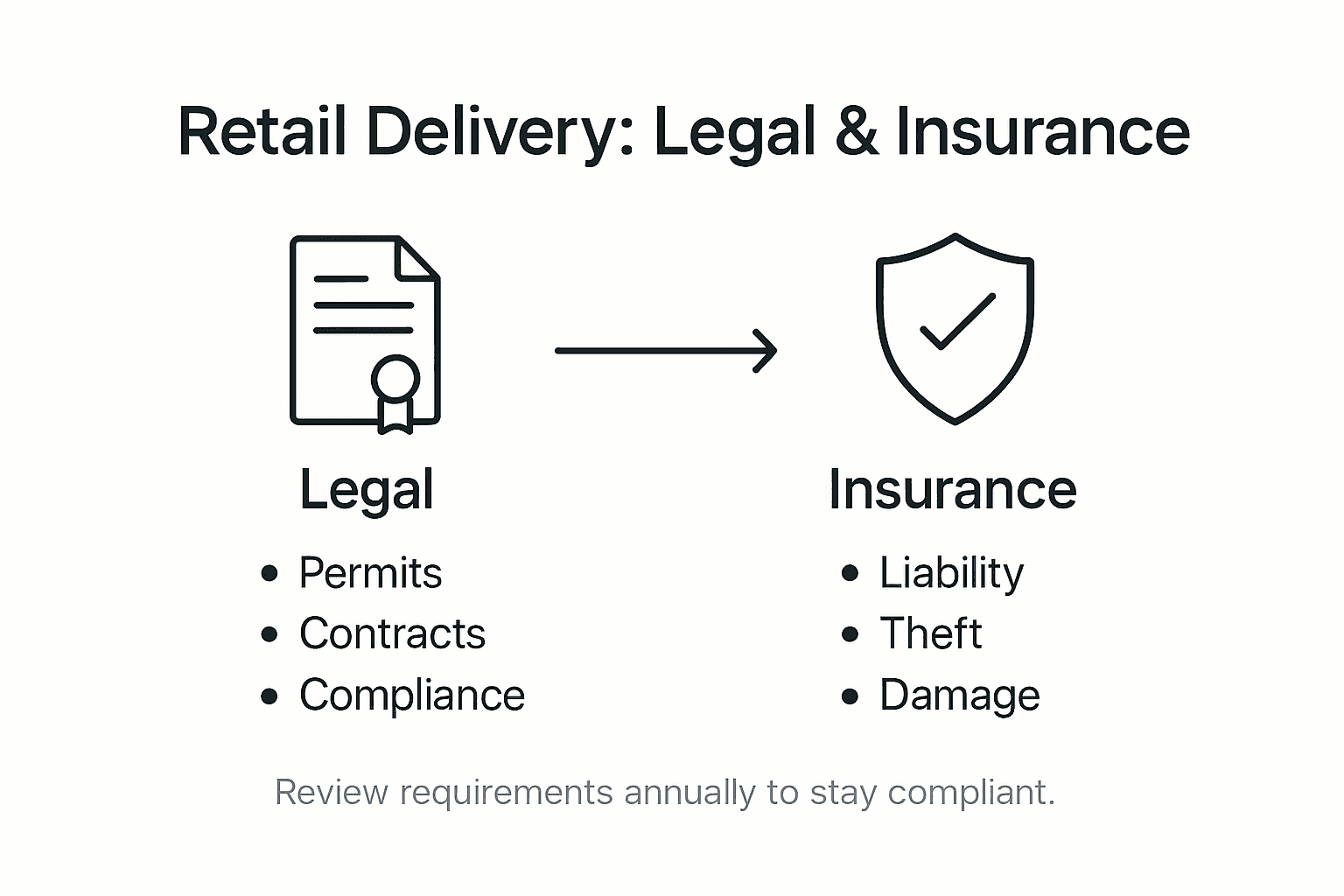
Insurance plays a critical role in managing potential risks associated with retail delivery services. Understanding insurance principles for business logistics reveals multiple coverage types essential for protecting businesses against potential financial losses. These typically include public liability insurance, goods-in-transit coverage, and comprehensive business insurance policies that address potential damage, theft, or accidents during product transportation.
Key legal and insurance considerations for retail delivery businesses include:
Risk Management Tip: Conduct an annual comprehensive review of your insurance policies and legal compliance, ensuring your coverage matches your current operational scope and potential risk exposure.
Retail delivery businesses frequently encounter operational challenges that can significantly impact their efficiency and customer satisfaction. Complex transport challenges in retail logistics reveal multiple potential pitfalls that require strategic intervention and proactive management to mitigate effectively.
Last-mile delivery network optimisation strategies highlight the most critical operational risks businesses must navigate. These include inefficient route planning, inadequate carrier selection, poor communication protocols, and insufficient technological integration. Urban delivery environments present particularly complex challenges, with dense traffic, restricted access zones, and evolving customer expectations creating substantial operational pressures.
Common pitfalls in retail delivery include:
Operational Resilience Tip: Develop a comprehensive, flexible logistics strategy that incorporates multiple carrier options, robust technology platforms, and adaptive routing mechanisms to quickly respond to unexpected disruptions in your delivery network.
Navigating the complexities of retail delivery solutions in Melbourne requires more than just traditional logistics. The challenges highlighted around route optimisation, real-time tracking, and specialised transportation demand a partner who understands both the technology and local landscape. Whether managing fragile high-value items or scaling up for peak periods, a reliable and flexible delivery infrastructure is critical to maintain customer satisfaction and operational efficiency.
At Onyx Removals, we specialise in tailored retail delivery and specialised transportation services designed to meet these exact needs. Our experienced team provides personalised planning and seamless execution across commercial removals and retail transport. By combining expertise in packing, storage, and stress-free delivery with integrated communication, we help Melbourne businesses overcome logistical pitfalls and thrive in a competitive retail environment.
Discover how our comprehensive moving and retail delivery solutions can simplify your operations and boost your business success. Visit Onyx Removals today to get a tailored quote and take the first step towards smooth, dependable retail deliveries that meet your customers’ evolving expectations.
Retail delivery solutions encompass logistics and transportation strategies that facilitate the efficient movement of products from businesses to customers. They include services such as order processing, inventory management, and tracking, as well as final product distribution.
Businesses can enhance their retail delivery processes by investing in technology such as omnichannel fulfillment systems, real-time tracking, and routing optimisation software. These technologies increase efficiency, reduce costs, and improve customer satisfaction.
Retail businesses typically have access to various delivery services, including standard parcel delivery, express courier services, scheduled contract deliveries, specialised transportation, and bulk freight shipping. Each type serves different operational needs and customer expectations.
Retail delivery businesses must comply with regulations such as Australian Consumer Law, workplace health and safety standards, and insurance requirements. It’s crucial to ensure proper documentation and understand liability and risk transfer in delivery contracts.

No Related Post


