



TL;DR:
- Early packing, organization, and professional removalists ensure a smooth Melbourne move.
- Booking movers 4-6 weeks in advance and preparing your home reduces last-minute stress.
- Proper planning and professional help prevent common moving day mistakes and damages.
Moving day in Melbourne ranks as one of life’s most stressful events, and it’s not hard to see why. Between unpredictable weather, tight rental deadlines, peak-hour traffic on the Monash, and the sheer physical challenge of shifting a household, things can unravel fast. The good news is that most moving day disasters are entirely avoidable. With the right preparation, a clear timeline, and a few hard-won strategies tailored to Melbourne’s unique conditions, you can turn what feels like a logistical nightmare into a surprisingly manageable day. This guide walks you through the best practices for a smooth relocation, whether you’re a renter chasing your bond refund or a homeowner making a fresh start.
| Point | Details |
|---|---|
| Pack early, stay organised | Begin packing 4-6 weeks ahead and use colour-coded labels to streamline the move. |
| Book professional removalists | Secure insured, AFRA-accredited movers well in advance to avoid stress and minimise risks. |
| Create safe and clean home | Set up child/pet zones, prep for rain, and follow cleaning checklists to boost move success. |
| Handle specialty challenges | Prepare for bulky items, delicate possessions, and renter/homeowner differences with tailored solutions. |
| Expert help prevents mistakes | Rely on professional advice and planning to avoid costly moving day errors. |
Packing is the one task that almost everyone underestimates. You open a drawer, realise you’ve accumulated a decade’s worth of odds and ends, and suddenly the weekend before your move looks very short indeed. The fix is simple: start earlier than you think you need to.
Start packing 4-6 weeks before your move date, working through one room at a time. Research shows this approach with colour-coded labels and contents lists can speed up unpacking by up to 50% and dramatically cut last-minute stress. Colour coding works because your removalists can place boxes directly into the right rooms without asking you a single question.
Here’s a simple system that works well for most Melbourne households:
As you pack, write a brief contents list on each box and stick it on the side rather than the top. When boxes are stacked, you can still read the label. It sounds like a small detail, but it saves genuine time during unpacking.
Before you start loading boxes, it’s worth spending time decluttering before moving so you’re not paying to transport items you’ll throw out anyway. A good packing timeline guide can also help you map out exactly when to tackle each area of your home.
Pro Tip: Pack a clearly labelled “first night” box with everything you’ll need before the removalists return the next day: phone charger, toilet paper, kettle, cups, a change of clothes, and any medications. Treat this box as carry-on luggage and keep it with you.
Once your packing plan is in motion, the next priority is securing your removalists. This is where many Melbourne movers leave things too late and pay the price, sometimes literally.
Book professional removalists 4-6 weeks ahead of your move date. Average local move costs in Melbourne sit between $400 and $1,200, with most companies charging around $150 per hour. Weekends and end-of-month dates book out fast because that’s when most leases expire, so moving mid-week or mid-month can save you money and give you more choice.
When choosing a removalist, look for AFRA accreditation (the Australian Furniture Removers Association) and confirmed transit insurance. These aren’t just nice extras. Professionals prevent 85% of damage claims through proper equipment and expertise, while DIY moves carry a 34% injury risk and frequently run over time. For bulky, fragile, or long-distance moves, the maths strongly favours hiring professionals.
| Factor | Professional removalists | DIY move |
|---|---|---|
| Damage risk | Low (insured and trained) | High (no coverage, inexperienced) |
| Injury risk | Minimal | 34% reported injuries |
| Time efficiency | Predictable and fast | Often runs over schedule |
| Cost | $400-$1,200 typical | Hire costs plus risk exposure |
| Specialty items | Handled with correct gear | Often impractical or unsafe |
Key things to confirm before you sign any booking:
For a detailed breakdown of what drives Melbourne moving costs, it helps to understand the variables before you call for quotes. You should also look into moving insurance options and compare professional vs DIY packing before making your decision.
“The cheapest quote is rarely the best value on move day. A removalist who shows up late, without the right equipment, or without insurance can cost you far more than you saved.”
With movers booked and boxes accumulating, the next step is preparing your actual home for the physical process of moving. This is where people often forget important details until they’re standing in a half-empty house at 2pm.
Here’s a practical sequence for preparing your home on move day:
Melbourne’s weather deserves its own paragraph. The city can throw four seasons at you in a single afternoon, and a clear morning can become a downpour by midday. Have tarps and towels ready for Melbourne rain and plan to start early to avoid rush hour traffic, which can add significant time to your move.
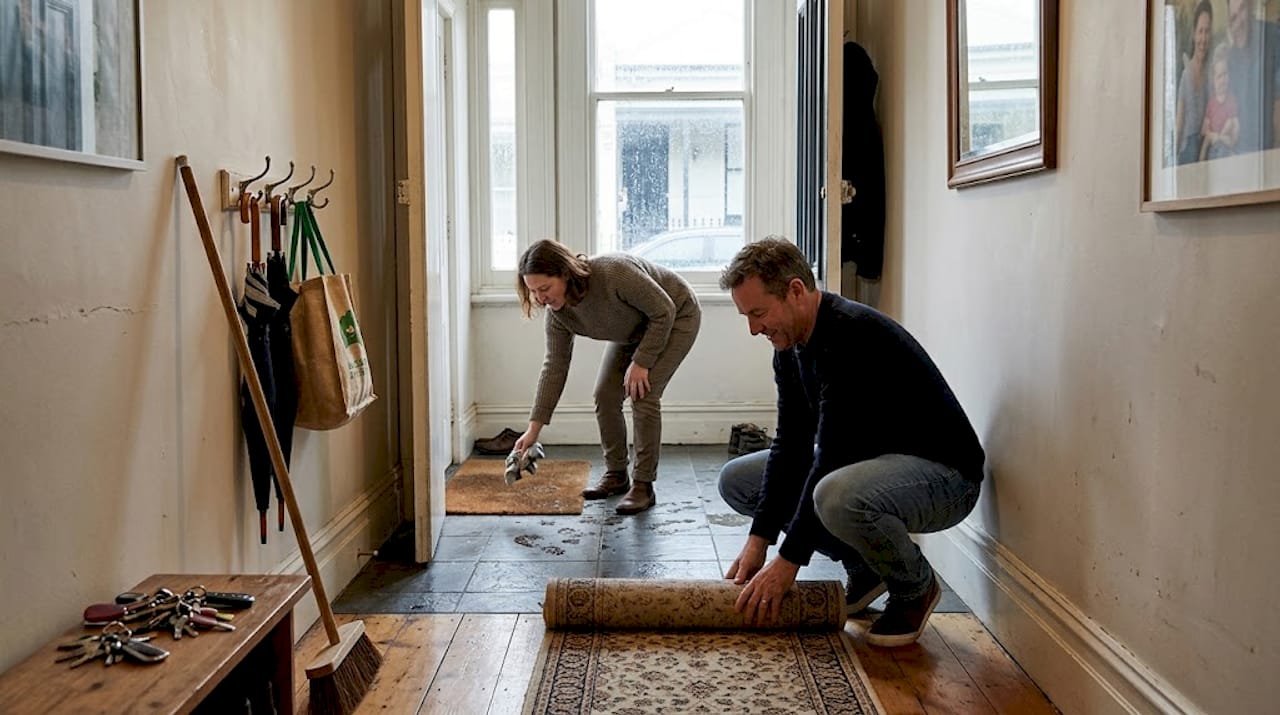
For renters, this stage is also about bond recovery. Only 64% of bonds are fully refunded, and cleaning disputes cause 56% of bond issues. A thorough pre-move cleaning checklist and careful attention to the condition report can protect your deposit. Useful moving house cleaning tips tailored to Melbourne rentals can make this much less daunting.
Pro Tip: Take timestamped photos of every room, appliance, and wall before you hand back the keys. If a dispute arises later, photos are your strongest evidence.
Not every move is a straightforward two-bedroom apartment with flat-pack furniture. As soon as specialty items or complex tenancy situations enter the picture, moving day demands more careful planning.
Specialty items like art, antiques, and plants require archival packing materials and upright transport. Large furniture like pianos or bookshelves needs proper disassembly and dollies. Attempting to wing these tasks on moving day without the right equipment is how damage happens.
| Item type | Key challenge | Recommended method |
|---|---|---|
| Artwork and mirrors | Surface scratches, breakage | Archival wrap, padded crates |
| Plants | Root shock, leaf damage | Upright, climate-controlled transit |
| Antiques | Structural fragility | Custom packaging, short stacks |
| Large furniture | Doorway clearance, injury risk | Disassembly, furniture dollies |
For those booking last-minute, be aware that moves within 48 hours add a 20-50% surcharge on top of standard rates. That premium alone is a compelling reason to plan early.
The moving day experience also differs significantly depending on your situation:
As outlined by Victorian tenancy guidance, renters must meet minimum property standards before vacating, which means cleaning isn’t just courtesy, it’s a legal expectation. A thorough moving checklist for Australia can help both renters and homeowners stay across every task.
After working with Melbourne families through hundreds of relocations, one pattern stands out clearly: nearly every moving day disaster traces back to a decision made weeks earlier, not on the day itself. Rushed timelines, skipped research on removalists, and ignored cleaning requirements don’t create problems on move day. They create problems because someone cut a corner in week three of the preparation phase.
Organisation and pre-planning matter far more than physical strength or luck. The households that have the smoothest moves are rarely the ones with the most muscle. They’re the ones that started packing early, booked reliable movers, and treated their condition report like an important legal document, because it is.
Professional removalists also absorb an enormous amount of invisible stress. When your Melbourne moving tips are backed by experienced hands and the right equipment, you’re free to focus on your family and your new home. The comparison between DIY vs pro moving becomes very clear when you factor in time, risk, and mental load. One overlooked detail, whether it’s insurance, a weather forecast, or a missed clean, can unravel an otherwise well-planned day. The best moving days are built quietly, in the weeks before they happen.
Putting these strategies into practice is far easier when you have a team that knows Melbourne’s streets, rental requirements, and moving challenges inside out.
At Onyx Removals, we offer stress-free moving services designed around your specific timeline and property type, whether you’re a renter needing cleaning support or a homeowner shifting fragile antiques. Our team arrives with quality packing materials for Melbourne homes and the full range of Melbourne moving equipment to handle every item safely. We handle the heavy lifting so you can focus on settling in. Get in touch today for a tailored quote and make your next Melbourne move the smoothest one yet.
Start packing 4-6 weeks before your move date and work through one room at a time. Using colour-coded labels from the start makes unpacking far quicker and less overwhelming.
A typical local Melbourne move costs between $400 and $1,200, with most removalists charging around $150 per hour. Mid-week bookings often attract lower rates than weekends.
Renters must focus on bond cleaning, condition report comparisons, and minimum standards compliance before handing back keys. Homeowners can prioritise utility switchover and protecting valuables during transit.
Booking a move within 48 hours typically adds a 20-50% surcharge to standard rates and increases the likelihood of damage, missed cleaning tasks, and rushed packing errors.
Use archival packing materials for fragile items, keep artwork and antiques upright during transit, and rely on furniture dollies or professional disassembly for oversized pieces.

No Related Post


