



TL;DR:
- Thorough documentation of property condition protects tenants from unfair bond deductions.
- Completing and returning the Condition Report within deadlines is essential for dispute prevention.
- Taking timestamped photos before and after move-in and move-out ensures strong evidence.
Many Melbourne tenants assume a quick vacuum and a wipe of the benchtops is all it takes to get their bond back. That assumption costs people real money. In Victoria, the official mechanism for apartment move-in and move-out documentation is the Condition Report, a legal document that records the property’s condition at the start and end of a tenancy. Miss a step, skip a photo, or return the form late, and you hand the rental provider evidence to make deductions. This guide walks you through every stage of the checklist process so you can protect your bond, understand your rights, and move with confidence.
| Point | Details |
|---|---|
| Condition Report is key | Filling out your Condition Report thoroughly protects your bond rights. |
| Document everything | Photos, videos, and written notes prevent most move-out disputes. |
| Know cleaning standards | Meet ‘reasonably clean’ benchmarks and only use professional cleaning if required. |
| Act on issues quickly | Report problems in writing and meet move-in deadlines to ensure legal protection. |
| Expert help is available | Professional movers and cleaners can simplify your checklist and relocation. |
The Condition Report is not just paperwork. It is the single most important document in your tenancy because it creates an official record of what the apartment looked like when you arrived. If damage appears at move-out that was not listed on the ingoing report, you can be held responsible for it. That is how significant this document really is.
Rental providers must give you the signed Condition Report using the official Word template, with two copies, before you move in. You must then review every room, add your own comments and photos for anything unclean or damaged, sign the document, and return one copy within five business days of moving in. Miss that deadline and your ability to dispute move-out claims weakens considerably.
At the end of your tenancy, the rental provider completes the exit section of the same Condition Report within 10 days of the tenancy ending. You have the right to attend that final inspection, and the exit report is compared directly against the ingoing report to assess any bond claims.
Here is a quick breakdown of who is responsible for what:
| Responsibility | Rental provider | Renter |
|---|---|---|
| Provide Condition Report before move-in | Yes | No |
| Review and annotate report | No | Yes (within 5 business days) |
| Attach photos to report | Both recommended | Yes |
| Complete exit section at move-out | Yes (within 10 days) | No |
| Attend exit inspection | Optional | Strongly recommended |
Common pitfalls include: missing the five-day return deadline, writing vague comments like “dirty” instead of “grease build-up inside oven door”, and not attaching date-stamped photos. These gaps are exactly what rental providers use to justify bond deductions.
Our apartment move-in checklist and our broader guide on how to rent in Melbourne both expand on these steps if you want a deeper look.
Pro Tip: Keep a copy of your completed Condition Report along with your photos in a cloud folder. Time-stamped digital evidence is far harder to dispute than memory.
With the paperwork sorted, it is time to focus on what you need to check and document the very first day. Before you unpack a single box, walk through the apartment methodically and treat it like a forensic inspection.
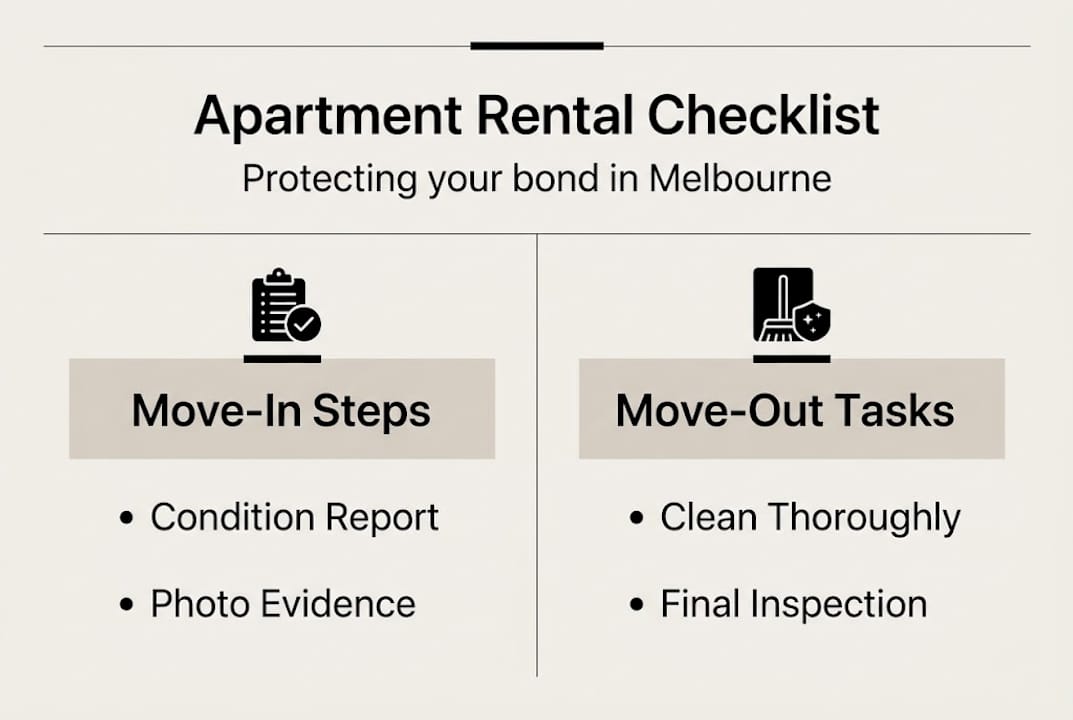
Our apartment move-in checklist recommends taking timestamped photos and videos of every area, including floors, walls, appliances, and cupboard interiors, before you bring anything inside. Once your furniture is in, you lose access to corners and walls that could already be marked or stained.
Here is your step-by-step move-in process:
Before you move in, also check the 14 rental minimum standards that every rental property in Victoria must meet. These cover heating, ventilation, water efficiency, structural safety, and more. If the property does not meet these standards, you have grounds to request repairs before or just after moving in.
For Melbourne apartments specifically, also note any building-specific rules around waste disposal, noise curfews, and secure entry procedures. These are in the owners corporation rules and breaching them can create friction with the rental provider.
Pro Tip: Note every issue, no matter how small. A tiny chip in a tile or a small mark on the wall might seem trivial at move-in, but at move-out it can suddenly become a repair cost if you did not flag it.
Our move-in cleaning guide has additional tips on getting the apartment into shape before you settle in.
Securing your bond also means knowing exactly what to do at the end. A lot of tenants spend time cleaning but forget to document, and that is where things go wrong.
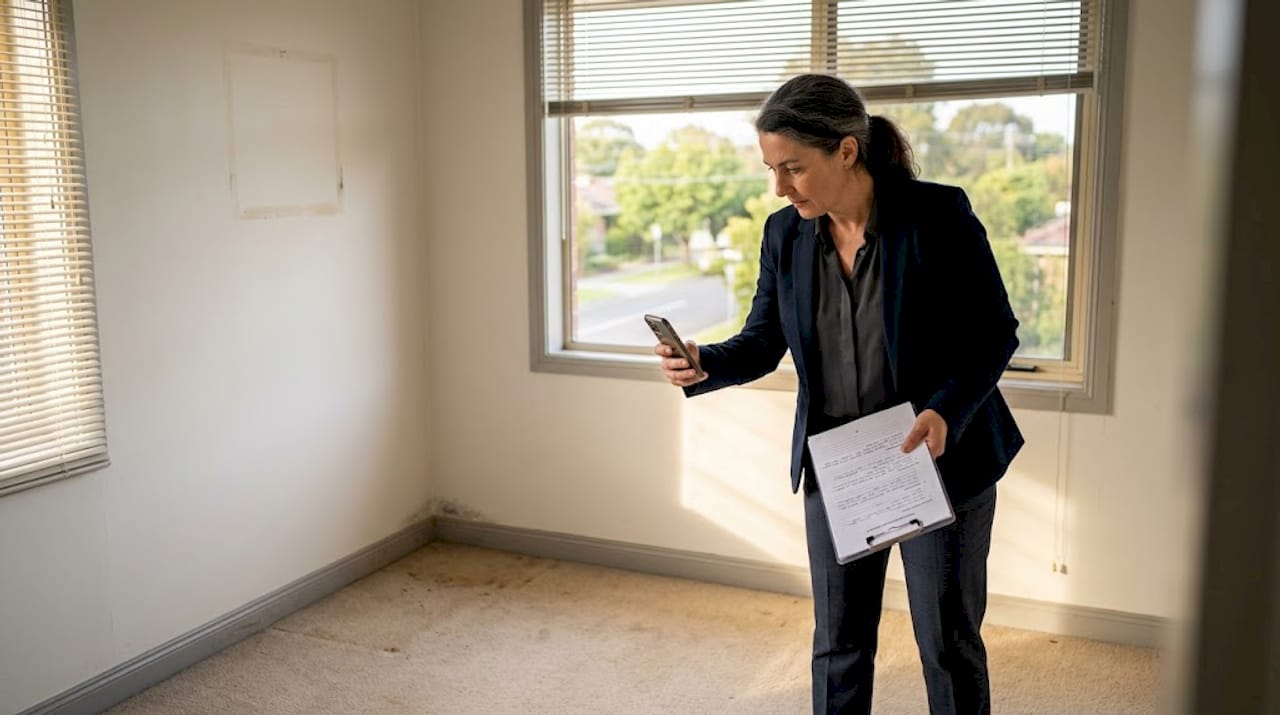
Start by reviewing your original Condition Report and photos. This tells you exactly what condition each area was in when you arrived. Your goal at move-out is to match that standard, accounting for fair wear and tear.
Key cleaning priorities tenants frequently overlook:
On the question of professional cleaning, renters must leave the property reasonably clean to a standard consistent with community averages. Professional cleaning is only legally required if the property was professionally cleaned at the start of your tenancy and that condition was written into a post-March 2021 fixed-term agreement. If your rental provider insists on professional cleaning outside those conditions, that demand is not legally enforceable.
Some agents push for professional cleaning regardless. Know your rights.
| Move-out task | Priority | Common miss? |
|---|---|---|
| Photograph all rooms before leaving | Critical | Yes |
| Clean inside all appliances | High | Often |
| Wipe window tracks and sills | Medium | Frequently |
| Patch minor wall scuffs | Medium | Sometimes |
| Clean balcony and outdoor areas | High | Yes |
Good move-out cleaning tips can make a real difference, and if you want professional support, end of lease cleaning services are available. You can also use an end of tenancy checklist to keep yourself on track.
Pro Tip: Invite the property manager to walk through the apartment with you before your final exit. If they flag anything, you have the chance to address it on the spot rather than lose bond money over something small.
Even with the best preparation, things can sometimes go off-script. Knowing what to do when a problem arises is just as valuable as doing everything right the first time.
One of the most common edge cases is when the rental provider fails to give you a Condition Report at move-in. In that situation, complete your own report using the official template and submit it to the rental provider within five business days of moving in. You are not left without protection just because they dropped the ball.
Fair wear and tear is another area of frequent confusion. It refers to the gradual, unavoidable deterioration of a property through ordinary use. Faded paint from sunlight exposure, worn carpet in high-traffic areas, and minor scuffs on walls from furniture are all examples of fair wear and tear. These cannot be claimed against your bond. Damage that goes beyond this, such as stains, holes, or broken fittings, is a different matter.
“Add comments and photos at move-in to protect yourself at move-out. Items noted as unclean, damaged, or not working at the start of your tenancy cannot be claimed against you at the end.”
If a dispute cannot be resolved directly with the rental provider, the next step is VCAT, the Victorian Civil and Administrative Tribunal. VCAT handles bond and tenancy disputes and uses the Condition Report as primary evidence. A poorly completed or missing report leaves you with very little to stand on.
The five most common mistakes tenants make:
A detailed rental property cleaning checklist can help you close the gaps before the exit inspection.
Here is something worth saying plainly: most bond disputes are not about the damage. They are about the evidence. Or the lack of it.
Tenants often rush move-in day. There are removalists, furniture to arrange, connections to set up, and a dozen other priorities competing for attention. Taking an extra twenty minutes to walk through the empty apartment with a phone camera and a checklist feels low on the list. That is exactly why so many tenants lose bond money they should keep.
Experienced property managers know what missing documentation looks like. When the exit report shows damage and the ingoing report is vague or photo-free, the scales tip in the rental provider’s favour. It is not always fair, but it is how the process works in practice.
Thorough documentation prevents the vast majority of bond issues. The tenants who come out ahead are not the ones who clean more thoroughly. They are the ones who documented more thoroughly.
Do not rely on common sense or a handshake. Follow the checklist, photograph everything, and keep copies of everything you submit. If you want to make the cleaning side stress-free, bond return cleaning professionals can handle that part while you focus on the paperwork.
A thorough checklist is your best protection, but having the right team behind you makes the whole process far less stressful.
At Onyx Removals, we support Melbourne tenants through every stage of the moving process, from packing and transportation to cleaning and unpacking. Whether you need help arriving at your new apartment in great shape or leaving your old one in bond-ready condition, our team knows what Melbourne landlords and property managers expect. Our Melbourne moving services are tailored to apartment relocations, with flexible options to suit any schedule or budget. If you are ready to start planning, get a moving quote today and take the first step toward a smooth, stress-free move.
Complete your own Condition Report using the official template and submit it within 5 days. This gives you legal protection in case of disputes at the end of your tenancy.
You must leave the property reasonably clean to a standard consistent with community averages, unless your tenancy agreement specifies otherwise.
Fair wear and tear covers normal ageing such as faded paint or worn carpet, which cannot be claimed against your bond by the rental provider.
Meticulous documentation with photos and written notes prevents most disputes. Complete the Condition Report thoroughly at move-in and keep a timestamped copy of everything.

No Related Post


