



TL;DR:
- Moving into a Melbourne apartment involves complex tasks like utility setups, legal paperwork, and building access, requiring careful planning. Following a step-by-step checklist, including early utility contact, document photos, and condition reports, helps ensure a smooth transition. Hiring local professional movers can save time, reduce risks, and handle Melbourne-specific challenges more efficiently than DIY efforts.
Moving into a new Melbourne apartment feels straightforward until you’re standing in an empty flat with no electricity, a pile of boxes you can’t unpack, and a property manager calling to ask why you haven’t returned the condition report. The reality is that apartment moves in Melbourne involve a web of overlapping tasks: utility connections, legal paperwork, council registrations, and building-specific access rules that catch even experienced movers off guard. This guide cuts through the confusion with a proven, step-by-step process built around real Melbourne conditions, so you can move in smoothly, protect your bond, and settle into your new home without the drama.
| Point | Details |
|---|---|
| Plan utilities early | Organise electricity, gas, and NBN at least a week before move-in to avoid delays. |
| Budget for real costs | Removalist fees for Melbourne apartments vary—know your hourly and travel costs upfront. |
| Document everything | Photograph your apartment and record condition reports on day one to protect your bond. |
| Don’t skip handover steps | Check locks, hot water, and smoke alarms to ensure immediate comfort and safety. |
| Finish post-move tasks | Set up bins, update authorities, and trial commutes for a seamless start in your new home. |
Once you know what’s at stake, let’s dive into the practical prep steps every successful Melbourne move requires. Most people start packing too late and organise the administrative side too early or not at all. Getting the sequence right is everything.
The best approach is to work backwards from your move-in date and assign each task to a specific window of time. Two weeks out, confirm your lease and key collection time with your property manager. One week out, arrange your removalists, confirm parking access at both locations, and notify your building manager about the move so they can reserve the lift if your apartment building has one.
Your Melbourne apartment move-in checklist should include the following essential items:
When setting up utilities, don’t assume the previous tenant’s account has been closed. Contact providers directly and open a new account in your name, rather than simply transferring or assuming continuity of service.
Pro Tip: Book your NBN connection first, before any other utility. Internet providers frequently need up to 10 business days to schedule an installation visit, and working from home without internet is far more disruptive than a short delay in getting gas connected.
Use a combined move-in and move-out checklist so you can track which tasks apply to both your old and new property simultaneously. Overlap is common when you’re vacating one lease while starting another, and a dual checklist keeps you from dropping the ball on either end.
| Task | Timing | Priority |
|---|---|---|
| Book removalists | 3-4 weeks out | High |
| Connect electricity and gas | 1-2 weeks out | High |
| Arrange NBN internet | 2-3 weeks out | High |
| Lodge mail redirection | 1 week out | Medium |
| Notify authorities (ATO, VicRoads, AEC) | 1 week out | High |
| Take condition report photos | Move-in day | Critical |
| Record meter readings | Move-in day | Critical |
| Test all keys and smoke alarms | Move-in day | Critical |
Preparation complete, it’s time to budget realistically and avoid financial shocks during your move. Melbourne removalist pricing is more variable than most people expect, and a quote that looks affordable upfront can grow significantly if you haven’t asked the right questions.
According to 2026 Melbourne removalist benchmarks, two movers cost between $105 and $190 per hour, while three movers run from $145 to $260 per hour. A local one-bedroom move ranges from $315 to $735 in total, a two-bedroom from $525 to $1,250, and a three-bedroom from $840 to $2,100. Most companies also charge a travel fee of between $80 and $150.
Understanding Melbourne moving costs means knowing what drives your final price. Key factors include:
| Move size | DIY estimated cost | Professional removalist |
|---|---|---|
| Studio or 1-bedroom | $150-$300 (van hire + fuel) | $315-$735 |
| 2-bedroom | $250-$450 | $525-$1,250 |
| 3-bedroom | $400-$650 | $840-$2,100 |
The DIY route looks cheaper on paper, but factor in the time cost, physical strain, risk of damage, and the very real possibility of a hire van that’s too small for the job, and the gap narrows quickly. Explore affordable moving options before assuming DIY is the smarter choice.

When getting quotes, ask every company to confirm their pricing structure in writing. Specifically request a breakdown that includes the travel fee, any stair or parking surcharges, and how they handle delays such as a lift booking that runs over time. The Melbourne moving industry is competitive and well-regulated, but quote clarity varies widely between providers.
With your finances in order, focus on the legal and practical details that safeguard your rental experience. The handover process is where many tenants lose money they should have kept, simply because they didn’t document things carefully enough on day one.
Here is a step-by-step process for a clean, dispute-free handover:
“If it’s not in writing, it didn’t happen.” This is the single most important principle of renting in Melbourne. Every conversation with your property manager about the condition of your apartment should have a written follow-up.
Follow the apartment cleaning tips that apply specifically to Melbourne apartments, where older buildings often have built-up grime in unexpected places like window tracks and range hoods. A thorough move-in cleaning guide can also help families with children who need a clean environment before settling in properly.
Pro Tip: Record a short video walkthrough of the entire apartment on move-in day and email it to yourself. The email timestamp creates an independent record of the date and time, which is useful if any condition disputes arise months later.
Once your handover is complete, make sure you don’t miss these “final mile” steps that truly settle you into your new home. The first few days after moving are typically chaotic, but a short list of post-move tasks will save you significant hassle in the weeks ahead.
According to the Melbourne apartment moving checklist, post-move priorities such as bin setup, connecting with local services, and trialling commute routes are frequently overlooked but genuinely important for settling in smoothly. Use the Melbourne apartment moving checklist to track your progress through this final phase.
Key post-move tasks to complete in the first week:
Wrapping up the practical action steps, here’s our direct take drawn from years on the ground in Melbourne’s moving market. And this perspective might surprise you.
The most organised movers we work with, the ones with colour-coded spreadsheets and labelled boxes, still run into Melbourne-specific problems they didn’t anticipate. Why? Because apartments in this city have quirks that no checklist fully prepares you for until you’ve lived them.
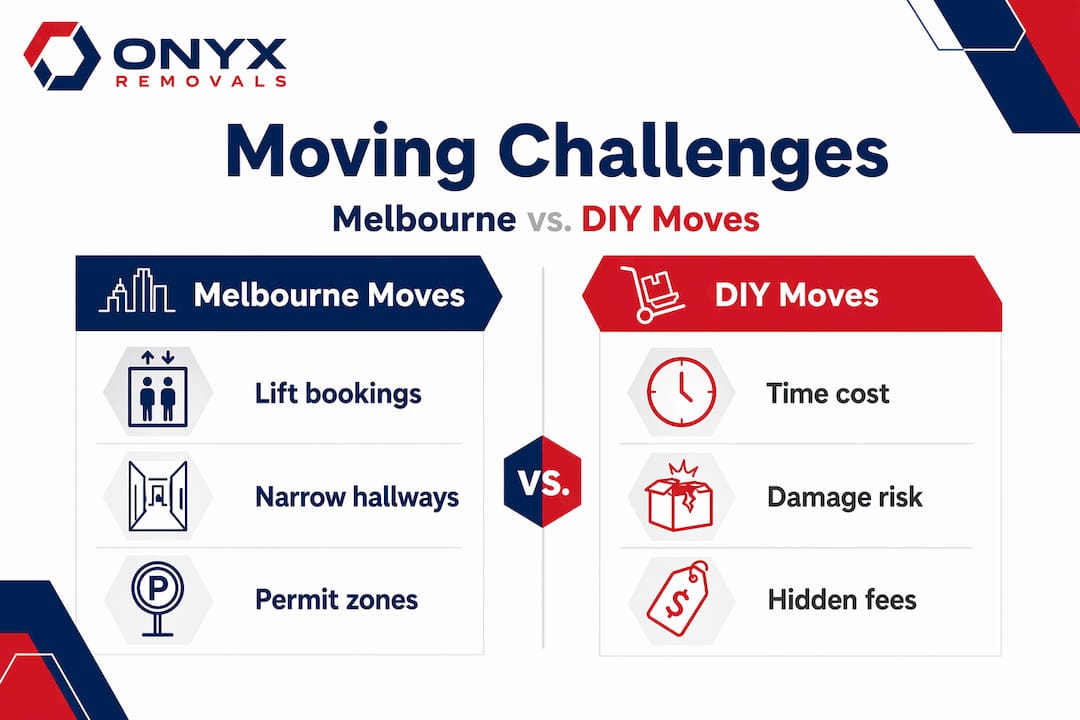
Consider the basics: multi-storey buildings in the CBD and inner suburbs often have lift booking systems that require 48-hour notice and strict time windows. Turn up outside that window and you’re carrying furniture up stairs, or you’re waiting. Parking on many Melbourne inner-city streets is permit-only or metered, and a removalist truck that can’t park within 20 metres of your building entrance turns a two-hour job into a four-hour one.
Narrow Victorian-era hallways are another constant challenge. Many apartments in suburbs like Fitzroy, Collingwood, Richmond, and St Kilda were converted from older terrace housing, and the internal corridors simply weren’t designed for moving large furniture through. A sofa that fit easily in your last place can become a 45-minute puzzle in a new apartment with a tight stairwell turn.
The temptation with DIY moves is to focus only on the items that fit neatly into a hire van. But those awkward pieces, the wardrobe that needs disassembly, the mattress that won’t turn the corner, the desk that’s heavier than expected, are exactly the items that cause injuries, damage, and delays when handled without experience.
Our experience with residential vs commercial moving insights consistently shows that the cost of fixing a damaged wall, replacing a broken piece of furniture, or paying for an extra hour of van hire because the job ran over time often exceeds the cost difference between DIY and professional services. DIY can absolutely work for a small studio with minimal furniture and excellent access. But for most Melbourne apartment moves, especially those involving multiple floors, older buildings, or families with significant belongings, professional removalists with local knowledge are not a luxury. They are the cost-effective option when you account for the full picture.
If you’re ready to let experts handle the heavy lifting, here’s how Onyx Removals can help you transition smoothly.

At Onyx Removals, we specialise in Melbourne apartment moves and understand exactly what makes them different from house removals. From narrow stairwells and lift bookings to permit parking and building access requirements, our team navigates these challenges every day. Our residential removal services are tailored to your specific situation, whether you’re moving a studio or a full family home. Getting started is simple: request accurate home removal quotes with no obligation and receive a transparent, itemised price with no hidden fees. Explore all Onyx Removals services including packing, unpacking, cleaning, and storage to find exactly what your move requires.
Yes, being present lets you document initial condition, test keys and appliances, and ensure all legal requirements are met on handover day. The condition report documentation process including photos, meter readings, and key testing is much harder to complete accurately without you there in person.
Arrange utility connections at least 5-10 days before your move to avoid service gaps, particularly for NBN internet which frequently requires up to 10 business days for an installation appointment.
Professionals efficiently manage narrow hallways, parking permits, and lift bookings while protecting your furniture from damage. As noted in StudyMelbourne’s move-in guidance, professionals handle narrow hallways and parking access significantly better than DIY approaches.
Ask specifically about travel, parking, stair, and heavy item fees when requesting quotes. Travel fees alone range from $80 to $150 with most Melbourne removalists, and stair charges can add considerably more to your final invoice.
Update your details with VicRoads, the ATO, Medicare, your bank, and the AEC to stay compliant with all legal and financial obligations. The full Melbourne apartment checklist also recommends updating your super fund and any subscription services at the same time.

No Related Post


