



TL;DR:
- Choosing a trustworthy removalist begins with thorough preparation by defining your move scope, budget, and special requirements.
- Obtaining and comparing at least three detailed, written quotes helps identify market rates and avoid hidden charges or scams.
Moving house is one of the most stressful events a family can go through, and knowing how to choose a removalist confidently is what separates a smooth relocation from a costly disaster. The wrong choice can mean damaged furniture, unexpected fees, and belongings that arrive late or not at all. This guide walks you through every stage, from preparing before you even contact a removalist, to verifying credentials, comparing quotes, and protecting yourself on the day. By the end, you will know exactly what to look for and what to walk away from.
| Point | Details |
|---|---|
| Prepare before you quote | Define your move scope, budget, and special requirements before contacting any removalist. |
| Get three written quotes | Comparing at least three itemised quotes helps you identify the market rate and spot red flags. |
| Verify credentials and insurance | Confirm AFRA accreditation, Goods in Transit insurance, and Public Liability coverage before signing. |
| Read the contract carefully | Written contracts with clear cancellation, delay, and payment terms protect you from disputes. |
| Document everything pre-move | Photograph your belongings before loading to support any insurance claims after delivery. |
Most people contact removalists before they have a clear picture of what they actually need. This is where problems begin. Before you request a single quote, take time to define your move properly.
Start by mapping out the full scope of your relocation:
Once you have this picture, set a realistic budget. Be honest with yourself about the trade-off between cost and convenience. Choosing a full-service removalist who packs and unpacks for you costs more, but it drastically reduces the physical and mental load on your household.
Next, look for recommendations from trusted sources. Ask friends, family, or neighbours who have moved recently. Check whether a removalist is a member of the Australian Furniture Removers Association (AFRA), the peak industry body in Australia. AFRA membership signals that a company meets minimum standards for equipment, insurance, and professional conduct.
Create a written inventory before you reach out. Even a rough list helps removalists provide accurate quotes and gives you a consistent set of information to share across multiple providers. This single step saves a significant amount of confusion later.
Pro Tip: A pre-move survey conducted in-home or virtually allows a removalist to assess property access, stair challenges, and special items. Always request one before accepting a quote. Without it, last-minute charges are almost inevitable.
Once you are prepared, it is time to gather quotes. The rule most experienced movers follow is simple: get at least three written, itemised quotes based on identical service requirements. This is not just about finding the cheapest option. It is about understanding what is standard and spotting anything unusual.
When reviewing quotes, pay attention to the following:
A useful framework is to lay quotes side by side in a table so you can compare like with like.
| Quote component | Company A | Company B | Company C |
|---|---|---|---|
| Base rate (hourly) | $180/hr | $165/hr | $195/hr |
| Packing materials | Included | Extra charge | Included |
| Cancellation fee | $150 | Not stated | $100 |
| Pre-move survey | Virtual | None | In-home |
| Estimated total | $1,440 | $1,320 (est.) | $1,560 |
Notice that Company B looks cheapest until you factor in unlisted packing costs and no pre-move survey. This kind of side-by-side comparison reveals what low quotes often obscure.
Be cautious of prices that seem too good to be true. Unusually low quotes can signal a scam operation, where a company takes a large deposit and disappears, or substandard service where corners are cut on the day. Reputable removalists do not demand full payment upfront and always provide written estimates.
You can also use resources like the Onyx Removals guide on comparing moving quotes for a practical breakdown of how to evaluate each line item.
Pro Tip: Always ask whether a quote is binding or non-binding. A binding quote locks in the price regardless of how long the job takes. A non-binding estimate can increase if the move runs over time. For large or complex moves, push for a binding figure after a proper survey.
Knowing how to choose the right moving company means looking beyond the website and the quote. This stage is where most people cut corners and regret it later.
Start with insurance. Confirm that your removalist holds Goods in Transit insurance and Public Liability insurance, and ask for certificates of currency. Do not simply take their word for it. A credible removalist will provide these documents without hesitation.

Next, verify AFRA membership or other professional accreditations directly on the industry body’s website. Membership is not automatic proof of excellence, but it does mean the company has agreed to a code of conduct and is subject to dispute resolution processes.
Check reviews across multiple independent platforms. Google, ProductReview, and word-of-mouth referrals from people you trust all carry weight. Look for patterns in negative feedback. A few complaints about minor delays are normal. Repeated issues involving hostage goods or dispute estimates signal unethical practices and are worth taking seriously.
Here are the red flags that should stop you from proceeding:
“A contract that clearly outlines pickup and delivery details, inventory, costs, and terms is a legal safeguard. If a removalist is reluctant to put anything in writing, treat it as a serious warning sign.”
Written contracts with detailed scope, cancellation policies, delay provisions, and payment terms protect your rights and reduce the risk of disputes going unresolved.
This is the area where most households get caught out. Many people assume their removalist automatically covers their belongings during transit. This assumption is almost always wrong.
In Australia, removalists are not legally required to insure your goods. What most carriers offer is carrier liability, which only pays out if you can prove the removalist was negligent. Carrier liability caps can be as low as $200 per item. That is not going to cover a damaged 75-inch television or a scratched antique dresser.
Full moving insurance is an entirely separate policy. It covers accidental damage, theft, and weather-related risks, with no requirement to prove negligence. Here is how the two compare:
Moving insurance typically costs between 1.5% and 3% of your declared goods value, and it must generally be booked at least 48 hours before your move date. For a household with $60,000 worth of contents, that means a premium of roughly $900 to $1,800. It is not free, but it is a fraction of the cost of replacing damaged furniture or electronics out of pocket.
The Onyx Removals guide on insurance types for movers provides a clear breakdown of what Australian policies do and do not cover, which is worth reading before you commit to any provider.
Pro Tip: Before moving day, photograph every item of value. Open drawers, capture scratches that already exist, and document serial numbers where possible. This photographic record is your strongest asset if you need to file a claim later.
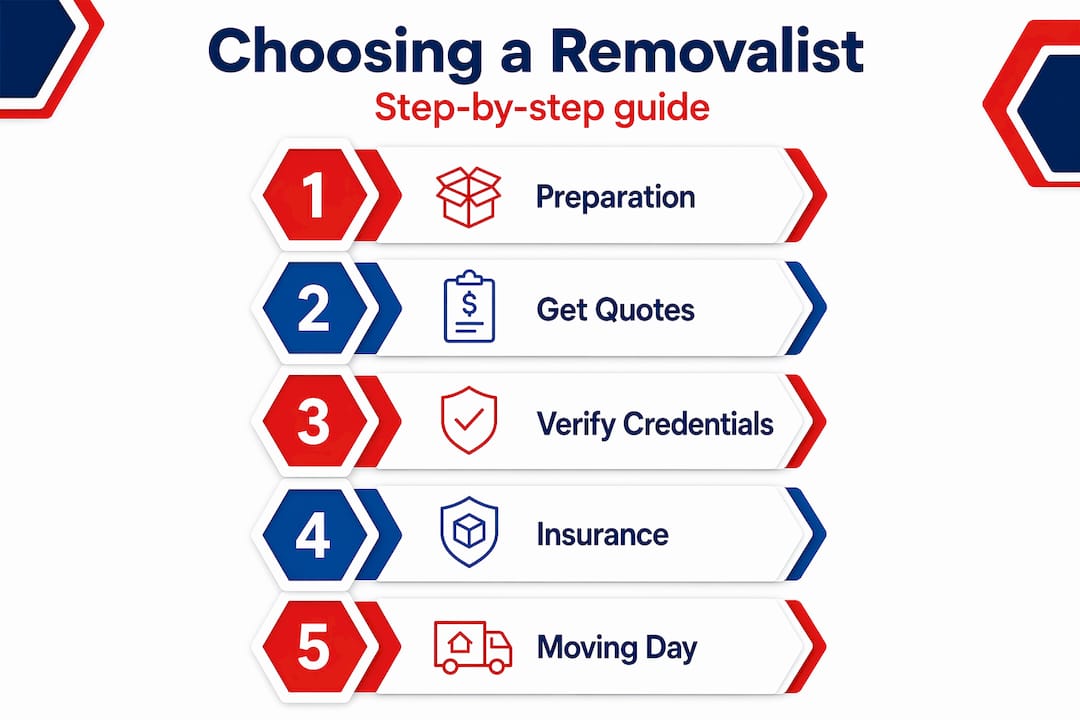
You have chosen your removalist, signed the contract, and organised insurance. Now comes execution. A few simple habits on the day will save you significant stress later.
If something arrives damaged, do not wait. Document it with photos, note it on the paperwork, and contact your insurance provider within the timeframes stated in your policy. Most policies require notification within a specific window, often 24 to 72 hours.
Here is a quick reference table for moving day actions:
| Task | When to do it | Why it matters |
|---|---|---|
| Confirm arrival time | Evening before | Avoids delays and scheduling confusion |
| Cross-check inventory at loading | During loading | Catches missing items before the truck departs |
| Final room walkthrough | Before truck leaves | Prevents items being left behind |
| Inspect goods at delivery | Upon arrival | Damage noted on paperwork supports insurance claims |
| Contact insurer if damage found | Within 24 to 72 hours | Meets policy notification requirements |
Clear communication and scheduling from booking through to delivery strongly correlates with customer satisfaction. If a removalist is hard to reach during the lead-up to your move, that tells you something important about the day itself.
I have seen enough residential moves to know that the people who stress most on moving day are almost always the ones who chose based on price alone. That is not a criticism. Cost matters when you are relocating a family. But the cheapest quote has a habit of becoming the most expensive outcome.
What I have learned is that the real indicator of a good removalist is not their price list. It is how they communicate before the job. A company that responds promptly, asks detailed questions about your move, offers a survey, and sends a clear written quote without being pushed is almost always a company that shows up on time and handles your belongings with care.
The insurance gap is the part that troubles me most, because it catches people completely off guard. Most clients have no idea that carrier liability is essentially a minimum-protection safety net. By the time they find out, they are already dealing with a damaged bookshelf and a very uncomfortable phone call.
My advice: treat the insurance conversation as a non-negotiable step, not an optional add-on. Ask every removalist you speak to what their liability position is, and then go and buy proper moving insurance regardless of how confident you feel about their answer.
And if a removalist makes you feel pressured, or is vague about what is in the contract, walk away. There are reliable professionals in this industry who do excellent work at fair prices. You do not need to settle for anyone who makes your gut uneasy.
— Dinshaw
If you are planning a residential move in Melbourne and want the confidence that comes from working with a credible, experienced team, Onyx Removals is worth a close look. They offer transparent, itemised quotes, carry the appropriate insurance, and provide personalised moving plans that cover everything from professional packing services to furniture disassembly and storage solutions. There is no pressure to commit before you are ready, and the team walks you through every step of the process. To see the full range of residential moving services available in Melbourne, visit the Onyx Removals website and request a no-obligation quote today.
Get at least three written, itemised quotes based on identical service requirements. This helps you identify the market rate and spot any outliers that might indicate poor quality or hidden charges.
Only if you can prove negligence, and even then, carrier liability is often capped at a low amount per item. Full moving insurance is a separate policy that covers accidental damage without requiring negligence proof, and it is worth purchasing before your move.
Moving insurance typically costs between 1.5% and 3% of your declared goods value and must generally be booked at least 48 hours before your move. It is far less expensive than replacing damaged or lost belongings out of pocket.
Watch for requests for large cash deposits upfront, vague or verbal-only quotes, no written contract, no pre-move survey offer, and poor communication during the enquiry stage. Any of these alone warrants serious caution.
AFRA stands for the Australian Furniture Removers Association. It is the peak industry body for removalists in Australia. Membership signals that a company meets minimum standards for equipment, insurance, and professional conduct, giving you an extra layer of confidence before you book.

No Related Post


