


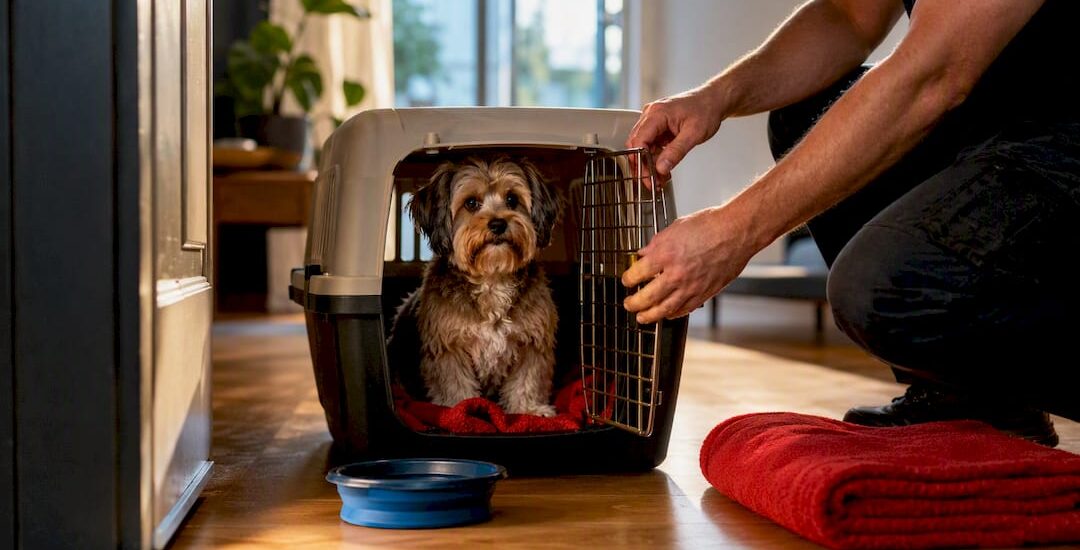
Budgeting for pets adds anywhere from around $60 for basic crate gear if you’re driving them yourself, up to $1,500 or more for door-to-door air transport of a large dog on an interstate route. Most households moving locally or driving their own pet spend closer to the low end, while commercial moves or long interstate legs push costs toward the high end. The breakdown below covers what shifts that number and how to build a realistic budget.
TL;DR:
- Costs vary from about $60 for owner-driven local moves to over $1,500 for large dogs flown cargo interstate, depending on route and service choices.
- Booking depot pickup and providing your own crate can reduce costs by roughly 20 to 35 percent compared to full door-to-door services.
- Vet and paperwork expenses include health certificates ($60 to $150) and crate purchases ($60 to $350), which are often overlooked until the last minute.
- Large breed or brachycephalic pets may incur higher costs due to special handling, temperature monitoring, or vet approvals, increasing the overall budget.
- Comparing multiple quotes for professional services is essential, as prices can fluctuate by several hundred dollars on the same route and method.
Pet relocation services cost varies enormously depending on how the animal actually travels, and that’s the first decision that shapes your whole budget. Driving the pet yourself costs next to nothing beyond fuel and maybe a travel crate. Everything else on the market sits somewhere between “reasonably cheap” and “surprisingly expensive,” depending on distance, size and how much hands-off convenience you want.
Here’s roughly what each option costs in practice:
A small cat in a $200 road transport booking and a large dog flown cargo interstate for $1,500 are both “pet relocation,” but they’re not comparable line items. Match the method to your pet’s size and your timeline before you start collecting quotes.
Distance is the obvious lever, but it’s not the only one. Route competition matters just as much. Busy corridors like Melbourne to Brisbane have multiple operators bidding for your business, while remote or less common routes often mean one or two providers setting the price with little pushback.
Animal size and breed change the equation too. Brachycephalic breeds (bulldogs, pugs, some cat breeds) often need extra handling, temperature monitoring and sometimes vet sign off before cargo travel, which adds cost. Crate size matters just as much as pet weight because operators frequently price cargo by crate volume rather than simple weight, so an oversized crate for a nervous pet can push the price up disproportionately.
A few practical levers you actually control:
Pro Tip: Measure your pet and crate combination against the airline’s exact carrier dimensions before you book. A crate that’s 2cm too tall can mean a rejected booking on move day and a scramble for an expensive last-minute alternative.
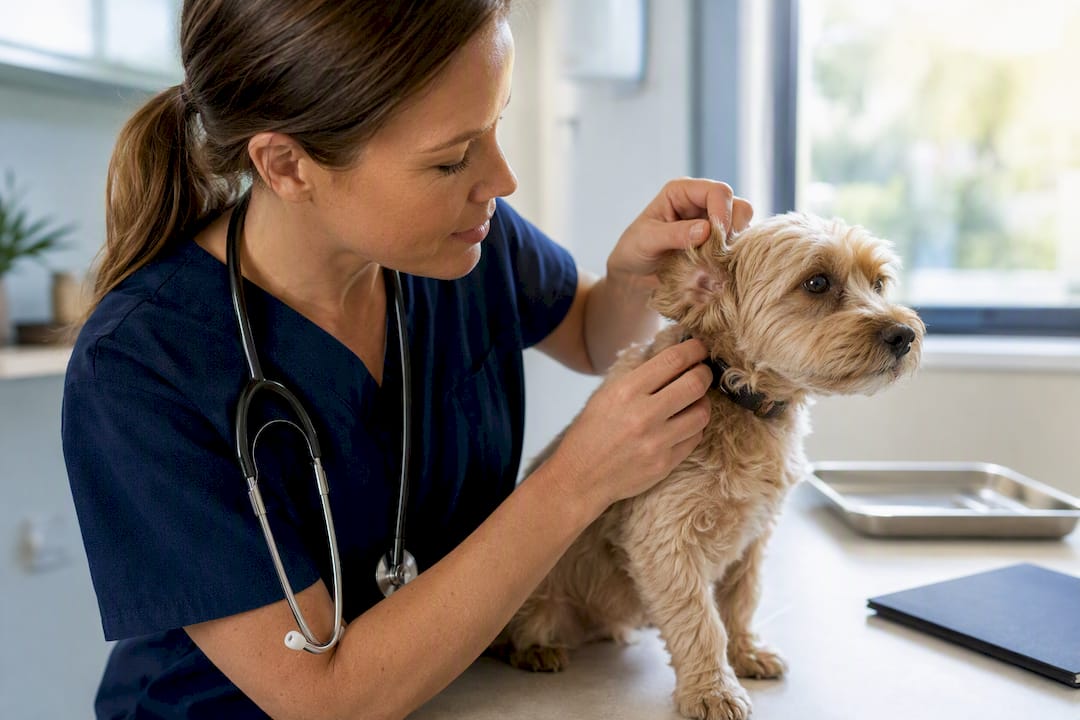
Vet and documentation costs are the ones people forget until they’re staring at an unexpected bill the week before the move. Health certificates for interstate or air travel typically need a vet visit within 10 days of departure, and that visit alone can run $60 to $150 depending on your clinic and whether the pet needs a check-up beyond the paperwork.
Add these to your list:
Standard pet insurance usually doesn’t cover any of this. Relocation and routine travel costs sit outside typical policy terms, so treat this budget as a separate line item, not something a claim will offset.
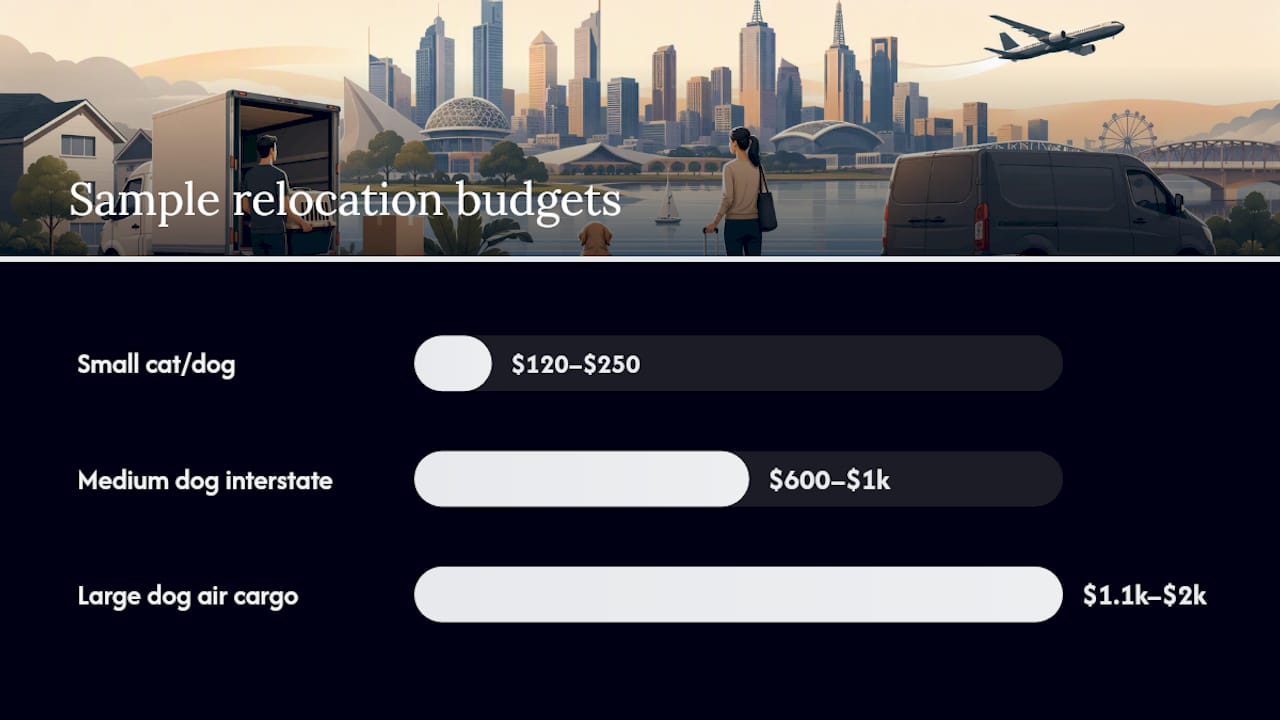
Start with a copyable checklist before you look at dollar figures. When you’re requesting quotes, ask each operator to price: transport method, crate (supplied or hired), door-to-door versus depot pickup, health certificate timing, and any state-specific biosecurity steps.
Now, three scenarios to anchor your own numbers:
Get at least three quotes for any professional transport option. Airtasker’s data shows identical routes can vary by several hundred dollars between operators, and asking each one for both door-to-door and depot pricing side by side often reveals savings you wouldn’t otherwise see.
Escape risk peaks on move day, when doors stay open for hours and strangers move through the house carrying furniture. The RSPCA recommends boarding pets for the day or setting up a quiet, confined safe room away from the action, which is a cheap way to avoid the worst-case scenario.
A few non-negotiables for the day itself:
Pro Tip: If you’re moving multiple pets, have medical needs to manage, or you’re facing a long interstate leg, professional transport isn’t just about convenience. It reduces the number of stressful transitions your pet goes through in a single day.
An experienced moving crew can schedule loading to reduce the window where doors stay open, stagger truck access so there’s no single moment of chaos, and nominate one team member as the point of contact for pet handover or boarding pickup. That coordination matters more than people expect. Onyx Removals covers this kind of scheduling detail in its pet relocation guide and broader moving with pets checklist for readers who want the full sequence.
— Dinshaw
Most moving quotes treat pets as an afterthought, which is exactly how households end up scrambling on the day. Some moving companies build pet-safe scheduling into personalised moving plans from the start, coordinating loading windows around boarding pickup or a safe-room setup to help avoid chasing open doors at the worst possible moment.
If you’re planning an interstate leg with a pet in tow, our guide on interstate pet transport costs walks through Melbourne-specific pricing examples, and our interstate pet transport page covers the safe, stress-free options available for longer routes. For the move itself, get a personalised moving quote and mention your pet when you book, so scheduling accounts for them from day one.
Most households add somewhere between $120 and $1,000 to their moving budget depending on transport method, with air cargo for large pets on interstate routes running higher, sometimes past $1,500.
Driving is almost always cheaper if you have the time and a suitable vehicle, since you’re only paying for a crate and fuel rather than handling and booking fees.
Standard pet insurance policies typically don’t cover relocation, transport bookings or routine travel expenses, so budget for these separately from any existing policy.
Health certificates and crate sizing catch people out most often, since certificates have short validity windows and crates priced by volume can cost more than expected for larger or anxious pets needing bigger carriers.

No Related Post


