



Many professionals assume employers rarely cover moving costs, but relocation support has become a strategic tool for attracting talent in Melbourne’s competitive market. Companies across sectors now offer comprehensive packages including moving expenses, temporary accommodation, and settling allowances. Understanding what’s available, which employers provide support, and how to negotiate these benefits can transform your relocation experience from stressful to seamless.
| Point | Details |
|---|---|
| Package components | Relocation support commonly includes moving costs, temporary accommodation, travel expenses, and settling allowances tailored to family size |
| Provider diversity | Melbourne employers from universities like RMIT to tech firms like Airwallex offer relocation packages to attract skilled professionals |
| Negotiation matters | Terms are individualised and documented in employment contracts, making upfront discussion and clear agreements essential |
| Eligibility varies | Support typically depends on role seniority, organisational needs, and contract terms, with timelines usually within 12 months of employment |
Melbourne’s job market increasingly features employers who recognise relocation support as essential for securing top talent. Academic institutions and technology companies lead this trend, offering structured packages that ease the financial burden of moving.
RMIT University provides relocation support including travel costs, moving goods, temporary accommodation, and allowances for eligible staff. Their comprehensive approach demonstrates how educational institutions invest in attracting researchers and academic professionals from interstate and overseas. The university’s policy outlines specific entitlements based on family composition and distance travelled.
Technology sector companies also compete through relocation incentives. Airwallex offers relocation support for Senior Mobile Engineer positions relocating to Melbourne. This reflects the tech industry’s need to attract specialised talent in a global marketplace where professionals have multiple location options.
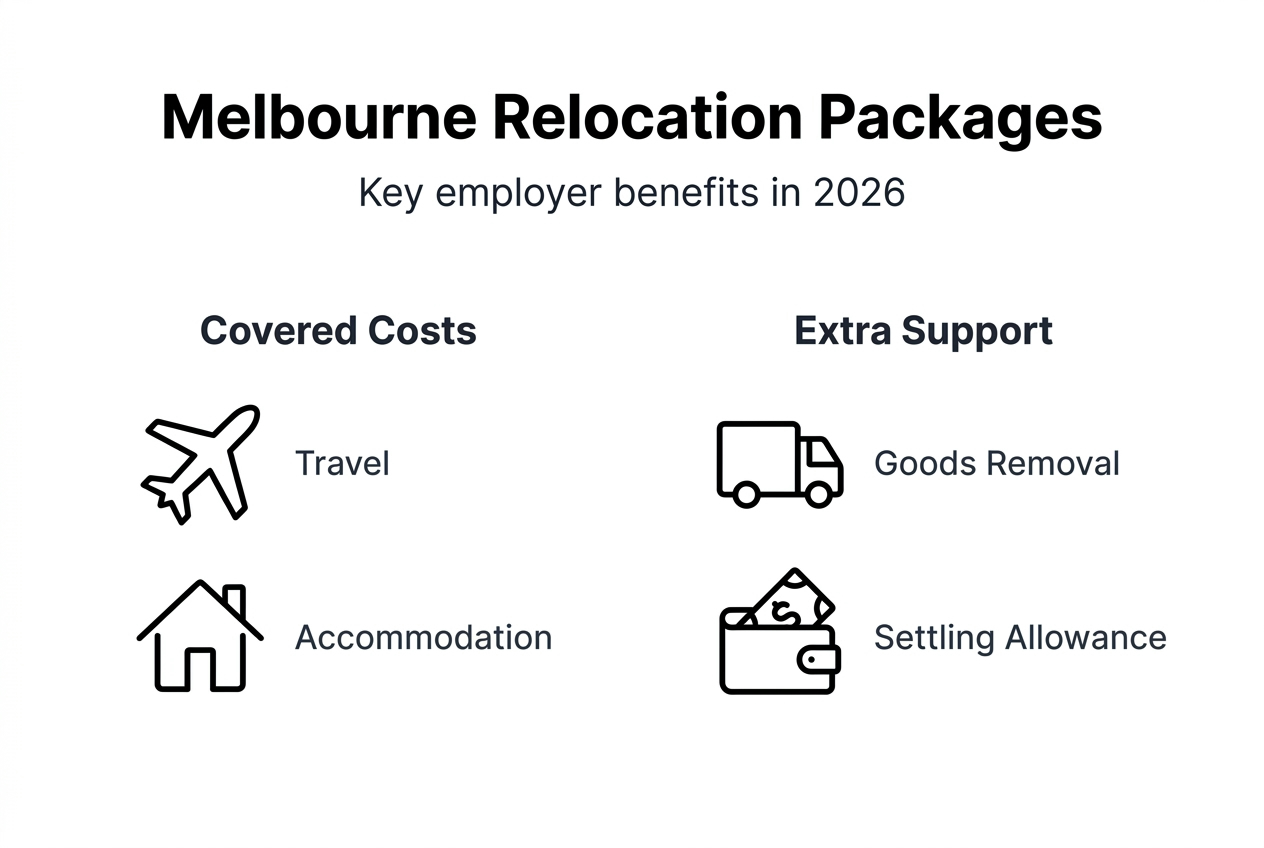
Relocation packages typically include:
Eligibility usually depends on role seniority, skill scarcity, and organisational priorities. Senior positions and specialised roles command more comprehensive packages because companies invest more heavily in securing hard to fill positions. Most support is time limited, with benefits accessible within the first 12 months of employment. This ensures new employees settle quickly while containing organisational costs.
Understanding employee relocation support Australia standards helps you benchmark offers and negotiate effectively.
Relocation packages contain multiple components designed to address different aspects of moving. Understanding these elements helps you evaluate offers and identify gaps requiring negotiation.
Travel expenses form the foundation of most packages. Employers typically cover airfares or fuel costs for you and immediate family members using economical routes. Some organisations specify maximum amounts or require advance approval for travel bookings. International relocations may include visa application fees and medical examinations.
Household goods removal represents the most substantial component. Relocation packages often cover moving household items with volume limits varying by family size. Single employees might receive 10 cubic metres whilst families could access 30 cubic metres or more. Professional removalists handle packing, transport, and unpacking, removing the physical burden from relocating families.

| Family Size | Typical Volume Allowance | Temporary Accommodation Days | Settling Allowance Range |
|---|---|---|---|
| Single | 10-15 cubic metres | 14-21 days | $2,000-$3,500 |
| Couple | 20-25 cubic metres | 21-30 days | $3,500-$5,000 |
| Family (3-4) | 30-35 cubic metres | 30-45 days | $5,000-$7,500 |
| Large Family (5+) | 35-45 cubic metres | 45-60 days | $7,500-$10,000 |
Temporary accommodation bridges the gap between arrival and securing permanent housing. Hotels, serviced apartments, or corporate housing provide immediate shelter whilst you search for suitable properties. Duration varies from two weeks for local moves to several months for international relocations requiring property inspections and lease negotiations.
Relocation allowances cover incidental expenses that accumulate during moves. Connection fees for utilities, initial grocery shopping, school uniforms, and temporary storage represent costs that relocation packages vary to address based on individual circumstances. Cash allowances provide flexibility to prioritise spending according to personal needs.
Support timelines typically extend up to 12 months from employment commencement. This recognises that settling involves ongoing adjustments beyond the initial move. Some organisations provide staged payments or reimbursements tied to receipts, whilst others offer lump sums upfront.
Pro Tip: Document every relocation expense with receipts and dates. Many employers reimburse costs rather than paying upfront, so organised records ensure you claim all entitled benefits without delays or disputes.
Understanding company relocation assistance Australia standards helps you evaluate whether offers meet market expectations.
Relocation support exists within a legal framework requiring clear documentation and mutual understanding. Relocation terms are guidelines, not contractual entitlements unless explicitly included in written contracts. This distinction matters because it determines enforceability and your ability to claim specific benefits.
Employment contracts should specify relocation entitlements in detail. Vague promises during interviews become unenforceable without written confirmation. Your contract should state exact amounts, covered expenses, timeframes, and conditions such as repayment clauses if you leave within a specified period. Many organisations require employees to reimburse relocation costs if they resign within 12 to 24 months.
Negotiation opportunities exist at several points. Initial job offers present the primary window for discussing relocation support. Come prepared with research on typical packages for your role and industry. Relocation packages should be negotiated and clearly documented for transparency and employee confidence. Consider these negotiation points:
Tax implications significantly affect relocation package value. Some benefits attract fringe benefits tax whilst others qualify for exemptions. Understanding whether your employer grosses up payments to cover tax ensures you receive the full intended benefit rather than losing substantial portions to taxation.
Suburb choice influences relocation costs and lifestyle satisfaction. Melbourne’s diverse neighbourhoods offer different price points, school options, and commute times. Researching areas before negotiating temporary accommodation locations helps you explore potential permanent suburbs whilst covered by employer support.
“Successful relocations depend on clear communication between employers and employees. Documenting expectations, timelines, and responsibilities prevents misunderstandings and builds mutual trust during a naturally stressful transition.” – Australian Relocation Managers
Pro Tip: Request relocation terms in writing before accepting job offers. Verbal promises become difficult to enforce, and written documentation protects both parties by establishing clear expectations and accountability.
Leverage company relocation assistance Australia expertise to understand contractual nuances and avoid common pitfalls.
Identifying employers who offer relocation support requires strategic research and proactive communication. Job listings sometimes mention relocation assistance, but many companies provide support without advertising it publicly.
Follow these steps to maximise your chances of securing relocation benefits:
Melbourne companies in competitive sectors offer relocation to attract skilled workers, and professionals should research and negotiate these packages. Technology, finance, healthcare, and education sectors commonly provide support due to skill shortages and competition for talent.
Tailoring requests increases success rates. Generic relocation requests carry less weight than specific, justified proposals. If you have school aged children, explain the importance of arriving before term starts. If you’re selling property interstate, outline realistic timeframes requiring temporary accommodation. Demonstrating that you’ve thought through logistics shows employers you’ll transition smoothly.
Some sectors actively recruit relocating professionals. The early childhood education sector connects professionals with employers who may offer relocation benefits to meet staffing needs. Exploring industry specific programmes reveals opportunities where your skills align with employer priorities.
Using relocation support strategically reduces stress and financial pressure. Professional removalists, temporary accommodation, and settling allowances transform overwhelming moves into manageable transitions. Families arrive with energy to focus on new roles rather than exhausted from coordinating logistics.
Pro Tip: Time your relocation to align with school terms, lease end dates, and employer onboarding schedules. Strategic timing maximises the value of temporary accommodation allowances and minimises disruption to family routines.
Explore stress free moving services Melbourne and understand the benefits of hiring movers Melbourne to complement employer support with professional expertise.
Once you’ve secured relocation support from your new employer, partnering with experienced movers ensures you maximise those benefits whilst minimising stress.
Onyx Removals specialises in tailored residential removal services Melbourne for professionals and families navigating job relocations. Our team understands the tight timelines and coordination challenges that come with employment driven moves. We work within your company relocation assistance Australia package parameters, providing detailed quotes and documentation that align with employer reimbursement requirements. From packing fragile items to coordinating delivery timing with temporary accommodation schedules, we handle logistics so you can focus on starting your new role. Our stress free moving services Melbourne approach combines careful planning, secure transport, and responsive communication to ensure your belongings arrive safely and on schedule, making us the ideal partner for professionals needing dependable relocation support.
Melbourne employers commonly cover travel expenses, household goods removal, temporary accommodation, and settling allowances. Comprehensive packages may include spouse employment assistance, school placement support, and real estate agent fees. Coverage varies significantly by role seniority and organisational budgets.
Review job descriptions carefully for relocation mentions, research company career pages for relocation policies, and ask recruiters directly during initial screening conversations. Professional networks and industry contacts often provide insights into which employers regularly support relocating candidates.
Relocation packages are negotiable, especially for senior or specialised roles where employers compete for talent. Come prepared with research on typical packages, specific needs based on family circumstances, and flexibility around timing or component trade offs to strengthen your negotiating position.
Most relocation support extends up to 12 months from employment commencement, though timelines vary by component. Temporary accommodation typically lasts weeks to months, whilst settling allowances and reimbursement windows may remain open for the full year to accommodate gradual expenses.
Relocation benefits typically target senior positions, specialised roles with skill shortages, or situations where employers actively recruit from other locations. Entry level positions rarely include comprehensive support unless the employer faces critical staffing needs or operates in regional areas requiring incentives to attract candidates.

No Related Post


