


Choosing eco friendly moving supplies for your Melbourne relocation means navigating conflicting environmental claims, confusing certifications, and practical trade-offs between cost and sustainability. With Australia’s 2025 packaging mandate now in effect, understanding which materials truly reduce your carbon footprint while protecting your belongings has never been more critical. This guide establishes clear criteria for evaluating green moving products, explores the leading sustainable supply options available locally, compares their real-world performance, and provides expert insights to help you make informed decisions that align with your environmental values and moving needs.
| Point | Details |
|---|---|
| Packaging mandate 2025 | Australian regulations require packaging to be reusable, recyclable or compostable by 2025. |
| Reuse dominates crates | Reusable plastic crates made from recycled plastic are Melbourne’s main eco friendly moving option with local rental services. |
| Biodegradable fillers preferred | Biodegradable packing peanuts made from cornstarch provide a compostable alternative to polystyrene that dissolves in moisture. |
| Local sourcing matters | Local suppliers reduce transport emissions and request lifecycle assessment data to verify environmental impact beyond marketing claims. |
Selecting genuinely sustainable moving supplies requires assessing multiple environmental and practical factors beyond surface-level green marketing. Start with material sustainability by checking for recycled content percentages and biodegradability certifications. Products made from post-consumer recycled plastic or FSC-certified paper demonstrate verifiable environmental credentials. Reusability stands as perhaps the most critical factor, since items used multiple times dramatically reduce per-move waste compared to single-use alternatives.
Carbon footprint analysis through lifecycle assessment reveals the total environmental cost from raw material extraction through manufacturing, transport, use, and disposal. Australian regulations mandate 100% packaging reusable, recyclable, or compostable by 2025, making compliance verification essential. Look for certification marks from the Australian Packaging Covenant Organisation, Forest Stewardship Council, or the Australasian Bioplastics Association to confirm regulatory adherence.
Practicality matters equally in Melbourne’s variable climate. Supplies must withstand humidity and occasional rain during loading and transport. Consider your move scale when evaluating options, as a studio apartment requires different solutions than a five-bedroom house. Local availability in Melbourne affects both convenience and transport emissions, making regional suppliers preferable to interstate or overseas sources. For comprehensive guidance on integrating these supplies into your overall relocation strategy, explore our eco-friendly moving practices guide.
Pro Tip: Request lifecycle assessment data from suppliers before committing to large orders, as this reveals true environmental impact beyond marketing claims.
Having established evaluation criteria, we can now explore the specific eco friendly supply options that meet these standards and dominate Melbourne’s sustainable moving market.
Reusable plastic crates made from recycled plastic represent Melbourne’s primary eco-friendly moving solution, with multiple rental services offering delivery and collection. These stackable containers typically hold 30 kilograms, feature reinforced corners for durability, and can be reused over 50 times before recycling. The closed-lid design protects contents from moisture while preventing items from falling during transport. Local providers size their crate bundles to match home dimensions, from studio apartments requiring 20 crates to five-bedroom houses needing 80 or more.
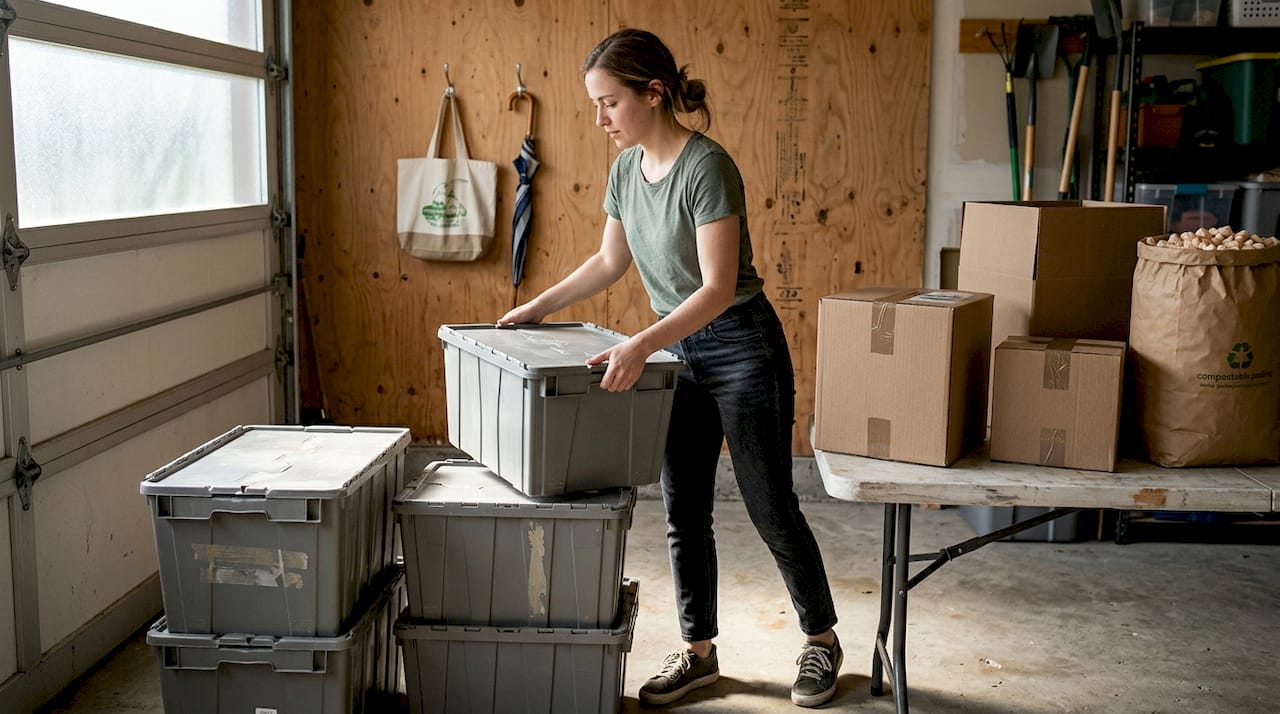
Biodegradable packing peanuts manufactured from cornstarch provide a compostable alternative to traditional polystyrene. These water-soluble fillers dissolve completely when exposed to moisture and break down in home compost bins within weeks. They cushion fragile items effectively while eliminating the environmental persistence and wildlife hazards associated with polystyrene foam. Several Melbourne packaging suppliers stock these in bulk quantities suitable for residential moves.
Kraft paper and textile fillers offer zero-waste alternatives for wrapping and cushioning. Unbleached kraft paper provides recyclable protection for dishes, glassware, and artwork. Repurposing existing towels, clothing, and linens as padding eliminates the need for purchased fillers entirely while maximising space efficiency. This approach particularly suits eco-conscious movers prioritising waste reduction. For detailed guidance on selecting and sizing containers, review our removal packing boxes Melbourne guide.
Pro Tip: Rent crate bundles sized to your home type rather than estimating box quantities, as providers calculate optimal numbers based on thousands of previous moves, preventing shortages and excess.
Transitioning from individual supply options, we now compare their environmental and practical performance to identify the best choices for different moving scenarios.
| Supply type | Durability | Reusability | Carbon footprint | Weather resistance | Cost |
|---|---|---|---|---|---|
| Reusable plastic crates | Excellent (50+ uses) | Very high | 29% lower than virgin plastic | Superior | Moderate rental |
| Cardboard boxes | Poor (1-2 uses) | Very low | Higher per use | Weakens with moisture | Low upfront |
| Wooden crates | Excellent | Moderate | Moderate | Good | High |
| Biodegradable fillers | Single use | None | Low production impact | Dissolves in water | Moderate |
Reusable plastic crates excel in Melbourne’s climate due to their complete moisture resistance and stackability. Lifecycle assessments show recycled plastic crates have 29% lower carbon footprint than virgin plastic alternatives and dramatically outperform cardboard on reuse cycles and waste reduction. Their uniform dimensions enable efficient truck loading and stable stacking, reducing transport trips. The rental model eliminates disposal concerns while spreading manufacturing impact across dozens of uses.
Cardboard boxes present lower upfront costs but deteriorate rapidly in humid conditions. A single exposure to rain can compromise structural integrity, risking contents and requiring replacement. Their single-use nature generates substantial waste despite recyclability, as contamination from tape and labels often prevents effective recycling. The cumulative carbon footprint across multiple moves exceeds reusable alternatives significantly.
Wooden crates offer exceptional durability and natural material appeal but weigh considerably more than plastic, increasing fuel consumption during transport. Their irregular reusability stems from splintering, warping, and the difficulty of sanitising porous wood between uses. Manufacturing requires more energy than recycled plastic processing. Biodegradable fillers provide clear environmental advantages over polystyrene but remain single-use products, making textile repurposing preferable when feasible.
Pro Tip: Calculate total lifecycle cost by dividing purchase or rental price by realistic use cycles, revealing that reusable crates cost less per move than disposable boxes over time while eliminating waste.
For practical implementation guidance tailored to Melbourne conditions, explore our eco friendly moving tips Melbourne resource. With comparative performance clear, let’s examine how to select supplies matching your specific moving requirements.
Assess your belongings volume and home size to determine supply quantities. Studio apartments typically need 20-30 crates, two-bedroom units require 40-50, and four-bedroom houses demand 70-80. Underestimating creates multiple packing sessions and rushed final days, while overestimating wastes rental fees.
Factor Melbourne’s weather patterns into material selection. The city’s average 600 millimetres annual rainfall and high humidity make moisture-resistant containers essential. Choose sealed plastic crates over cardboard if moving during autumn or winter months when precipitation peaks. Even brief exposure during loading can compromise cardboard structural integrity.
Balance environmental priorities with budget constraints by comparing lifecycle costs. Reusable crate rental averages 70-90 dollars for two weeks including delivery and collection, while purchasing equivalent cardboard boxes costs 50-70 dollars but generates waste. Spread across typical reuse cycles, crates cost substantially less per move while eliminating disposal.
Prioritise convenience through delivery and pickup services offered by Melbourne providers. Services deliver clean crates to your door before packing begins and collect them after unpacking completes, eliminating storage and transport hassles. This model particularly benefits apartment dwellers without vehicle access or storage space.
Integrate sustainable fillers and packing methods that minimise plastic consumption. Replace bubble wrap with kraft paper or textile wrapping. Substitute polystyrene peanuts with biodegradable cornstarch alternatives or repurposed clothing. These choices reduce single-use plastic waste while maintaining protection standards. For professional packing assistance incorporating these sustainable methods, review our cost to pack someone pack house guide.
Having identified the optimal supplies for your situation, discover how professional removal services can streamline your eco-friendly Melbourne move.
Planning a sustainable move involves more than selecting green supplies. It requires coordinating logistics, managing timelines, and ensuring proper handling techniques that protect both your belongings and the environment.
Onyx Removals delivers professional residential removal services throughout Melbourne with integrated eco-friendly solutions. Our team provides access to reusable plastic crate systems, biodegradable packing materials, and sustainable moving practices that reduce your relocation’s environmental impact. We coordinate crate delivery, packing timelines, and collection schedules to simplify your eco friendly moving Melbourne experience. Our packing vs unpacking services incorporate waste-reduction techniques and efficient material use, ensuring your move aligns with your environmental values without compromising protection or convenience.
Eco friendly moving supplies prioritise recycled or renewable materials, biodegradability, and reusability to minimise environmental impact. They meet Australian packaging standards requiring 100% recyclable, reusable, or compostable composition. Genuine eco products feature third-party certifications from organisations like APCO, FSC, or ABA rather than unverified marketing claims. The most sustainable options enable multiple uses before recycling, dramatically reducing per-move waste compared to single-use alternatives. For implementation strategies, visit our eco-friendly moving practices guide.
Reusable plastic crates outperform cardboard in durability, moisture resistance, and overall environmental impact when assessed across full lifecycles. Crates withstand 50 or more uses before recycling, while cardboard deteriorates after one or two moves, particularly in humid conditions. Lifecycle analysis reveals recycled plastic crates generate 29% lower carbon emissions than virgin plastic and substantially less waste than cardboard over equivalent use periods. Melbourne’s rainfall makes moisture resistance particularly valuable during loading and transport.
Cornstarch-based biodegradable packing peanuts dissolve in water and break down in compost bins, providing cushioning without polystyrene’s environmental persistence. Repurposing existing towels, clothing, and linens as padding eliminates purchased filler needs entirely while maximising packing efficiency. Unbleached kraft paper offers recyclable wrapping for fragile items. Avoid traditional polystyrene peanuts, which resist decomposition for centuries and pose ingestion hazards to wildlife.
Verify compliance by checking for certification marks from the Australian Packaging Covenant Organisation, Forest Stewardship Council, or Australasian Bioplastics Association on product packaging. Australian regulations mandate packaging be 100% reusable, recyclable, or compostable under standards enforced since 2025. Request supplier documentation confirming material composition and end-of-life disposal pathways. Reputable Melbourne providers display certifications prominently and provide lifecycle data upon request. For certified packing services meeting these standards, consult local removal specialists.
Multiple Melbourne-based companies specialise in reusable crate rental with delivery and collection services. Providers typically offer online booking systems where you select crate quantities based on home size, choose delivery dates, and schedule pickup after unpacking completes. Rental periods span two to four weeks, with extension options for complex moves. Services deliver clean, sanitised crates to your address and collect them when finished, eliminating storage and transport requirements. Pricing structures bundle crates by home size, ranging from studio packages around 70 dollars to large house bundles exceeding 150 dollars including delivery.

No Related Post


