



TL;DR:
- Starting small with just 5 to 10 minutes of daily movement helps build momentum and sustainability.
- Consistency and planning, rather than motivation, are key to establishing long-term exercise habits for all ages.
Most people think getting moving is purely a willpower problem. You either feel motivated or you don’t. But research and real-world experience tell a different story. The barrier is almost never motivation. It’s the size of the first step. Whether you’re an individual trying to build a healthier routine or a family juggling work, school, and everything in between, the strategies that actually work are surprisingly simple and grounded in solid evidence. This guide walks you through what the research says, how to start safely, and how to make movement stick for the long haul.
| Point | Details |
|---|---|
| Start smaller than you think | Begin with just 5 to 10 minutes of movement daily to build momentum without burning out. |
| Consistency beats intensity | Scheduling regular movement matters far more than how hard you push yourself each session. |
| Use the talk test for safety | If you can speak a few words but not sing comfortably, you’re at the right exercise intensity. |
| Plan around barriers | Identify likely obstacles in advance rather than waiting for motivation to appear on its own. |
| Gradual progression prevents injury | Add 5 to 10 minutes of activity every few weeks, not all at once, to stay injury-free. |
The most common mistake when starting to exercise is aiming too high too soon. Someone decides to run five kilometres on day one, feels shattered by day three, and stops entirely by day five. The intention was good. The approach was the problem.
Australian health guidelines recommend setting small, specific goals rather than overhauling everything at once. This reduces injury risk and makes the habit feel manageable. Think of it like this: if you can do something consistently for four weeks, you’ve built a real habit. If you exhaust yourself in week one, you’ve built a memory of failure.
Adults should work toward 150 minutes per week of moderate-intensity physical activity. That sounds like a lot until you break it down. Split across five days, it’s just 30 minutes. And you don’t need to start there. You can start at five minutes.
For beginners or anyone returning after a break, low-impact movement protects joints while still delivering real health benefits. Good starting points include:
Pro Tip: Set a SMART goal before you start. Instead of “I want to walk more,” try “I will walk for 15 minutes after dinner on Monday, Wednesday, and Friday this week.” Specific. Measurable. Achievable. Relevant. Time-bound.
Here’s the honest truth about motivating yourself to move: motivation follows action, not the other way around. Waiting until you feel ready is how weeks disappear. The research backs this up.
Barriers to activity can be planned around rather than waiting for motivation to strike. That means you need a system, not a feeling. Here’s how to build one that works for a real life with real constraints:
Pro Tip: If cost or weather is a barrier, keep a short list of free, indoor movement options ready before you need them. Searching for ideas when you’re already low on motivation is a losing battle.
Overcoming inertia is one thing. Injuring yourself in the first fortnight is what derails long-term progress. Safe movement starts with understanding your own body signals.
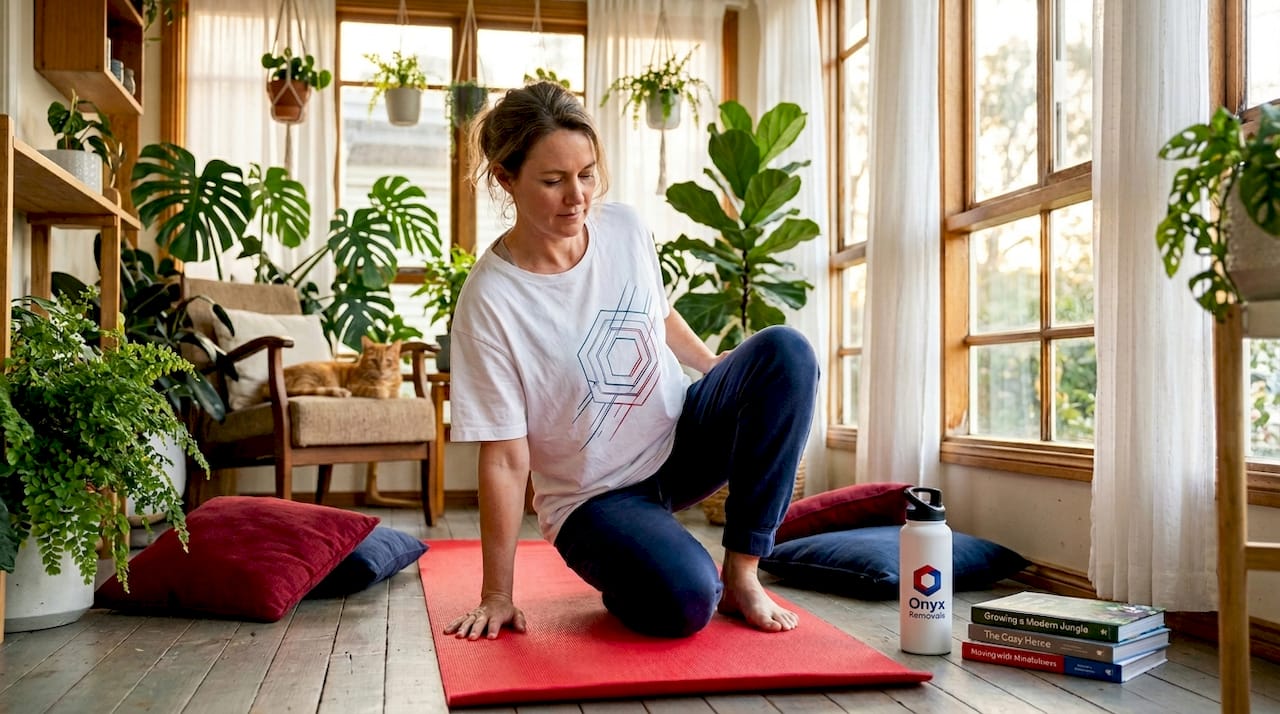
The simplest tool available to any beginner is the talk test. Moderate exercise intensity means you can speak a few words but not hold a full conversation or sing comfortably. This behavioural check replaces the need for heart rate monitors or fitness trackers when you’re just starting out. If you can belt out a song, push a little harder. If you can’t get a sentence out, slow down.
It’s equally worth knowing the difference between normal muscle soreness and a genuine injury. Muscle tenderness after weight training lasting 24 to 48 hours is a normal adaptation response. Sharp pain during movement, joint swelling, or discomfort that worsens over days is not normal and warrants medical attention.
“Start low and go slow” is not just a mantra for cautious people. It’s the evidence-based approach that keeps beginners in the game long enough to see real results.
Key safety principles for beginners:
Building a habit takes longer than most fitness content admits. Research from UCLA Health quotes Dr Goldman’s approach of starting low and going slow, emphasising that lasting change comes from consistency over several weeks, not dramatic early effort.
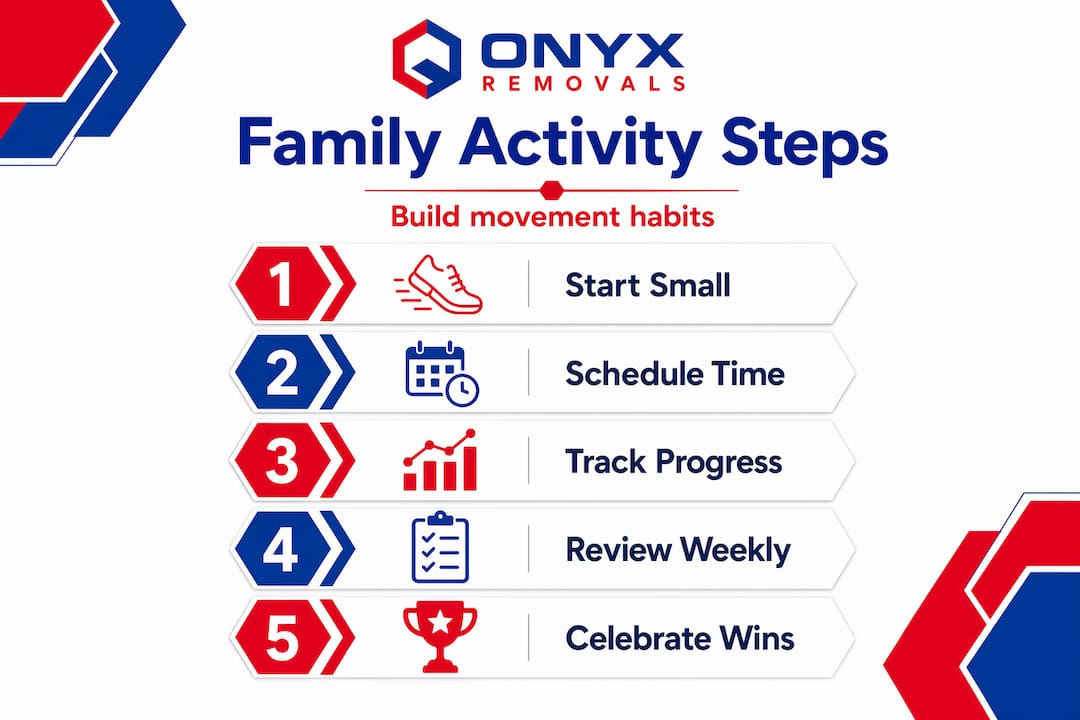
Here’s a practical four-step approach to making movement a permanent part of your week:
The families who succeed long-term are those who treat movement as a non-negotiable part of the week, like eating or sleeping, rather than something they fit in when everything else is done.
Ways to stay active don’t require gym memberships, expensive equipment, or hours you don’t have. The following comparison shows how small lifestyle swaps accumulate into meaningful activity across a week:
| Sedentary habit | Active alternative | Weekly gain |
|---|---|---|
| Driving short errands | Walking or cycling instead | 30 to 60 minutes |
| Taking the lift | Using the stairs | 10 to 20 minutes |
| Sitting during lunch break | A 15-minute walk outside | 75 minutes (5 days) |
| Screen time in the evening | Family walk or backyard play | 30 to 60 minutes |
| Weekend drive for coffee | Walk to a nearby café | 20 to 40 minutes |
For families, movement works best when it’s woven into things you’re already doing together:
Free apps and activity trackers can add a layer of accountability and make it easier to track gradual progress. Many councils across Melbourne also offer free or low-cost community fitness programmes, which are worth exploring if group motivation helps you stay consistent.
I’ve worked with enough people going through major life changes to know one thing clearly: motivation is the most overrated concept in fitness. People talk about it like it’s a resource that arrives in the morning and depletes by afternoon. What I’ve seen work, time and again, is not motivation. It’s structure and small wins.
The clients who make lasting changes are not the ones who start with the most enthusiasm. They’re the ones who commit to something genuinely modest and stick to it for six weeks. A 10-minute walk three times a week sounds almost embarrassingly small. But I’ve watched that turn into a 45-minute daily habit inside two months for people who had never exercised consistently in their lives.
What I’ve learned is that social support is the X-factor most people underestimate. A walking partner, a family commitment, or even just telling someone your goal out loud changes the psychological stakes. You’re no longer just accountable to yourself. That’s often the difference.
My advice: be patient with yourself, especially in the first fortnight when everything feels hard and uncertain. The discomfort is temporary. The habit is the point.
— Dinshaw
If the idea of getting moving applies to more than just your fitness routine, and you’re actually planning a house move in Melbourne, Onyx Removals makes the process far less overwhelming.
Onyx Removals offers residential moving services tailored to families and individuals, covering everything from careful packing and transport to storage solutions. Their team handles the logistics so you can focus on settling in. A step-by-step moving checklist can help you plan weeks in advance, and their packing and unpacking service means you don’t have to do it all yourself. Get in touch with Onyx Removals for a personalised quote and take the first real step toward a stress-free move.
Adults should work toward 150 minutes of moderate activity per week, but beginners can start with as little as 5 to 10 minutes a day and build gradually from there.
The talk test is a simple way to check exercise intensity. If you can speak a few words but not sing comfortably, you’re working at a moderate and appropriate level.
Consistency over several weeks is what creates lasting habits. Most people begin to feel a routine becoming automatic after four to six weeks of regular, scheduled activity.
Normal muscle tenderness after exercise lasts 24 to 48 hours. Sharp pain during movement, joint swelling, or pain that worsens over days are signs to stop and seek medical advice.
Walking to local parks, backyard play, cycling, and community sport programmes are all cost-free or low-cost ways to stay active as a family, with no special equipment required.

No Related Post


