


TL;DR:
- Melbourne high-rise moves involve unique challenges like lift access, parking restrictions, and narrow hallways.
- Proper planning, early communication with building managers, and understanding building rules are essential.
- Professional movers offer expertise in navigating logistics, saving time, reducing risks, and ensuring smooth execution.
Moving into or out of a Melbourne high-rise sounds straightforward until the lift is booked out, the CBD parking inspector is circling, and your sofa is stuck in the stairwell. These aren’t rare disasters. They’re everyday realities for apartment movers across the city, and they catch even well-organised people completely off guard. The good news is that with the right preparation and a clear process, every one of these obstacles is manageable. This guide walks you through the unique challenges of high-rise moving in Melbourne, from the first planning steps right through to final handover, so you can move with confidence and without costly surprises.
| Point | Details |
|---|---|
| Plan for access | Service lift bookings, permits and building manager notification are essential for a smooth high-rise move. |
| Account for CBD restrictions | Melbourne high-rise moves require extra time and often special parking or loading zone arrangements. |
| Prepare for edge cases | Oversized furniture and stair navigation costs can surprise movers in high-density buildings. |
| Finalise with aftercare | Close the move with cleaning, inspections and bond retrieval for a hassle-free handover. |
High-rise moving isn’t just regular moving with more floors. The logistics are fundamentally different, and understanding why is the first step to getting it right. Melbourne’s CBD apartment stock is dense and varied, with buildings ranging from boutique six-storey blocks to towers exceeding 60 levels. Each one comes with its own rules, access constraints, and physical quirks.
The apartment moving challenges that catch people off guard most often involve service lift access, tight hallways, and furniture that simply won’t fit through standard openings. Many buildings have only one service lift, and it must be booked in advance. Miss that window and your entire move stalls.
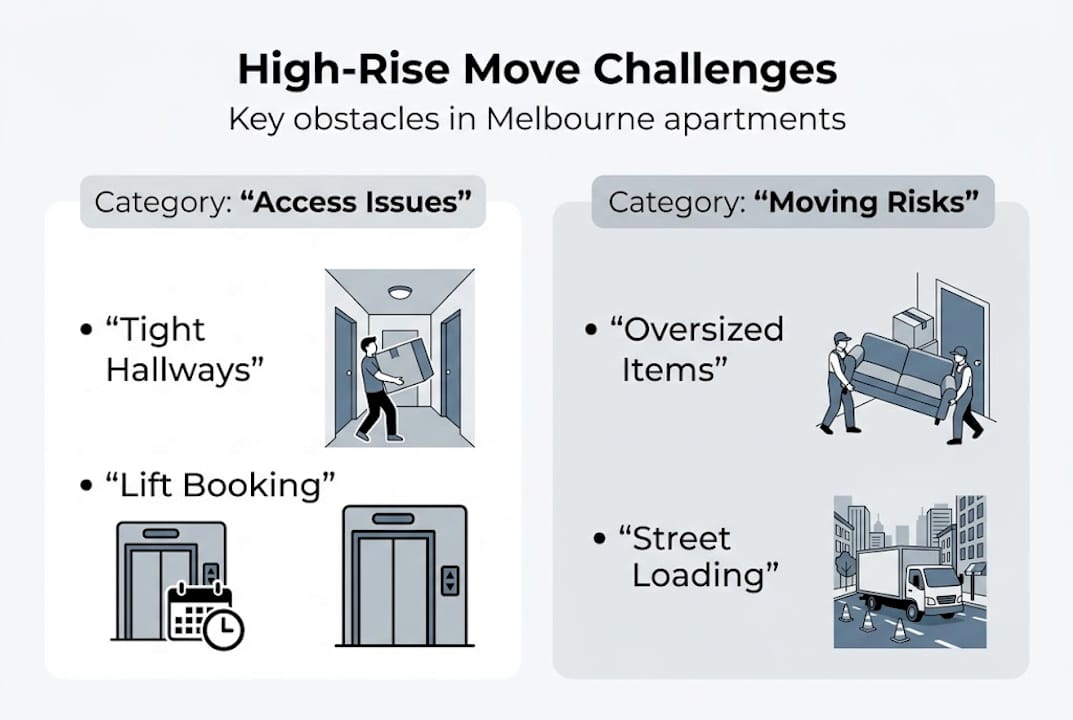
Parking is another major hurdle. Melbourne’s CBD is layered with clearways, timed loading zones, and council restrictions that change by time of day. A removalist truck that can’t park close to the building entrance means long carries from the truck due to narrow streets, which adds both time and cost to your move.
Building managers also require advance notification and, in many cases, a lift bond. This is a refundable deposit held against potential damage to the elevator during your move. Some buildings won’t allow moves to proceed without it.
“No service lift requires stair navigation with trolleys; oversized furniture may not fit elevators or hallways; CBD parking restrictions including clearways and timed zones apply; notify neighbours for noise.” — What removalists wish Melbourne apartment movers knew
Here’s a snapshot of what you’re working with in Melbourne’s CBD apartment landscape:
| Apartment type | Share of CBD stock |
|---|---|
| 1-bedroom units | 32% |
| 2-bedroom units | 53% |
| 3-bedroom and above | 15% |
Key access complications to know before you book:
Browsing through apartment moving tips specific to Melbourne will give you a stronger sense of what to expect before you commit to a date.
With key challenges outlined, the next step is ensuring your move is set up for success. Preparation for a high-rise move needs to start at least four to six weeks out, not the weekend before.
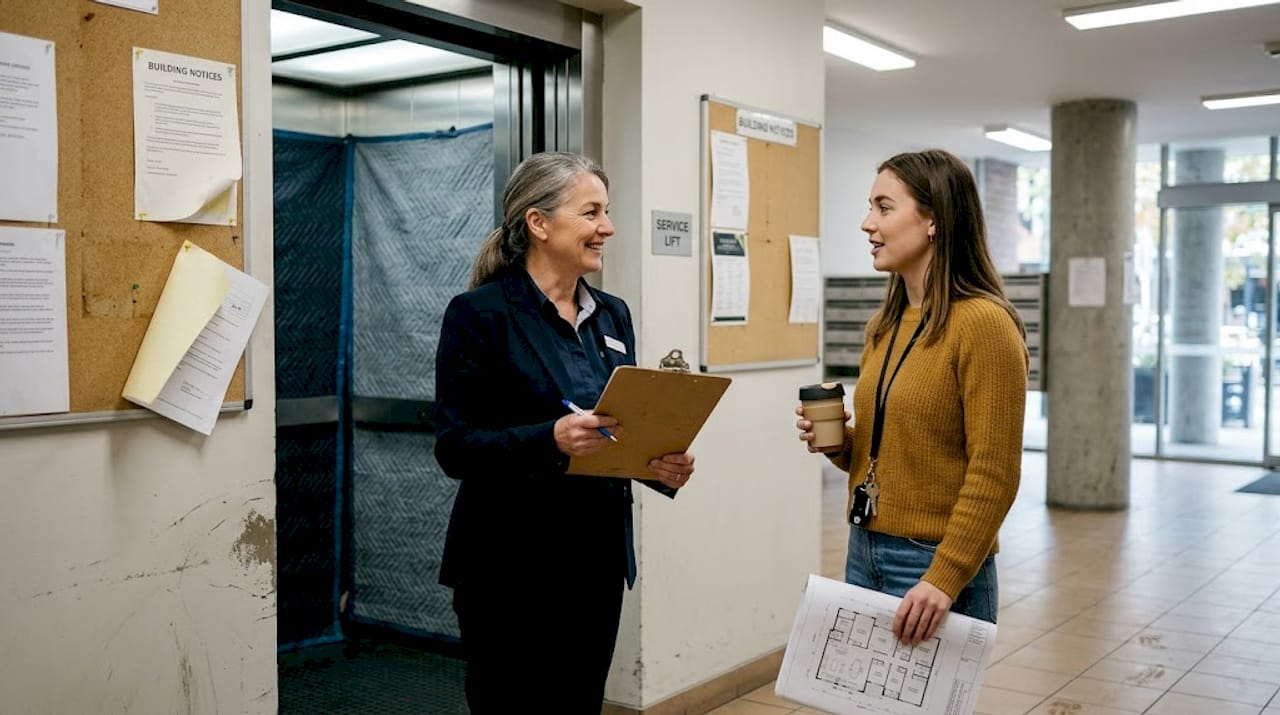
The single most important early task is contacting your building manager. Confirm the service lift booking process, ask about required documentation, and find out whether a lift bond is required along with any noise restrictions or approved moving hours. Many buildings only allow moves between 8am and 5pm on weekdays.
Here’s how professional removalists compare to a DIY approach for high-rise moves:
| Factor | Professional removalists | DIY move |
|---|---|---|
| Lift booking knowledge | Experienced, handles logistics | Must research independently |
| Equipment for stairs | Trolleys, straps, padding | Often improvised |
| CBD parking permits | Familiar with council processes | Time-consuming to arrange |
| Insurance coverage | Included in most services | No coverage unless arranged |
| Time efficiency | Faster with trained crew | Slower, higher injury risk |
Your pre-move task list should cover:
Pro Tip: Download a detailed moving checklist and work through it building by building. What applies at your current address may not apply at your new one, so treat each property as a separate planning task.
Also review the move-in checklist for Melbourne apartments to make sure you’ve covered the receiving end of the move, not just the departure.
After thorough prep, execution is everything. Here’s how to get move day right.
Start early. Arriving before your lift booking window opens gives you time to protect lift interiors with padding, confirm access with the building manager, and brief your removalist crew on the layout. Don’t assume anything has been communicated in advance.
Your move-day order of operations:
When it comes to benefits of professional movers, one of the biggest is their ability to adapt on the spot. A trained crew knows how to disassemble furniture that won’t fit through a doorway, navigate a stairwell safely with a trolley, and repack a truck efficiently if access changes.
“No service lift requires stair navigation with trolleys; oversized furniture may not fit elevators or hallways.” — What removalists wish Melbourne apartment movers knew
Key safety and efficiency reminders for move day:
Even the best plans encounter snags. Here’s how to tackle them without derailing your move.
The most common crisis on move day is a lift breakdown or unexpected access refusal. Buildings do experience mechanical failures, and if the service lift goes down mid-move, you’re suddenly facing a stair carry for everything remaining. This is where having a removalist with the right equipment and experience makes a real difference.
Common problems and how to handle them:
Pro Tip: Always have a backup contact number for both building managers saved in your phone before move day. One call can resolve most access issues faster than any other solution.
Cost overruns are a real risk in high-rise moves. Long carries from the truck due to narrow streets add time and cost that many people don’t budget for. Understanding the full apartment movers cost breakdown before you book helps you avoid bill shock at the end.
If you’re managing the packing side yourself, consider whether packing and unpacking services might save time and reduce breakage risk on a complex high-rise move.
Once the heavy lifting is finished, complete your move with a proper wrap-up.
The handover phase is where people most often lose bond money or miss critical steps. Walk through both properties with a checklist and document everything with photos or video before you hand back any keys.
Post-move tasks to complete:
Cleaning is often overlooked until the last minute. A proper end-of-lease clean is essential for bond recovery. Use the apartment move-in cleaning guide to ensure the new place is ready before you unpack, and follow moving house cleaning tips for the vacated property.
Here’s a quick reference for your post-move admin:
| Task | Who to contact | Timing |
|---|---|---|
| Lift bond refund | Building manager | Within 7 days of move |
| Address change | Australia Post, ATO, Medicare | Within 2 weeks |
| Utility connections | Energy and internet providers | Before or on move day |
| End-of-lease inspection | Property manager | Within 3 days of vacating |
Melbourne CBD apartments are predominantly 1-bed and 2-bed units, with 32% being one-bedroom and 53% two-bedroom configurations. Even smaller apartments generate a surprising volume of items, so don’t underestimate the post-move admin load.
Most high-rise moving guides focus on trucks, boxes, and timelines. What they consistently underestimate is the human side of the move. The building manager who lets you run 30 minutes over your lift booking. The neighbour who holds the lobby door open when your hands are full. The council officer who gives you a warning instead of a fine because you were upfront about the situation.
In our experience moving thousands of Melburnians through high-rise buildings, the moves that go smoothest are almost never the ones with the most expensive equipment. They’re the ones where the person coordinating the move communicated clearly, early, and often.
People respond well to being kept informed. A quick knock on a neighbour’s door the day before costs nothing and prevents complaints that can derail your entire booking window. A phone call to the building manager confirming your arrival time builds goodwill that pays off when something unexpected happens.
For deeper insights on apartment moving challenges, the pattern is consistent: logistics fail when communication fails. Get the people side right, and the rest follows.
Ready to put your high-rise move in the hands of specialists? High-rise relocations in Melbourne require more than muscle. They require knowledge of building protocols, CBD parking rules, lift booking systems, and the kind of on-the-ground problem-solving that only comes from experience.
At Onyx Removals, our residential moving services are built around exactly this kind of move. We handle the coordination, the permits, the lift bookings, and the careful transport of your belongings from one Melbourne address to another, without the stress landing on you. If you’re ready to plan your move, secure a home removal quote today and let us take care of the details.
In most cases, you need to arrange parking and possibly a moving permit with both the building manager and the local council. CBD parking restrictions including clearways and timed zones apply throughout the city centre.
Prepare for stair navigation or book specialists who can handle oversized items safely. Oversized furniture may not fit in standard elevators or hallways, so measuring in advance is essential.
A lift bond is a refundable deposit paid to the building to cover potential elevator damage during your move. Lift bonds are often required by high-rise buildings across Melbourne’s CBD.
High-rise moves typically take longer than standard house moves due to access restrictions and loading times. Long carries from the truck caused by narrow CBD streets add time and cost, so always budget extra hours.
Yes, notifying neighbours ahead of time is both courteous and practical. It helps minimise complaints about noise or lift usage, and notifying neighbours for noise is one of the most commonly overlooked steps in high-rise moves.

No Related Post


