



TL;DR:
- Professionally moving heavy furniture ensures safety, proper equipment use, and insurance coverage.
- Melbourne removalists follow a structured process including site assessment, disassembly, and surface protection.
- Costs vary from $200 to over $1,500 depending on item’s weight, complexity, and move scope.
Moving heavy furniture yourself sounds simple until someone ends up with a strained back, a gouged floorboard, or a wardrobe wedged in a stairwell. 25 to 34% of DIY heavy lifting attempts result in injury or strain, and Melbourne homes with their narrow Victorian corridors and multi-storey townhouses make the risks even greater. This guide covers everything you need: how to assess your situation, who to hire, what it costs in 2026, and how to choose a removalist you can actually trust. Whether you’re relocating to a new suburb or rearranging during a renovation, knowing when to call in the professionals is the smartest decision you’ll make.
| Point | Details |
|---|---|
| DIY risks are high | Serious injuries and property damage are common when moving heavy furniture without professionals in Melbourne. |
| Pros bring safety and skill | Licensed removalists use specialised equipment and safe practices to protect your health and belongings. |
| Quotes vary—ask questions | Melbourne prices range from $100 to $200 per hour but extras can apply, so always get a detailed, written quote. |
| Choose carefully | Verify insurance, reviews, and service details before booking, and avoid companies that seem unusually cheap or vague. |
Let’s be honest. Most people who attempt to move a fridge or a king-size bed themselves are confident right up until the moment something goes wrong. Even fit, healthy adults underestimate the cumulative strain of repeated heavy lifting, awkward angles, and tight spaces. Body stressing causes 37% of serious worker injury claims in Australia, and lifting accounts for 23.5% of all work-related injuries. Those numbers don’t shrink just because you’re doing it at home on a weekend.
Consider a common scenario: someone shifting a double-door fridge from the kitchen to a truck parked on the street. The fridge weighs around 120kg. The path involves a step down from the back door, a turn through a narrow laundry, and a slight incline on the driveway. Without proper furniture removal safety knowledge and equipment, that’s a recipe for a disc injury or a dropped appliance.
Professional removalists bring three things that matter most:
The scenarios that most clearly call for professionals include:
“The real cost of a DIY move isn’t always visible on the day. It shows up weeks later in physio bills, damaged floors, or a broken appliance that needs replacing.”
Pro Tip: If you’re unsure whether an item qualifies as ‘heavy,’ check with a heavy appliance movers specialist before attempting it solo. A quick call can save you a lot of pain, literally.
Now that you’ve seen why this isn’t a casual task, let’s examine exactly what professionals do that makes them worth it.
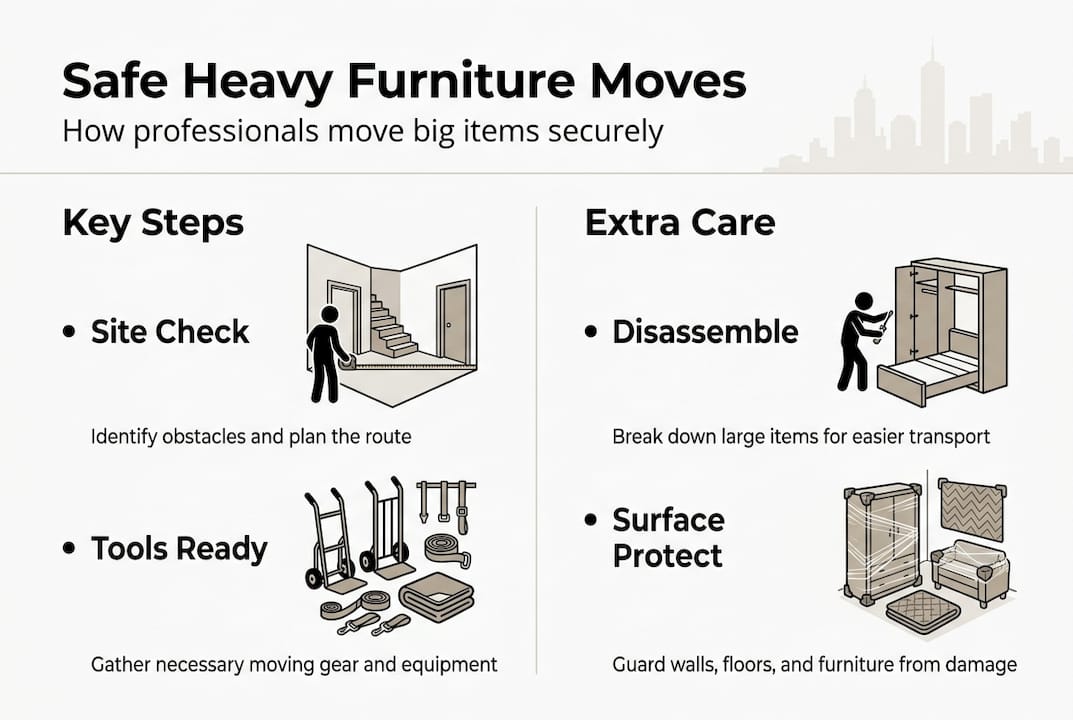
With that background, understanding the professional process makes the value and safety much clearer. Reputable Melbourne removalists don’t just show up and start lifting. There’s a deliberate process behind every safe, successful move.
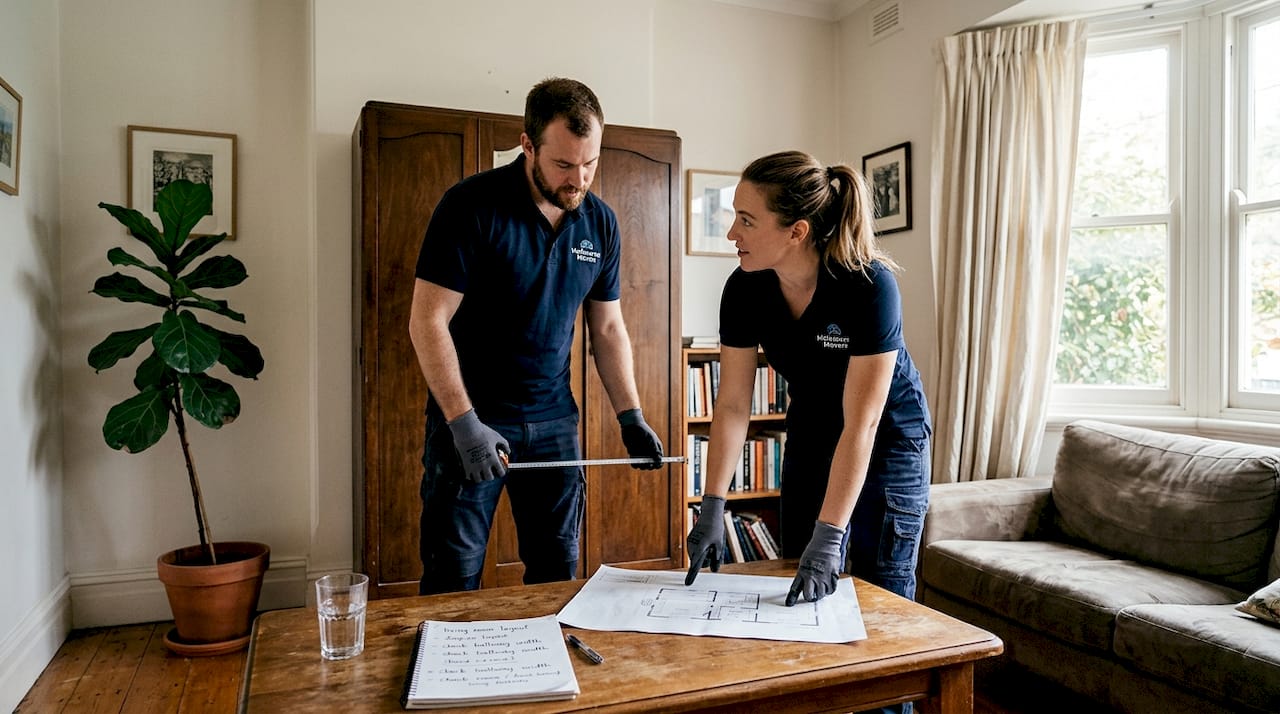
Step 1: Site assessment
Before anything is touched, a good removalist walks the space. They check doorway widths, staircase angles, floor surfaces, and access points. This isn’t just about logistics; it’s about identifying risks before they become problems.
Step 2: Equipment selection
The right tool for the job matters enormously. Removalists use dollies, straps, harnesses, and hydraulic lifters for items up to 500kg, and often recommend disassembly for large furniture to reduce weight and bulk. A stair climber, for instance, allows a single operator to safely move a heavy appliance up or down stairs that would otherwise require three people and significant risk.
Step 3: Pre-disassembly and labelling
For items like bed frames, modular shelving, and large dining tables, furniture disassembly before the move reduces both weight and the chance of damage. Every component gets labelled so reassembly is straightforward at the destination.
Step 4: Safe lifting and movement
Professionals follow strict technique: knees bent, back straight, load kept close to the body, and movements coordinated verbally between team members. On stairs, one person guides from above while another supports from below, with clear communication at every step.
Step 5: Protection of surfaces
Protective blankets, corner guards, and floor runners are used to prevent scratches, dents, and scuffs to both the furniture and your home.
| Factor | Professional removalist | DIY move |
|---|---|---|
| Equipment | Dollies, stair climbers, straps, lifters | Basic trolley or none |
| Manpower | Trained 2 to 3 person team | Friends or family |
| Technique | Certified lifting methods | Self-taught or guesswork |
| Insurance | Full coverage included | None |
| Disassembly | Offered as standard | Usually skipped |
Pro Tip: Ask your removalist about bulk furniture removal options if you’re clearing multiple rooms. Bundling items into a single job almost always reduces the overall cost and time.
After understanding the process, it’s time to see what this peace of mind and safety actually costs. The good news is that professional help is more accessible than many Melbourne residents assume.
Melbourne removalists charge $100 to $200 per hour for a team of two to three movers with a truck. For smaller jobs, expect to pay $400 to $800. A full three-bedroom home relocation typically falls between $800 and $1,500 depending on complexity.
Here’s a breakdown of what influences your final quote:
| Move type | Estimated cost (2026) |
|---|---|
| Single heavy item (e.g. fridge, sofa) | $200 to $400 |
| Small apartment (1 to 2 rooms) | $400 to $800 |
| Three-bedroom home | $800 to $1,500 |
| Office or commercial move | $1,200 to $3,000+ |
“Always request a written, itemised quote before committing. Verbal estimates are easy to dispute; written ones protect both parties.”
When booking heavy object movers, ask specifically whether the quote is fixed or hourly. Fixed quotes give you certainty; hourly quotes can creep up if the job takes longer than expected.
Pro Tip: Watch out for unusually low quotes that don’t mention insurance or travel fees. Hidden charges for fuel levies, stair fees, and minimum hours are common traps. Always ask what’s included before signing anything.
With realistic expectations for cost, your last key step is knowing how to choose the right company for the job and protect yourself.
Here’s a step-by-step checklist for vetting any Melbourne removalist:
Red flags to watch for:
For jobs involving bulky furniture removal like sectional sofas, oversized wardrobes, or antique pieces, ask whether the company has handled similar items before. Experience with specialty pieces matters as much as general moving skill.
Pro Tip: Ask for a written contract that outlines the full scope of work, insurance details, and expected timing. This protects you if anything goes wrong on the day.
After years in the Melbourne removals industry, the pattern is clear: the jobs that go wrong almost always share one thing in common. Someone tried to save money upfront and paid for it later.
The hidden costs of a poor mover or a DIY attempt are rarely visible on the day. They show up as a physio bill three weeks later, a scratched hardwood floor that needs refinishing, or a washing machine that stops working because it was tilted incorrectly during transport. Cheap movers risk hidden fees and uninsured damage; established firms prioritise transparency, insurance, and reviews over the lowest price.
What genuinely separates a great removalist from an average one isn’t just muscle. It’s planning, communication, and accountability. A professional who asks about your access challenges before the job, confirms insurance in writing, and shows up with the right equipment is worth every dollar over a cheap quote that leaves you guessing.
For anything involving large furniture disposal or eco-friendly removal, established companies also have networks for donation and recycling that DIY movers simply don’t. That’s a practical benefit that rarely gets mentioned but makes a real difference.
The peace of mind that comes from knowing every stage is safely handled is genuinely underrated. It’s not just about the move itself. It’s about arriving at the other end without injury, damage, or regret.
If this guide has made one thing clear, it’s that moving heavy furniture safely is a job that rewards proper preparation and the right professional team.
Onyx Removals offers residential removal services across Melbourne, from single-item lifts to full-home relocations. Whether you need help with a heavy appliance, a complete house move, or anything in between, our team brings the equipment, expertise, and insurance to get it done safely. You can request home removal quotes online in minutes and get a clear, itemised price before committing. No surprises, no hidden fees. Just a straightforward, professional move handled by people who do this every day.
Items over 50kg, such as pianos, large couches, wardrobes, and appliances, require professional equipment and expertise to move safely. Attempting these without proper tools significantly increases the risk of injury and property damage.
Yes, professional movers use stair climbers and team strategy for steps, curves, and narrow spaces to move heavy furniture safely. They assess access points before the job begins to plan the safest route.
Look for AFRA membership, full insurance, positive customer reviews, and transparency in quotes and contracts when choosing a removalist. Asking for a written scope of work is a reliable way to test their professionalism.
Yes, extra charges may apply for packing, difficult access, item disposal, or moving unusually large items like pianos. Specialty items and packing add to removalist quotes, so always ask for an itemised breakdown upfront.

No Related Post


