



The cheapest way to move interstate is backloading or a shared truck, followed by hiring a one-way pantech and roping in mates. A compact one or two-bedroom household typically spends $800 to $2,500 doing it this way, versus $3,000 to $10,000+ for a full-service removalist over long distances. Before you book anything:
Cutting the cost of an interstate move comes down to reducing volume, comparing at least three quotes, and matching your moving method to your timeline flexibility.
| Point | Details |
|---|---|
| Backloading saves the most | Flexible dates unlock the cheapest professional transport option, per Crown Relocations. |
| Budget bands vary widely | Expect $800 to $10,000+, depending on volume, distance and how much labour you handle yourself. |
| Declutter before you quote | Selling or donating bulky items cuts both volume charges and labour time. |
| Hidden costs add up fast | Tolls, storage gaps and accommodation shortfalls often exceed the transport cost itself. |
| Onyx Removals fits tight budgets | Shared truck slots, hourly packing and short-term storage suit constrained timelines without full-service pricing. |
Your budget band depends less on distance than on how much stuff you’re moving and how much of the labour you’re doing yourself. Canstar’s cost analysis puts a typical three-bedroom interstate move anywhere from a few thousand dollars up to $10,000 or more once you factor in long-haul routes like Perth to Melbourne.
| Budget band | Typical cost | What’s usually included |
|---|---|---|
| Low ($800 to $2,500) | DIY van hire, friends do the lifting | Fuel, vehicle hire, tolls; no insurance, no packing help |
| Mid (a few thousand dollars) | Backloading or shared truck, some professional labour | Shared transport slot, basic liability cover, partial packing |
| High ($3,000 to $10,000+) | Full-service removalist, door-to-door | Packing, unpacking, storage buffer, full transit insurance |
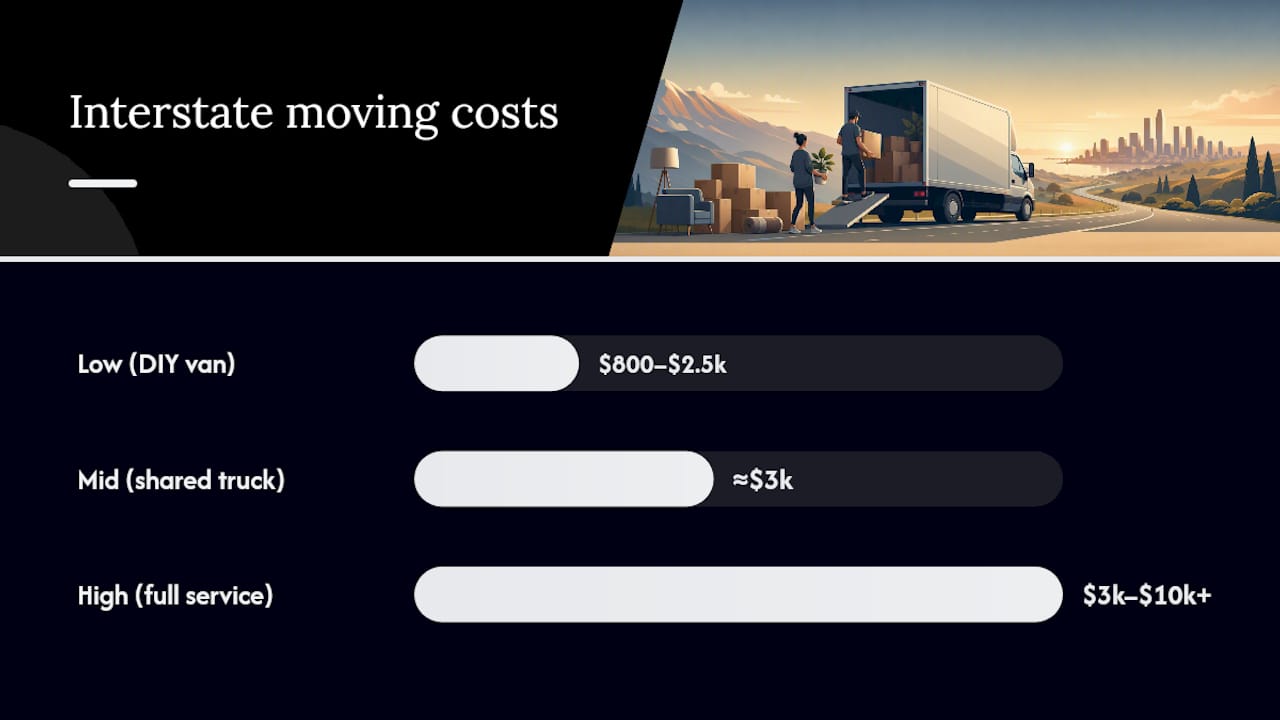
What pushes you from one band to the next: distance, cubic volume, anything fragile or oversized (pianos, pool tables), and how flexible your dates are. A rigid settlement date with no wiggle room almost always costs more, because you lose your ability to wait for a cheap backload slot.
Every method trades cost against effort, and picking the wrong one for your situation is where budgets blow out.
Lower your cost within any method by hiring a smaller vehicle than you think you need, consolidating loads with a neighbour, or booking partial help (just the heavy furniture) instead of a full crew.
Lead times matter more than most people expect, especially for backloading, where trucks fill up weeks in advance during peak season.
Booking during end-of-month, school holidays or long weekends routinely adds a premium, sometimes 20% or more, because demand for trucks and crews spikes at exactly those times.
Every kilo you don’t move is money saved, since removalists and truck hire both price by volume and weight. Realestate lists decluttering as one of the most effective ways to cut moving costs, and it’s the one step most people leave too late.
Pro Tip: Sell furniture you’re replacing anyway before you move, not after. Buyers pay more for something they can pick up locally than for a photo of it interstate.
Boxes are the easiest cost to slash without risking damage; alternatively, consider moving box rental for affordable, reusable packing options.
To cut cubic volume further: disassemble furniture where possible, use wardrobe boxes instead of wrapping hanging clothes individually, and wrap fragile items in towels or linen instead of buying bubble wrap.
Booking smart saves as much as the method you choose.
Sometimes the cheapest quote isn’t the best deal. A slightly higher price from an established operator with AFRA accreditation can save you money overall if it means no delays, no damage claims, and no second truck booking.
Pro Tip: Ask every quote for a written breakdown, not just a total. A $200 gap between two quotes often hides a $400 difference in what’s actually covered.
Low quotes often exclude the costs that surprise people most. Budget for fuel surcharges, tolls, ferry crossings on routes like Tasmania, parking permits for the truck at both ends, and any gap between move-out and move-in dates that forces short-term accommodation or storage.
Standard removalist liability cover typically compensates for damage based on weight rather than replacement value, so a smashed television might only net you a token payout. Full transit insurance costs more but is worth it for anything genuinely valuable.
Storage earns its keep when your move-out and move-in dates don’t line up, or when you’re downsizing and need somewhere to park furniture temporarily.
Paying for a professional move sounds like the opposite of budget-friendly, but for the right situation it’s the cheaper option once you count every hidden cost.
Onyx Removals offers services built to keep costs down without cutting corners: shared truck options for flexible dates, packing charged by the hour rather than a flat premium, and short-term storage to bridge settlement gaps.
Consider a Melbourne family relocating to Brisbane with a fixed settlement date and a piano. DIY hire would have meant two trips, a hired trailer for the piano, and no insurance if it was dropped. A single professional booking with partial packing and transit cover cost more upfront but eliminated the risk of a damaged instrument and a second weekend lost to driving.
The gap between leaving your old home and settling into the new one is where budgets quietly leak. If your move-out and move-in dates don’t align, even a few nights in a hotel with two kids and a dog can add hundreds of dollars you didn’t plan for.

Ask your removalist or backload provider about flexible delivery windows before booking short-term accommodation, since a slightly later delivery might mean you avoid a hotel stay altogether. House-sitting sites, extended-stay apartments, and short-term rentals booked well in advance are usually cheaper than hotel chains for stays over three nights.
If family or friends live near your destination, even a few nights on a couch removes accommodation from the ledger entirely. Consider staggering the move: send the truck ahead with your goods into storage, then travel yourself once the new place is confirmed ready, rather than paying for both a hotel and a full moving crew standing by on the same day.
Groceries and takeaway also blow out during a move because kitchens are half-packed. Plan simple meals for the final week, and pack a small kit of a kettle, cutlery and a couple of plates in your essentials box rather than eating out every night. It sounds minor, but two weeks of takeaway for a family easily rivals the cost of hiring a smaller truck.
Forgetting to transfer services on time is one of the most common ways budget movers end up paying twice, either for overlapping bills or reconnection fees at the new place.
Work through this in the same week you confirm your moving date, not the week you arrive. Utilities providers often need five to ten business days’ notice to avoid a gap in service or a rushed-connection surcharge.
The overlooked cost isn’t the truck, it’s the week either side of moving day: takeaway meals, a forgotten storage gap, a permit you didn’t know you needed. Run the numbers early with a cost calculator before you commit to a date.
There are cheaper routes than a full-service move, a rented pantech with mates, a backload slot, a stack of borrowed boxes, and each one can work. But if your timeline is tight, your load includes anything fragile, or you simply don’t have three free weekends to spare, Onyx Removals gives you the professional option without the professional price tag.

Melbourne-based moves can be booked as a shared truck slot, with packing charged by the hour instead of a flat fee, and short-term storage available if your settlement dates don’t line up. That combination lets you pay for exactly the help you need rather than an all-or-nothing package. Get an accurate home removal quote before you lock in a date, so you know your real number, not a guess, before moving week arrives.
What’s the cheapest way to move interstate on a budget?
Backloading or a shared truck is usually cheapest, followed by hiring a one-way pantech and doing the loading yourself with friends.
How much does an average interstate move cost in Australia?
A typical three-bedroom move ranges from a few thousand dollars up to $10,000 or more for long-distance routes, according to Canstar.
Is it cheaper to hire a removalist or do it yourself?
DIY is cheaper for small loads and short distances, but a professional often works out cheaper overall for large households, fragile items or tight timelines once damage risk and time off work are factored in.
How far ahead should I book an interstate move?
Start collecting quotes 8 to 10 weeks out and lock in your truck or removalist by 6 weeks, especially if moving during peak season or school holidays.
Does insurance matter for a budget move?
Yes. Standard liability cover often pays out based on weight, not replacement value, so anything valuable is worth covering with full transit insurance.

No Related Post


