



Moving into your new Melbourne home and staring at a bare rooftop, you may wonder if it could become the green retreat you crave in the city. Space is precious, and creating a rooftop garden means navigating both building challenges and strict local regulations. This guide gives urban homeowners practical steps for safely assessing, preparing, and planting a rooftop garden that balances style, sustainability, and Melbourne’s unique requirements. Careful planning ensures your garden thrives without risking structural or legal issues.
| Key Point | Explanation |
|---|---|
| 1. Ensure Roof Structural Integrity | Consult a structural engineer to verify if your rooftop can safely support a garden to prevent damage. |
| 2. Follow Local Regulations | Research required permits and building codes, particularly for heritage structures, before beginning your rooftop garden project. |
| 3. Choose Lightweight Containers | Opt for lightweight and durable materials for containers to minimise strain on the roof while ensuring good drainage. |
| 4. Implement Effective Drainage Systems | Use waterproof membranes and drainage layers to manage water flow and protect the roof from potential damage. |
| 5. Monitor Plant Health Regularly | Check soil moisture and inspect for pests to maintain plant health, using organic methods for pest control when needed. |
Before transforming your Melbourne rooftop into a lush garden paradise, you need to carefully evaluate the structural integrity and feasibility of your potential green space. This initial assessment will determine whether your rooftop can safely support a garden and meet local regulatory requirements.
Start by consulting a structural engineer or building professional who can verify roof structural capacity. Not all roofs are created equal some will require significant reinforcement to handle the additional weight of soil, plants, containers, and water. In Melbourne, buildings vary dramatically in age and construction, so professional assessment is crucial. You’ll want to understand load-bearing capabilities, waterproofing conditions, and potential stress points that could compromise your roof’s integrity.
Your next step involves checking local regulations. Licensed roofing practitioners must comply with specific Victorian building codes, including the Building Act 1993 and Plumbing Regulations 2018. This means understanding drainage requirements, structural limitations, and potential permit needs. Some heritage buildings or apartments might have additional restrictions, so thorough research is key.
Top Tip: Before investing in plants and materials, always get a professional structural assessment to prevent potential roof damage and ensure your garden’s long-term success.
With your rooftop’s structural integrity confirmed, it’s time to transform this urban canvas into a thriving green sanctuary. Preparing your rooftop space is about creating the right foundation for a successful garden that can withstand Melbourne’s dynamic climate.
Start by focusing on sustainable site preparation techniques. This means carefully selecting soil types that are lightweight yet nutrient-rich, ensuring proper drainage, and choosing materials that won’t overburden your roof’s structural capacity. Consider using specialised rooftop growing media that’s engineered to be lighter than traditional garden soil while providing excellent water retention and plant nutrition. You’ll want to create raised garden beds or containers with built-in drainage systems to manage water effectively and prevent potential leaks or water damage.
Next, consider your microclimate. Melbourne’s urban environment presents unique challenges, so urban greening strategies become crucial. Assess sun exposure, wind patterns, and potential temperature variations across your rooftop. Choose native and drought-tolerant plants that can withstand these conditions. Install windbreaks if needed, and consider using reflective or light-coloured materials for containers to help manage heat absorption.
Top Tip: Invest in lightweight, modular garden systems that allow flexibility and easy reconfiguration as your rooftop garden evolves.
Choosing the right plants and containers is crucial for creating a successful rooftop garden in Melbourne. Your selections will determine not just the aesthetic appeal but also the long-term sustainability of your urban green space.
Start by prioritising native and drought-resistant plants that can thrive in Melbourne’s challenging urban environment. Look for compact species that can withstand intense sunlight, variable temperatures, and potentially strong winds. Consider native herbs like rosemary, thyme, and native mint, which are not only resilient but also provide culinary benefits. Edible plants such as cherry tomatoes, compact chilli peppers, and leafy greens like silverbeet work brilliantly in rooftop settings. These selections offer both aesthetic value and practical utility.
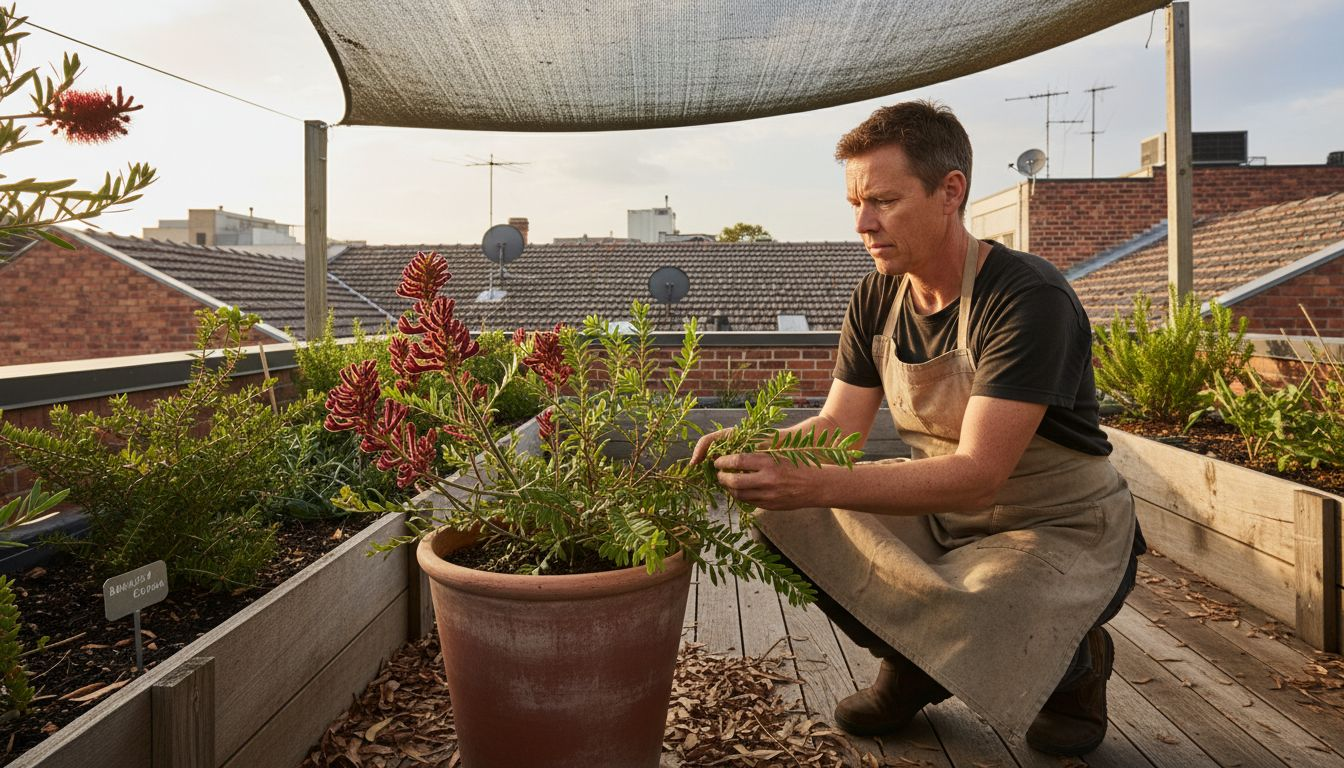
When it comes to containers, opt for lightweight materials that won’t strain your roof’s structural integrity. Container growing systems should feature excellent drainage capabilities and adequate depth for root development. Terracotta, fibreglass, and specialised rooftop planters made from recycled materials are excellent choices. Ensure each container has multiple drainage holes and consider using a lightweight potting mix specifically designed for container gardening. Group plants with similar water and sunlight requirements together to create microclimates that support healthy growth and make maintenance more manageable.
Here’s a quick reference to Melbourne rooftop garden container materials and their key benefits:
| Material Type | Weight Impact | Durability | Environmental Benefit |
|---|---|---|---|
| Terracotta | Moderate | High | Natural clay, recyclable |
| Fibreglass | Very light | Long-lasting | Low water absorption |
| Recycled plastics | Light | UV resistant | Reuses waste materials |
| Lightweight metal | Light | Rustproof | Can be recycled fully |
Top Tip: Select modular containers that can be easily rearranged and choose plants that can tolerate both full sun and occasional shade to maximise your rooftop garden’s adaptability.
Installing the right soil and drainage systems is critical to the success of your Melbourne rooftop garden. This step will ensure your plants thrive while protecting your building’s structural integrity and managing water flow effectively.
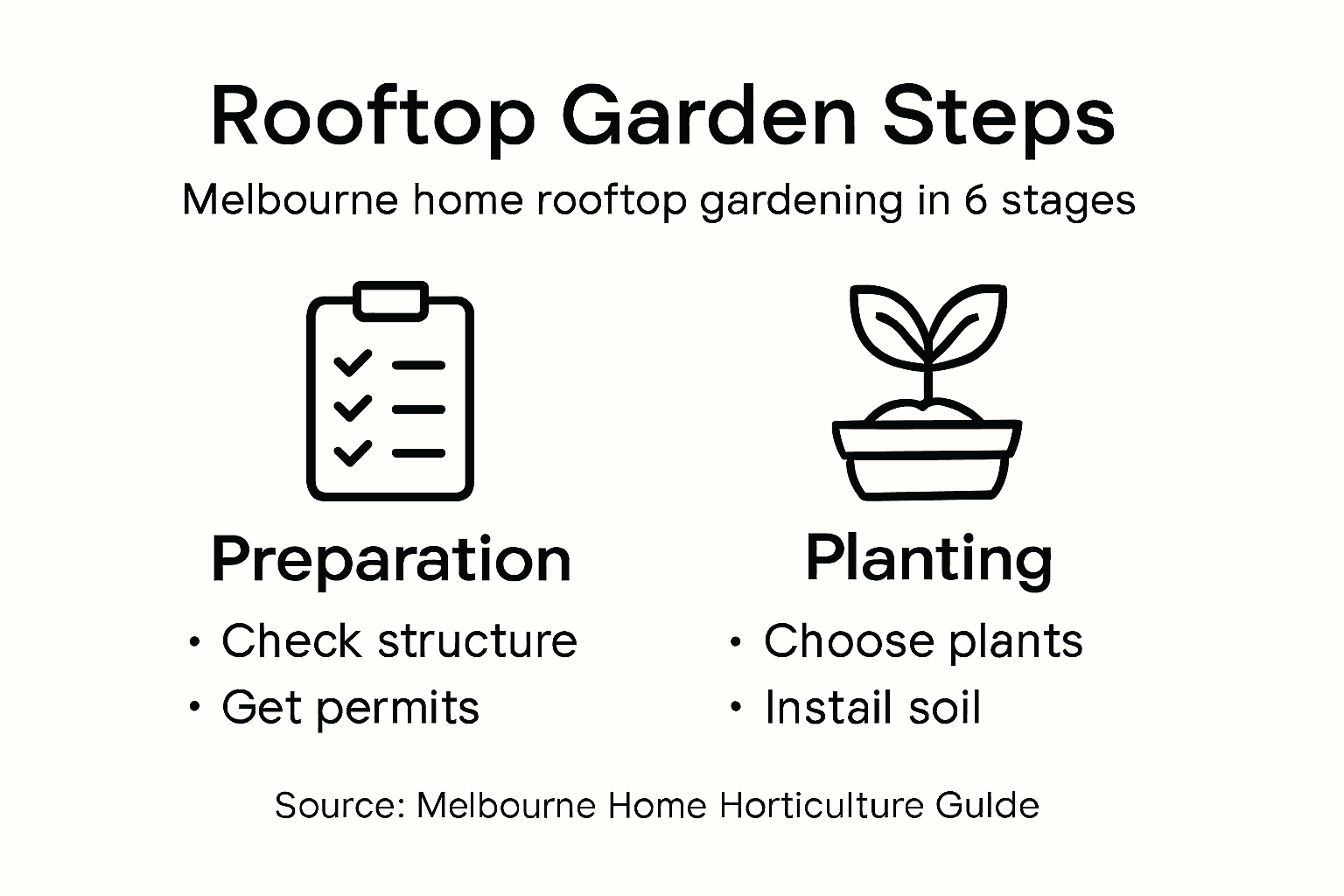
Begin by understanding Victorian roofing drainage regulations. Your rooftop garden needs a multilayered approach to soil and drainage. Start with a waterproof membrane to protect the roof surface, followed by a root barrier that prevents plant roots from penetrating the building’s structure. Next, add a drainage mat or layer that allows water to flow freely and prevents soil compaction. This layer is crucial for preventing water accumulation that could damage your roof.
Choose a specialised lightweight growing medium designed for rooftop gardens. Stormwater management strategies recommend using substrate mixes that are both nutrient-rich and incredibly lightweight. These mixes typically combine organic matter like coconut coir, perlite, and lightweight expanded clay aggregates. These materials provide excellent drainage while maintaining moisture and supporting plant growth. Ensure your containers have multiple drainage holes and consider using geotextile fabric at the bottom to prevent soil loss while allowing water to pass through. Position your containers slightly elevated from the roof surface to improve air circulation and prevent water trapping.
Compare common soil and drainage layers used in rooftop gardens:
| Layer Purpose | Typical Materials | Protection Provided | Drainage Role |
|---|---|---|---|
| Waterproof membrane | Synthetic rubber, bitumen | Prevents water penetration | No drainage, protective |
| Root barrier | Geotextile, polyethylene | Blocks invasive roots | Allows water movement |
| Drainage mat/layer | Expanded clay, gravel, foam | Reduces soil compaction | Facilitates water flow |
| Growing medium | Coconut coir, perlite blend | Nutrient supply for plants | Manages water retention |
Top Tip: Test your drainage system by watering plants and observing water flow to ensure proper runoff and prevent potential moisture issues.
Transforming your carefully prepared rooftop space into a thriving garden requires thoughtful planning and strategic plant placement. Your goal is to create a resilient, productive green space that maximises every square centimetre of your urban oasis.
Sustainable planting practices are crucial when arranging your rooftop garden. Start by mapping out your space and considering each container’s microclimate. Melbourne’s variable conditions mean you’ll want to group plants with similar water and sunlight requirements together. Place taller plants towards the centre or back of your garden to provide wind protection for more delicate species. Drought-tolerant natives like grevillea, saltbush, and kangaroo paw work brilliantly in exposed rooftop environments. Consider creating vertical layers using climbing plants on trellises or hanging planters to maximise your growing space.
For edible gardens, companion planting strategies can help maximise productivity. Pair herbs like basil and mint with vegetables such as tomatoes and capsicum. These combinations not only look beautiful but can help with pest management and improve overall plant health. Remember to leave enough space between containers for maintenance and air circulation. Rotate your containers periodically to ensure even sun exposure and prevent uneven growth.
Top Tip: Create a simple garden layout sketch before planting to visualise plant positioning and ensure optimal growing conditions.
Now that your rooftop garden is established, ongoing care becomes crucial to ensure your green sanctuary continues to thrive in Melbourne’s challenging urban environment. Consistent monitoring and proactive maintenance will help your plants stay healthy and productive.
Begin by understanding native plant growth patterns. Regularly inspect your plants for signs of stress, pest activity, or nutrient deficiencies. Melbourne’s variable climate means your garden will need adaptive care. Check soil moisture levels weekly, adjusting watering schedules based on temperature and rainfall. Look out for common urban garden pests like aphids, scale insects, and mites. Use a magnifying glass to examine plant leaves and stems closely, catching potential issues early before they become widespread problems.
Embrace sustainable garden maintenance practices that support both plant health and environmental resilience. Instead of harsh chemical treatments, opt for organic pest management strategies like introducing beneficial insects, using neem oil, or creating natural pest deterrents. Regularly remove dead or yellowing leaves, rotate containers to ensure even growth, and replenish nutrients through organic compost or worm castings. Pay special attention to your native plants, as they often require less intervention and are naturally adapted to Melbourne’s unique ecosystem.
Top Tip: Keep a garden journal to track plant growth, note successful strategies, and learn from your rooftop garden’s unique microclimate.
Starting a rooftop garden in Melbourne involves careful planning from assessing your roof’s structure to selecting the perfect plants and containers. This journey can feel overwhelming, especially when it comes to relocating your garden supplies or existing plants safely without risking damage. Whether you are moving delicate garden containers, installing lightweight modular systems, or transferring mature plants, protecting your rooftop oasis is essential.

Trust Onyx Removals to provide expert moving solutions tailored for Melbourne homeowners passionate about rooftop gardening. We specialise in the careful transport of plants and garden materials, ensuring your new green sanctuary remains intact and thriving from day one. Explore our comprehensive range of services, including specialised plant moving and packing options, to make your transition smooth and worry-free. Don’t delay your garden dreams – start your stress-free relocation today by visiting Onyx Removals and discover how our expert team can help bring your rooftop garden vision to life.
To assess your rooftop’s suitability, consult a structural engineer to verify its load-bearing capacity. Start by scheduling a professional assessment to identify any necessary reinforcements and ensure your roof can support the weight of soil, plants, and water.
Focus on selecting lightweight, nutrient-rich soil and installing proper drainage systems to prepare your rooftop garden sustainably. Consider using specialised rooftop growing media that retain moisture while minimising weight, ensuring your garden thrives.
Choose native and drought-resistant plants suited for Melbourne’s climate, such as rosemary, silverbeet, and compact chilli peppers. Start by selecting a mix of herbs and vegetables that can withstand intense sunlight and varying temperatures to ensure optimal growth.
Install a multilayered drainage system including a waterproof membrane and a drainage mat to effectively manage water flow. Begin by setting up these layers during your garden’s installation to prevent water accumulation and protect your roof’s integrity.
Regularly inspect your plants for stress or pests and adjust your watering schedule based on weather conditions. Start by monitoring soil moisture levels weekly and removing any dead plant material to promote a healthy growing environment.

No Related Post


