


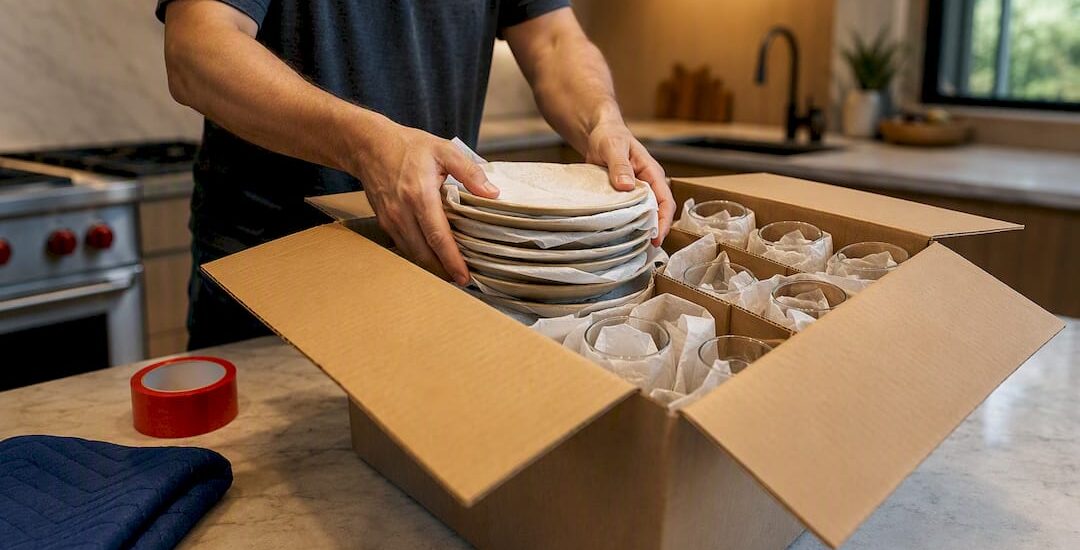
Wrap every fragile item individually in packing paper, cushion it so nothing can shift, then seal the box with the H-tape method and label it clearly on every side. That single sequence prevents most breakage. Use sturdy double-walled boxes, run the shake test before sealing, keep each box light enough to lift safely, and hand irreplaceable antiques or heirlooms to professional packers instead of risking them yourself.
TL;DR:
- Use purpose-built double-walled boxes for plates, glasses, and fragile items to prevent flexing and crushing during the move.
- Pack each item individually with cushioning and ensure no empty space remains to minimize shifting and impact.
- Seal boxes securely with H-tape and perform a shake test, adding extra padding if any movement is detected.
- Fragile boxes should be loaded last in the truck, placed on stable surfaces and never stacked under heavier items.
- Consider professional packing for irreplaceable, valuable, or oversized fragile items to reduce breakage risk and ensure better claims coverage.
Buying the wrong boxes is the single most common mistake home movers make. A standard moving carton flexes under weight and offers no rigidity around plates or glassware, so the first job is sourcing purpose-built supplies rather than grabbing whatever’s free from the local supermarket.
For a typical kitchen, you’ll want:
Smaller, heavier boxes always beat large, light ones when it comes to breakables. A giant carton stuffed with plates becomes nearly impossible to lift without tipping contents, whereas a compact dish-pack box keeps weight manageable and pressure even. Set up a dedicated packing station: a clear table or bench, your tape dispenser within reach, and piles of paper and bubble wrap sorted by size. Pad the base of every box with a scrunched layer of paper before anything goes in.
Start the kitchen first, and start it early. It’s consistently the room that takes longest to pack, thanks to the sheer number of small, awkward, breakable items hiding in every cupboard. Professional packers often plan on four to six dish-pack boxes for an average two-bedroom kitchen and deliberately over-buy materials rather than run out mid-pack.
Running out halfway through a box of crystal glasses, with no more paper in the house, is how people start reaching for towels and newspaper as a substitute.*
If you’d rather skip the shopping trip altogether, Onyx Removals stocks packing supplies for moving sized specifically for fragile household items.
Every category of breakable has its own logic, but the underlying principle never changes: wrap first, cushion always, and eliminate every pocket of empty space before the lid closes.
Plates and bowls. Wrap each piece individually in packing paper, then stack them vertically like records in a crate rather than flat, which spreads impact across the plate’s strongest edge instead of its weakest centre. Slide a sheet of cardboard or foam between stacks of different sizes, pad the base of the box generously, and fill every remaining gap with crumpled paper.
Glasses and stemware. Stuff paper into the bowl of each glass first, then wrap the stem separately before wrapping the whole piece. Cell dividers or foam pouches keep individual glasses from touching, and everything should stand upright, never on its side. Particularly delicate crystal stemware is worth double-boxing: one wrapped and cushioned inside a smaller box, that box then placed inside a larger one padded on all sides.
Mirrors and framed art. Run painter’s tape in an X across the glass to control any shattering, fit foam corner protectors, and use a proper picture carton or a cardboard sandwich (two flat pieces taped either side of the frame). Always transport these upright, never flat, and never stack anything on top.
Electronics and appliances. Original manufacturer cartons remain the safest option, and using them cuts risk and makes reassembly far simpler once you’re unpacking at the new place. Tape down loose parts, bag and label every cable, and let anything unplugged sit at room temperature for a few hours before you power it back on.
Odd shapes: vases, lamps, figurines. Box within a box is the technique here. Wrap the item in several layers of bubble wrap, stand or lay it inside a smaller carton stuffed with crumpled paper, then set that carton inside a larger one with more padding around it. Tape every seam.
Knives and sharp items. Sheath the blade in cardboard or thick paper first, wrap the whole knife, and mark the outside of the box clearly so nobody reaches in blind.
A quick reference for the trickiest categories:
Sealing matters almost as much as the wrapping inside. A box with a weak bottom will fail under its own weight, no matter how carefully you’ve packed the contents.
A silent box on the shake test is the benchmark experienced removalists actually use in the field, not a marketing line. If it rattles, it will break. For consistent labelling across the whole house, Onyx Removals has a guide on how to label moving boxes that pairs well with this system.
Loading order decides almost as much as packing quality. Fragile boxes belong in last, on top of everything else, so they come off first and never carry the weight of furniture stacked above them.
If items are heading into storage rather than straight to a new home, avoid damp sheds or hot rooftop units, and keep fragile boxes near the front of the storage space so they’re easy to reach without moving everything else first.
Some pieces are worth handing over entirely. Marble, oversized pottery, fine art, and anything with genuine irreplaceability fall into that category, and crating or professional packing meaningfully cuts the risk of a claim on items like these.
Pro Tip: If a piece is genuinely irreplaceable, the cost of professional packing is almost always smaller than the cost of replacing it. Run the numbers before deciding to save the fee.
Onyx Removals covers this in more depth for collectors and estate items in its guide to packing fragile collectibles.
Moving day moves fast, and it’s easy to skip a step under pressure. Run through this before the truck arrives:
Glassware and crystal chip rather than shatter outright, and chips almost always happen at the rim or the base where two pieces touch during transit. The fix is consistent separation: nothing glass should ever make direct contact with another glass surface inside the box.
Wrap each piece from the base up, tucking the paper into any grooves or cut patterns rather than just wrapping around the outside. Crystal stemware with cut or etched detailing is more brittle than plain glass, so give it an extra layer of bubble wrap around the bowl specifically, where the glass is thinnest. Pack glasses upright wherever the shape allows, since that’s the strongest orientation for the rim.
Cell dividers do more work here than most people expect. A cardboard cell kit inside a dish-pack box turns one crowded box into a dozen individual compartments, and that separation is what actually prevents chipping, not the thickness of the wrap alone. If you don’t have cell dividers on hand, rolled bath towels standing upright between glasses can serve as a rough substitute, though towels shouldn’t fully replace proper packing paper or bubble wrap on genuinely delicate crystal.
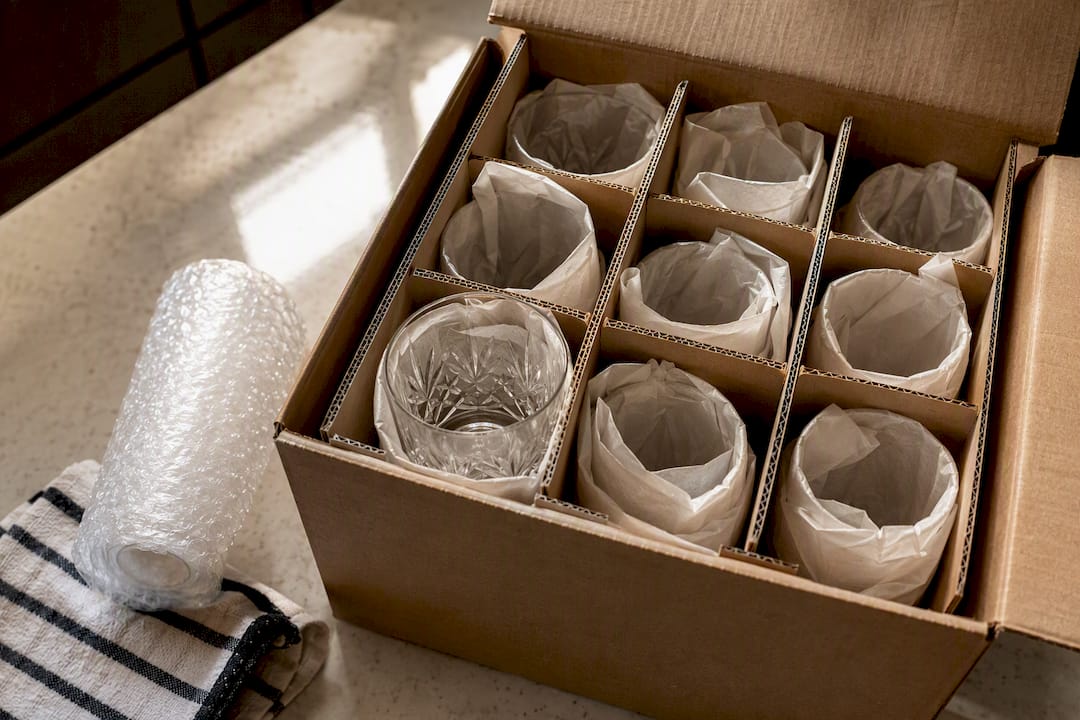
Never lay crystal decanters or vases on their side unless the neck is specifically supported. The weight distribution on their side puts pressure exactly where the glass is weakest.
A cracked dinner set is annoying. A cracked family heirloom is something else entirely, and the packing approach for sentimental items should be more conservative than for anything replaceable, even if the item itself isn’t especially valuable in dollar terms.
Slow down. Sentimental pieces are exactly where rushed, end-of-day packing does the most damage, because they’re often odd shapes, hand-me-downs with existing wear, or items nobody’s checked the sturdiness of in years. Inspect each piece for existing cracks or weak glue joints before wrapping, since a pre-existing flaw is far more likely to fail under the vibration of a truck than a sound piece would.
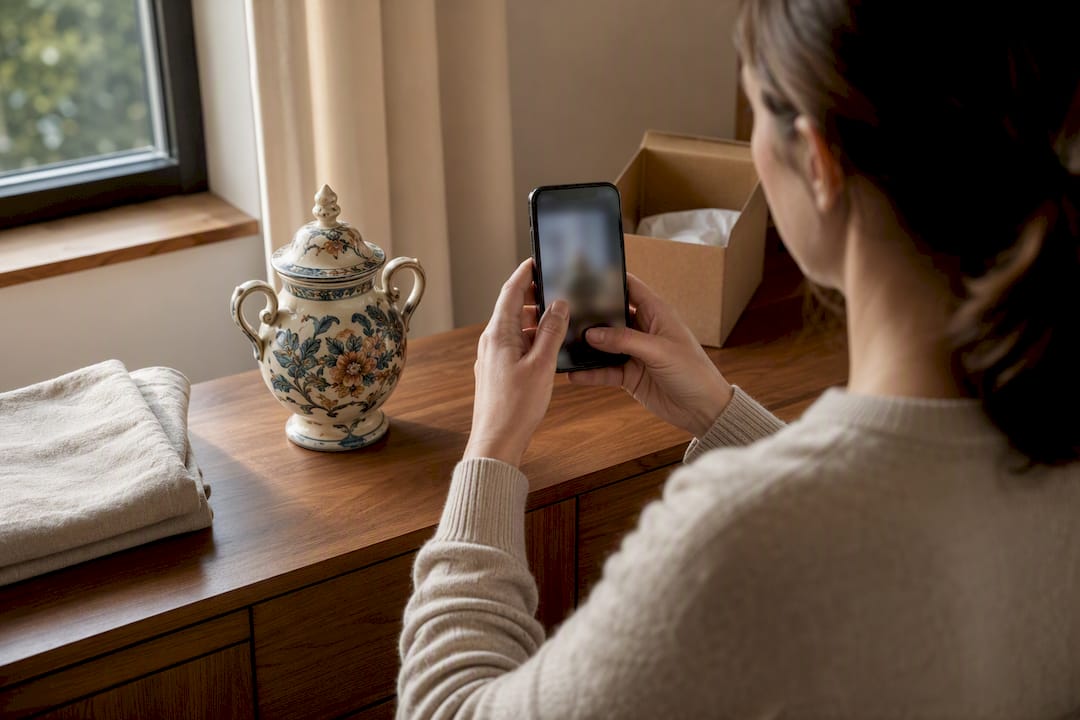
Photograph the item from multiple angles before you wrap it. This matters for two reasons: it gives you a record if a claim is ever needed, and it gives you (or whoever unpacks it) a reference for how the piece looked and any decorative elements that might get lost in wrapping.
For anything with genuine emotional weight, consider hand-carrying it in your own vehicle rather than trusting it to the truck at all. It removes the item from the loading, transit and unloading risk entirely, and for a piece that can’t be replaced, that peace of mind is worth the extra bag on your lap. If the item is too large to carry, ask about having it specifically packed by an experienced team rather than folded into a general box with other kitchen items.
Packing a house full of breakables generates a genuinely large amount of waste, and most of it (bubble wrap, packing paper, tape) ends up in landfill within weeks of the move.
Reusable options are worth considering before you buy anything single-use. Plastic moving crates and reusable packing cubes can be hired for the move and returned, cutting out cardboard entirely for non-fragile categories, and some cell dividers and dish-pack kits are sturdy enough to be reused across multiple moves rather than binned after one trip.
For the fragile items themselves, household substitutes reduce material use without compromising protection, provided you’re realistic about their limits. Towels, tea towels and off-season clothing can cushion and fill voids around glassware, though they work best as supplementary filler around items already wrapped in proper paper, not as a full replacement for it. Old newspaper works for wrapping non-porous items like ceramics where ink transfer isn’t a concern, saving fresh packing paper for anything that would show ink marks.
Cardboard itself is broadly recyclable, so breaking down dish-pack boxes for kerbside collection after the move is straightforward, provided tape and any plastic cell dividers are removed first. Buying slightly fewer, better-quality boxes and reusing them for storage afterward also cuts down on the churn of buy-once, bin-once packing that a lot of house moves fall into by default.
After years of watching what breaks and what doesn’t, a few patterns hold up every time. Plates crack most often when they’re stacked flat rather than vertically. Crystal chips when it’s wrapped but not separated from its neighbours. And the items clients most regret not having professionally packed are almost never the expensive ones. They’re the sentimental ones: a grandmother’s china, a hand-blown vase from an overseas trip.
Our packers always ask to handle mirrors, artwork and anything glass-fronted themselves, because these fail in ways that aren’t obvious until the box is opened at the other end. Mover-packed fragile boxes also tend to fare better in any claims process, simply because the packing itself is documented and consistent.
— Dinshaw
Onyx Removals is the option for readers who’ve read this far and decided some items are too valuable, too sentimental, or too awkwardly shaped to risk on a DIY pack job. Our team packs kitchens, glassware, artwork and collectibles using the same dish-pack boxes, cell kits and H-tape techniques covered above, backed by declared-value insurance options that give mover-packed items broader claims coverage than a box you’ve taped up yourself.

Crating is available for oversized or particularly delicate pieces like marble tabletops and large ceramics, and our team can pack just your fragile items while you handle the rest, or take on the full move. Professional packing tends to pay for itself fastest on items that are expensive to replace or impossible to replace at all, which is exactly where a DIY pack carries the most risk.
To get started, request a quote through our moving services in Melbourne page and let us know roughly how many rooms need packing and whether you have any high-value or antique pieces. If you just need the materials and plan to pack it yourself, our packing and unpacking service page also covers standalone supply orders.

No Related Post


