


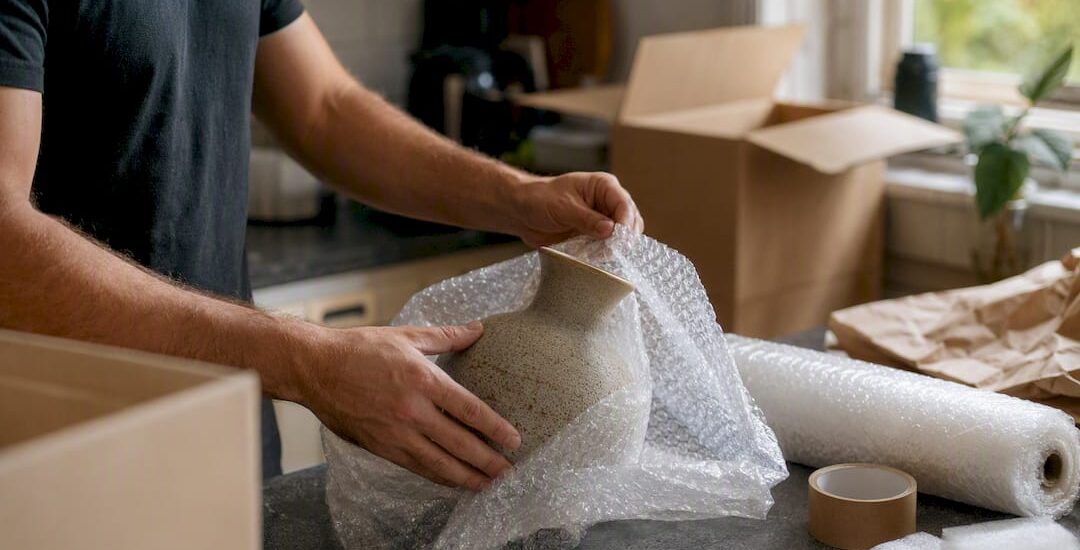
Wrap every fragile item individually, cushion it with layered padding, immobilise it inside a correctly sized double-walled box, and label it clearly. That’s the whole formula. Most breakages during a move come down to one of these steps being skipped, not bad luck.
Three rules cover almost every situation you’ll face on packing day:
If you’re dealing with anything genuinely high-value, oddly shaped, or on a tight deadline, that’s the point to bring in professional packers rather than gamble on it.
Packing fragile items successfully comes down to three things done consistently: individual wrapping, void-free immobilisation inside a correctly sized box, and labelling that gives movers real instructions.
| Point | Details |
|---|---|
| Wrap individually | Never let two fragile items touch directly, even inside the same box. |
| Pack plates and mirrors vertically | Standing items on edge spreads load better than flat stacking and cuts crack risk. |
| Fill every void | Loose items inside a box are the most common cause of breakage, not weak cardboard. |
| Label with instructions, not just “fragile” | Include room, contents, orientation arrows and handling notes for movers. |
| Call in professionals for high-value items | Onyx Removals’ packing service provides trained packers, specialist materials and condition reports for valuable or awkward pieces. |
The materials you choose matter more than how much you spend on them. A roll of packing paper and the right box size will outperform an expensive but wrong-sized carton every time.
Your core kit should include:
Beyond the basics, a few specialist products earn their cost quickly. Dish packs (boxes with built-in cell dividers) and plate dividers stop crockery grinding against itself in transit. Picture and mirror kits, essentially cardboard sandwiches with corner protectors, are purpose-built for flat framed items. Air sleeves work well for stemware and awkward cylindrical objects. Anti-static wrap matters specifically for electronics, since ordinary plastic wrap can generate static that damages circuit boards.
You can get away with cheaper substitutes in some cases. Clean towels or blankets work as cushioning for solid, low-value items like saucepans or garden pots. They’re a poor substitute for anything with a delicate surface or sharp edges, where foam or bubble wrap does a job cloth simply can’t.
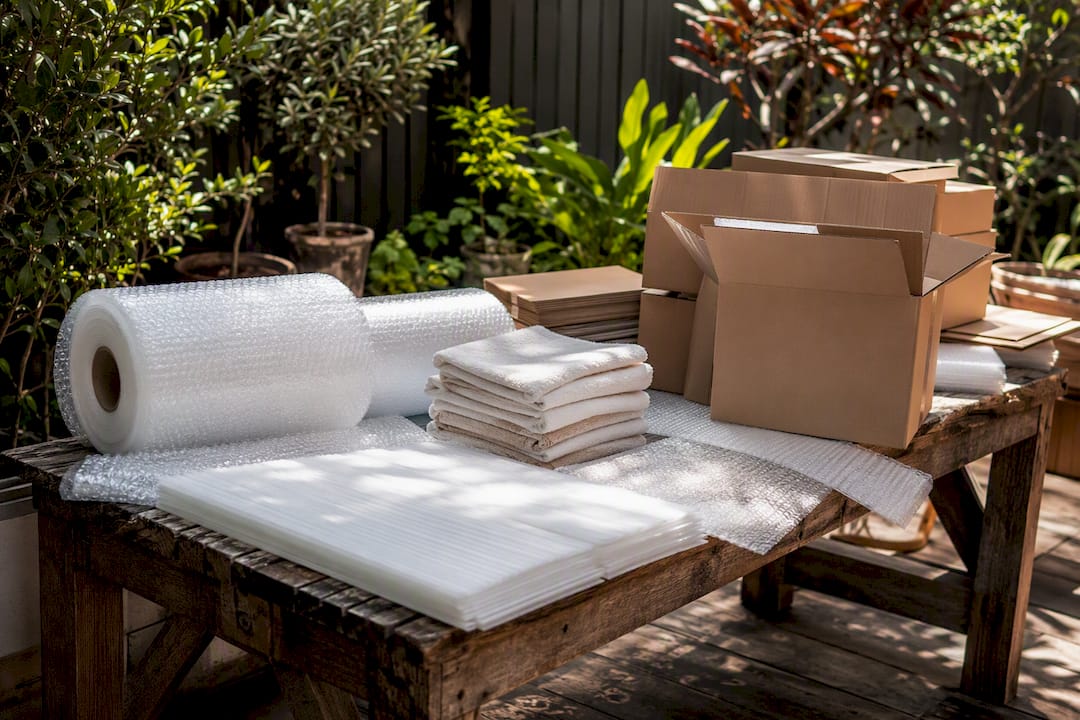
Pro Tip: Buy one size of box larger than you think you need for fragile items. An oversized box lets you build a proper cushioning layer on all six sides instead of squeezing items in tight against the cardboard.
If you’re unsure where to source the right gear, Onyx Removals has a breakdown of packing supplies for moving that covers what’s genuinely worth buying versus what you can improvise.
Different objects fail in different ways. Plates crack under pressure points, glasses shatter from lateral knocks, and electronics fail from static or flexing. Each needs a slightly different approach.
Plates and crockery. Wrap each plate individually in packing paper, then stack them on their edge inside a dish pack box, never flat. Standing plates vertically distributes load through the ring of the plate rather than concentrating weight on the centre, which is why flat-stacked plates crack so often even when they’re well wrapped.
Stemware and glasses. Stuff the inside of each glass loosely with paper, wrap in tissue, then a layer of bubble wrap around the outside. Pack upright in a partitioned box or air sleeves, never on their side, and fill every gap so nothing can tip.
Framed pictures and mirrors. Cross masking tape over the glass in an X pattern to hold shards together if it breaks. Where it’s practical, remove the glass from the frame before the move, since packaging guides recommend this precaution specifically to stop broken glass damaging the image underneath. Sandwich the piece between two sheets of cardboard cut to size, corner-protect it, and box it rather than leaving it wrapped and loose.
Electronics and TVs. Use the original manufacturer’s box if you kept it. If not, wrap the unit in anti-static bubble wrap, pad all six sides inside a snug double-walled box, and coil cables separately in labelled bags rather than leaving them dangling. Screens should always travel upright, never flat, to avoid pressure across the panel.
Odd shapes and sculptures. Fill every cavity and hollow with paper before wrapping the outside, so there’s no internal space for the piece to move or crush. Mark which way is up directly on the box if the item has a correct orientation, and don’t rely on the recipient guessing.
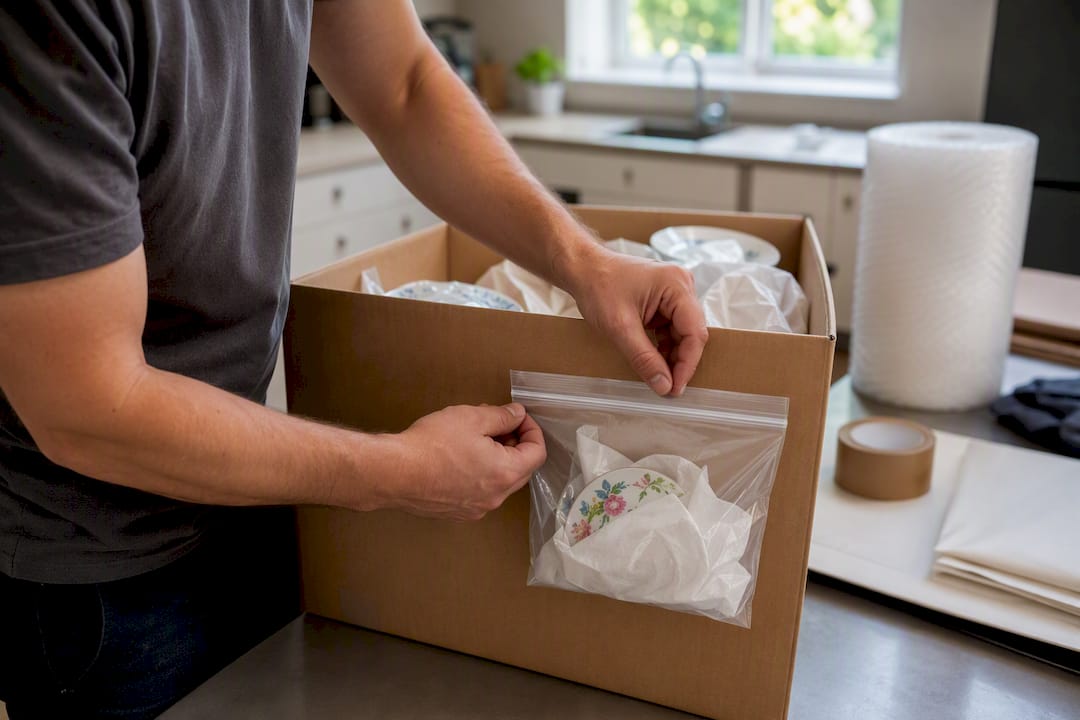
Small valuables and jewellery. Small labelled boxes and zip-lock pouches work better than wrapping loose items in tissue, which tends to get discarded by mistake. Photograph anything valuable before packing it away as a simple record for your own inventory.
If you’re packing a guitar or another instrument for the move, the technique is different again. Specialist guidance on packing guitars safely covers loosening the strings and supporting the neck, which a standard fragile-item approach won’t account for.
Pro Tip: Pack similar items together and disassemble what you can before wrapping. Community advice from experienced movers consistently backs this up: clean, inspect, disassemble, and secure loose parts before anything gets wrapped, rather than trying to fix problems after the box is sealed.
Medium to medium-large double-walled boxes handle fragile items better than single-wall cartons, which flex too easily under stacking pressure. Bigger isn’t automatically better. A box that’s too large for its contents just gives fragile items more room to shift around inside.
For anything genuinely high-value, box-in-box packing is worth the extra ten minutes. Wrap and cushion the item, place it in a smaller box with padding on every side, then set that whole box inside a larger one with more cushioning filling the gap between the two. This method is particularly effective for framed art and electronics, where the outer box absorbs the initial impact before it ever reaches the item itself.
Packing order inside any box follows the same logic every time:
Choosing a box around 10 to 25% larger than the item gives you enough room for that cushioning without leaving so much space the contents can bounce. Vertical packing beats flat-stacking for the same reason it works for plates: standing items on edge spreads pressure across a stronger structural line, while flat stacking concentrates weight on the weakest point, usually the centre.
Writing “fragile” on a box tells a mover almost nothing useful. Australia Post’s own packaging guidance points out that labelling alone doesn’t guarantee special handling, which means the label itself needs to do more work.
A label that actually reduces damage should include:
For anything genuinely valuable, take photos of the item before it goes into the box and jot a one-line condition note. It costs two minutes and becomes your evidence if you ever need to make a damage claim.
Fragile boxes belong in what removalists call the “ride zone”: mid-height, away from the rear doors where road vibration and door-slam shocks concentrate, and never underneath heavier furniture or boxes.
A few practical points matter once boxes are on the truck:
DIY packing works fine for most household items. It stops being the right call once value, shape, or timing tip the scales against you.
Bring in professionals when:
Professional packing services bring trained staff who know the difference between a box that looks packed and one that’s actually immobilised. AFRA’s own guidance recommends professionals specifically for valuable, awkward, or highly delicate items, and notes that the packing method matters more than the box quality alone. Trained packers also produce condition reports before the move, which reduces friction if you ever need to make an insurance claim, since the insurer has a documented starting condition to work from rather than a dispute over what happened during transit.
Onyx Removals’ fragile item packing service covers exactly this gap for Melbourne movers who want the peace of mind without doing every fold and wrap themselves.
Packing quality starts before the first sheet of paper touches the item. Clean anything you’re about to pack. Dust, food residue, or moisture trapped under wrap can stain or corrode over weeks in transit, and it’s much harder to clean once an item’s been sealed in a box.
Disassemble what you can. Lamp shades come off bases, table legs unscrew, and shelving units separate into flat panels far easier to pack than the whole assembled piece. Every part you remove is one less awkward angle for damage to find.
Secure anything loose before it becomes a projectile inside its own box. Tape down clock pendulums, remove batteries from electronics, and bag small screws or fittings in labelled zip-lock pouches taped to the item they belong to. Losing a decorative knob or a specific screw is a small annoyance on moving day and a genuine headache when you’re trying to reassemble furniture weeks later.
For anything with moving parts, like a jewellery box with drawers or a china cabinet with glass doors, wedge soft padding into the mechanism itself, not just around the exterior. A drawer that slides open mid-transit can crack against its own frame just as easily as against another box.
Temperature swings and humidity do real damage to certain fragile items, particularly over longer interstate hauls where goods might sit in a truck or storage facility for days rather than hours.
Glass and ceramics are largely stable across normal temperature ranges, but rapid swings, such as moving items from an air-conditioned house into a hot truck, can create stress in already-weakened pieces. Electronics are more sensitive: extreme heat inside a closed vehicle can affect battery cells and warp plastic housings, so keep devices with you in climate-controlled transport where that’s an option rather than in a truck sitting in direct sun.
Humidity is the bigger concern for anything with a paper, timber, or fabric component: framed artwork, books, timber furniture with veneer, and musical instruments all absorb moisture from humid air and can warp, swell, or develop mould if stored damp for extended periods. If your move involves any storage gap between pickup and delivery, ask whether that storage is climate-controlled, particularly for artwork or timber pieces.
A simple rule covers most situations: avoid packing fragile items the same day they’ve come out of extreme heat or cold, let them reach room temperature first, and never leave sealed boxes containing electronics or artwork in a hot vehicle longer than necessary.
The same handful of errors show up again and again: flat-stacked plates, glasses wrapped but packed on their side, and boxes sealed with obvious empty space still rattling inside. None of these come from carelessness. They come from not knowing the small technique that prevents them.
The fix is rarely more materials. It’s usually orientation, void fill, and choosing the right box size from the start.
Onyx Removals is the alternative to guessing your way through packing day: trained packers, the right specialist materials on hand, and a documented condition record before anything leaves your house. For anyone who’s read this far and is weighing up whether to tackle the china cabinet or the framed art themselves, that’s exactly the gap this service closes.

The professional packing service covers everything from dish packs and picture kits through to full-house packing for interstate moves, with staff trained in the same box-in-box and vertical-packing techniques covered above. Every fragile item gets assessed on arrival, so you know before moving day whether something needs specialist handling or a standard wrap will do. If you’re ready to see what that looks like for your own move, get a home removal quote and we’ll talk you through what your specific items need.
What’s the best way to pack fragile items for a house move?
Wrap each item individually in packing paper and bubble wrap, place it in a correctly sized double-walled box with cushioning on all sides, and immobilise it so nothing shifts when the box is moved. Label the box clearly with contents and orientation.
Is bubble wrap or packing paper better for fragile items?
They serve different purposes. Packing paper prevents scratches and should touch the item first; bubble wrap goes over the top for impact protection. Most fragile items need both layers, not one or the other.
Should I write “fragile” on every box?
Write it, but don’t rely on it alone. Australia Post’s own guidance confirms the word “fragile” doesn’t guarantee special handling, so pair it with specific contents, orientation arrows, and handling notes.
How much bigger should the box be than the item?
Aim for a box 10 to 25% larger than the item itself, enough room for a proper cushioning layer on every side without leaving so much space the item can move around.
When should I hire professional packers instead of doing it myself?
Bring in professionals for high-value items, awkward shapes, or when you need documented condition reports for insurance. AFRA recommends professional packing specifically for delicate or valuable pieces where a mistake would be costly.

No Related Post


