


Planning an interstate move from Melbourne can feel overwhelming when you’re juggling quotes that vary wildly in price and scope. Many residents struggle to determine whether they’re getting a fair deal or missing hidden costs that could derail their budget. This guide walks you through understanding how interstate removalist quotes work, what factors influence pricing, and the practical steps to secure accurate, transparent quotes from professional movers. You’ll learn how to prepare effectively, compare options, and verify costs to ensure a smooth relocation without financial surprises.
| Point | Details |
|---|---|
| Cost calculation | Interstate removalist costs from Melbourne average $183.63 per cubic metre depending on volume and destination |
| Backloading savings | Using backloading services can reduce your moving costs by up to 50% if you have flexible dates |
| Packing services | Professional packing adds $400 to $800 for full service but prevents damage and saves significant time |
| Destination matters | Moving to Sydney costs less than Perth due to higher demand and more frequent routes |
| Seasonal pricing | Summer moves incur surcharges of 10 to 15% due to peak demand periods |
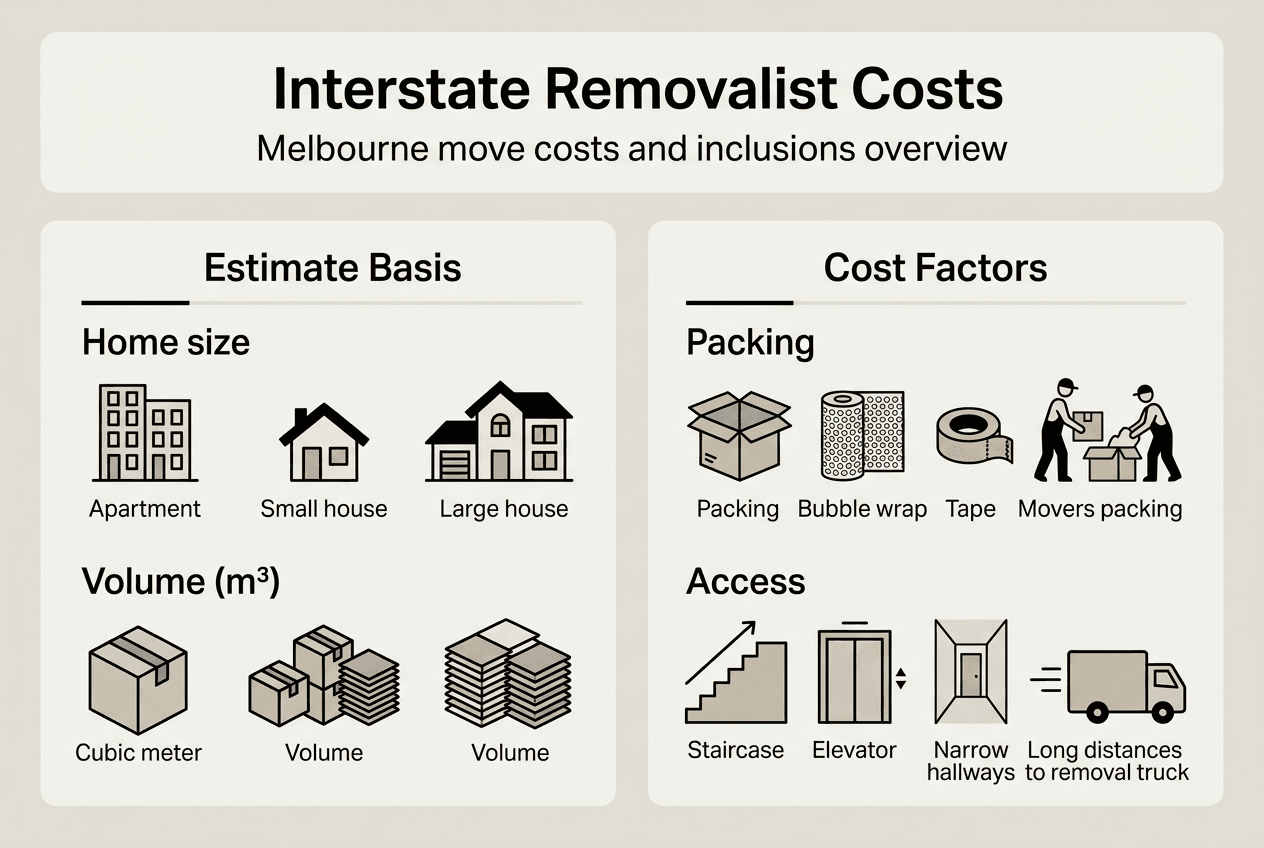
Melbourne interstate removalist quotes are primarily calculated based on the volume of your belongings measured in cubic metres. The average cost sits around $183.63 per cubic metre, though this figure fluctuates depending on your destination city, total volume, and additional services required. For a typical three bedroom house containing 20 to 25 cubic metres of furniture and belongings, you’re looking at approximately $3,672 to $4,590 before factoring in extras like packing or insurance.
Several factors beyond volume influence your final quote. Accessibility plays a crucial role because removalists need to account for stairs, narrow driveways, or limited parking that complicates loading and unloading. The time of year matters significantly, with summer months commanding premium rates due to increased demand. Your choice of destination also impacts pricing because routes to Sydney see more regular traffic than less common destinations like Darwin or Hobart, affecting both availability and cost efficiency.
Packing services represent another major cost variable. Full packing services add $400 to $800 to your quote, whilst fragile item packing alone runs $100 to $300. These services might seem expensive upfront but they transfer liability to professionals and dramatically reduce the risk of damage during transit. Many homeowners find the time savings alone justify the expense, particularly when moving delicate items like artwork or antiques.
Here’s how volume translates to estimated costs for common Melbourne interstate moves:
| Home size | Estimated volume | Base cost range | With packing |
|---|---|---|---|
| 1 bedroom unit | 10 to 12 m³ | $1,836 to $2,203 | $2,236 to $3,003 |
| 2 bedroom house | 15 to 18 m³ | $2,754 to $3,305 | $3,154 to $4,105 |
| 3 bedroom house | 20 to 25 m³ | $3,672 to $4,590 | $4,072 to $5,390 |
| 4 bedroom house | 30 to 35 m³ | $5,508 to $6,427 | $5,908 to $7,227 |
Pro Tip: Request an in home assessment rather than relying on phone estimates. Removalists can provide far more accurate quotes when they physically see your belongings, access points, and any special handling requirements.
Backloading offers substantial savings but requires flexibility. This service pairs your move with another customer’s return journey, cutting costs by up to 50% because the truck would otherwise travel empty. The trade off is that you must work within the removalist’s existing schedule, which might mean waiting a few extra days or accepting a less precise delivery window. For budget conscious movers without strict timelines, backloading through a removalist interstate quote Melbourne service represents excellent value.
Proper preparation dramatically improves quote accuracy and helps you avoid surprise charges on moving day. Start by creating a comprehensive inventory of everything you plan to move, room by room. This inventory serves two purposes: it helps removalists estimate volume more precisely, and it provides documentation for insurance claims if items go missing or sustain damage during transit. Don’t forget outdoor items, garage contents, and storage areas that often get overlooked in initial estimates.

Estimating your belongings’ volume requires some spatial reasoning. A standard moving box holds roughly 0.1 cubic metres, whilst a three seater sofa occupies about 2 cubic metres. Most professional removalists provide volume calculators on their websites, or you can request guidance during initial consultations. Being conservative with your estimate prevents the awkward situation of having insufficient truck space on moving day, which can result in rushed decisions or additional charges.
Deciding on packing services early streamlines the quoting process. Full packing costs $400 to $800 but eliminates hours of tedious work and ensures items are packed to industry standards. If budget constraints make full packing unrealistic, consider partial packing for fragile items like glassware, electronics, and artwork. Many removalists offer a hybrid approach where they pack breakables whilst you handle clothing and linens, balancing cost savings with professional expertise where it matters most.
Accessibility issues significantly impact labour time and therefore costs. Walk through your property and note:
Pro Tip: Take photos of tricky access points and share them with removalists during the quote process. Visual evidence helps them allocate appropriate crew size and equipment, leading to more accurate pricing.
Timing flexibility opens up significant savings opportunities. Moving outside peak summer months reduces competition for trucks and crews, often resulting in better rates and more negotiating power. If you’re considering backloading, having a flexible window of even three to five days can make the difference between securing a spot and missing out entirely. Review your home movers quote Melbourne guide options early to understand seasonal pricing patterns.
Gather information about your destination property as well. Interstate removalists need to know about delivery access, unloading restrictions, and any building requirements like booking freight elevators. Providing this information upfront prevents delays and additional charges when the truck arrives at your new home. Some apartment buildings require certificate of currency for insurance or advance booking for loading docks, details that should be communicated during the quoting phase.
Consider whether you need storage solutions as part of your move. Sometimes interstate relocations involve settlement date mismatches or temporary accommodation periods. Understanding your packing vs unpacking services needs alongside potential storage requirements helps removalists provide comprehensive quotes that cover your entire relocation timeline, not just the transport component.
Requesting quotes from multiple removalists is essential for understanding market rates and service quality. Aim for at least three to five quotes to establish a reliable baseline. When contacting companies, provide identical information to each one so you’re comparing apples to apples. Include your inventory list, moving dates, origin and destination addresses, access considerations, and any special requirements like piano moving or antique handling.
Compare quotes systematically rather than simply choosing the lowest price. Break down each quote to understand:
Backloading presents an attractive cost reduction strategy but comes with specific trade offs. Backloading can halve your moving costs because you’re sharing truck space and fuel costs with another customer. The compromise involves reduced control over exact pickup and delivery dates, potential for longer transit times, and sometimes limited insurance coverage compared to dedicated moves. Evaluate whether the savings justify the flexibility required for your circumstances.
This comparison table illustrates typical quote variations:
| Service type | Cost range | Flexibility | Transit time | Best for |
|---|---|---|---|---|
| Dedicated truck | $3,500 to $5,500 | High | 1 to 3 days | Fixed timelines, full loads |
| Backloading | $1,750 to $2,750 | Low | 3 to 7 days | Flexible dates, budget moves |
| Shared load | $2,500 to $4,000 | Medium | 2 to 5 days | Moderate flexibility |
| Express service | $4,500 to $7,000 | Very high | 1 to 2 days | Urgent relocations |
Ask detailed questions about insurance coverage because policies vary significantly between removalists. Standard transit insurance typically covers $100 to $200 per cubic metre, which might not adequately protect high value items. Enquire about comprehensive insurance options, excess amounts, claims processes, and what documentation you’ll need if something goes wrong. Understanding these details before signing prevents disputes after your belongings are already in transit.
Request clarification on additional fees that might not appear in initial quotes. Common extras include:
Verify what’s included in packing services if you’ve opted for professional packing. Some quotes include all materials whilst others charge separately for boxes, tape, and protective wrapping. Clarify whether packing includes disassembly and reassembly of furniture, or if that’s an additional service. These details might seem minor but they add up quickly and can turn an apparently competitive quote into an expensive exercise.
Check references and reviews for shortlisted removalists before making your decision. Online reviews provide insights into reliability, professionalism, and how companies handle problems. Pay particular attention to comments about quote accuracy because significant discrepancies between quoted and final prices indicate poor business practices. The best interstate removalists Melbourne maintain transparent pricing and strong reputations for delivering on their commitments.
Moving day begins with the removalist crew confirming your inventory against the original quote. They’ll walk through your property to verify volume estimates and identify any items that weren’t included in the initial assessment. This verification protects both parties because it establishes exactly what’s being loaded and transported. If significant discrepancies emerge, discuss pricing adjustments before loading begins rather than facing surprise charges at delivery.
Professional crews follow systematic loading procedures to maximise space efficiency and protect your belongings. They’ll typically load heaviest items first, using furniture blankets and straps to prevent shifting during transit. Fragile items receive special attention with additional padding and strategic placement away from heavy pieces. Don’t hesitate to ask questions about their loading strategy or express concerns about specific items because experienced removalists appreciate proactive communication.
Transit times vary based on distance and service type. Melbourne to Sydney typically takes one to two days for dedicated moves, whilst backloading might extend to five to seven days. Melbourne to Brisbane requires two to three days, and Melbourne to Perth can take four to six days depending on route and stops. Your removalist should provide estimated arrival windows and contact details for tracking your shipment during transit.
Summer relocations require special consideration because peak season increases costs by 10 to 15% due to high demand. If you’re moving between December and February, book well in advance to secure preferred dates and avoid premium surcharges. Consider whether shifting your move to autumn or spring is feasible because you’ll likely access better rates and more flexible scheduling options.
Verify your final invoice carefully against the original quote. Check that:
Address discrepancies immediately rather than waiting until after you’ve paid. Reputable removalists welcome questions about invoicing and will explain any differences between quoted and final amounts. If unexpected charges appear, request detailed justification and compare against your original quote documentation.
Inspect your belongings thoroughly upon delivery before signing acceptance documents. Note any visible damage on the delivery paperwork and photograph affected items immediately. Most insurance claims require notification within 24 to 48 hours, so prompt documentation is crucial. Keep your inventory list handy to verify everything arrived and nothing went missing during transit.
Post move issues occasionally arise despite careful planning. Common concerns include:
Maintain professional communication when addressing problems. Contact your removalist’s customer service team with specific details, supporting photos, and reference to your contract terms. Most established interstate moving companies Melbourne have clear dispute resolution processes and genuinely want to resolve issues fairly.
File insurance claims promptly if damage exceeds minor cosmetic issues. Gather evidence including photos of damaged items, original purchase receipts if available, and repair quotes from qualified professionals. Insurance assessors require documentation to process claims, so thorough record keeping from the start of your move pays dividends if problems occur.
Navigating interstate moves from Melbourne becomes significantly easier when you partner with experienced professionals who understand the complexities of long distance relocations. Onyx Removals specialises in residential removal services Melbourne residents trust for transparent pricing and reliable service delivery. Their quote process prioritises accuracy through detailed assessments that account for volume, access considerations, and your specific timeline requirements.

Their team provides comprehensive support from initial consultation through final delivery, including professional packing vs unpacking services tailored to your budget and needs. Whether you’re moving a one bedroom unit to Sydney or relocating a family home to Brisbane, their systematic approach ensures nothing gets overlooked. Explore their secure home removal quotes Melbourne platform to begin planning your interstate relocation with confidence and clarity.
Interstate removalist quotes from Melbourne average around $183.63 per cubic metre, though actual costs vary based on destination, volume, and services required. A typical three bedroom house move ranges from $3,500 to $4,500 for basic transport, with packing services adding $400 to $800 to the total.
Backloading services can reduce your moving costs by up to 50% if you’re flexible with pickup and delivery dates. Moving outside peak summer months also lowers costs by 10 to 15% because demand drops and removalists offer better rates to fill their schedules.
Volume estimates, packing requirements, property accessibility, and seasonal demand all significantly impact quote accuracy. Providing detailed information about stairs, parking restrictions, fragile items, and exact inventory during the initial consultation leads to more precise quotes and fewer surprise charges on moving day.
Most quotes include basic transit insurance covering $100 to $200 per cubic metre, but this may not adequately protect high value items. You can purchase comprehensive insurance for additional coverage, though it increases your overall cost. Always verify insurance terms, excess amounts, and claims processes before finalising your booking.
Request quotes at least four to six weeks before your planned move date to secure preferred timing and competitive rates. For summer moves or long distance relocations to less common destinations, booking eight to twelve weeks ahead provides better availability and negotiating leverage for pricing and services.

No Related Post


