


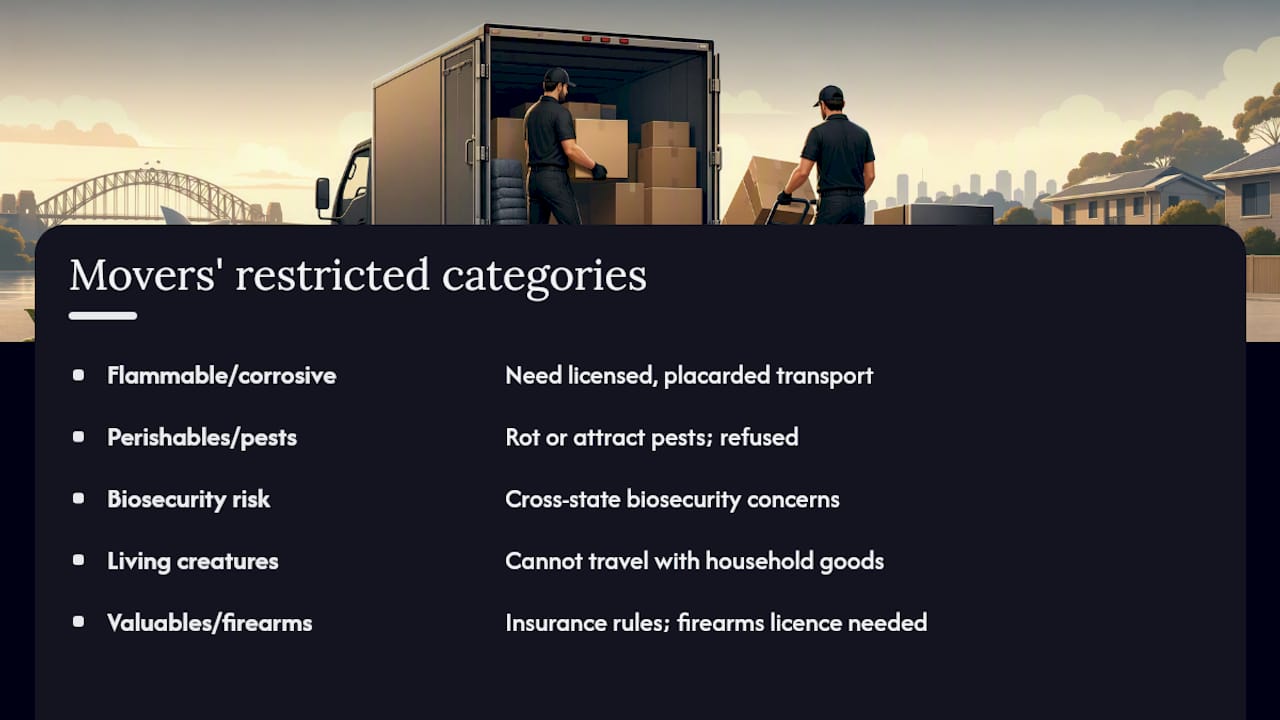
Movers routinely refuse hazardous goods, perishables, live plants and animals, firearms and explosives, and high-value items like cash and jewellery, along with certain lithium batteries. Most of these rules trace back to dangerous goods law, biosecurity regulation, or the gaps in standard transit insurance. Keep documents and valuables with you, and confirm your mover’s written policy before packing day.
TL;DR:
- Most hazardous chemicals, perishable foods, and live animals are routinely refused by movers due to legal, safety, and biosecurity restrictions.
- Lithium batteries, firearms, fireworks, and antiques require prior declaration, specialized handling, and often permits or certificates to move legally.
- Declaring restricted items early and booking specialist services in advance reduce the risk of delays, damage, or legal issues on moving day.
- Standard transit insurance usually covers only declared valuables within set limits, so high-value items should be personally carried or insured separately.
- Proper disposal of hazardous waste through licensed contractors and collection services is essential to prevent environmental harm and comply with regulations.
Every removalist in Australia works inside the same legal boundary: the Australian Dangerous Goods Code sets out what an unlicensed carrier can and cannot legally load onto a truck. That single fact explains most of the “no” list you’ll hit when you book a move. It isn’t the removalist being fussy. A standard furniture truck has no placarding, no spill containment, and no licence to carry classified dangerous goods, so anything that falls into those categories simply cannot travel with your lounge suite and dinner set.
The list breaks into a handful of practical groups: things that can catch fire or burn skin, things that rot or attract pests, things that carry biosecurity risk across state lines, living creatures, irreplaceable paperwork and valuables, and anything requiring a firearms licence. Each has its own regulator, its own paperwork, and its own workaround. Reputable industry guidance on commonly refused items lists nearly the same categories across the board, which tells you this isn’t one company’s house rule. It’s an industry-wide standard built around safety law, biosecurity law, and what a transit insurance policy will actually pay out on.
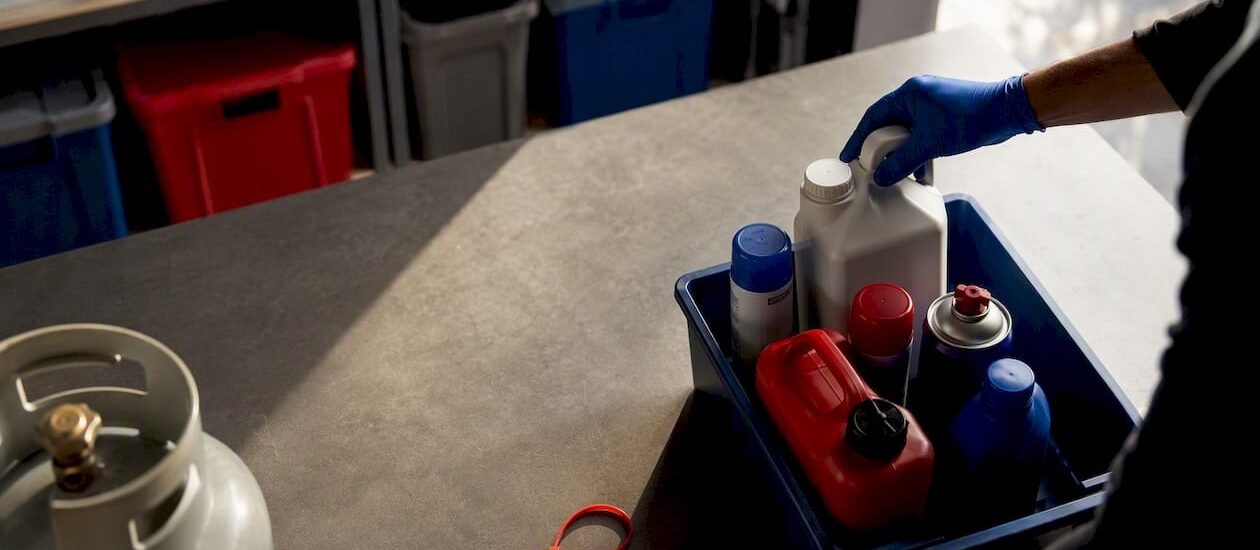
Petrol, paint thinners, turpentine, garden chemicals, pool chlorine, aerosol cans and LPG cylinders top the list of items a standard removal truck legally cannot carry. SafeWork SA’s guidance on transporting dangerous goods confirms why: household hazardous goods fall under the same classification system as industrial chemicals, and moving them requires licensing, placarding and specialist equipment that a furniture van simply doesn’t have.
The risk isn’t theoretical. A cracked container of pool chlorine sitting against a box of paperbacks for six hours on a truck can ruin an entire load, and it can void the transit insurance covering everything else in the vehicle. Corrosives, aerosols under pressure, and anything flammable pose a genuine risk to the crew as well as your goods, which is why removalists treat this category as a hard line rather than a judgement call.
Common household items removalists will decline include:
Gas cylinders catch people out more than anything else on this list. Size doesn’t change the classification: a tiny camping canister sits in the same regulatory basket as a full LPG bottle, and most removalist guides confirm cylinders need to be purged and certified before any carrier will touch them.
Pro Tip: Drain fuel from mowers, trimmers and generators a week before your move, not the night before. Most councils run a free household chemical collection a few times a year, and booking ahead beats discovering on moving day that you’re stuck with a shed full of banned items.
For anything left over, a licensed hazardous waste contractor or your local council’s chemical collection service is the safe route. Check your state’s environmental protection authority for exact drop-off rules, since they vary by council area.
Fresh produce, dairy, opened pantry staples and anything cooked sits on every removalist’s refusal list, and for good reason on a long-haul move. A truck travelling interstate can take a duration that risks spoilage, and food left in transit doesn’t just spoil. It attracts pests, leaves odours that linger in the cabin, and can contaminate other goods stored nearby.
There’s a biosecurity layer here too. Fresh fruit, vegetables, and certain packaged goods face restrictions when crossing into some states and territories, adding another reason perishables rarely make the cut for interstate removalists.
Items typically excluded from the truck:
The practical fix is usually the simplest one: plan your last supermarket shop well in advance of the move, rather than just before. Eat down your pantry, donate what’s left to a food bank or neighbour, and pack a cooler bag for the short-haul essentials that travel in your own car.
Pro Tip: If you’re relocating interstate and can’t bear to part with a full freezer, a refrigerated courier service is worth pricing out separately. It’s a small extra cost against replacing everything on arrival.
Plants sit in a strange middle ground: removalists don’t refuse them out of squeamishness, they refuse them because interstate plant movement is genuinely regulated. Soil, root systems, and untreated wood can all carry pests, fungal disease, or weed seeds that one state doesn’t want introduced from another. The Interstate Quarantine framework requires checking each destination state’s entry conditions, and some plant material needs formal certification before it’s allowed to travel at all.
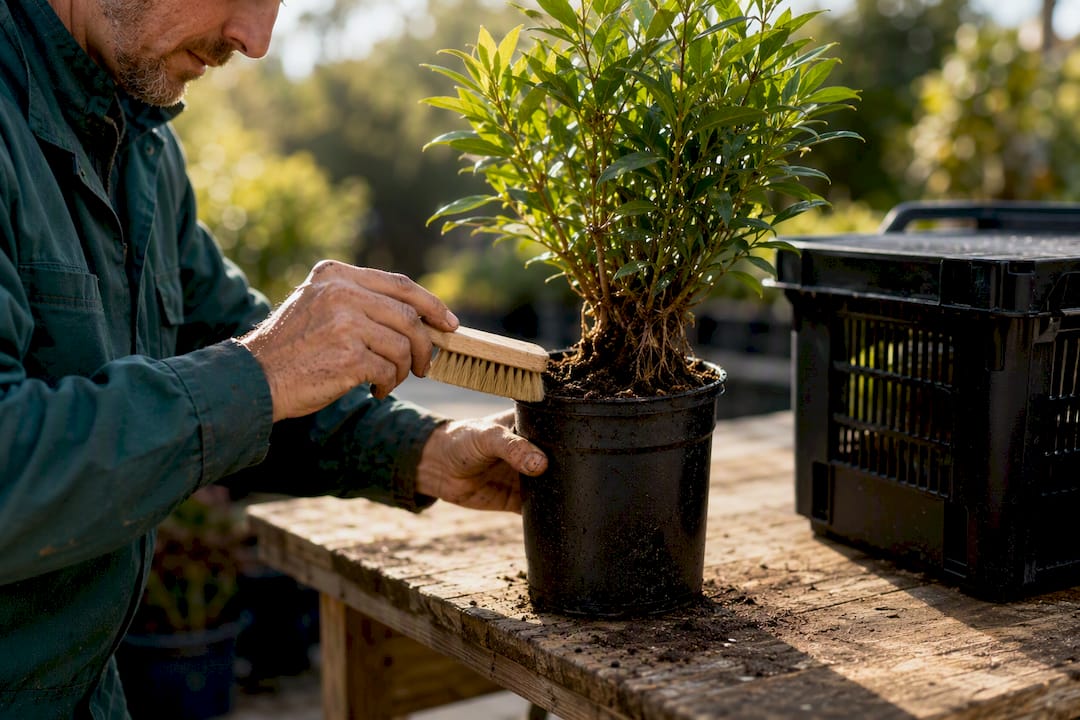
It’s not only living plants that trigger scrutiny. Outdoor furniture with soil residue, gardening tools, and pot plants with visible dirt can all get flagged, and Australia’s biosecurity guidance for personal effects warns that uncleaned items risk destruction or delay at inspection, even domestically.
If you’re determined to bring your plants with you, here’s the realistic path:
No removalist will put your dog, cat, or any live animal on a furniture truck, and it has nothing to do with liability paperwork. Trucks aren’t ventilated or temperature controlled for living creatures, and there’s no way to monitor an animal’s welfare mid-transit. Some interstate movements also require permits or vet certification that a moving company has no authority to arrange.
The better options:
Cash, jewellery, share certificates, wills, property deeds and family heirlooms need to travel with you, not on the truck, and the reason comes down to insurance. Standard transit cover typically excludes or caps liability for undeclared valuables at a modest per-item limit, which means a $15,000 diamond ring sitting undeclared in a shoebox is effectively uninsured if something goes wrong.
Items worth carrying personally rather than boxing up:
If a valuable is too large to carry personally, such as an art collection or a safe, declare it explicitly to your removalist and ask for written confirmation of what’s covered. A dedicated guide to moving valuables walks through how declaration and specialist courier insurance work together, and it’s worth reading before moving day rather than after something’s gone missing.
Pro Tip: Photograph every valuable item before it’s packed, including any serial numbers or hallmarks. It costs five minutes and makes a world of difference if you ever need to file an insurance claim.
Small household batteries in a remote control or a torch aren’t the concern. It’s large lithium packs, e-bike batteries and hoverboard batteries that cause the real fire risk, and safety guidance from major carriers consistently flags these for special handling rather than standard transport.
The safest approach is removing these batteries entirely and carrying them yourself, following the manufacturer’s transport guidance for the specific cell type. Airlines have well-established rules for lithium battery transport that make a useful reference point even for a road move.
Firearms transport is governed by state and territory firearms law, not by your removalist’s preference. Guns generally must travel unloaded, locked, and under the authority of a licensed transporter, and ammunition is routinely prohibited from general freight altogether.
Pianos, pool tables, hot tubs, home gym equipment and heavy machinery aren’t strictly banned, but most standard crews can’t handle them without warning. These items need extra hands, sometimes crane hire, and often disassembly and reassembly by someone who knows the equipment.
Book a specialist quote well ahead of moving day so the right crew size and equipment turns up, rather than discovering on the day that your piano needs a second truck.
The moment you spot something on this list while packing, deal with it early rather than hoping it’ll sort itself out.
Pro Tip: Run through your restricted-items list two weeks out, not two days out. Chemical collection services and specialist couriers often need advance booking, and you don’t want to be stuck holding a tin of paint thinner an hour before the truck arrives.
For general questions about state-specific rules, the ADG Code documentation and your state’s biosecurity regulator are the two most reliable starting points, alongside whatever written policy your removalist provides.
Most professional removalists run a pre-move survey, partly to quote accurately and partly to flag hazardous or high-value items before truck day. It’s your chance to mention the pool chemicals in the shed or the jewellery collection in the wardrobe.
Getting this in writing avoids the worst conversation in the industry: the one that happens after something’s gone wrong, when it turns out the item was never covered at all.
Every specialty removal starts with the same conversation: what exactly are we moving, and does it need special handling. Professional removal companies arrange storage, packing and unpacking, and disposal assistance for households working through exactly this kind of restricted-items sort. Declare hazardous, valuable or oversized items early, ideally at quote stage, so the right crew, equipment and insurance cover are locked in before moving day rather than negotiated on the truck.
Genuine antiques, cultural artefacts, and items with heritage or export significance sometimes need more than a careful packer. Certain artworks, Indigenous cultural items, and antiques over a certain age can fall under export permit requirements if you’re moving them out of the country, and some heritage-listed items face domestic movement restrictions too.
If you own anything that might qualify, in doubt, check with the relevant cultural heritage authority before booking a move rather than after. A misclassified item held up at a border or port can add weeks to a relocation timeline. For interstate moves within Australia, this is rarely an issue, but valuable antiques still deserve the same declaration and insurance treatment as any other high-value item; specialist courier insurance is usually the safer bet over standard transit cover.
Practical steps if you’re unsure whether an item qualifies:
International relocations add a layer that domestic moves never touch: customs law in both the country you’re leaving and the one you’re entering. Food, plants, wooden items, and anything with soil residue face the strictest scrutiny, and Australia’s own biosecurity rules mean returning residents need to declare these items carefully or risk having them destroyed at the border.
Firearms, certain medications, and some electronics also attract customs restrictions that vary significantly by destination country. What’s a routine household item in one country can be a restricted import in another, so blanket assumptions don’t hold up well here.
The safest approach for an international move is treating your customs declaration the same way you’d treat a dangerous goods declaration: thorough, honest, and done early. Most freight forwarders handling international household moves will run through a checklist with you before the container ships, and it’s worth using that checklist rather than assuming your domestic packing habits will translate.
Hazardous household waste doesn’t just disappear because a removalist won’t carry it. Paint, chemicals, batteries and old electronics all need proper disposal, and tipping them into general rubbish creates genuine environmental harm, from groundwater contamination to landfill fires caused by damaged lithium cells.
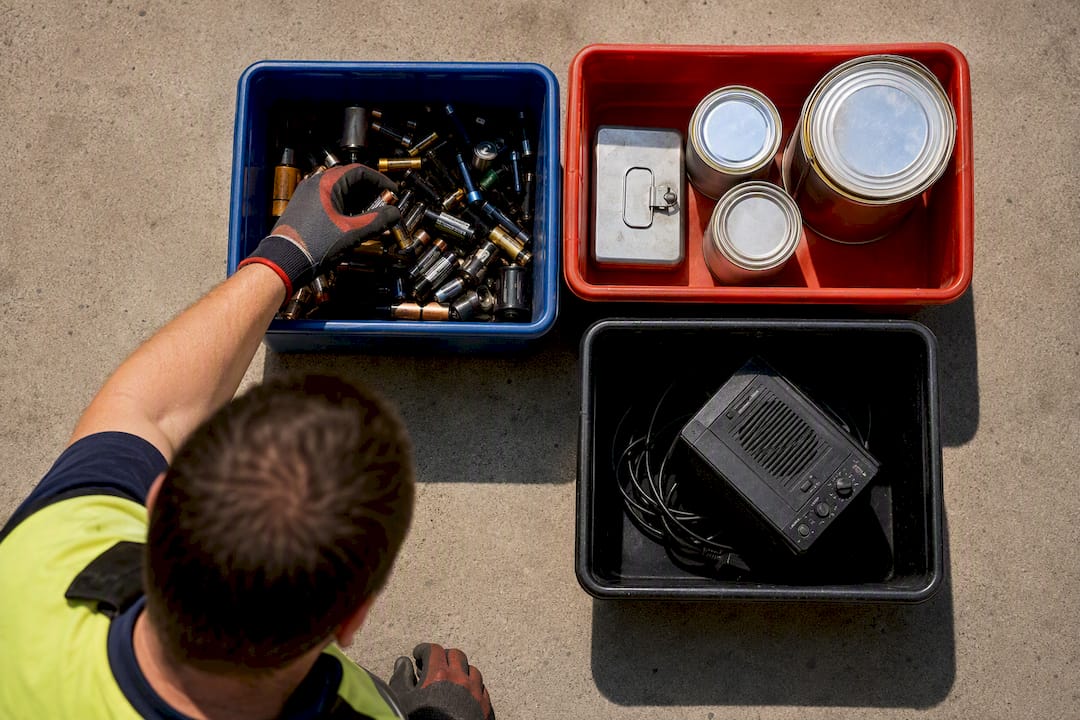
Most councils run dedicated household chemical collection days, and many offer year-round drop-off points for paint, batteries and e-waste. Using these services instead of pouring chemicals down a drain or binning old batteries isn’t just about compliance, it’s about not leaving a mess for someone else to deal with down the track.
If you’re relocating a business or clearing out a larger property, a licensed waste contractor can handle bulk hazardous disposal in one go, which is usually faster and safer than multiple trips to a council drop-off point.
For state and territory dangerous goods classifications, start with the ADG Code. For biosecurity and personal effects rules, DAFF’s guidance covers cleaning and declaration requirements, while Interstate Quarantine covers plant certification between states. For general pre-move preparation, Onyx Removals’ essential moving checklist is a practical companion.
Households dealing with pest issues before a move, particularly around outdoor furniture or garden tools that need biosecurity cleaning, may also find a pest-proofing checklist useful groundwork before packing day.
If any of this has turned up more restricted or specialist items than you expected, a proper quote sorts out the plan quickly. Onyx Removals handles residential and commercial moves across Melbourne and can arrange specialist handling for anything on this list that needs extra care, from oversized furniture to declared valuables.
The households that avoid moving-day surprises are the ones who read their restricted items list before the truck turns up, not after. Get a proper survey done, declare what needs declaring, and if something on this list has you stuck, ask for a specialist quote rather than guessing your way through it.
— Dinshaw

No Related Post


