



TL;DR:
- Shared removal services combine multiple customers’ belongings into one vehicle, reducing costs by 30–50 percent. They follow route-based schedules, with delivery windows that can extend up to 30 days, requiring flexibility. They are ideal for small moves like studios or small offices seeking affordable options with environmental benefits.
A shared removal service is defined as a transport arrangement where multiple customers combine their belongings into a single vehicle, each paying only for the cubic space their items occupy. Also known in the industry as a consolidated or shared load removal, this model cuts the cost of shared removal services by 30–50% compared to booking a dedicated truck. That saving comes from splitting transport and labour costs across several customers rather than one. For anyone moving a studio, a one or two bedroom apartment, or a small office, a shared moving service is often the most practical and budget-conscious option available.
The process begins at the booking stage, where a removalist schedules your items alongside those of other customers travelling in the same direction or along the same route. Your belongings are collected, loaded, and consolidated with other shipments in a single truck or container. Each customer’s items are kept separate throughout the journey.
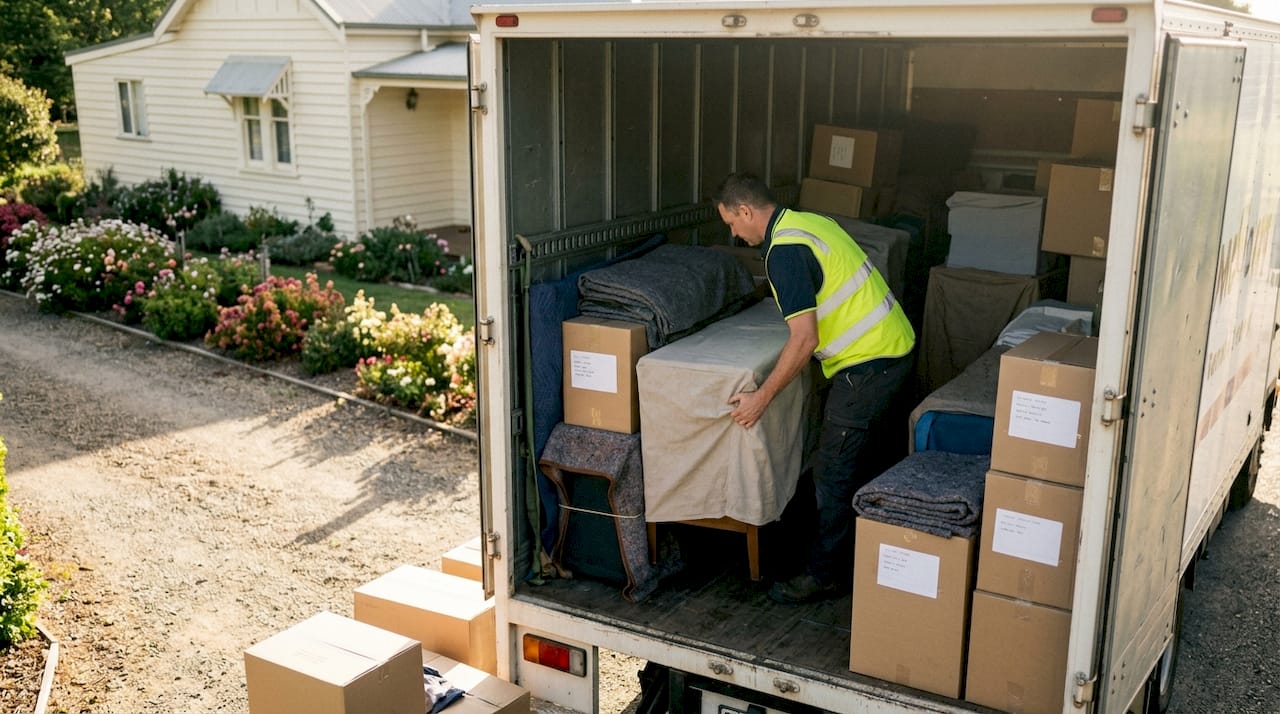
Professional providers use individual item labelling and, in many cases, patented separation systems to prevent any mixing of goods. This level of care matches the handling standards of a dedicated removal. GPS tracking is now standard with quality operators, giving customers visibility over their shipment at every stage.
Scheduling works differently from a dedicated removal. Departure dates are set based on route optimisation rather than your preferred date alone. Some providers operate on a departure cycle of every 2–3 weeks, so your move date needs to align with the next available consolidated load. Total transit times vary by distance, but customers should plan for a flexible delivery window rather than a fixed arrival date.
Here is the typical process from start to finish:
Pro Tip: Ask your removalist for the exact departure schedule before you commit. Knowing the next three departure dates lets you plan your move-out and move-in dates without last-minute stress.
For group moves such as student or flatmate relocations, a single combined booking is common. One person books and pays, then the group splits the cost internally. This simplifies administration and keeps the process clean.
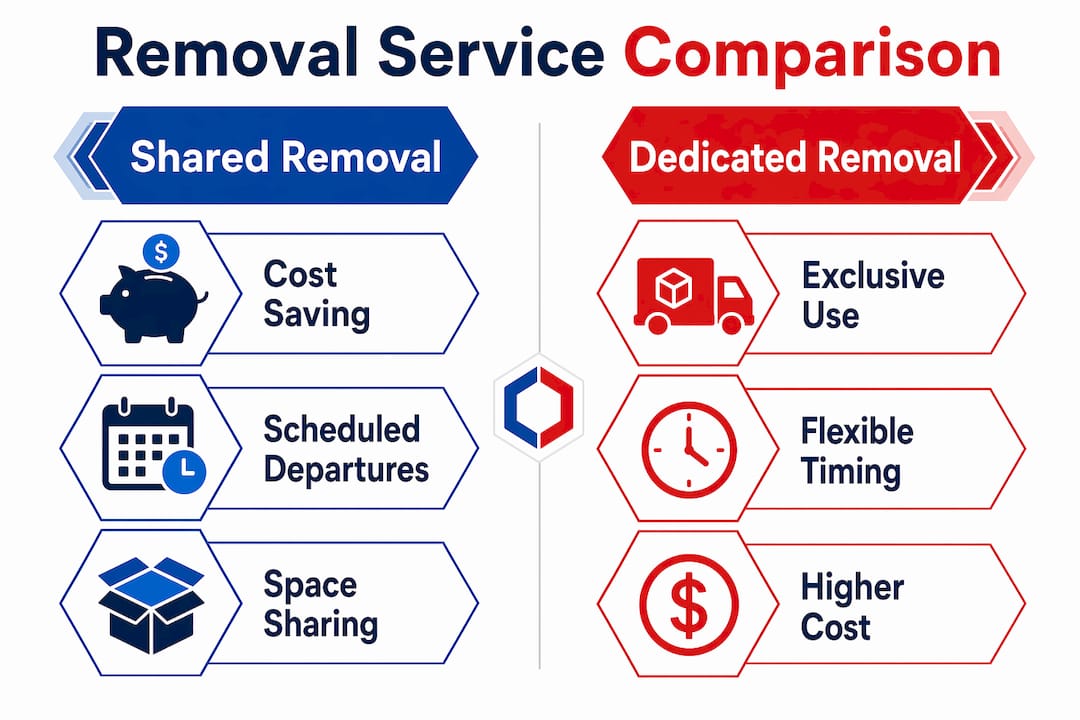
Shared removals deliver clear financial advantages. Because you pay only for the space your belongings occupy, a small move costs a fraction of what a full truck would. The 30–50% cost reduction is the headline figure, and it holds true for studios and one to two bedroom apartments in particular. That saving is real money, not a marketing estimate.
The environmental case is equally strong. Consolidated trucking reduces carbon emissions by an average of 63% per shipment by eliminating multiple individual vehicle trips. For customers who want to reduce their environmental footprint without paying a premium, a shared transport service is the most direct way to do it.
The key benefits at a glance:
The limitations are real and worth understanding before you book.
The right choice depends on your volume, budget, and how fixed your dates are. Use a moving budget calculator to compare the real cost difference before deciding.
The core difference between shared and dedicated removals is control versus cost. A dedicated truck is yours alone. It departs when you need it, arrives when agreed, and carries nothing but your belongings. That certainty costs more because you pay for the entire vehicle regardless of how full it is.
A shared load service trades some of that control for a significantly lower price. The vehicle departs on a schedule that suits the consolidated load, not just you. Delivery falls within a window rather than on a specific day.
| Feature | Shared removal | Dedicated removal |
|---|---|---|
| Cost | Pay for space used only | Pay for full vehicle |
| Departure timing | Route-based schedule | Your chosen date |
| Delivery window | Flexible, often days to weeks | Fixed or near-fixed |
| Best for | Small to medium moves | Large households or offices |
| Environmental impact | Lower emissions per move | Higher emissions per move |
| Item security | Separation systems and GPS | Exclusive vehicle access |
The choice between shared and dedicated removals balances cost efficiency with delivery timeline certainty. Dedicated trucks suit large or time-sensitive moves. Shared loads suit customers with volume under a full truck and some flexibility in their schedule.
Pro Tip: If your move is under 20 cubic metres, get quotes for both options. The price gap is often large enough that a shared load pays for professional packing and still comes in cheaper than a bare-bones dedicated truck.
Some advanced providers use a hub-and-spoke transit system that can match or beat budget dedicated movers on delivery speed for certain routes. The assumption that shared always means slower is not always accurate.
Getting full value from a shared moving service starts before the truck arrives. The less you move, the less you pay. Decluttering before a move directly reduces your cubic volume, which lowers your quoted price and shrinks your carbon footprint at the same time. Removing items you no longer need is the single highest-return preparation task for any shared load move.
Practical steps to maximise value:
Pro Tip: Pack your boxes to a consistent size and weight. Uniform cartons stack more efficiently, which reduces the cubic space your load occupies and can lower your final cost.
Reducing volume through sustainable packing practices also means fewer cartons to buy, less waste to dispose of, and a cleaner move overall. Every cubic metre you eliminate is money back in your pocket.
A shared removal service is the most cost-effective option for small to medium moves, cutting costs by 30–50% while reducing emissions, provided customers can work within a flexible delivery schedule.
| Point | Details |
|---|---|
| Cost savings are significant | Shared loads cost 30–50% less than dedicated vehicles by charging for space used only. |
| Environmental benefit is measurable | Consolidated transport reduces carbon emissions by an average of 63% per shipment. |
| Timing requires flexibility | Departures follow route schedules, so fixed settlement dates suit dedicated removals better. |
| Best suited to smaller moves | Studios and one to two bedroom apartments get the greatest value from shared loads. |
| Preparation reduces cost further | Decluttering and accurate volume measurement directly lower your quoted price. |
People often assume shared removals are a budget compromise. The reality is more interesting. Clients who use professional shared load services with GPS tracking and guaranteed departures return for repeat bookings at a 72% rate. That is not the behaviour of customers who felt they settled for less.
The misconception I see most often is that shared means careless. In practice, the separation and labelling protocols used by quality operators are as thorough as anything used in a dedicated removal. The difference is the truck, not the care taken with your belongings.
Where shared removals genuinely fall short is on timing certainty. If your lease ends on a specific date and your new place is available the next morning, a shared load’s flexible window creates real risk. That is not a flaw in the service. It is simply the wrong tool for that situation.
My honest view is that most people moving a one or two bedroom home in Melbourne are overpaying for a dedicated truck they do not need. The shared truck moving guide from Onyx Removals is worth reading before you commit to either option. Shared removals have become genuinely sophisticated, and the gap between them and dedicated services has narrowed considerably.
— Dinshaw
Onyx Removals provides professional moving services across Melbourne, including shared load options for residential and commercial clients who want cost-efficient, well-managed relocations.
The team at Onyx Removals handles everything from volume assessment and packing and unpacking to scheduling and delivery coordination, so your shared move runs to plan. Whether you are moving a studio apartment or clearing a small office, the process is straightforward and the pricing is transparent. Onyx Removals tailors each move to the customer’s timeline and budget, with flexible scheduling that works around consolidated departure dates. Get in touch through the Melbourne moving services page to request a quote and find out which option suits your move best.
A shared removal service combines the belongings of multiple customers into one vehicle, with each customer paying only for the cubic space their items use. It is also called a consolidated or shared load removal.
Shared load removals typically cost 30–50% less than dedicated vehicle services. The saving comes from splitting transport and labour costs across multiple customers.
Professional providers use individual labelling, physical separation systems, and GPS tracking to keep each customer’s items secure and separate throughout transit.
Delivery timelines depend on the route and the provider’s departure schedule. Some providers offer delivery windows of up to 30 days from the pickup date, so flexibility in your schedule is important.
Shared removals suit people moving studios, one to two bedroom apartments, or small offices who have some flexibility in their delivery timeline and want to reduce their moving costs significantly.

No Related Post


