



Relocating a warehouse is one of the most operationally demanding projects a Melbourne business manager will ever face. Unlike a standard office move, you are coordinating heavy machinery, thousands of SKUs (stock keeping units), staff safety, lease obligations, and client commitments, all at once. Get it wrong and you risk days of lost productivity, damaged stock, and strained supplier relationships. Get it right and your business barely misses a beat. The tips below walk you through every stage of a successful warehouse relocation, from setting clear objectives to handing back the keys on your old site.
| Point | Details |
|---|---|
| Start with a clear plan | Detailed objectives, assigned roles, and timeline greatly reduce the risk of costly delays. |
| Inventory and labelling are vital | Thorough sorting and systematic labelling help prevent lost or damaged stock during a move. |
| Invest in proper materials | Adopting the right packing materials and safety gear minimises loss and injury. |
| Use professional machinery movers | Engaging experts for heavy equipment relocation cuts risk and disruption. |
| Don’t skip compliance steps | Final cleaning, documentation, and compliance checks ensure a smooth handover. |
With those challenges front of mind, the first step is getting crystal clear about your move’s goals and structure. Without defined objectives, even a well-resourced relocation can spiral into confusion and cost overruns.
Start by writing down your three non-negotiables. For most warehouse managers, these are: minimise downtime, protect stock integrity, and keep staff safe throughout the process. Once those are locked in, every decision you make, from which removalist to hire to which items move first, should be measured against them.
Break the project into four distinct phases:
Assign a named person responsible for each phase. Vague ownership leads to gaps. Communicate the full plan to your team, key suppliers, and major clients at least four weeks before the move date. Surprises erode trust.
Always build buffer time into your schedule. Setting a timeline for major business moves reduces average downtime by 30%, yet most managers underestimate how long packing alone takes. Add at least 20% extra time to each phase estimate.
For more practical guidance on organising a warehouse layout and workflow before and after a move, that resource will save you hours of rework.
“The move plan is not a document you write once and forget. It is a living schedule that gets reviewed weekly as the move date approaches.”
Pro Tip: Colour-code your timeline by phase and pin it somewhere every team member can see it. Visibility drives accountability.
Once your objectives and timelines are in place, focus shifts to the heart of any warehouse, the inventory.
Begin with a full stock audit. Walk every aisle and reconcile physical counts against your warehouse management system (WMS). This is your chance to identify obsolete stock, expired goods, and items that should be disposed of rather than moved. Moving less is always cheaper and faster than moving more.
Categorise your stock into three groups:
Label every carton and pallet with a unique barcode or QR code that maps back to your WMS. Handwritten labels fade, smudge, and get misread under pressure. Digital tracking gives you a real-time view of where every item is throughout the move.
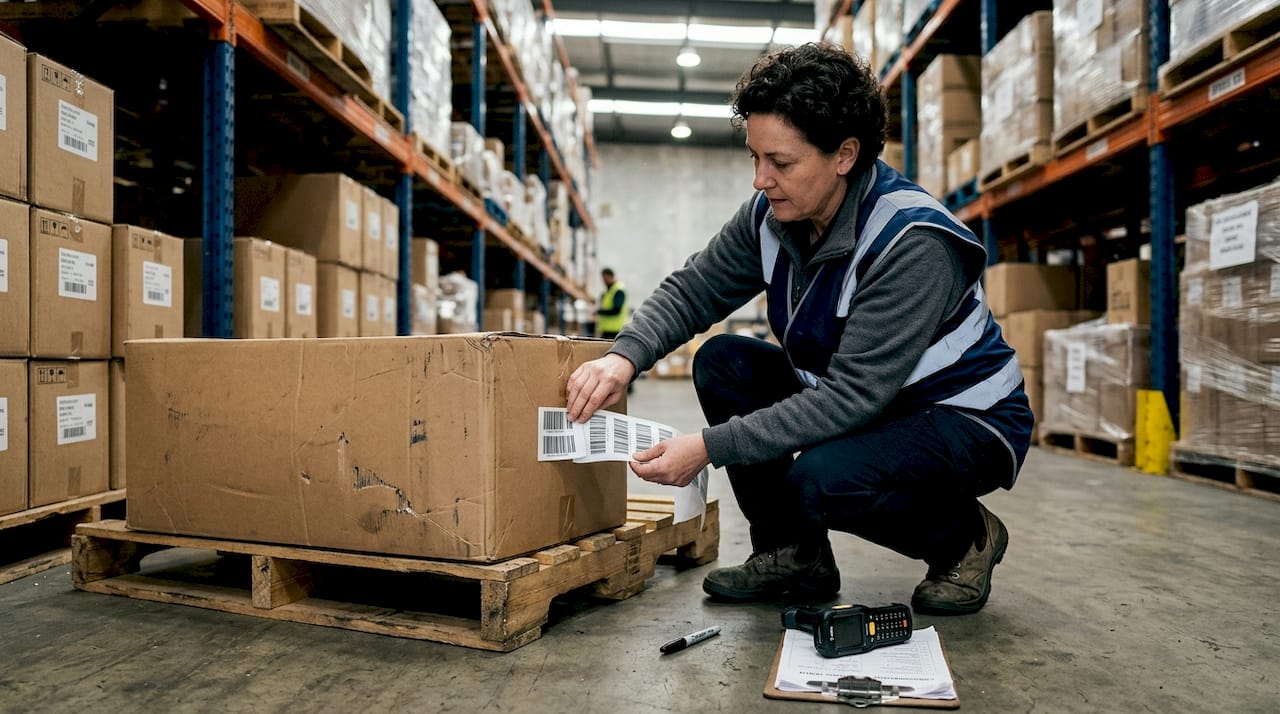
Preparing warehouse inventory before a large-scale transfer mitigates loss and confusion that would otherwise cost you days of reconciliation work after arrival.
| Stage | Inventory status | Action required |
|---|---|---|
| Before move | Full audit complete | Categorise, label, flag disposals |
| During move | Items in transit | Track via WMS or barcode scan |
| After move | Goods at new site | Verify counts, update system records |
Secure critical documents, such as supplier contracts and compliance certificates, in a clearly labelled, lockable container that travels with a designated staff member, not on the general freight run.
Pro Tip: Use your organising systems review as an opportunity to redesign your new warehouse layout for better pick efficiency before the first box arrives.
With inventory sorted, the next essential is to pack and transport that inventory safely.
Not all packing materials are equal. For a warehouse move, you need supplies rated for the specific weights and dimensions of your goods. Using undersized cartons for heavy stock is one of the most common causes of damage claims.
Essential supplies for a warehouse relocation include:
Melbourne warehouses faced a 15% loss rate during moves when using low-quality materials. That figure triples when staff also lack basic handling training. The cost of proper materials is always less than the cost of a damage claim.
Investing in essential packing supplies and refresher safety training for your team significantly reduces item loss and damage rates across the board.
For the physical handling side, ensure all staff involved in the move have access to pallet jacks, trolleys, gloves, and high-visibility vests. Run a 30-minute safety briefing before the move begins. Cover manual handling techniques, load limits, and emergency procedures. For guidance on moving heavy items safely, that resource covers posture, equipment use, and team-lift protocols in detail.
Pro Tip: Order 15% more packing materials than your estimate. Running out mid-pack on move day is a costly and avoidable delay.
With standard goods prepared, attention turns to the handling of large-scale and specialist machinery and equipment.
Machinery is where warehouse moves get genuinely complex. A forklift, a conveyor system, or a heavy press cannot be handled the same way as a pallet of boxed goods. Improper handling risks serious injury, equipment damage, and regulatory penalties.
Always engage licensed, insured removalists for any asset that requires disassembly, crane lifting, or specialised rigging. Check that their public liability and goods-in-transit insurance covers the full replacement value of your equipment. Ask for written confirmation before the move date.
Using professional machinery movers not only reduces risk to equipment but also minimises business disruption by ensuring assets are reconnected and operational faster.
For oversized loads on Melbourne roads, you may need a permit from VicRoads. Your removalist should handle this, but confirm it in writing as part of the contract.
Schedule machinery moves before the main stock run. Use this sequence:
| Factor | DIY removal | Professional removal |
|---|---|---|
| Cost | Lower upfront | Higher upfront, lower total risk |
| Insurance cover | Typically none | Goods-in-transit included |
| Downtime risk | High | Low |
| Injury risk | Significant | Managed and mitigated |
| Compliance | Self-managed | Handled by licensed operators |
For goods that need extra care during transit, the guide on transporting fragile goods applies equally well to sensitive equipment components.
Once equipment and stock are at the new site, a successful move concludes with thorough compliance and handover steps.
Many managers treat the old site as an afterthought once the last truck leaves. This is a costly mistake. Lease agreements almost always include reinstatement and cleanliness obligations, and failing to meet them can result in bond deductions or legal disputes.
Follow these steps to vacate cleanly and compliantly:
Thorough exit cleaning and documentation protect both parties during commercial property handovers and reduce the risk of disputes over bond or damage claims.
Once the old site is handed back, shift focus to your new warehouse with these post-move tasks:
“A signed condition report at handover is your single strongest protection against retrospective damage claims. Never hand back keys without one.”
For a structured approach to the cleaning component, the move-out cleaning checklist covers every area of a commercial premises in the correct order.
Beyond the steps, hard-earned wisdom can make or break your next move.
After working through dozens of Melbourne warehouse relocations, the pattern is clear. Most failures do not come from a lack of labour or equipment. They come from skipped communication and zero contingency planning. A manager assumes the new site’s loading dock can handle their largest truck. It cannot. They assume staff know the plan. They do not.
The most efficient moves we have seen share one habit: a rehearsal run. Before move day, the coordinator walks the new site with the removalist team, maps every access point, and identifies bottlenecks. This single step eliminates the majority of on-day surprises.
Another overlooked step is the post-move debrief. Within a week of settling in, gather your team and ask three questions: what worked, what did not, and what would you do differently? The answers sharpen your process for the next time and often reveal small issues before they become expensive ones.
For a broader view of how warehouse relocations compare to other commercial moves, the commercial move guide offers useful context on scope, cost, and planning differences.
The managers who struggle most are those who treat a warehouse move as a bigger version of an office move. It is not. It is a logistics project that demands the same rigour as any major operational change.
Planning a warehouse relocation in Melbourne is a serious undertaking, and the difference between a smooth move and a costly disruption often comes down to who is managing the process.
Onyx Removals brings structured commercial relocation project management to every warehouse move, covering everything from inventory preparation and specialist transport to cleaning and compliance. Our team understands the operational pressures Melbourne warehouse managers face and builds move plans around your schedule, not ours. Whether you need full-service support or targeted help with a specific phase, explore our approach to Melbourne corporate moves or browse our full range of moving services to find the right fit for your relocation.
Detailed pre-planning reduces risks and downtime significantly. Start at least three to six months before your scheduled move date to allow for thorough inventory preparation, team coordination, and supplier notifications.
Item loss and downtime are the most commonly reported risks during poorly managed moves. Both are largely preventable with proper labelling, digital tracking, and a clear move-day schedule.
It is strongly recommended to use licensed, insured professionals for heavy machinery. Improper handling can lead to serious injury, equipment damage, and significant business disruption that far outweighs any cost saving.
Clean the premises thoroughly, complete signed inventory and condition reports, and finalise all lease and compliance documents before handover. A structured cleaning checklist ensures nothing is missed during this critical final stage.

No Related Post


