



TL;DR:
- Planning a home move involves choosing the right truck size to avoid wasted space or multiple trips across Melbourne’s streets.
- Understanding rental options, costs, and hidden fees helps ensure a smooth relocation experience with fair pricing and reliable service.
Planning a home moving truck rental is one of those tasks that looks straightforward until you are standing in a car park next to a vehicle that is clearly too small for your three-seater sofa. The term “truck rental” is used loosely in everyday conversation, but the industry calls these self-drive removal vehicles, and understanding the difference between sizes, contracts, and pricing structures will save you real money. Whether you are shifting a studio flat in Fitzroy or a four-bedroom house in the outer suburbs, this guide covers every decision point so you choose the right vehicle, pay a fair price, and actually enjoy moving day.
| Point | Details |
|---|---|
| Match truck size to your home | Use the standard size guide: 10 ft for studios, up to 26 ft for four-bedroom homes to avoid multiple trips. |
| Local vs one-way rental matters | Local rentals suit short Melbourne moves; one-way contracts work best for interstate or cross-suburb relocations. |
| Hidden fees add up fast | Fuel, insurance, and extension charges can double your base rate if you do not read the rental agreement carefully. |
| Book early for better pricing | Demand spikes on weekends and at month-end in Melbourne; booking ahead secures better rates and vehicle availability. |
| Bigger is not always better | A truck one size up costs roughly $10 to $30 more per day, but unnecessary extra size creates parking and access problems. |
The single most consequential decision you will make about your self-drive removal vehicle is the size. Get it wrong and you either pay for wasted space or you make two trips across Melbourne in peak-hour traffic. Neither outcome is fun.
Standard truck size recommendations break down like this:
| Truck size | Cargo capacity | Best suited for |
|---|---|---|
| 10 ft | Approx. 380 cu ft | Studio or one-bedroom flat |
| 15 ft | Approx. 760 cu ft | Two-bedroom home |
| 20 ft | Approx. 1,020 cu ft | Three-bedroom home |
| 26 ft | Approx. 1,700 cu ft | Four-bedroom home or larger |
These figures are a starting point, not a guarantee. Volume calculations do not tell you whether a king-size bed frame will make it through the loading ramp or whether a large sectional sofa will sit flat without crushing boxes underneath. Truck size choice should factor in loading path dimensions and your largest furniture pieces, not just the cubic footage on the spec sheet. Measure your bulkiest items before you book.
There is also the question of parking and street access. A 26 ft truck in a narrow Carlton laneway is a genuine headache. If your street has overhead power lines, parked cars on both sides, or a tight driveway, a slightly smaller vehicle that you load more creatively will serve you better than a large one you cannot position properly.
Pro Tip: Going one size up typically costs $10 to $30 more per day. That is almost always cheaper than a second trip, which adds fuel, extra mileage charges, and hours to your moving day.
For a detailed breakdown of large truck rental options in Melbourne, including how sizing choices affect your total cost, it is worth reading through the full comparison before you commit.
Not all rental contracts work the same way, and this is where many Melbourne movers get caught out. There are two main structures: local (in-town) rentals and one-way rentals.
Local rentals are priced on a daily rate plus a per-kilometre fee. You pick up the truck and return it to the same depot. They are ideal for moves within Melbourne, short-distance suburban shifts, or situations where you have time to load over multiple days. Local rentals can start as low as $19.95 for smaller vehicles, though Melbourne-specific pricing will differ from international benchmarks.
One-way rentals work differently. You collect the truck from one location and drop it at another. This structure suits interstate relocations or moves where returning to the original pickup point is impractical. One-way pricing is typically a flat rate that includes a set number of days and kilometres, after which extension fees apply. The cost of extending a one-way rental by a day can vary significantly between providers, so reading the fine print before signing matters.
Key factors to weigh when choosing your rental type:
Pro Tip: For one-way moving van rental, always book a buffer day into your contract. Delays in packing, traffic, or access issues are common, and paying for a planned extra day upfront is far cheaper than a last-minute extension.
For a full breakdown of one-way moving costs in Melbourne and how to estimate your total spend before you commit, the Onyx Removals guide is worth bookmarking.
“Cheap” and “reliable” are not mutually exclusive when it comes to self-drive removal vehicles, but you do need to know what to compare. The base rental rate is just one number. The real cost includes fuel, insurance, equipment hire, and any fees buried in the rental agreement.
Local moving truck costs range broadly depending on truck size, provider, and timing. A small local rental might cost $20 to $80 per day, while a large one-way truck for an interstate move can run well over $1,000 when you factor in fuel and insurance. The goal is not to find the cheapest sticker price. It is to find the best total value.
Here is a practical process for securing the best price on your rental:
For a direct comparison of Melbourne providers and how to save on your rental, the Onyx Removals resource covers current options and rate structures in detail.
Reviews matter more than you might think. A provider with slightly higher rates but excellent customer service is worth more on moving day than a discount operator who leaves you stuck with a maintenance problem and no support line.
Having the right truck means nothing if you load it badly. Packing and loading strategy directly affects whether everything fits, whether anything breaks, and whether you finish before sunset.
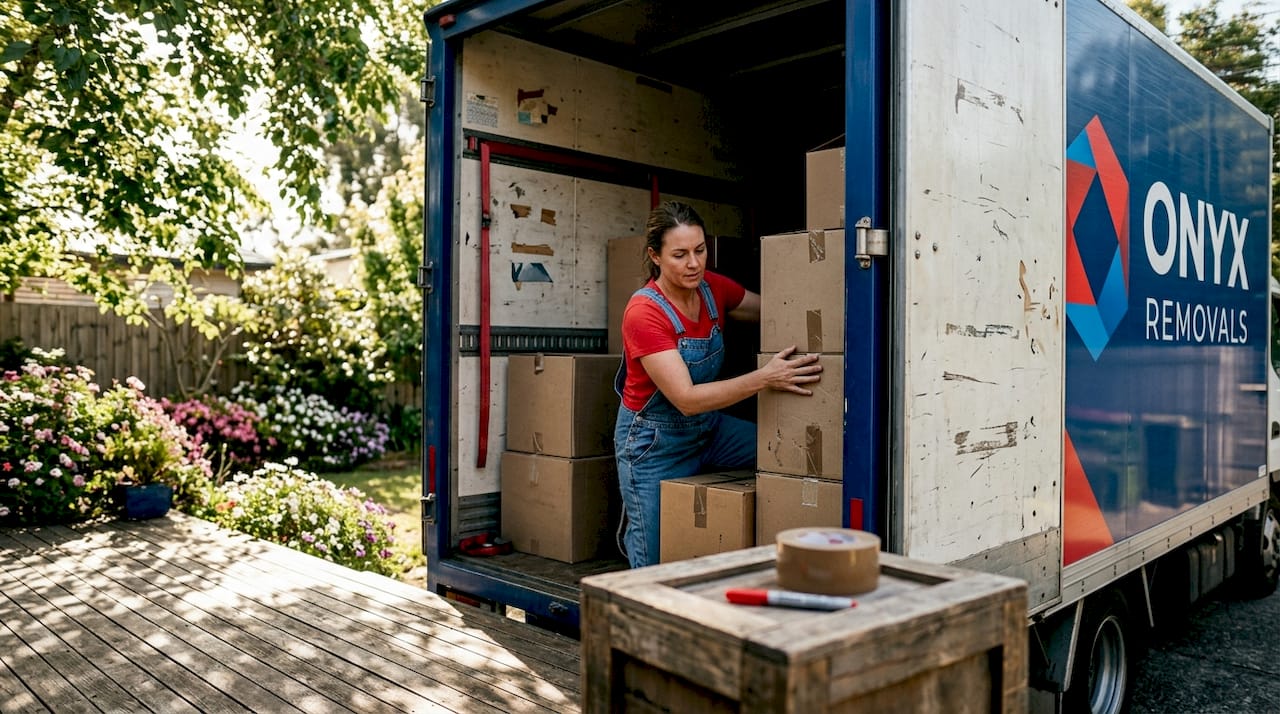
Start by measuring your largest furniture pieces, particularly bed frames, sofas, wardrobes, and appliances. Cross-reference those dimensions against the truck’s interior height and ramp width. It sounds obvious, but many DIY moving mistakes come from ignoring practical logistics until loading day.
Practical tips for a smoother moving day:
Pro Tip: Before you leave your old address, take photos of the truck’s interior and exterior. This protects you against disputed damage claims when you return the vehicle.
Moving day safety deserves its own attention. Read through this guide on moving day safety tips before you lift a single box. Back injuries from poor lifting technique are the most common moving-day setback, and they are entirely avoidable.
You might also want to know what not to pack before loading the truck. Certain items, including aerosols, flammable liquids, and some cleaning products, are prohibited in rental vehicles.
Not every Melbourne move needs a full-size rental truck. Depending on the volume and nature of your load, there are alternatives worth considering.
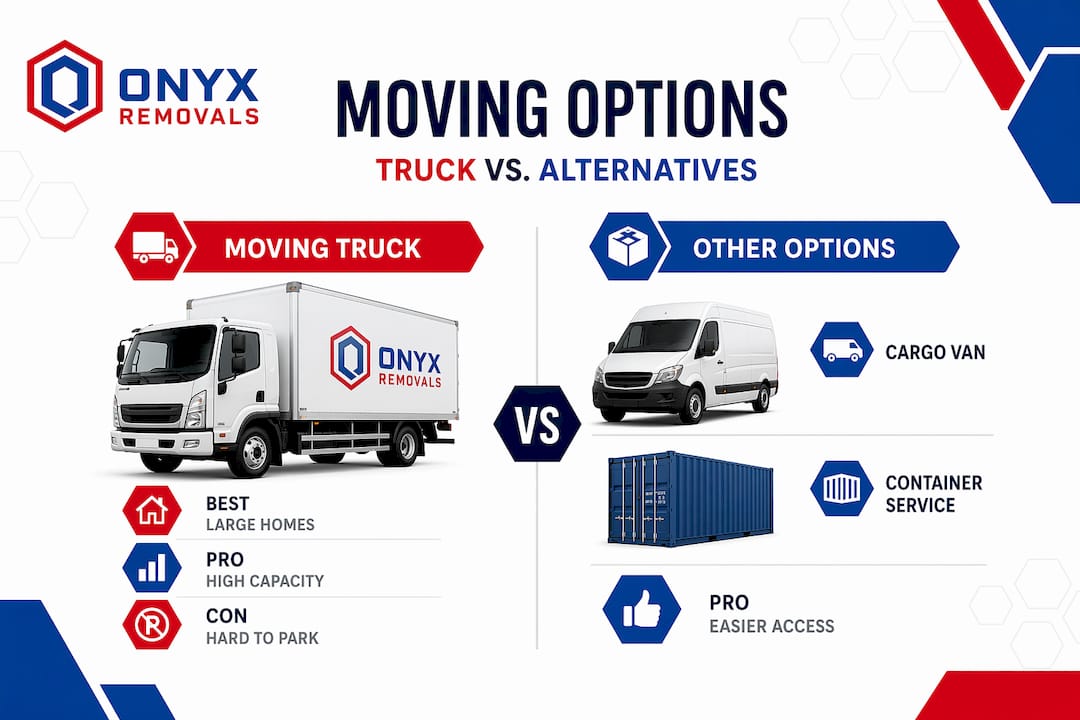
| Option | Best for | Pros | Cons | Approx. cost |
|---|---|---|---|---|
| Cargo van | Studio or small flat | Easy to drive, fuel-efficient | Limited capacity | $60 to $120/day |
| Trailer rental | Bulky single items | Low cost, tow with own vehicle | Requires tow bar, no cab | $40 to $80/day |
| Portable container | Flexible timelines | Load at your pace, storage option | Requires delivery scheduling | $200 to $400+ |
| Professional movers | Time-poor or complex moves | No driving, full service | Higher cost | Quote-based |
Cargo vans are genuinely underused for small Melbourne moves. A 9-foot cargo van carries up to 246 cubic feet of load and seats two adults. For a studio flat or a one-bedroom unit with minimal furniture, a cargo van is easier to drive, cheaper to fuel, and simpler to park than even a 10 ft truck. For guidance on van rental for smaller moves, there is a dedicated Melbourne-focused resource that covers pricing and vehicle options.
Portable container services are worth considering if your move involves a storage gap. You load the container at your current address, it gets stored, then delivered to your new address when you are ready. This is particularly useful for Melbourne movers waiting on settlement dates or rental handover timing.
If you are weighing whether to go the DIY route at all, the comparison of DIY vs professional moving lays out the real cost and effort differences honestly.
I have seen a lot of Melbourne moves go sideways because of two predictable mistakes: choosing a truck size based on gut feel rather than measurement, and underestimating how much the practical logistics matter once you are on the road.
The “bigger is safer” instinct is understandable but often wrong. A 26 ft truck sounds reassuring right up until you cannot get it down your street, cannot fit it in the supermarket car park when you stop for lunch, and cannot return it to the depot without a three-point turn that takes seven attempts. Sizing up is smart. Sizing up two or three categories because you are nervous is not.
What I have found actually helps is doing a rough inventory before you book. Count your furniture pieces, estimate your box count, and use that against a size chart rather than a vague sense of how much “stuff” you have. Most people are surprised to find they need a smaller truck than they assumed.
Budgeting for unexpected costs is also something most guides gloss over. Fuel for a large truck over 50 to 80 kilometres in Melbourne traffic costs more than people expect. Add a parking ticket from misjudging a loading zone, a bottle of cleaning product you forgot was prohibited in the truck, and a last-minute blanket hire, and your “cheap” rental is no longer cheap.
The move itself is genuinely manageable if you plan the loading order before the truck arrives, not during. Walk through your home the day before and decide what goes first, what goes last, and what you absolutely need accessible when you arrive at the new address.
— Dinshaw
Deciding between a full self-drive rental and professional support does not have to be an all-or-nothing choice. At Onyx Removals, we work with Melbourne families and individuals to find the right balance for their move, whether that means handling the whole relocation or simply providing the equipment and expertise that makes a rental truck move far less stressful.
Our residential removal services cover everything from packing through to transport and unpacking, with flexible options that complement your own plans. If you are renting a truck and just need the right gear, our moving equipment hire includes trolleys, furniture blankets, and loading aids that make a real difference on the day. Get in touch for a tailored quote and let us help you plan a move that actually goes to plan.
A 15 ft truck is the standard recommendation for a two-bedroom home. If you have large furniture or a lot of boxes, sizing up to a 17 ft or 20 ft truck is worth the modest extra daily cost.
Local rental rates in Melbourne typically start around $60 to $120 per day for smaller trucks, with larger vehicles costing more. One-way or long-distance moves cost significantly more once fuel, insurance, and distance fees are added.
A local rental means you pick up and return the truck to the same depot, paying by the day and kilometre. A one-way rental lets you drop the truck at a different location, which suits interstate or cross-city moves but usually comes at a higher flat-rate cost.
Yes. A cargo van suits studio and one-bedroom moves well, carrying up to 246 cubic feet of load. It is easier to drive and park than a standard moving truck, and daily rates are generally lower.
Common extra charges include fuel surcharges, after-hours return fees, insurance excess, equipment hire, and extension day fees. Always read the full agreement before signing and ask specifically about what happens if you need the truck for an extra day.

No Related Post


