



Over half of all Australian companies face significant challenges supporting staff when a major move is required for work. Employee relocation support is crucial because it addresses more than just packing boxes—these programs help people deal with stress, adjust to new surroundings, and keep their work lives on track. Whether you are an employee or manager, understanding what effective relocation support really includes can make all the difference during a transition.
| Point | Details |
|---|---|
| Comprehensive Support Services | Employee relocation support services encompass logistical, emotional, and professional assistance to ensure smooth transitions. |
| Holistic Approach | Successful relocations require addressing both practical needs and personal challenges to maintain productivity and talent retention. |
| Employer and Employee Responsibilities | Clear communication and mutual understanding of responsibilities are essential for effective relocation processes. |
| Risk Management | Anticipating potential challenges and developing proactive strategies can turn relocation into a positive experience for both employees and organisations. |
Employee relocation support services represent comprehensive assistance programs designed to help employees transition smoothly when moving for work purposes. These specialised services address the complex logistical, emotional, and professional challenges associated with geographical workplace transitions.
At its core, employee relocation support involves a strategic approach to managing an employee’s move, which often includes multiple critical components. Managing organisational change during relocation requires careful planning and comprehensive support mechanisms. Typical services might encompass:
Drawing from university relocation assistance models, professional organisations often provide nuanced support tailored to individual employee needs. For instance, the University of Adelaide demonstrates how comprehensive relocation packages can include arranging flights, securing temporary accommodation, and coordinating household effects transportation.
The ultimate goal of employee relocation support is minimising disruption and enabling professionals to maintain productivity during significant workplace transitions. By addressing both practical and emotional aspects of moving, these services help organisations retain talent and support seamless workforce mobility.
Employee relocation support encompasses a diverse range of services designed to streamline workforce transitions. These comprehensive packages are strategically crafted to address the multifaceted challenges employees face when relocating for professional opportunities.
Comprehensive moving solutions typically include several critical support categories that cater to different organisational and individual needs. Based on the University of Adelaide’s relocation assistance model, these support types can be categorised as follows:
Professional Relocation Support Services:
Personal Transition Support:
The university relocation assistance package demonstrates how support varies depending on critical factors like job level, assignment duration, family size, and geographical origin. Organisations recognise that effective relocation support goes beyond mere physical transportation, requiring a holistic approach that addresses both professional and personal dimensions of employee mobility.

Ultimately, robust relocation support serves as a strategic investment in talent retention and workforce adaptability. By providing comprehensive assistance, companies can minimise transition stress, maintain productivity, and demonstrate genuine commitment to their employees’ wellbeing during significant professional transformations.
Employee relocation is a complex journey that requires meticulous planning and strategic execution. Moving timeline preparation involves a systematic approach to minimise disruption and ensure a smooth transition for both employees and organisations.
Navigating the relocation process involves several critical stages, with organisations needing to address multiple dimensions simultaneously. Research highlights the importance of understanding common pitfalls in employee relocations, which can derail even the most carefully planned moves. The comprehensive relocation process typically includes:
Successful employee relocation demands a holistic approach that balances organisational objectives with individual employee needs. By implementing a structured, empathetic process, companies can transform potentially stressful transitions into positive, growth-oriented experiences that strengthen workforce resilience and commitment.
Employee relocation involves a delicate balance of mutual responsibilities between employers and employees. Understanding reasonable job relocation guidelines is crucial for maintaining a transparent and legally compliant transition process.
Employer responsibilities encompass a comprehensive range of critical obligations that extend far beyond simple logistical arrangements. Compliance with legal and tax regulations represents a fundamental aspect of successful employee relocations. Key employer responsibilities include:
Employer Responsibilities:
Employee Responsibilities:
Legal frameworks mandate that employers cannot impose unreasonable relocation demands that might cause undue hardship. Employees, conversely, are expected to engage constructively and demonstrate professional commitment throughout the transition process. This balanced approach ensures mutual respect, minimises potential conflicts, and creates a supportive environment for successful workforce mobility.
Employee relocation involves navigating a complex landscape of potential challenges that can significantly impact both organisational effectiveness and individual employee wellbeing. Understanding potential relocation pitfalls is crucial for developing robust, strategic mobility programs.
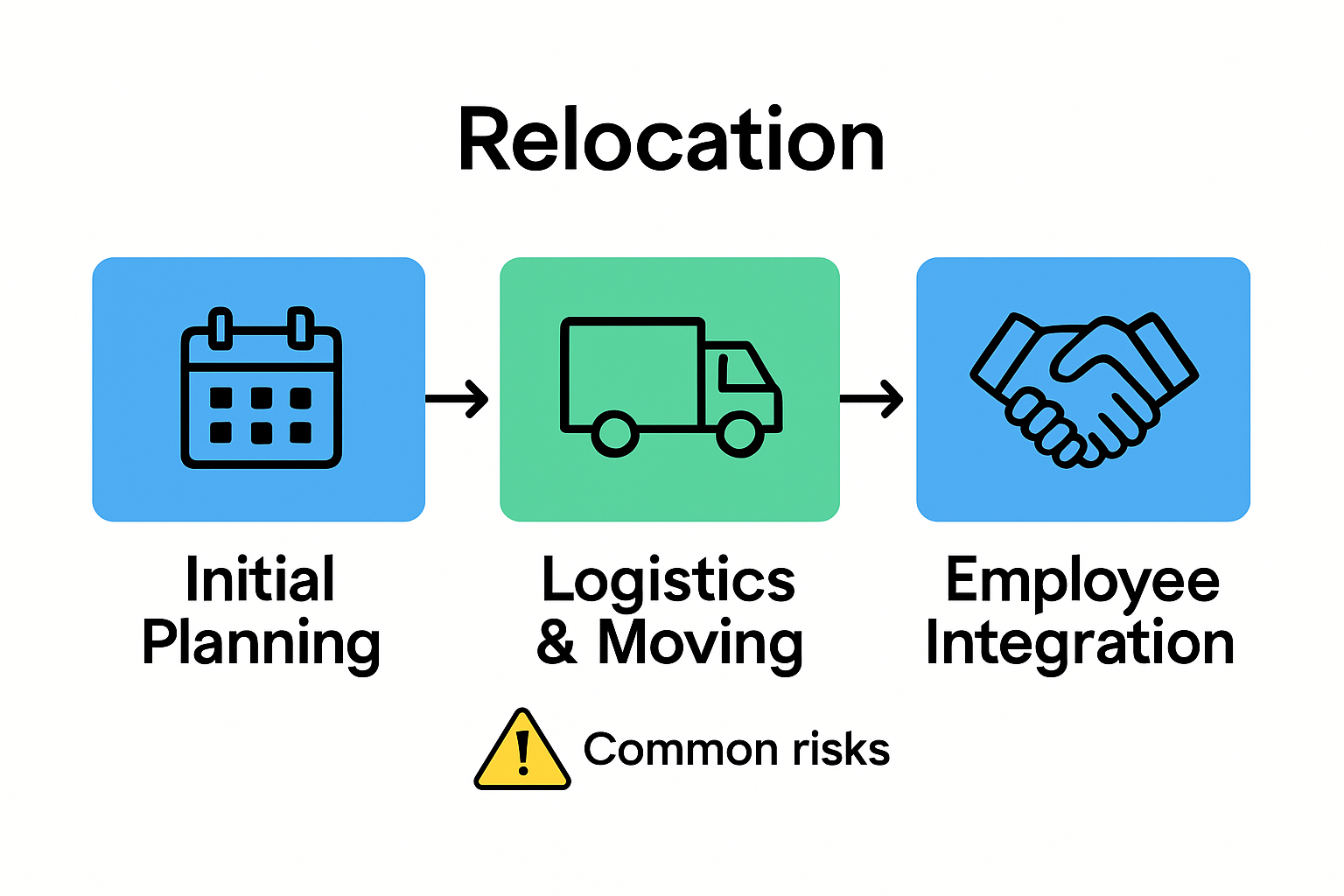
The most prevalent risks in employee relocation can be categorised into several critical domains:
Financial Risks:
Operational Risks:
Personal Transition Risks:
International relocation planning demands meticulous attention to detail. Common mistakes often stem from insufficient preparation, such as underestimating lead times for documentation, neglecting cultural adaptation support, and poor communication about expectations and timelines.
Successful relocation strategies require proactive risk management, transparent communication, and a holistic approach that balances organisational objectives with individual employee needs. By anticipating potential challenges and developing comprehensive mitigation strategies, companies can transform relocation from a potential source of stress into an opportunity for professional growth and organisational resilience.
Relocating employees can be a complex and stressful challenge involving logistical coordination, financial considerations, and personal adjustments. This comprehensive guide highlights key pain points such as managing transport, accommodation, cultural orientation, and minimising disruption to productivity. Onyx Removals understands these concerns and provides tailored moving services designed to ease every step of your staff’s transition. With our professional approach to managing workplace moves, you can confidently support your team through change while focusing on business continuity.
Ready to reduce relocation stress and empower your workforce? Discover how our specialised business relocation services can offer seamless solutions customised for your organisation’s needs. Visit Onyx Removals today to access expert moving plans supported by a dedicated team committed to reliability and personalised care. Let’s make employee relocation a smooth experience that strengthens your company’s success and talent retention.
Employee relocation support services are comprehensive assistance programs designed to help employees manage the logistical, emotional, and professional challenges associated with moving for work. These services can include transportation of belongings, temporary housing, spousal employment assistance, and cultural orientation.
Types of relocation support include professional services such as logistical coordination and financial reimbursement, as well as personal transition support like family integration programs and psychological counselling.
The employee relocation process typically involves four key stages: initial planning, logistics and coordination, employee support, and post-relocation support, ensuring a smooth transition for the employee and minimal disruption to productivity.
Employers are responsible for providing clear terms of relocation and covering reasonable expenses, while employees should communicate any personal challenges and actively participate in the relocation planning process.

No Related Post


