


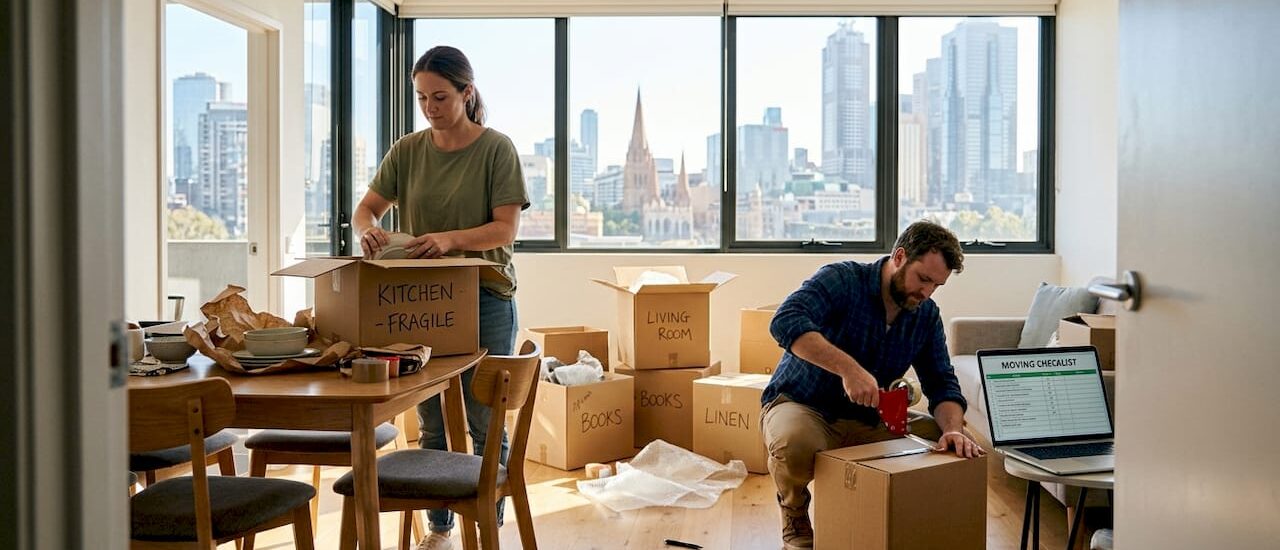
Most Melbourne homeowners assume moving house is simply a matter of hiring a truck and packing some boxes. Then reality hits: the parking permits, the building manager’s rules, the fragile items that need special wrapping, the utilities that need transferring, and the mountain of admin that nobody warned you about. Moving is genuinely one of life’s most demanding events, and without a solid plan, it can spiral quickly. This guide walks you through every key stage of a Melbourne residential move, from early planning right through to settling in, so you can approach your relocation with confidence instead of chaos.
| Point | Details |
|---|---|
| Plan early | Start preparing several weeks in advance to reduce last-minute stress and ensure nothing is missed. |
| Pack smart | Use the right materials, label boxes clearly, and keep essentials separate for moving day. |
| Choose experienced movers | Compare licensed, insured, and well-reviewed Melbourne removalists for peace of mind. |
| Protect valuables | Invest in moving insurance and safeguard your most precious items during transit. |
| Settle in quickly | Connect utilities, clean, and organise essential areas promptly after your move. |
The single biggest mistake Melbourne movers make is underestimating how much lead time a successful relocation requires. Most people start thinking about packing a week or two out. By then, they’re already behind. A well-structured plan, started at least six to eight weeks before moving day, gives you the breathing room to handle surprises without panic.
A moving checklist is your most powerful tool here. It keeps every task visible, prevents things from slipping through the cracks, and gives you a genuine sense of progress. Comprehensive checklists reduce last-minute stress significantly, which matters when you’re juggling work, family, and a settlement deadline all at once.
Here are the core planning tasks to tackle early:
“The best time to start planning your move is the moment you know you’re moving. The second best time is right now.”
Pro Tip: Create a shared digital checklist with everyone in your household so tasks are assigned and nothing is duplicated or forgotten.
A systematic checklist prevents forgotten tasks and lost items, which is especially important in a city like Melbourne where building access rules, tram routes, and narrow inner-city streets can add unexpected complications. Breaking your checklist into weekly stages makes the whole process far more manageable.
Melbourne-specific considerations include booking a parking permit from your local council if you’re moving in a busy suburb like Fitzroy, Richmond, or St Kilda. Many apartment buildings also require you to book the service lift in advance, sometimes weeks ahead.
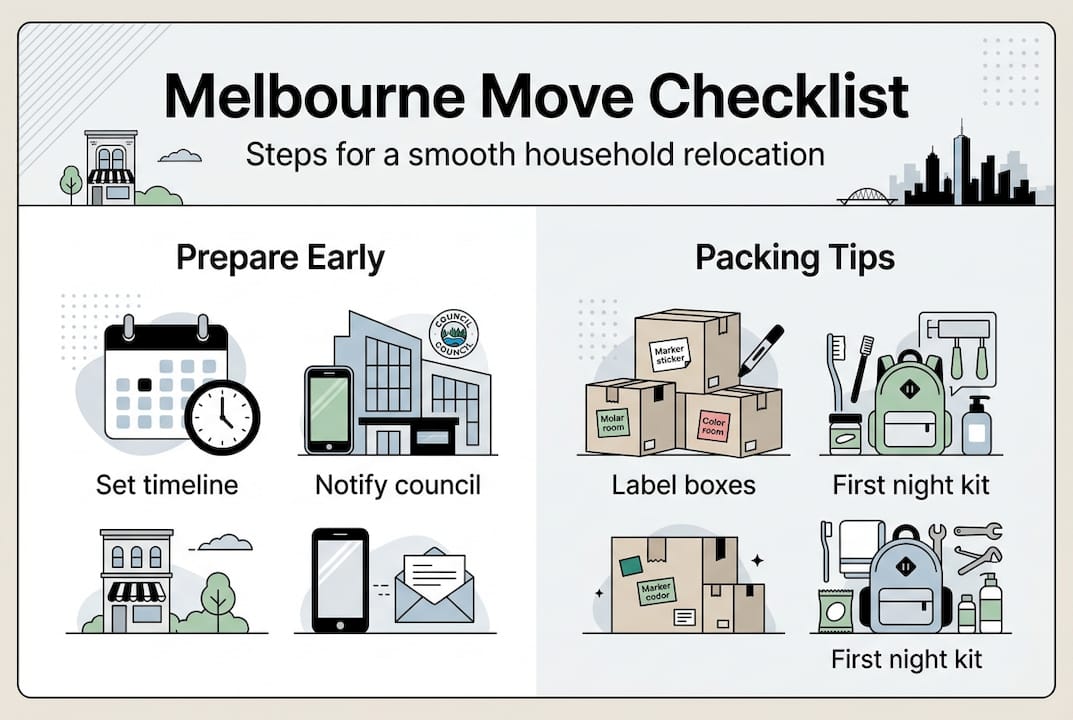
Pro Tip: Pack a clearly labelled “first night” box with bedding, toiletries, phone chargers, and a change of clothes. You’ll thank yourself when you’re exhausted after moving day.
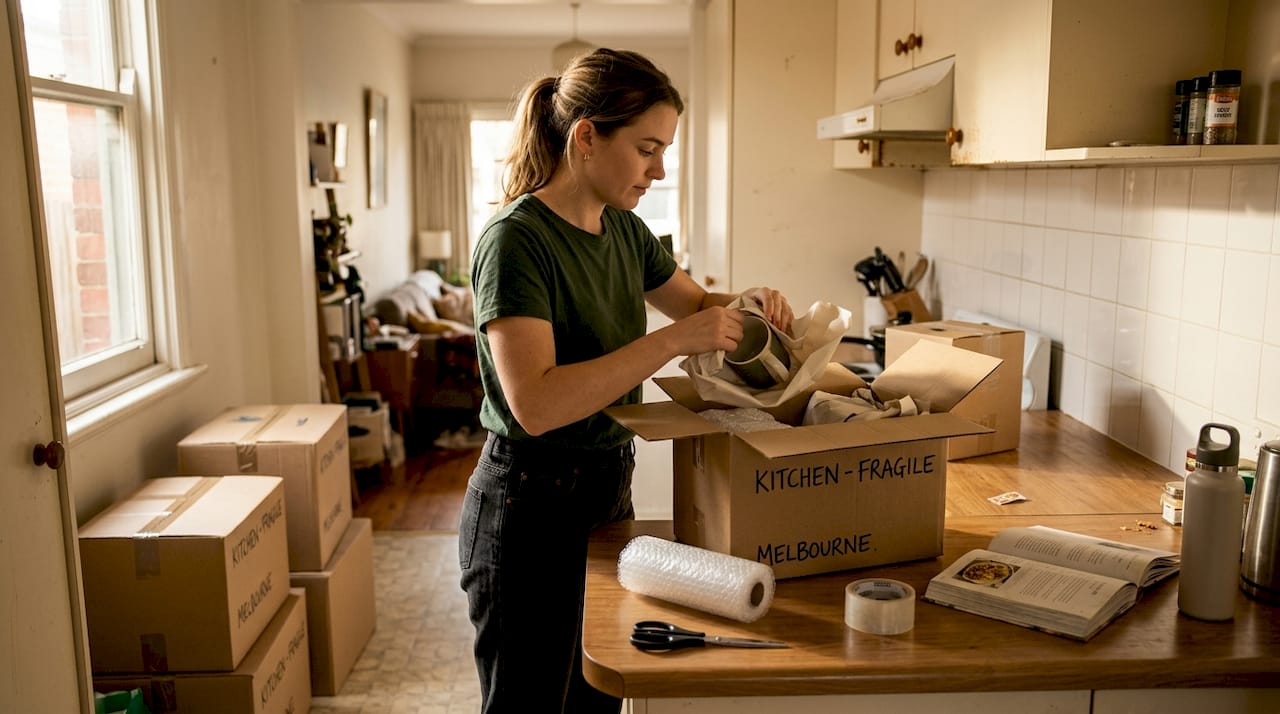
Packing is where most moves either succeed or fall apart. Melbourne’s climate, with its famously unpredictable weather, means moisture-resistant materials matter more than you might think. Use double-walled boxes for heavy items, and wrap fragile pieces in packing paper rather than newspaper, which can leave ink stains.
Here’s a quick breakdown of packing materials and their best uses:
| Material | Best for | Avoid using for |
|---|---|---|
| Double-walled boxes | Books, kitchenware, tools | Lightweight clothing |
| Bubble wrap | Glassware, ceramics, electronics | Anything moisture-sensitive |
| Packing paper | Plates, ornaments, picture frames | Sharp or heavy items |
| Wardrobe boxes | Hanging clothes | Bulky or heavy items |
| Zip-lock bags | Small parts, screws, cables | Fragile items |
Certain items should never be packed for professional transit. This includes flammable liquids, gas cylinders, perishable food, and important documents like passports and birth certificates. These should travel with you personally.
For fragile item packing, always wrap each piece individually, fill empty space in boxes with packing paper to prevent shifting, and mark boxes clearly with “fragile” on multiple sides.
Pro Tip: Pack boxes to a consistent weight of around 15 to 20 kilograms. Heavier boxes are a common cause of injury on moving day and can damage your belongings if they’re dropped.
Not all removalists are equal, and choosing the wrong one can turn a manageable move into a costly disaster. Professional movers make relocation safer for your belongings and significantly reduce the physical and mental load on you.
When comparing Melbourne removalists, look for these key factors:
| Factor | What to check |
|---|---|
| Licencing | Confirm they hold a valid Australian Business Number (ABN) |
| Insurance | Ask specifically about movers insurance coverage |
| Reviews | Check Google and ProductReview for recent, verified feedback |
| Local knowledge | Do they know Melbourne’s parking and access rules? |
| Transparent pricing | Are fuel levies and weekend rates disclosed upfront? |
Red flags to watch for include removalists who demand full payment upfront, provide quotes without inspecting your belongings, or have no verifiable online presence. Always get at least three written quotes before committing.
Clear communication with your movers is the single most important factor on moving day. Brief your removalist team on any access challenges, fragile items, or pieces that need disassembly before they start loading.
Here’s a practical moving day sequence that works well for Melbourne properties:
Pro Tip: Take timestamped photos of both properties before and after the move. This protects you in any bond dispute and gives you a clear record of the property’s condition.
Moving insurance protects your property against accidental loss or damage during transit. Many people assume their home and contents policy covers a move. It often doesn’t, or the coverage is far more limited than expected.
The main types of removal insurance available in Australia include:
Always read the fine print before signing. Check exclusions carefully, particularly around items you’ve packed yourself versus items packed by the removalist. Most policies have different liability rules for each.
“Choosing the right moving insurance options before your move is far easier than trying to make a claim without adequate coverage after something goes wrong.”
For a full breakdown of what to look for, the moving insurance guide covers policy types, claim processes, and what questions to ask your removalist.
Cleaning thoroughly and connecting utilities ensures your new home is functional and comfortable from day one. Don’t leave these tasks until after you’ve unpacked everything. Do them first.
Here’s what to prioritise in the first 48 hours:
For fresh start cleaning tips specific to Melbourne homes, focus on areas that are often overlooked: ceiling fans, window tracks, and behind appliances. These spots accumulate grime quickly and are much easier to clean before furniture is in place.
Pro Tip: Unpack one room completely before moving on to the next. Starting with the bedroom and bathroom gives you a functional sanctuary while the rest of the house comes together gradually.
If you’ve worked through this guide and you’re ready to put a proper plan in place, Onyx Removals is here to take the hard work off your hands. We specialise in Melbourne residential moving and offer a full range of services including packing, cleaning, storage, and specialised transport.
Our team knows Melbourne’s streets, building rules, and seasonal quirks inside out. Whether you’re moving from a Fitzroy terrace or a Docklands apartment, we tailor every move to your specific situation. You can get a removal quote online in minutes, or explore our packing timeline guide to map out exactly when to start each stage of your move. Let us handle the logistics so you can focus on what matters most: settling into your new home.
Book your removalist at least four to six weeks before your move date to secure your preferred time slot, particularly during peak periods like end of month or school holidays.
Hazardous materials, perishable food, important documents, and valuables should not go in the moving truck. Certain items are unsafe for professional transit and must travel with you personally.
Yes, moving insurance is strongly recommended. Moving insurance protects your property against accidental damage or loss during transit, and your existing home contents policy may not cover a move.
Involve children early by giving them simple, age-appropriate packing tasks and let them pack a special box of their own favourite items. Keeping routines consistent during the transition helps them adjust more quickly.
Connect your utilities and do a thorough clean of your new home before unpacking. Cleaning and connecting utilities ensures your home is safe, functional, and comfortable from the very first night.

No Related Post


