


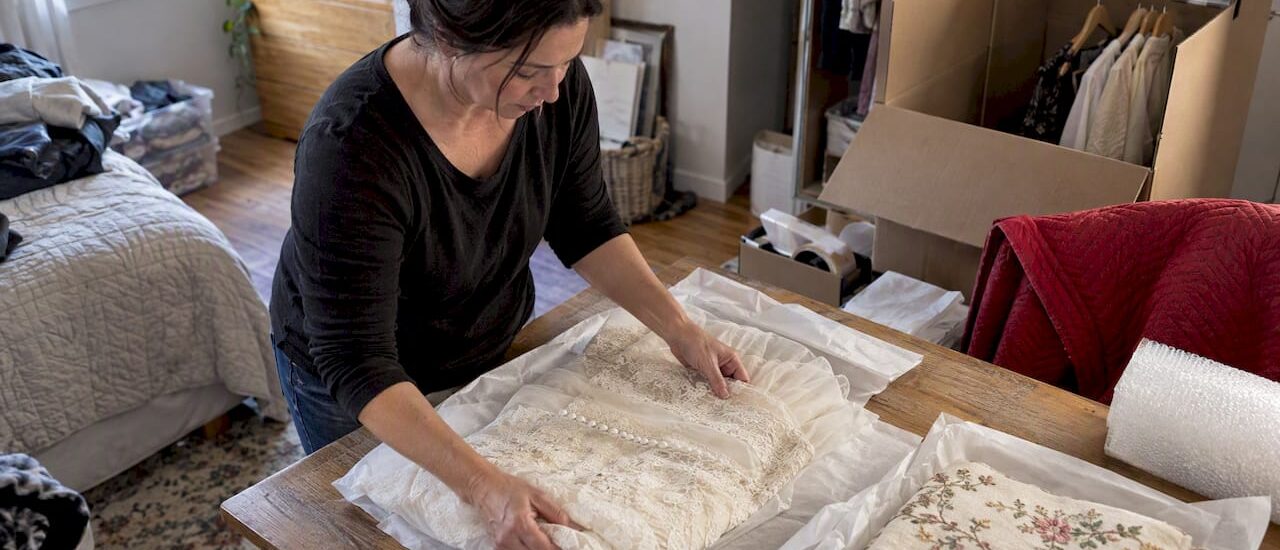
The best way to pack clothes for moving is to put hanging garments straight into wardrobe boxes or secured trash bags and use rolled or folded methods in sturdy boxes for everything else. Start packing in short daily sessions well before moving day, and set aside a separate first-night bag so you are not digging through boxes for clean clothes on arrival. Pack only clean, dry garments, and label every box clearly.
TL;DR:
- Use wardrobe boxes for hanging clothes and sturdy boxes or bags for folded or rolled items to prevent damage and creases during transit.
- Pack and declutter efficiently by sorting clothes into keep, donate, discard, or repair categories before packing to reduce box volume and move time.
- Reserve vacuum bags for bulky, synthetic, or heavily insulated garments like winter coats, avoiding them for natural fibers such as wool or silk.
- Label all boxes clearly with room and contents details, photograph valuables beforehand, and pack a dedicated first-night bag for immediate needs.
- Communicate any fragile or special textiles to your removalist in advance and consider professional packing for heirlooms or large, delicate items to prevent damage.
Before you touch a single drawer, gather the right materials. The wrong container is the most common reason clothes arrive creased, damp or smelling musty.
Start with off-season clothing and anything you will not wear before the move. Set daily packing blocks of 30 to 60 minutes rather than trying to finish everything in one exhausting weekend. Packing is consistently the most time-consuming part of a move, and spreading it across short sessions keeps the job manageable instead of chaotic.
Fewer clothes mean fewer boxes, less tape and a faster unpack. Before you fold a single shirt, run everything through a quick decision process.
Launder and fully air everything before it goes into a box. Damp or soiled fabric packed into a sealed container is exactly the environment mould needs, and leaving even a finger-width gap between garments on hangers helps reduce that risk when storage space is tight.
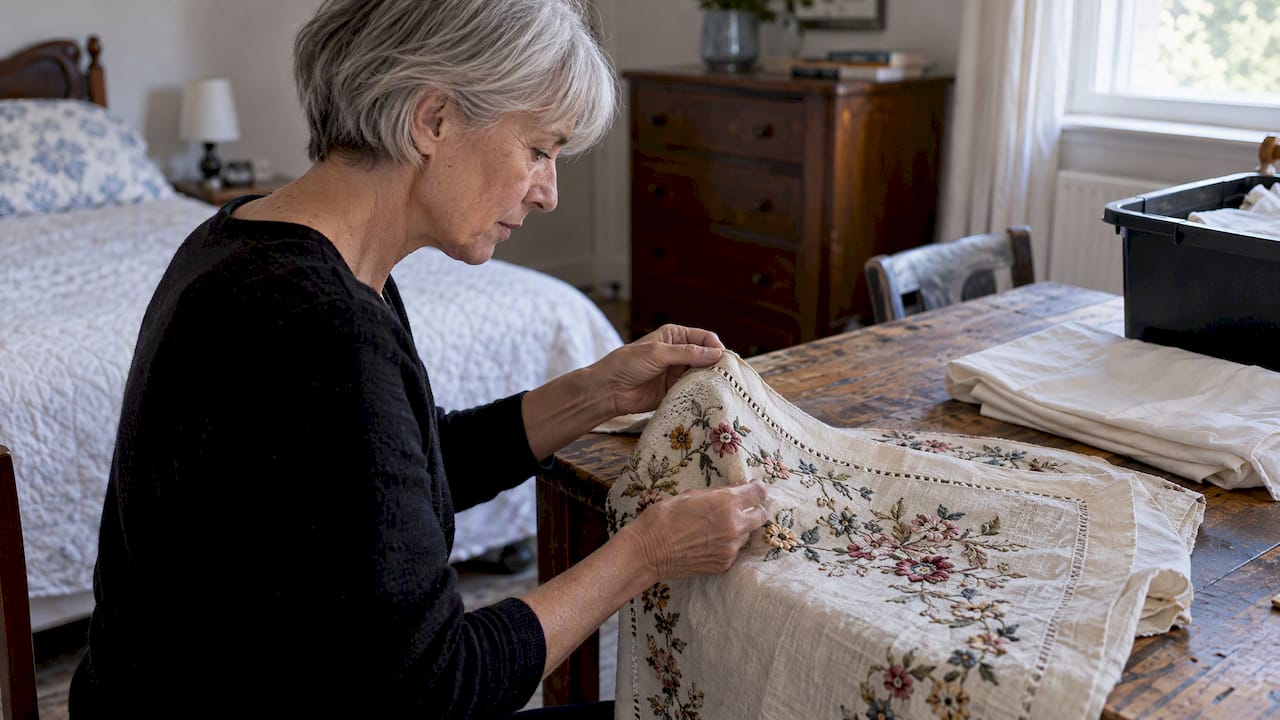
While you sort, set aside anything fragile or sentimental: wedding dresses, vintage pieces, hand-embroidered textiles or anything your grandmother wore. These need a different packing approach than your everyday wardrobe, and some are worth flagging for professional handling rather than a cardboard box.
Not every item belongs in the same type of box, and the wrong choice is where most moving damage happens.
Wardrobe boxes suit suits, dresses, coats and anything that hangs well on a rail. Measure your longest garment before you order boxes. Standard commercial wardrobe boxes are sometimes shorter than built-in robes in many Australian homes, so a full-length gown or coat may need a bin liner cover or a custom-length box instead of being folded at the hem.
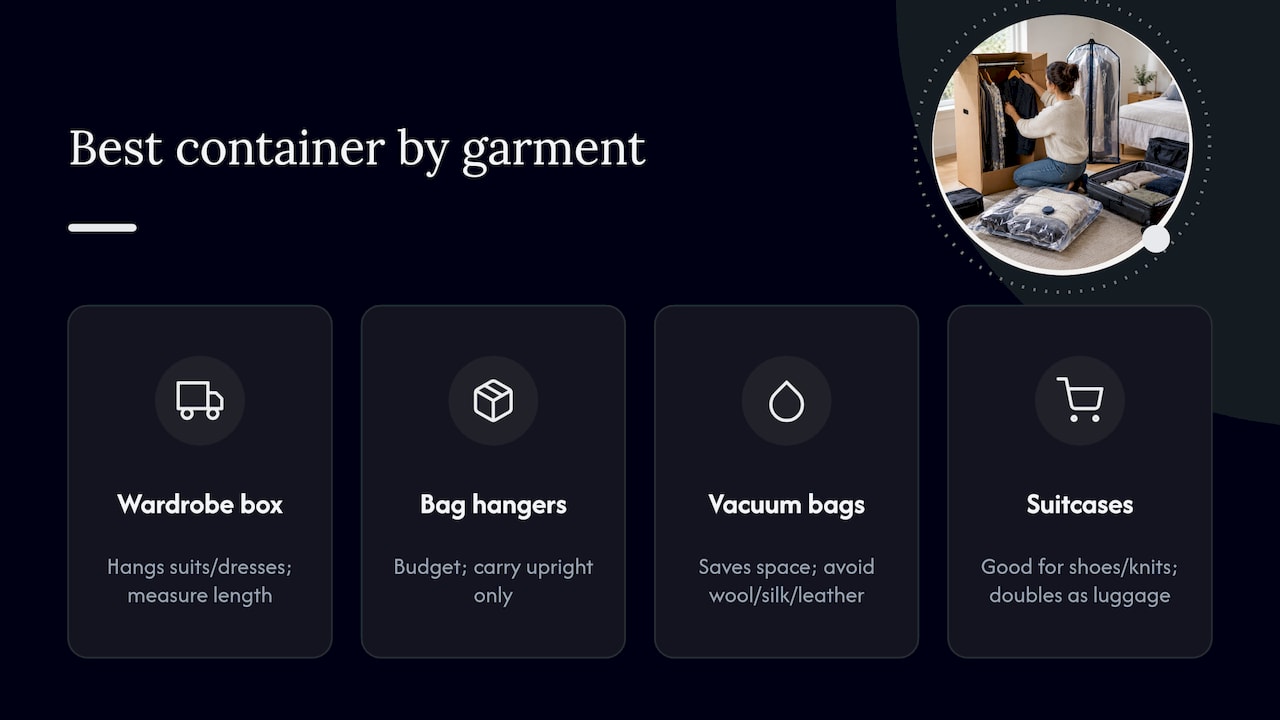
The trash-bag hanger method is the budget option: slide a large bin liner over a small group of hangers (five or six at most), gather the opening around the hanger hooks and tie or tape it off. It works well for short local moves but crushes easily if stacked, so these bundles should travel upright, never piled under other boxes.
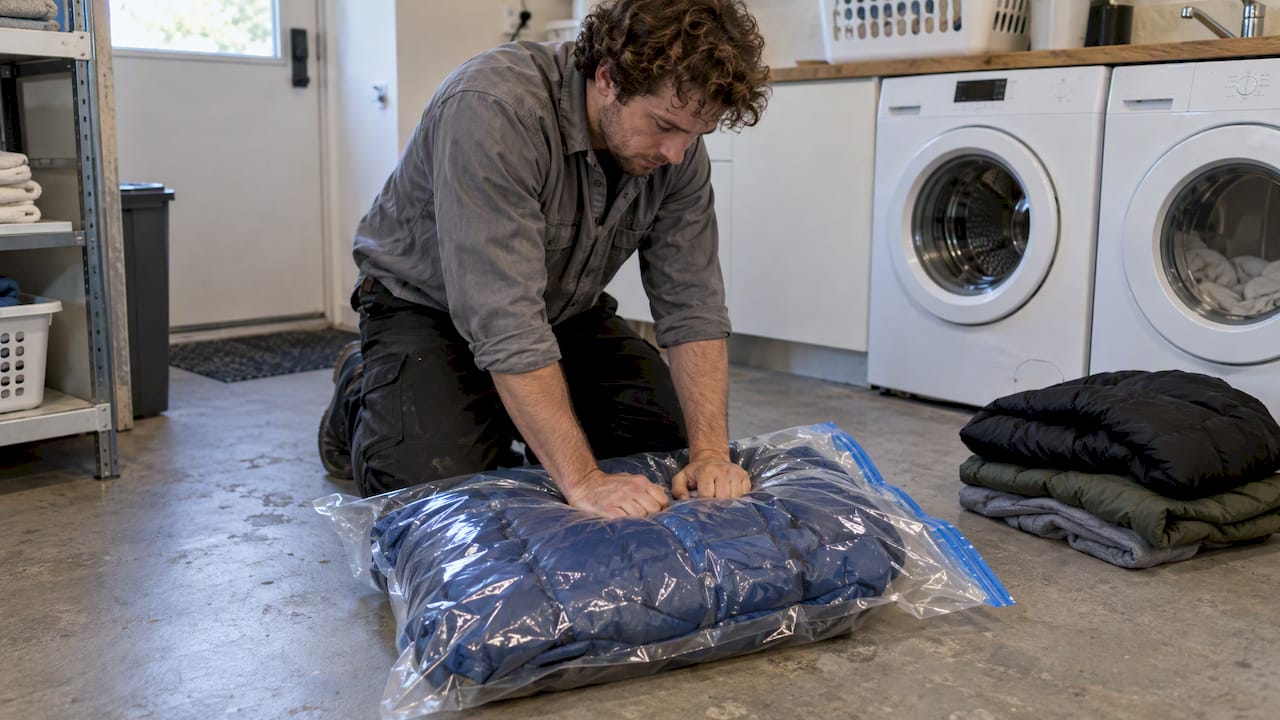
Vacuum or compression bags are excellent for synthetic fabrics and bulky outerwear like puffer jackets, saving real space in the truck. Avoid them for wool, silk and leather: prolonged compression can damage natural fibres, and garments must be completely clean and dry before sealing, since trapped moisture under vacuum has nowhere to go.
Suitcases, duffels and plastic tubs make sense for shoes, folded knitwear or anything you will need to grab first at the new place. They double as luggage, which means fewer boxes to buy overall.
Pro Tip: Reserve vacuum bags for the bulk items that save the most space, like winter coats and doonas, not for your everyday wardrobe.
Heirloom lace, vintage silk and anything you would be genuinely upset to lose need different handling to your everyday wardrobe. The core rule from textile conservation practice is simple: avoid long-term storage in ordinary plastic, because plastics can trap moisture and generate static that attracts dust, both of which degrade fibres over time.
This last step matters for both insurance and your own peace of mind. A quick photo and a one-line note on condition means you have evidence if something is damaged in transit, and a reminder of exactly how a piece should be unpacked and laid out again.
A box without a clear label is a box someone opens three times before finding what they need. Use a simple system: room, contents and a priority marker (first-night, fragile, or no rush).
That last point saves real time at the other end. Wardrobe boxes are awkward to shift once buried under furniture, so flagging them for easy access keeps to unload moving.
Removalists work faster and more safely with predictable, uniformly packed boxes rather than loose bags of unknown weight. Industry guidance notes that undisclosed bulky or unusually shaped items can slow a job down, increase costs, or in some cases be refused on the day.
Tell your removalist in advance about anything unusual: full-length gowns needing custom wardrobe boxes, fragile heirloom textiles, or items you want handled separately from the general load. For labelling and safe box weights, our guide to packing boxes for moving house covers the practical limits worth knowing before you tape a single box shut. Clear labelling and photos taken before the move also make any later insurance claim far simpler to resolve.
DIY packing works fine for everyday wardrobes on a reasonable timeline and a tight budget. Once you are dealing with heirloom textiles, a tight settlement date or simply more boxes than hours in the week, professional packers earn their fee back in avoided damage and saved weekends. Our comparison of professional packing versus DIY walks through that decision in more detail. The practical rule: pack what you can replace yourself, and hand off what you cannot.
— Dinshaw

If sorting, rolling and labelling every box sounds like more evening sessions than you have, we offer office and house packing and unpacking across Melbourne, including careful handling for delicate and specialty textiles alongside the rest of your wardrobe and household items. We also arrange short-term storage if your settlement dates do not line up, so packed boxes have somewhere safe to sit in the meantime. Pricing for packing and unpacking starts at $109 per hour, listed on our pricing page, where you can see exactly what is included before you book. Get in touch for a quote and we will build a packing plan around your move, not a generic checklist.
The 3-3-3 rule is an informal guideline some movers use: pack three days’ worth of essentials separately, sort clothes into three categories such as keep, donate and discard, and aim to finish packing in three focused sessions rather than one long one. It is not an official industry standard, just a memorable way to structure decisions when you are starting from scratch.
The easiest method is the trash-bag hanger technique: slide a bin liner over a small group of hanging garments and tie it at the top, keeping them wrinkle-free without needing a wardrobe box. For folded clothing, rolling items like t-shirts and jeans is faster than folding and saves space in the box.
Boxes are generally the better choice because removalists prefer predictable, uniformly stacked loads, and loose or oversized bags can slow down loading or increase costs. Bags work well for hanging garments using the trash-bag method, but folded or rolled clothing should go into sturdy boxes for protection and easier stacking.
Start packing at least a few weeks before moving day, beginning with off-season clothing and items you will not need in the meantime. Packing is typically the most time-consuming stage of a move, so short daily sessions spread over several weeks avoid the last-minute rush of a single weekend.

No Related Post


