


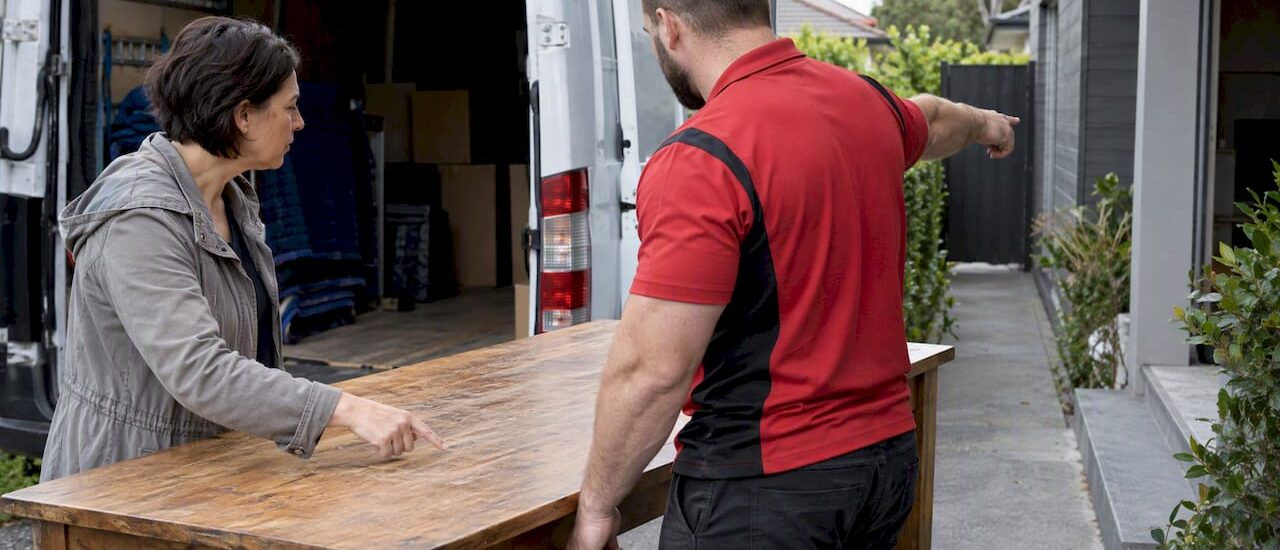
A bulky item fee is a mover’s surcharge for handling oversized, heavy or awkward items, and it covers the extra equipment, crew and time those items need. It sits on top of your base quote, not inside it, which is why removalists ask you to declare pianos, whitegoods or pool tables before moving day. Skip that step and you risk an on-the-spot charge once the crew sees what they’re actually lifting.
TL;DR:
- Heavy, bulky, or awkward items such as pianos, pool tables, and large whitegoods usually trigger a surcharge based on special equipment, extra labor, and safety risks.
- Declaring all oversized items upfront with photos or videos reduces on-site surprises and helps ensure accurate, detailed quotes with transparent bulky item fees.
- Most removalists charge a flat per-item fee, hourly rate uplift, or equipment surcharge, with in-person or video inspections providing the most precise estimation.
- Comparing quotes across providers requires asking specific questions about bulky item charges, dismantling services, insurance, and written itemized estimates.
- Hidden surcharges often arise because movers only discover bulky items on moving day; transparent pre-declarations avoid unexpected costs and service delays.
A bulky item fee exists because moving a piano or a fridge costs more in real terms than moving a box. Estimating standards for the removal industry require estimators to factor in van size, labour and hazards when pricing a job, and oversized items change every one of those variables at once, as outlined in the national furniture removal estimating standard. A sofa that needs a tail-lift and two extra pairs of hands is a different job to the same sofa carried down a ground-floor hallway.
The surcharge typically reflects:
That last point matters because transit insurance and limited liability terms are rarely a flat blanket. A mover pricing that risk is one reason two quotes for the same move can look very different.
Most removalists work from a fairly consistent list of items that trigger a bulky item fee, because each one demands a different kind of handling.
A quick way to speed up quoting is to measure anything over roughly a metre in any dimension and photograph it from two angles, including doorways it needs to pass through. That small bit of preparation lets a mover scope the job accurately before arriving.
There’s no single formula, but most removalists use one of a few common approaches. A flat per-item surcharge is the simplest: a set fee for a piano or a pool table regardless of how far it travels. An hourly uplift adds a higher rate for the hours an extra crew member is needed. Some movers charge a separate equipment or vehicle fee when a job needs a larger truck or a tail-lift. For genuinely unusual items, a bespoke estimate after an inspection is the only accurate option.
What changes the total most:
A visual inspection, whether in person or by video, is one of the clearest ways to turn a rough estimate into an itemised, comparable quote, according to NSW Government consumer guidance on choosing a removalist. That guidance also recommends getting at least three itemised quotes before booking, specifically so bulky item charges are visible and comparable rather than buried in a lump sum. A quote that only states an hourly rate, with no mention of bulky items, usually means the fee gets added later rather than disclosed up front.
For more detail on the equipment behind these charges, our guide to essential equipment for safe heavy furniture moves breaks down what a tail-lift or heavy-duty dolly actually does on the day.
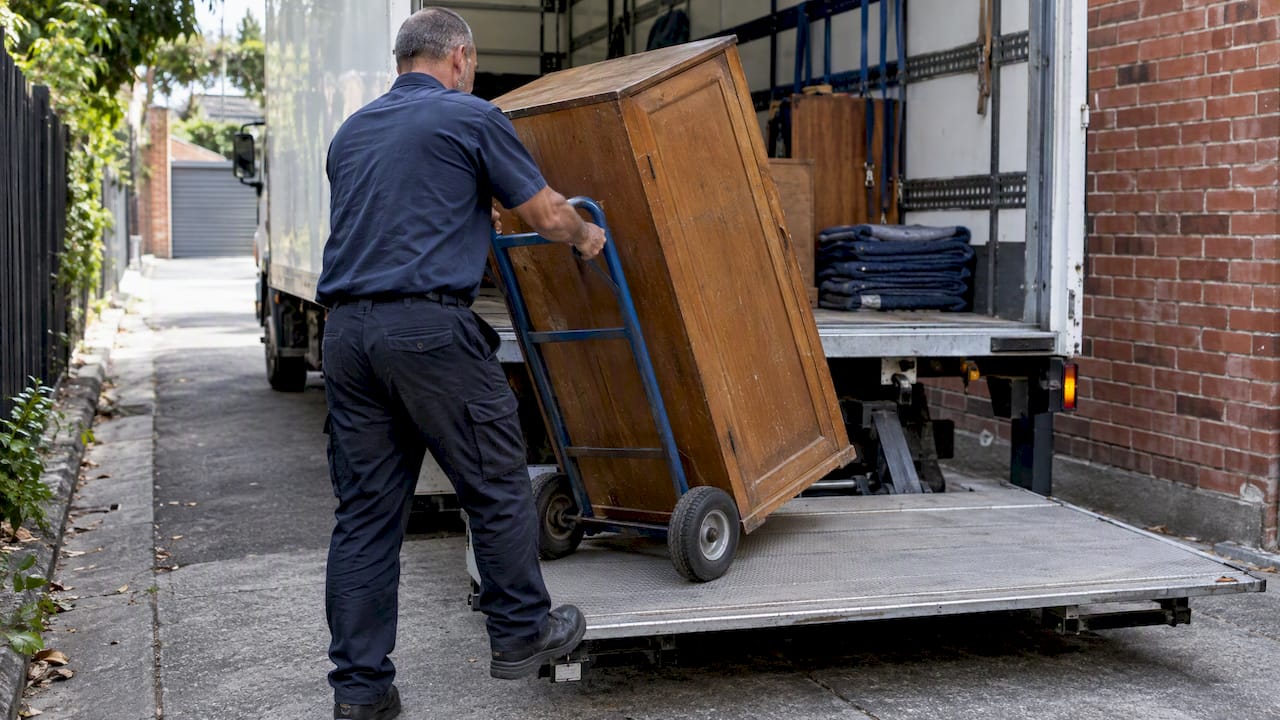
Most bulky item surprises come down to one thing: the mover didn’t know about the item until they were standing in front of it. A few steps before booking fix most of that.
Pro Tip: Ask about flexible scheduling and always request a written, itemised quote rather than a verbal estimate, so any bulky item surcharge is on paper before moving day.
Consumer advocates make the same point from the other direction: the cheapest hourly rate often ends up costing more once hidden charges like bulky item surcharges and travel rules are added, according to Fair Traders of Australia.
Before you book, run through this list with any removalist you’re considering.
Asking about AFRA accreditation is worth including because it signals established procedures around insurance, vehicle standards and training, which matters when a move involves high-risk bulky items, as noted in Selectra’s removalist guide. For a longer version of this checklist, see our 15 questions to ask moving companies.
We provide quotes for bulky items based on a proper inspection rather than a guess over the phone, using a video walkthrough or an in-person visit to deliver an itemised quote that details the charges for items like pianos, pool tables, or fridges to avoid surprises on moving day.
If you’ve got a piano, a pool table or a stack of whitegoods on your list, request a quote through our pricing page or check what’s included across our full range of services.
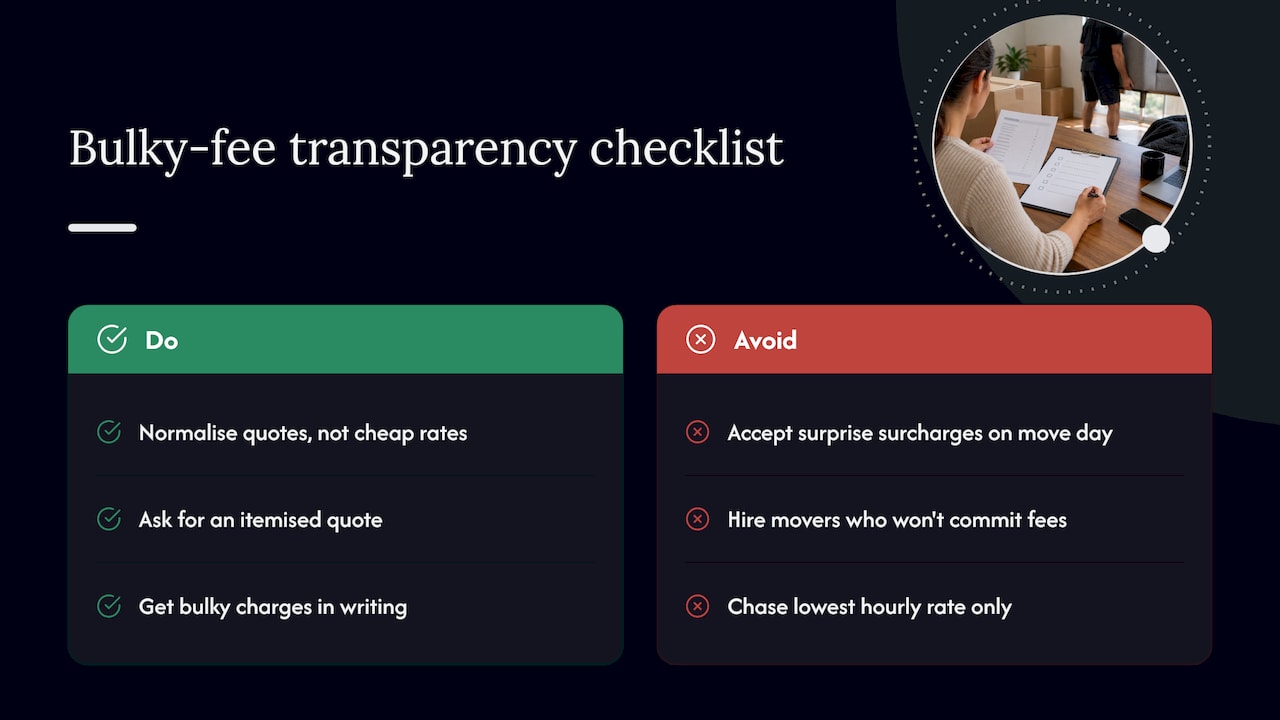
The biggest complaint we hear isn’t about the fee itself, it’s about finding out on the day. A piano surcharge disclosed in writing before the move is a planning detail. The same surcharge sprung on you while the crew is standing in your lounge room feels like a trap, even when the pricing is fair.
That’s why normalising quotes matters more than chasing the lowest hourly rate. Use the checklist above, ask for an itemised quote, and treat any mover who won’t commit bulky item charges to paper as a reason to keep comparing.
— Dinshaw
It only applies when your move includes items a removalist classifies as oversized, heavy or awkward, such as pianos, pool tables or large whitegoods. A standard move with ordinary furniture and boxes typically won’t attract the surcharge, but it’s worth confirming with each mover since the exact list of qualifying items varies.
Common examples include pianos, pool tables, sofas, mattresses, fridges, washing machines, safes and large cabinets. These items qualify because they’re heavy, awkward to balance, or need specialist equipment and extra crew to move safely.
Movers typically use a flat per-item fee, an hourly uplift for extra crew, a separate equipment charge, or a bespoke estimate after inspecting the item. An in-person or video inspection, as recommended by NSW Government consumer guidance, is the most reliable way to lock in an accurate figure.
Undeclared bulky items often force the crew to adjust team size or vehicle on the spot, which usually results in an unplanned on-site charge. Declaring items in advance, with photos or a short video, lets the mover price the job accurately before arrival.
Standard limited liability cover often doesn’t fully protect high-value or fragile bulky items, so it’s worth confirming the specific transit insurance terms before booking. Services must be provided with due care and skill under Australian Consumer Law, and you’re entitled to ask for clear information on costs and cover, as outlined by the Consumers’ Federation of Australia.

No Related Post


