


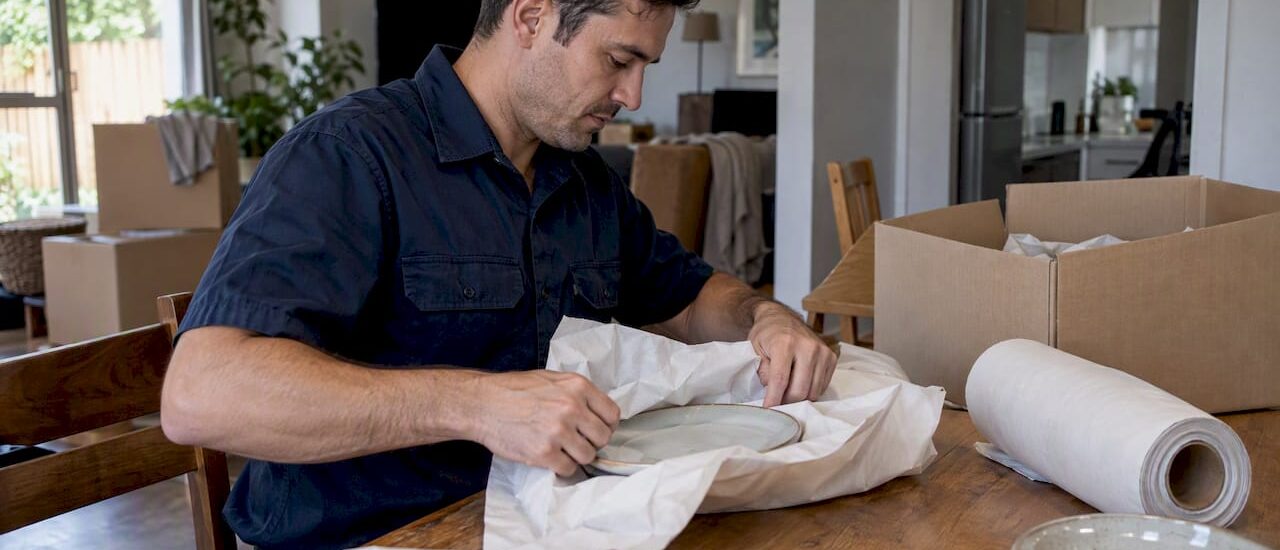
For most fragile household items, ink-free butchers paper or paper bubble wrap gives the best mix of protection, cost and recyclability. Keep archival tissue for photographs, fine documents and antiques that need long-term preservation. Wherever you can, choose recyclable paper options over plastic cushioning, both wrap just as well and are easier to deal with afterwards.
TL;DR:
- Use buffered archival tissue for most paper items, but choose unbuffered tissue for photographs and textiles; keep documents and artwork flat against rigid board.
- Stuff glasses before wrapping, give them at least two outside layers, and pack plates vertically with paper between each one to reduce impact damage.
- Before sealing, shake each box gently; if anything moves, add cushioning, then keep fragile boxes upright, off damp floors, and away from heavy loads.
- Clean, intact ink free paper generally belongs in curbside recycling, but shredded paper may be rejected, and waxed or contaminated sheets belong in general waste.
- Bring in professional packers for pianos, fine art, antiques, or jobs that require more than a day or two of sustained packing.
Not all packing paper does the same job, and picking the wrong one can cost you time or damage the things you’re trying to protect.
Standard newsprint is a poor match for collectibles, photographs or anything with a delicate painted or lacquered finish. If an item has long-term or sentimental value, archival tissue is worth the extra cost over bulk paper.
Matching the paper to the item saves time and reduces breakages.
Good wrapping technique matters more than how much paper you use. Before you start, clear a flat surface, gather ink-free paper, tape, a marker and the right box sizes, and give dusty or greasy items a quick wipe down so you’re not sealing dirt into the box.
For plates, lay a sheet flat, place the plate in one corner and roll it diagonally, tucking in the edges as you go. For glasses and stemware, stuff the inside first, then wrap the outside in a spiral motion so the whole piece is covered in at least two layers. For vases, wrap the body first, then pad the neck and base separately before sitting the piece upright in a snugly fitting box.
When boxing up, build a layer of crumpled paper on the bottom, pack wrapped items snugly with no gaps, and fill any remaining voids with more scrunched paper so nothing can shift.
Pro Tip: Before sealing, give the box a gentle shake. If you hear movement, open it back up and add more paper until everything is still and snug. For a closer look at this method, our guide on packing breakables with the shake test walks through it step by step, and our collectibles packing guide covers trickier, higher-value pieces.
Hardware stores and newsagents stock small packs of packing paper and rolls of paper bubble wrap, which suit renters, small moves or last-minute top-ups. Retailers including Bunnings now stock paper bubble wrap ranges as a recyclable alternative to the plastic version, sold in roll widths for both small and larger items.
For a whole house, removalist supply shops and packaging wholesalers sell butchers paper by the roll, which works out far cheaper per sheet than small retail packs. Our packing supplies overview covers what a typical household actually needs in volume.
Free or low-cost paper is often closer than you think:
When buying, check three things: that the paper is genuinely ink-free, the sheet size or roll width suits your items, and whether pre-cut sheets or a full roll makes more sense for your volume.
Clean, ink-free packing paper is widely accepted in Australian kerbside recycling, but shredded paper causes real problems. Shredded paper can escape sorting machinery at recycling facilities and is often rejected from yellow-lid bins altogether, according to Gleneira City Council’s recycling guidance. Check your own council’s rules before binning any shredded paper.
For large volumes after a move, specialist drop-off points and recycling centres will take clean, flattened paper and cardboard for remanufacture rather than landfill.
If you’re moving internationally, keep in mind that the Australian Border Force requires personal effects to be clean of soil and organic matter, and clear labelling helps reduce inspection time and any associated charges. Waxed, soiled or contaminated paper should go into general waste rather than recycling or shipment, as it can’t be processed either way.
After years of packing houses across Melbourne, a few patterns hold true: DIY packing works well for most household goods, but pianos, fine art, antiques and anything requiring more than a day or two of solid packing time usually justify bringing in professionals.
Our guide to packing fragile collectibles goes further into handling higher-value, awkward items.
The most common error is using too little paper, cushioning that feels fine when you pack it often settles and shifts during transport, leaving gaps that let items knock together. The opposite mistake, overpacking with paper you don’t need, wastes money and makes boxes heavier than necessary.
Printed newspaper is still a frequent choice simply because it’s free, but the ink can transfer onto plates, glassware and light-coloured fabrics, leaving marks that are hard to remove. Skip it for anything with a porous or light-coloured surface.
Another mistake is wrapping items loosely instead of tightly, a loose wrap looks secure but offers little real cushioning once the box is moving and bumping around in a truck. Folding fragile paper documents or photographs to fit a box is another common slip, creases are permanent and hard to reverse, so a flat board support is worth the extra space it takes.
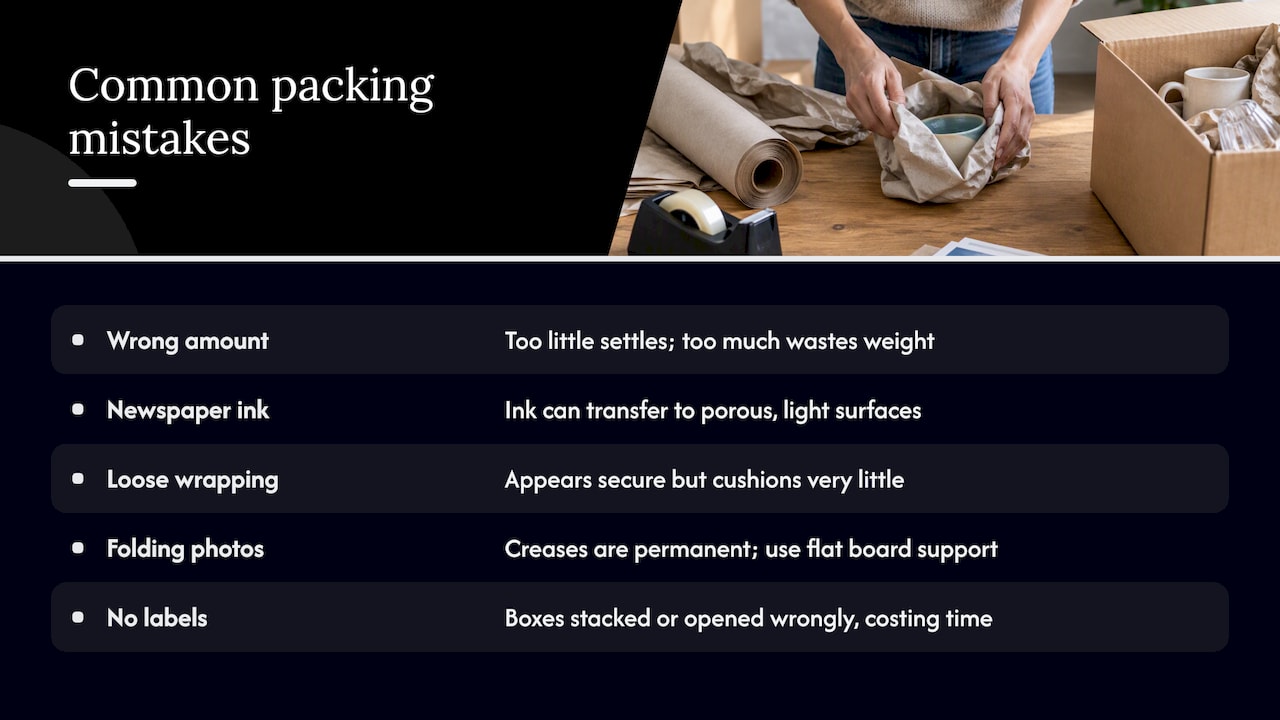
Finally, skipping labels is a mistake that costs time rather than items, unlabelled boxes get stacked wrong, handled roughly or opened in the wrong room, increasing the odds something fragile takes a knock it didn’t need to.
Once items are wrapped, how you store the boxes matters almost as much as the wrapping itself. Keep boxes upright, with any “this way up” markings visible, and never stack heavy boxes on top of ones marked fragile.
If boxes need to sit in storage or a truck for more than a day, keep them off the floor on a pallet or shelving where possible, damp concrete or garage floors can draw moisture into paper and cardboard over time. Keep stacks no more than a few boxes high for fragile items, and leave a little space between stacks so nothing is under constant pressure from its neighbours.
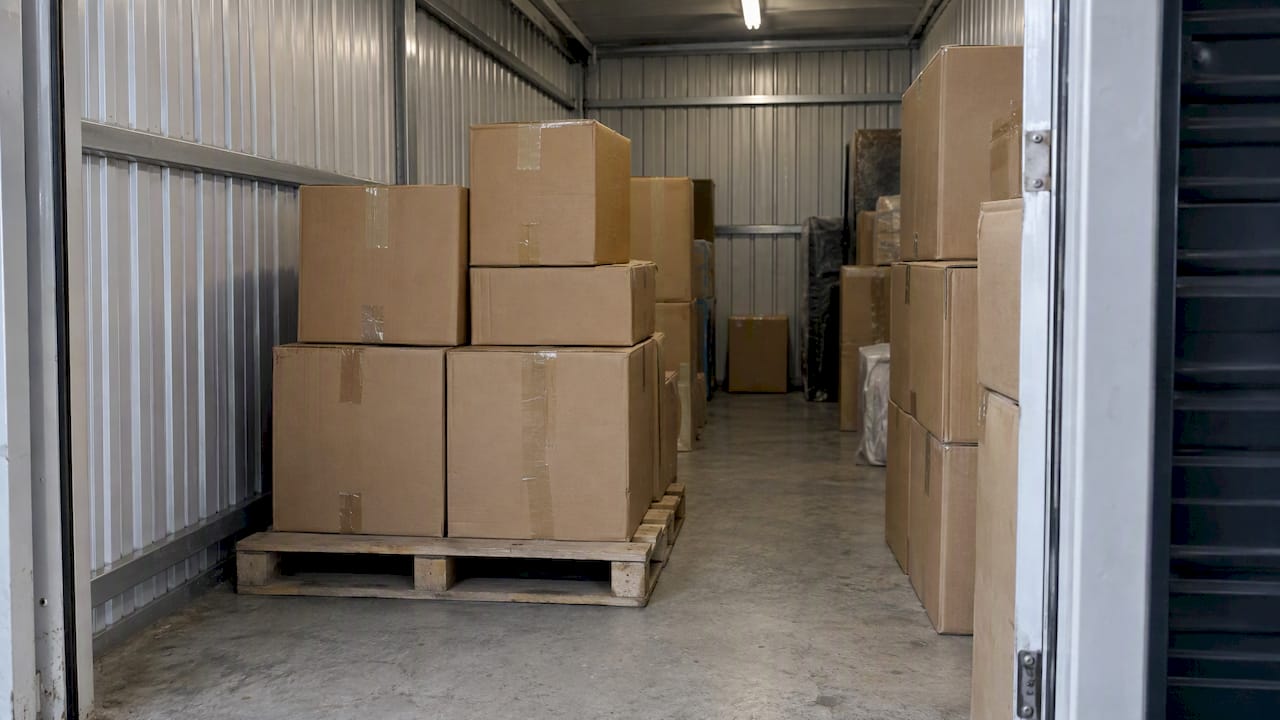
In a moving truck, fragile boxes belong against the cabin wall where there’s less movement, and wedged firmly enough that they can’t slide during transport. Avoid leaving wrapped items in direct sun or a hot car for extended periods, heat can soften some adhesives and warp certain finishes even through paper wrapping.
If you’re using temporary storage between properties, our guide to temporary storage during relocation covers how to prepare boxes for longer stays.
Plastic bubble wrap still edges out paper on sheer cushioning in a handful of edge cases, but for the vast majority of household moves, ink-free paper and paper bubble wrap protect just as well and leave you with something your council will actually take back. The convenience of plastic isn’t worth the landfill trade-off for most packing jobs.
— Dinshaw
If wrapping an entire house in paper sounds like more time than you have, our Office and House Packing & Unpacking service handles it for you, including supplying the right materials for fragile items and keeping a running inventory as boxes are packed. Pricing runs at $109 per hour, with a personalised plan built around your move rather than a one-size-fits-all package.

Get in touch through our pricing page for a quote, or check our full range of moving and relocation services if you need help beyond packing.
Ask local cafes, newsagents and offices for leftover paper or offcuts, and check community groups and online marketplaces where people often give away packing materials after their own move. Libraries and retail stockrooms sometimes have surplus paper from deliveries too.
Ink-free butchers paper or paper bubble wrap suits most household items, giving solid cushioning while staying recyclable in kerbside bins. For photographs, documents and antiques, acid-free archival tissue is the better choice since standard paper can stain these items over time.
The same community and retail sources that offer free paper, local shops, online marketplaces and neighbours who’ve recently moved, are usually your best bet. It’s worth asking early, since good offers tend to go quickly close to moving season.
Packing paper isn’t strictly required, but it’s one of the cheapest and most effective ways to stop plates, glasses and ornaments from knocking together in transit. Paper-based cushioning also has the advantage of being widely recyclable, unlike some plastic alternatives.
For council recycling rules, conservation standards and biosecurity requirements, see the sources below. For professional packing help, our packing and unpacking service page has more detail.

No Related Post


