



TL;DR:
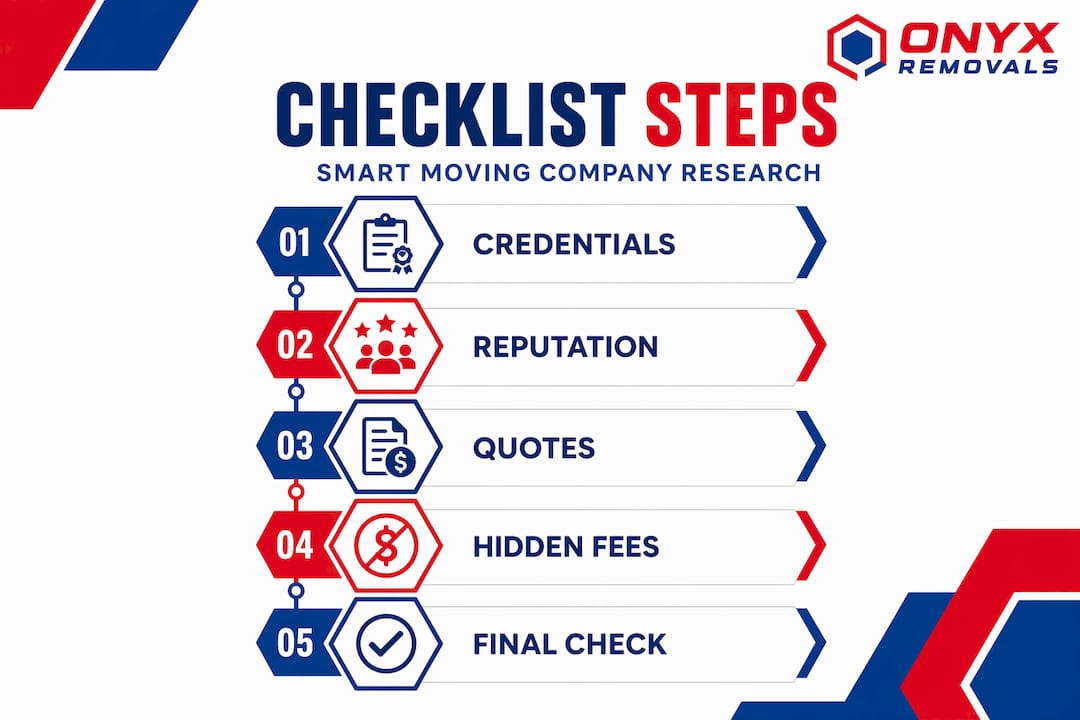
- Research moving companies thoroughly by verifying licenses, insurance, and business history before reading reviews.
- Compare multiple detailed, long-term reviews and obtain several quotes, favoring binding or flat-rate estimates to avoid surprises.
Most people spend more time researching a new phone than they do researching moving companies. You check a star rating, read two reviews, and call it done. But that approach leaves you exposed to bait-and-switch pricing, uninsured operators, and companies that vanish when something goes wrong. The good news is that a thorough vetting process takes less than a few hours and can save you hundreds of dollars and considerable stress. This guide walks you through every step.
| Point | Details |
|---|---|
| Check credentials first | Verify licences, registrations, and insurance before reading a single review. |
| Read reviews critically | Volume, recency, and specific detail matter far more than average star rating. |
| Get at least three quotes | Start comparing moving quotes at least eight weeks before moving day. |
| Watch for hidden charges | Ask about parking, elevator fees, and delivery windows upfront to avoid invoice surprises. |
| Confirm physical legitimacy | Cross-check addresses, company history, and owner details to weed out unreliable operators. |
Before you look at a single star rating, you need to confirm that a company is legally allowed to operate. In Australia, removalist businesses must hold a valid ABN and be registered with the relevant state authority. They should also carry public liability insurance and, ideally, goods-in-transit insurance to protect your belongings. These are not optional extras. They are the baseline.
Here is what to verify before going any further:
Pro Tip: When researching local moving companies in Melbourne, use insurance for moving house as a starting point to understand what coverage you actually need before you ask for proof.
One practical shortcut if you are comparing interstate options: in the US, FMCSA verification takes 90 seconds via a USDOT lookup. Australian regulators do not have an identical centralised database, but the same principle applies. A legitimate company will hand over its credentials without hesitation. If they stall or deflect, that tells you what you need to know.
Star ratings are easy to game. A company can accumulate a solid 4.5-star average through a short burst of reviews from friends, family, or paid services, then coast on that number for years. What you want is consistent, long-term reviews rather than a recent spike with a thin history.
Companies with 400-plus Google reviews spanning three or more years show a pattern you can actually trust. Volume matters. Longevity matters. But detail matters most of all.
Specific reviews mentioning crew names, professional packing, and on-time delivery are far more reliable than a wall of five-star posts that just say “Great service!”
When you read reviews, look for these positive signals. Detailed accounts of specific team members. References to how fragile items were handled. Comments about punctuality and communication. Responses from the company to negative reviews that are professional, not defensive.
Here is what raises red flags:
Check Google, but do not stop there. Moving company comparison research across multiple platforms, including Facebook, local community forums, and Word of Mouth Australia, gives you a much fuller picture. Fake reviews are widespread, and regulatory verifications alongside complaint histories will always give you clearer reliability signals than star averages alone.
Pro Tip: Search the company name in quotation marks alongside words like “complaint”, “scam”, or “dispute” to surface any forum discussions that would not appear in a standard Google search.

Getting one quote and booking is one of the most common mistakes people make. You need at least three quotes to understand what a fair market rate looks like for your specific move. Start requesting quotes at least two months before your moving date. Short-distance moves typically cost between $800 and $2,500, while long-distance jobs can run from $2,200 up to $5,700. Those ranges are wide for a reason: the details of your move drive the final number.
There are three quote structures you will encounter:
| Quote type | What it means | Risk level |
|---|---|---|
| Non-binding | Estimate only. Final price can change based on actual weight or time. | Higher |
| Binding | Fixed price agreed upfront. Final invoice matches the quote. | Lower |
| Flat-rate | Set price for the full job, regardless of time taken. | Lower |
A binding or flat-rate quote is almost always preferable. An in-home or virtual walkthrough estimate is the most reliable way to get an accurate binding quote, because the company sees your actual volume rather than guessing from a phone conversation.
Hidden charges are where quotes fall apart. Ask about surcharges like parking permits, elevator reservations, long-carry fees, and delivery windows before you sign anything. Small logistical details around parking and lift access can significantly shift the final invoice. A company that gives you a quote without asking about these factors either has not done this properly or plans to add them later.
Pro Tip: When you receive each quote, ask the company to itemise every charge in writing. If they cannot or will not do this, cross them off your list.
You have reviewed credentials, read reviews critically, and collected quotes. There are still a few checks worth doing before you hand over a deposit.
These steps take less than thirty minutes per company and can save you from a genuinely disastrous experience.
A clear timeline turns this research process from overwhelming into manageable. Here is how to structure it.
Pro Tip: Keep a shared document or spreadsheet with one column per company and rows for each criterion. Side-by-side comparison is far clearer than scrolling between browser tabs.
Star ratings have misled more people than I can count. I have seen families book a company with a gleaming 4.8-star average, only to find out the reviews were almost all from the past two months and the company had been operating under a different name before that. The rating looked excellent. The company was not.
What actually works is cross-referencing trust signals from independent sources. Not just Google, not just the company’s own testimonials page. The businesses that consistently perform well are the ones that hold up under scrutiny from multiple angles: their credentials check out, their review history is long and specific, and they communicate clearly from the first contact.
I have also seen how much damage a poorly worded quote can do. Non-binding estimates with vague inclusions create disputes after the truck is packed. The families who avoided that outcome all did one thing the same way: they asked for everything in writing before they committed to anything.
The best advice I can give you is simple. Treat the research process like a job interview where the company is the candidate. You are hiring them for a significant task. Ask hard questions. Check references. And if anything feels off during the quote stage, trust that feeling. A mover who is evasive before you have signed is not going to improve once they have your deposit.
— Dinshaw
If you have done the hard work of researching moving companies and you want to book a removalist you can genuinely trust, Onyx Removals is worth a close look. As a Melbourne-based residential removals company, Onyx provides transparent, binding quotes, experienced crews, and personalised moving plans built around your specific home and schedule. There are no vague estimates and no surprise charges on the day.
You can request accurate removal quotes directly through the website, with options for in-home or virtual surveys to get the most precise pricing. If you want to understand the full service offering before making a decision, the services overview covers everything from packing and unpacking to storage and specialist transport. Onyx has built its reputation on exactly the kind of transparency this article recommends you look for.
Start at least eight weeks before your moving date. This gives you time to vet credentials, collect multiple quotes, and make a considered decision without pressure.
A binding quote locks in the price agreed upfront, so your final invoice matches what you were quoted. A non-binding quote is an estimate that can increase based on actual weight or time.
Look for reviews with specific detail about crew names, packing quality, and timing. Generic five-star posts with no specifics, and sudden spikes in review volume, are common indicators of unreliable feedback.
Ask about parking permits, elevator access fees, long-carry charges, and delivery window restrictions. Logistical details like these can add significantly to your final bill if not clarified upfront.
Search their ABN on the Australian Business Register and confirm their insurance coverage directly. Ask for the insurer’s name and check their complaint history through Consumer Affairs in your state.

No Related Post


