



Self-drive moving truck hire in Melbourne generally costs between $80 and $250 a day depending on vehicle size, while driver-included taxi trucks commonly charge between $70 and $130 an hour. Neither figure is your final bill. Fuel, kilometre overages, insurance excess and after-hours fees usually push the real cost higher, so budget on top of the sticker price rather than against it.
TL;DR:
- Moving truck rental costs range from $80 to $250 per day depending on vehicle size, with additional fees for fuel, kilometres, insurance, and after-hours pickup.
- Driver-included taxi trucks charge $70 to $130 per hour, with minimum bookings of two to three hours, which can increase total costs for short jobs.
- Selecting a truck size larger than needed often results in higher daily rates and fuel costs, so matching capacity to your load can reduce expenses.
- Extra charges such as fuel, kilometre overages, tolls, and late returns can double or triple the initial quote if not carefully budgeted.
- Hiring professionals for heavy or complex moves, especially with stairs or tight access, can be more cost-effective than self-driving, thanks to fixed quotes and expert handling.
The price you pay depends almost entirely on truck size, and truck size depends on how much stuff you’re moving. A studio apartment doesn’t need the same vehicle as a four-bedroom house, and paying for capacity you don’t use is one of the most common ways people overspend on a DIY move.
Self-drive rentals in Melbourne generally fall between $80 and $250 per day, with smaller vans at the bottom of that range and large removal trucks at the top. A light truck can start from around $89 a day, with medium 3.5 to 8 tonne trucks from roughly $119 a day, before you factor in kilometres, fuel or insurance add-ons.
Driver-included, or “taxi truck,” hire works differently. You’re paying for a vehicle and a driver by the hour, and rates commonly sit between $70 and $130 per hour depending on truck size. Most operators enforce a minimum booking of two to three hours, so a genuinely quick job can still cost more than a full self-drive day if you’re not careful.
Here’s a rough breakdown of what suits what:
| Vehicle type | Typical daily rate | Best suited to |
|---|---|---|
| Ute or cargo van | Around $70 to $100 per day | Studio or single-room moves, small deliveries |
| 4.2m moving van | Approximately $89 to $130 per day | 1–2 bedroom units or apartments |
| 3–6 tonne rigid truck | Roughly $119 to $150 per day | 2–3 bedroom houses |
| 8 tonne tray/rigid | Generally $150 to $250 per day | 3+ bedroom houses, large households |
Vehicle sizing guidance from local moving truck hire guides backs this up. Hiring one size up “just in case” is a common instinct, but it usually just means paying more per day and burning more fuel for a truck running half empty.
The quoted daily or hourly rate is the starting point, not the total. A handful of standard extras are where most people get caught out.
Add these up before you commit, because a $99-a-day truck with $60 in fuel, $40 in excess kilometres and a $25 excess-reduction fee is really a $224 day.
This is the decision that determines whether truck hire actually saves you money. Both models have a clear sweet spot, and picking the wrong one for your situation is where costs blow out.
Driver-included hire tends to work out cheaper when the job is short, local, and involves multiple stops, because you’re not paying separately for your own time, fuel knowledge of the vehicle, or a second driver. Hourly taxi truck rates suit jobs like a single-room move or a few pallets between warehouses.
Self-drive makes more sense for a single, longer move where you’ve got mates or family to help load and unload. You’re not paying a driver by the hour, so a full day of self-drive hire, even at the higher daily rate, often beats several hours of driver-included billing.
Getting an accurate number before moving day means gathering a handful of inputs and running them through a simple calculation, rather than guessing off the headline daily rate.
Worked example, 2-bedroom Melbourne move: a 4.2m van at $120/day, plus 40km at $0.40/km overage ($16), $50 in fuel, and a $30 excess-reduction fee comes to roughly $216 for the day. Add a driver-included quote at $95/hour for a 3-hour job ($285) and the self-drive option comes out cheaper here, provided you’ve got helpers.
Demand spikes around the end of the month and university turnover periods can lift rates, and drivers under 25 often face age-based surcharges on top of the standard price. Book at least a week ahead where you can, longer over end-of-month periods.
Small booking decisions make a bigger difference to the final cost than most people expect. A few habits consistently save money.
Pro Tip: Get two quotes before you book, one self-drive and one driver-included, and run both through the calculation steps above. The cheaper headline rate isn’t always the cheaper total once fuel, kilometres and excess are added in.
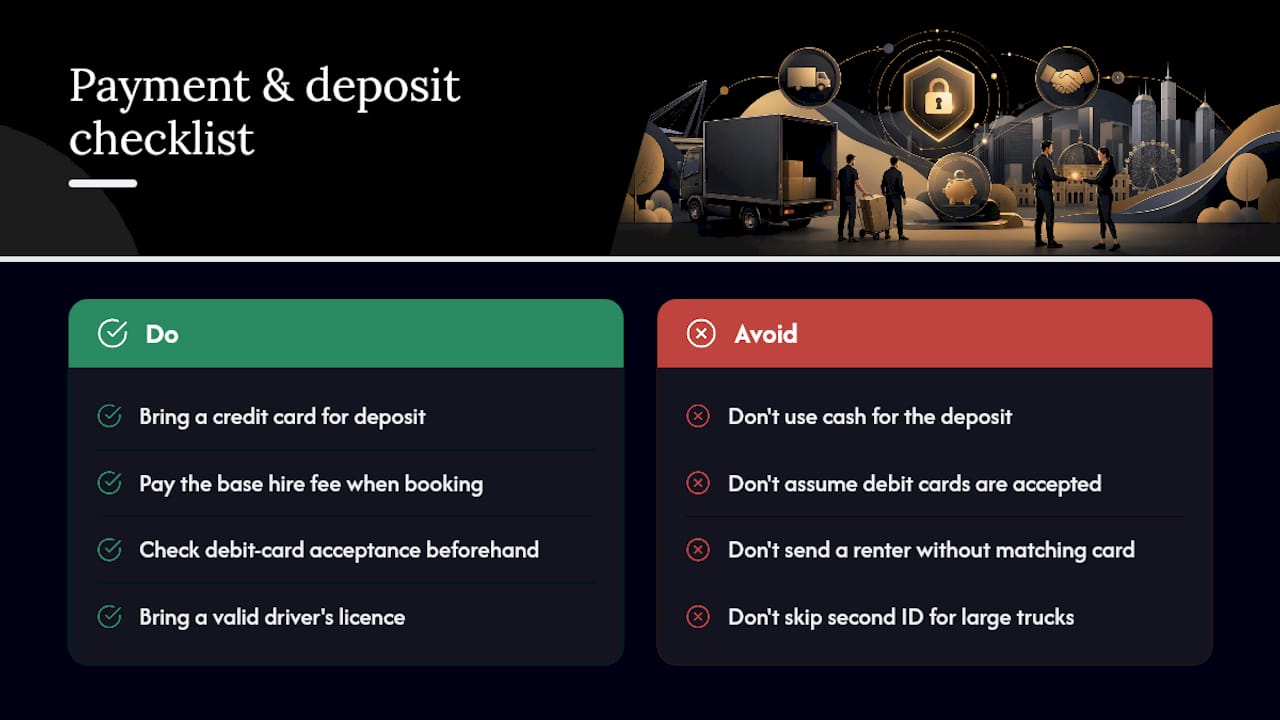
Most Melbourne truck rental operators ask for a security bond or deposit at the time of pickup, separate from the hire fee itself. This deposit typically covers potential damage, unpaid tolls, or fuel shortfalls discovered after the truck is returned, and it’s refunded once the vehicle passes inspection.
Expect the deposit to be held on a credit card rather than taken as cash, since operators need a way to charge back any damage or excess kilometre fees discovered later. Debit cards are sometimes accepted but often carry a higher deposit requirement or aren’t accepted at all, so check before you arrive to pick up the truck.
The base hire fee is usually charged upfront when you confirm the booking, either online or in person, with the deposit processed separately at handover. Some operators require the renter’s name on the booking to match the card used for both the hire fee and the deposit, which matters if you’re organising the truck on behalf of a family member or housemate.
Bring a valid driver’s licence, since most companies won’t hand over keys without sighting the physical card, and a second form of ID is common for larger trucks that require different licence classes. If you’re booking a driver-included taxi truck instead, payment is typically settled at the end of the job based on hours worked, though some operators still take a deposit or card pre-authorisation to secure the booking.
The timeline is fairly consistent across Melbourne operators, though the details shift depending on whether you’re self-driving or booking a driver.
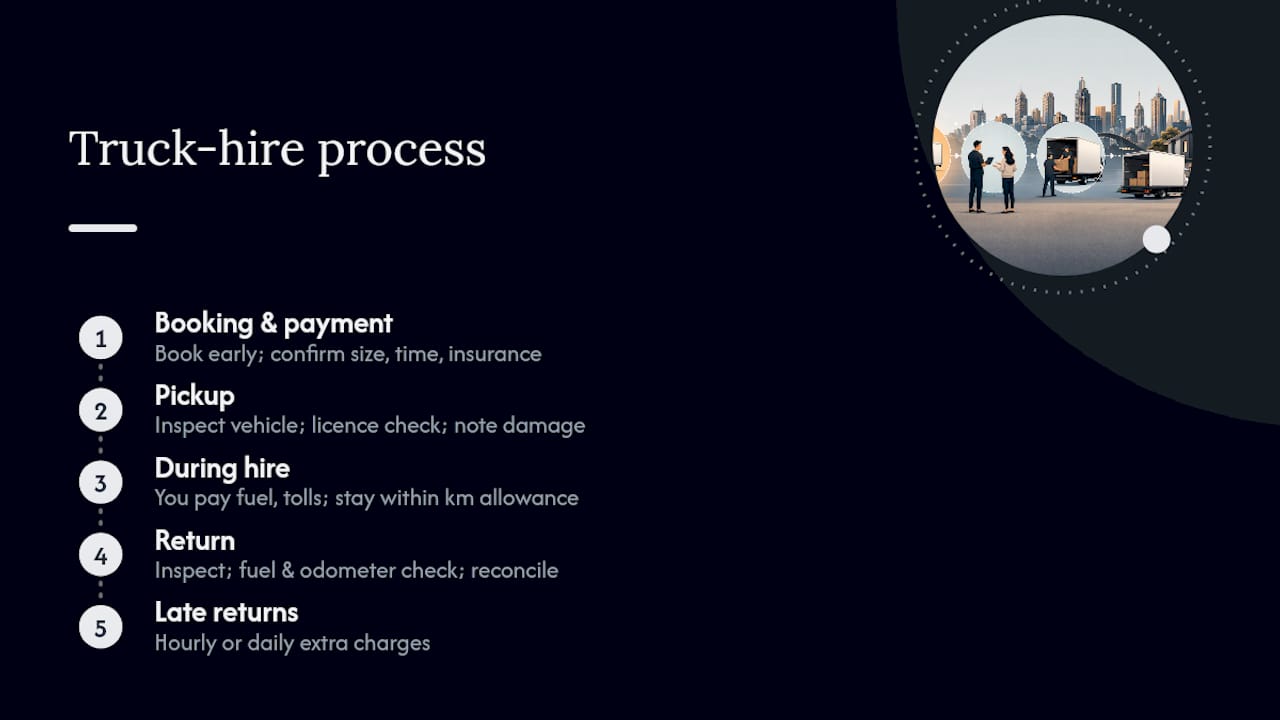
Booking usually happens online or by phone, ideally a week or more ahead for a weekday move and earlier still if you’re moving around end-of-month, when demand and prices both climb. At booking, you’ll confirm truck size, hire duration, pickup location, and insurance level, and most operators take payment or a card hold at this point.
On the day, pickup involves a vehicle inspection, a licence check, and a walkthrough of the truck’s condition, fuel level, and kilometre reading. This is worth doing carefully. Any existing damage should be noted and photographed before you drive off, since it protects your deposit at the other end.
During the hire period, you’re responsible for fuel, tolls, and staying within the included kilometre allowance, all of which get reconciled at return. Return involves another inspection, a fuel and odometer check, and processing of the deposit refund, which can take a few business days to clear back onto your card depending on the operator.
Late returns are typically charged at an hourly or daily rate on top of the original booking, so build in a buffer if traffic or loading runs long.
Stairs, narrow hallways and heavy furniture change the maths fast. What looks like a straightforward DIY job on paper often turns into a full day of lifting, scratched walls, and a truck returned late with after-hours fees attached. A managed move with an experienced crew removes that risk entirely, and for tight timeframes it’s frequently cost-competitive once you account for your own time and labour. Book removalist quotes early, and ask specifically what’s included in the price.
— Dinshaw
Running your own truck hire calculation is useful, but it also shows exactly where the hidden costs sit: fuel, excess kilometres, insurance, and your own time behind the wheel. A removalist service removes that guesswork with a fixed quote covering the truck, the crew, and the labour, so there’s no separate excess-reduction fee or kilometre overage to track.
Removal services typically handle residential removals, packing and unpacking, short-term storage, and specialty items like pianos or plants, all from one booking. For moves involving stairs, tight access, or a tight settlement date, a quoted crew often works out better value than a DIY hire once your own time is factored in. If your move fits a straightforward one-truck, no-stairs scenario, self-drive hire can still be the cheaper option, and that’s worth checking with the worked example above before you book either way.
Get an accurate residential removal quote from Onyx Removals and compare it against your own truck hire total before deciding.

No Related Post


