


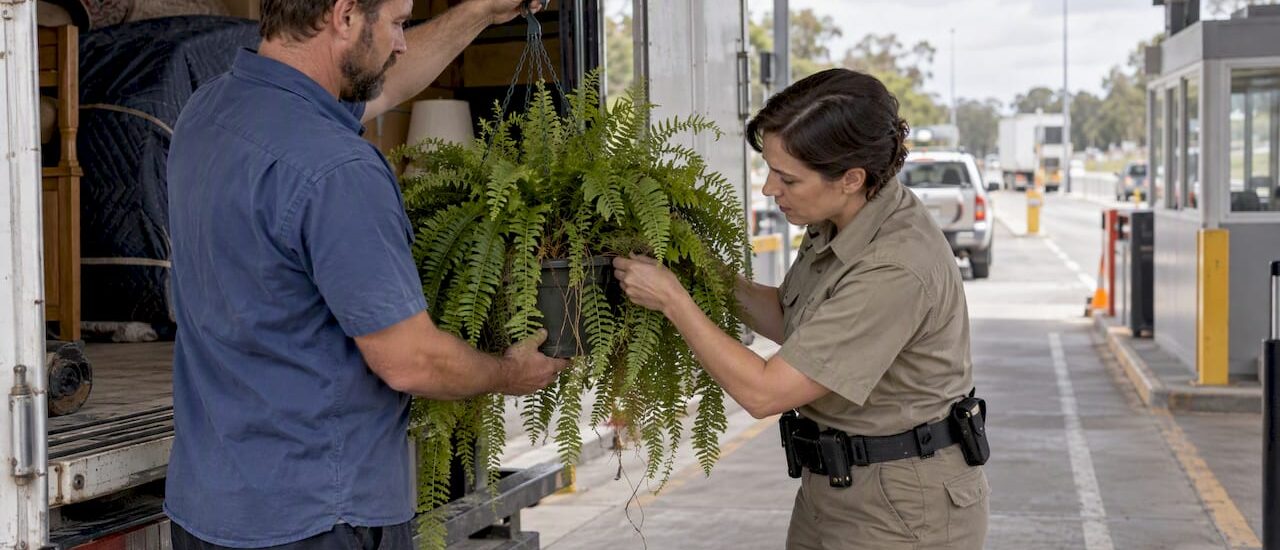
Moving hanging plants works by deciding which ones are worth taking, confirming any quarantine rules for your route, preparing and stabilising each plant, then transporting them in a climate stable vehicle or handing the job to a specialist. Owners should start biosecurity checks early, since a Plant Health Certificate can take around five business days to arrange.
TL;DR:
- Check destination state and species rules before packing; quarantine requirements vary, and a required Plant Health Certificate may take around five business days.
- Prune trailing stems by 20% to 30%, water lightly two to three days ahead, and use lightweight pots to reduce breakage and soil spills.
- For short trips, secure plants in the car cabin; longer journeys are safer with padded, ventilated crates, bracing, and placement away from vents.
- After arrival, inspect plants promptly and leave them in sheltered indirect light for seven to ten days before moving them to their final positions.
- Ask your removalist about plant coverage before moving, because standard policies may cover physical damage while excluding decline caused by heat, cold, or stress.
Not every hanging plant survives a move well, and Australian quarantine rules add another filter before you even start packing. Biosecurity requirements vary by state and territory, and the responsibility for compliance sits with the plant owner, not the removalist.
Before loading anything, work through a short mental checklist:
Agriculture Victoria advises owners to consult the Plant Quarantine Manual and contact the relevant state agriculture department when crossing borders, particularly into Western Australia, Tasmania or the Northern Territory, where controls tend to be stricter.
Preparation happens days before the move, not on the morning itself. The goal is a lighter, sturdier plant that can handle vibration and handling without snapping stems or spilling soil.
Keep a small kit on hand: secateurs, soft ties, spare lightweight pots, plastic liners and labels. Our packing tips for plants guide covers a few extra preparation details worth reading before moving day.
Pro Tip: Prune a little more than feels comfortable. A smaller, tidier plant travels far better than one with long stems catching on box edges.
Whether to transport a hanging plant still hooked or unhooked into a box depends on distance and vehicle type. For short local moves in a car, many hanging plants can travel hung from a sturdy hook or cradle rigged in the back seat. For longer trips or truck transport, unhooking and boxing the plant in a padded, ventilated crate is safer.
Soil containment matters as much as the plant itself:
Transporting plants in the car cabin rather than the boot or an enclosed truck tends to protect them best on shorter trips, since the cabin holds a steadier temperature and better airflow than a sealed boot, and it lets you check on the plants during the journey.
For longer interstate moves where a removalist truck is the only practical option, plants need secure bracing against the truck wall, away from direct airflow from vents, and ideally grouped together rather than scattered loose among boxes. Heavy or top heavy hanging plants, especially large ferns or mature trailing specimens, are safer moved with a dolly and a two person lift rather than one person carrying an awkward, unbalanced pot.
A professional plant moving service builds on the same fundamentals, repotting, pruning, securing, but adds the equipment and scheduling that make a complex move far less stressful for the owner. Our plant transport service typically covers:
For a large collection or an office full of hanging installations, we start with a quote and a site check, then build a tailored plan that fits plant transport into the broader move rather than treating it as an afterthought. Our office plant relocation guide goes into more detail for business premises with multiple hanging plants.
Moving day runs smoothly when the loading order and handling rules are set in advance.
On the day itself, the plant owner is best placed to do a final walk through check on each plant and brief the removal team on anything fragile or unusual, while the removalists handle the actual securing, lifting and loading.
The first twenty minutes after arrival matter almost as much as the drive itself. Unpack hanging plants early and check each one over before anything else.
Gradual reintroduction to normal light and humidity reduces transplant shock considerably. If a plant looks stressed well beyond that ten day window, or a pot has cracked and needs replacing, it is worth repotting properly rather than leaving a damaged container in place.
Pro Tip: Keep new plants away from heating or cooling vents for the first week after a move. The temperature swings that stress plants during transport can keep stressing them in an unfamiliar room.
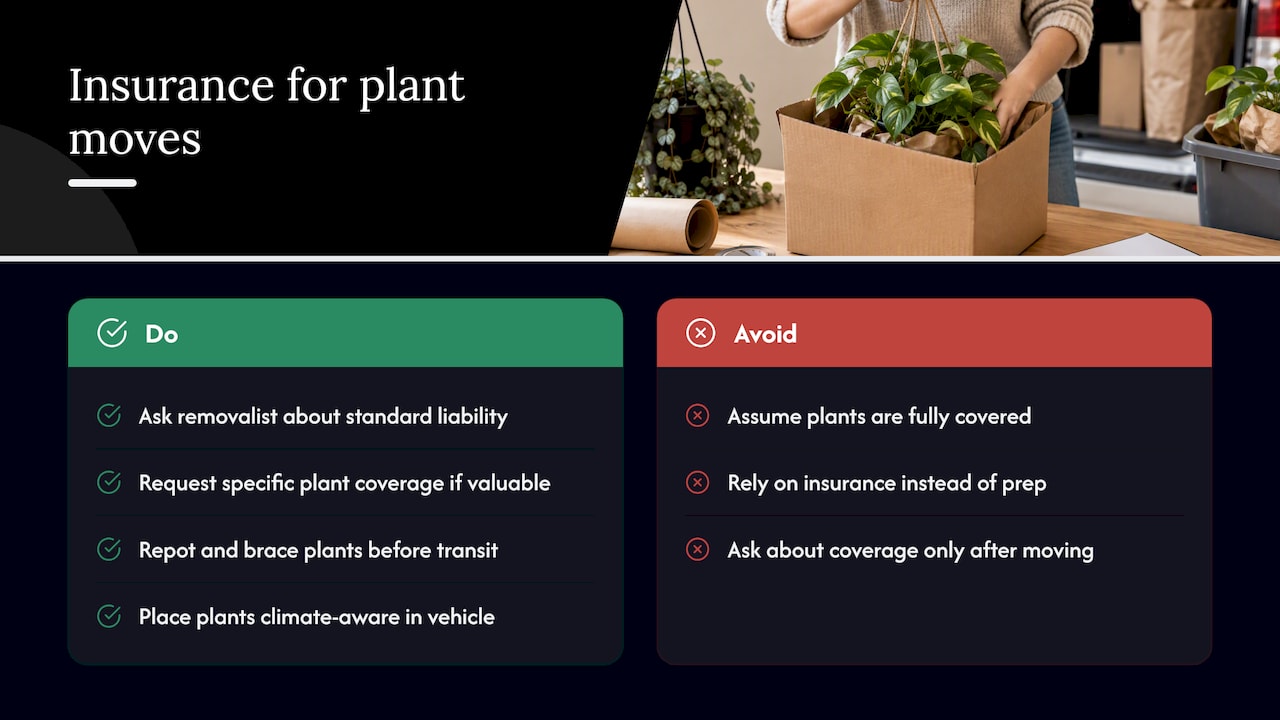
Plants sit in an unusual spot when it comes to moving insurance. Most removalist liability cover and transit insurance policies treat living plants as excluded or limited items, because their condition depends on factors like watering, light and handling that are hard to attribute cleanly to transit damage.
In practice, this means a few things for anyone planning a move with hanging plants. General contents insurance for a house move rarely extends full replacement value to plants, so it is worth asking your removalist directly what their standard liability covers before assuming plants are included. Some movers will cover a plant against direct physical damage during loading or transport, such as a cracked pot or a snapped main stem, while excluding general decline from heat, cold or stress.
If a plant collection has genuine financial or sentimental value, ask about any specific plant coverage before the move rather than after. The practical alternative many movers choose is simply reducing risk upfront: proper repotting, bracing and climate aware placement in the vehicle do more to protect a plant than any insurance claim filed after the fact. Treat insurance as a backstop for accidental damage, not as a substitute for the preparation and handling steps covered earlier in this guide.
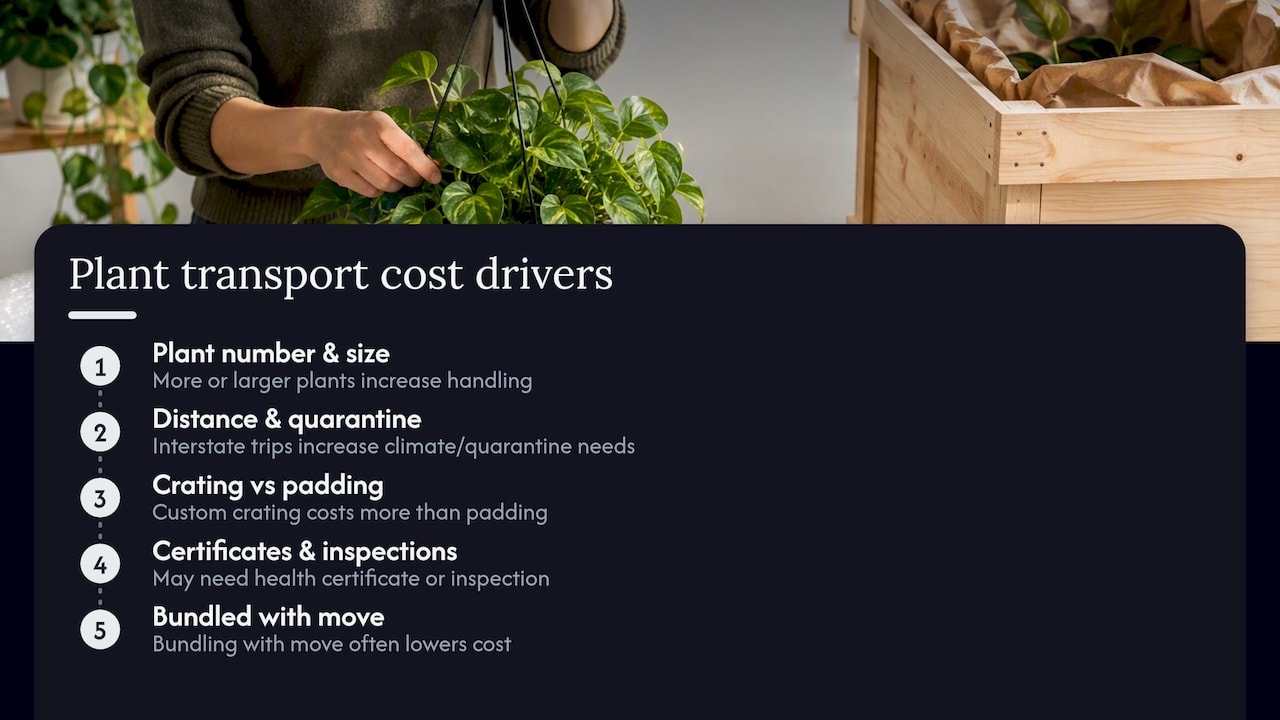
What a professional hanging plant transport job costs depends on a handful of practical factors rather than a flat rate. The number and size of plants matters most, since a single small hanging fern takes far less handling time than a dozen large specimens needing individual crating. Distance plays a role too: a local move within the same city needs less climate management than an interstate trip crossing quarantine zones.
Other cost drivers include whether plants need custom crating or can travel safely in standard pots with padding, whether a Plant Health Certificate or inspection is required for the route, and how the plant transport integrates with the rest of the move. Booking plant transport as part of a full residential or office move, rather than as a standalone job, often works out more efficient since the vehicle, crew and scheduling are already in place.
Our office and house packing and unpacking service is priced at $109 per hour, which gives a useful reference point for the kind of hands on preparation work that hanging plants often need before transport. Plant moving itself does not carry a published flat rate on our site, since the right approach depends on the size and number of plants and how they fit into the broader move, so we quote it individually after a quick chat about what you are moving.
Biosecurity comes first, always, before a single pot gets wrapped. Once that is sorted, stabilisation and climate control decide whether a hanging plant survives the trip looking like itself or looking half dead. The plants that travel worst are the ones packed in a rush, with wet soil and no bracing, left sitting in a hot car for hours while the rest of the move gets sorted first.
— Dinshaw
Moving hanging plants alongside a full house or office relocation is simpler when one team handles both. Plant transport can be incorporated into the same quote and schedule as packing, truck hire and storage to streamline the moving process.

Getting started is straightforward:
Check our pricing page for an idea of packing costs, or get in touch for a tailored quote on moving your plants as part of your next relocation.
Yes, for most local moves a car cabin is often the best option because it holds a steadier temperature and better airflow than a boot or an enclosed truck. Secure the pot so it cannot tip, and avoid placing it near a vent.
It depends on the states involved and the plant species, since Australian biosecurity rules vary by jurisdiction. Where a certificate is required, allow around five business days to arrange it before your move date.
Line pots with a plastic liner, tape a saucer firmly underneath, and wedge the pot into a crate or box with packing material so it cannot shift. Keeping soil lightly moist rather than bone dry or saturated also helps it hold together during the drive.
Yes, trimming trailing stems by roughly 20 to 30% a few days before the move reduces tangling, snapping and overall bulk. It also makes the plant lighter and easier to handle during loading.
Give plants seven to ten days in a sheltered spot with indirect light before moving them to their final hanging position. This gradual reintroduction reduces transplant shock and gives you time to spot any pest or damage issues.

No Related Post


